Biodiversity and Conservation
Class 12 Biology notes, explained simply
How many kinds of living things share the Earth, and why are we losing them? This chapter covers genetic, species and ecological diversity, how many species there are in the world and in India, why the tropics have more species, the species-area relationship, Tilman's diversity-stability plots, the Evil Quartet behind extinctions, the reasons to conserve, and in situ and ex situ conservation. Plain words, NCERT facts, every exercise and a 10-question self-check.
In short: Biodiversity is the sum total of diversity at all levels of biological organisation. In simple words, it is variety at every level of life: genetic, species and ecological diversity. India has more than 50,000 strains of rice and 1,000 varieties of mango.
Prefer Hindi? Read this chapter in Hindi notes (Hinglish).
The whole chapter in 30 seconds
- BiodiversityBiodiversity is the sum total of diversity at all levels of biological organisation, mainly genetic, species and ecological diversity. India has more than 50,000 strains of rice and 1,000 varieties of mango.
- How many speciesIUCN (2004): slightly more than 1.5 million species are described; Robert May estimates about 7 million in all. India has 2.4 per cent of the land but 8.1 per cent of the species: one of 12 mega diversity countries.
- PatternsDiversity is highest in the tropics and falls towards the poles. Humboldt found that species richness rises with area, but only up to a limit. On a log scale, log S = log C + Z log A, with Z usually 0.1 to 0.2.
- LossThe IUCN Red List (2004) records 784 extinctions in the last 500 years. The Evil Quartet: habitat loss and fragmentation, over-exploitation, alien species invasions (the Nile perch) and co-extinction.
- ConservationWe conserve for narrowly utilitarian, broadly utilitarian and ethical reasons. In situ: 34 hotspots, 3 in India (NCERT; 36 and 4 today), biosphere reserves, national parks, sanctuaries and sacred groves. Ex situ: zoos, seed banks, cryopreservation.
Remember: Evil Quartet = habitat loss, over-exploitation, alien species, co-extinction; in situ = in its own home, ex situ = outside it.
Contents10 parts · quiz · FAQ
- Biodiversity: nature's treasure
- How many species? Nature's library
- Equator to poles: Time, Weather, Sunlight
- Species and area: a new lane, a new taste
- Diversity and stability: the airplane with rivets
- Biodiversity loss: a slow drip, a tap fully on
- The four villains: the Evil Quartet
- Why save it: Pocket, Services, Duty
- How to save it: home or ICU
- Quick revision
- Self-check quiz
- Words to know
- Questions students ask
Dotted words are explained: tap one to see what it means.
1What is biodiversity, and what will we learn in this chapter?
In short: variety at every level of life is called biodiversity. Think of it as nature's treasure, with variety at every level. This chapter tells us how big the treasure is, where it is richest, why it is shrinking, and how it can be saved.
Guess firstHow many species (kinds) of ants are there in the world?
More than 20,000! A species is one kind of living thing (Chapter 11). This variety is the topic of the chapter.
What is the map of this chapter?
In NCERT 2026-27, Chapter 13 has two sections: 13.1 Biodiversity (Parts 01-07) and 13.2 Biodiversity Conservation (Parts 08-09). Part 10 is revision. Here is the question and the picture of each part:
| Part | Question | Picture |
|---|---|---|
| 01 | What is biodiversity? | Nature's treasure |
| 02 | How many species are there? | Nature's library |
| 03 | Why more in the tropics (the warm belt)? | "Time, Weather, Sunlight" |
| 04 | Bigger area, more species? | A new lane, a new taste |
| 05 | Why do more species matter? | An airplane with rivets |
| 06 | How many species are we losing? | A slowly dripping tap vs a tap turned fully on |
| 07 | Why are we losing them? 4 reasons | "Home, Greed, Guest, Partner" |
| 08 | Why should we save them? | "Pocket, Services, Duty" |
| 09 | How can we save them? | Protection at home vs moving a very sick patient to the ICU |
Each picture gets its story in its own part.
What would an alien see on Earth?
NCERT starts with a fun thought. Imagine an alien (an imaginary visitor from space) landing on Earth from a distant galaxy. The first thing it would notice is the huge variety of life.
That variety still surprises us humans today. These numbers are hard to believe:
| Living thing | Number of species |
|---|---|
| Ants (cheenti) | More than 20,000 |
| Beetles | 3,00,000 (300,000, or 3 lakh); the Ladybird of Chapter 8 (Microbes in Human Welfare) is a beetle too |
| Fishes | 28,000 |
| Orchids (Chapter 11) | Nearly 20,000 |
In Parts 05 and 07 you will meet the alien species. That is a species brought in from another place, not an alien from space.
Which 6 big questions do scientists ask?
Ecologists and evolutionary biologists (scientists who study the long changes in living things) want to understand this variety.
One word first: the biosphere is the part of Earth where life exists. Here are the NCERT questions, and where each one is answered:
| Question | Where |
|---|---|
| Why are there so many species? | Parts 02-04, Chapter 6 (Evolution) |
| Was there always so much variety? | Part 06 (fossils) |
| How did the variety come about? | Chapter 6 (evolution), Part 03 |
| Why does the biosphere need it? What if there were less? | Part 05 |
| What is the benefit for humans? | Part 08 |
What is the full meaning of biodiversity?
Remember the zoom-out of Chapter 11 (Organisms and Populations): from macromolecules (very large molecules) up to biomes (very large regions). The biosphere has variety at all of these levels, not only at the species level.
NCERT also calls this variety heterogeneity, which means being different from one another. The combined variety at all levels is called biodiversity.
This word was made famous by Edward Wilson, a sociobiologist (a scientist who studies the social behaviour of living things).
Which are the 3 most important levels of biodiversity?
| Level | Picture | NCERT example |
|---|---|---|
| Genetic diversity: differences in genes within one species | Different kinds of the same mango (Alphonso, also called Hapus; Dasheri; Langda) | Rauwolfia vomitoria; more than 50,000 strains of rice; 1,000 varieties of mango |
| Species diversity: variety of different species | Different fruits in one basket: mango, banana, guava | The Western Ghats (Pashchimi Ghat) have more amphibian (frog-like) species than the Eastern Ghats (Poorvi Ghat) |
| Ecological diversity: variety of ecosystems | The different homes of living things | India has more than a Scandinavian country like Norway |
The first level is genetic. Genes are the recipes inside a living thing (Chapter 5: Molecular Basis of Inheritance). They decide things like colour, taste and size.
Within the whole area where a species lives (its distributional range), genes can differ a lot. Take the medicinal plant Rauwolfia vomitoria in the different Himalayan ranges (mountain ranges).
This plant makes an active chemical called reserpine, which is used in medicine.
The plants on different mountains can differ in the power (potency) and the amount (concentration) of this chemical.
India has more than 50,000 genetically different strains of rice (chawal), and 1,000 varieties of mango (aam).
Remember: a strain or variety is a kind within one species, just as Hapus is also a mango. These are not different species.
Chapter 10 (Biotechnology and its Applications) said about 2,00,000 (200,000) varieties of rice. The two numbers come from different NCERT chapters. In this chapter's exam, write 50,000 strains.
How far is this true? Farmers have chosen many kinds of mango. Genetic diversity also exists in wild plants and animals, like the Rauwolfia of different mountains.
Now ecological diversity. An ecosystem is living things and their non-living surroundings, together as one unit (Chapter 12: Ecosystem). Each ecosystem is a different home for living things.
India has deserts, rain forests (barsaati jungle) and the 5 homes below. This is why India's ecosystem diversity is greater than that of a Scandinavian country (northern Europe) like Norway.
| Ecosystem | Plain meaning |
|---|---|
| Mangroves | Trees that grow in salty, muddy water on the sea coast |
| Coral reefs | Rocky reefs in the sea built by tiny coral animals |
| Wetlands | Land that stays under water for much of the year, like a marsh or the edge of a lake |
| Estuaries | Where a river meets the sea |
| Alpine meadows | Grassy fields high up in the mountains |
Trick: the 3 levels = "G-S-E" = Genetic, Species, Ecological (small to big).
How long did this treasure take to build?
This variety built up over many millions of years of evolution (1 million = 10 lakh). NCERT says that if species keep disappearing at today's speed, the treasure could be lost in less than 200 years.
How do we know about these 200 years? It is NCERT's estimate, based on the speed at which species are shrinking in number today.
People now understand that biodiversity is very important for our lives and our well-being. So biodiversity and its conservation (protection) is a worldwide issue today.
Conservation is done at all three levels (NCERT summary). The ways are in Parts 08-09.
Try it (in the kitchen): count how many kinds of rice come to your home. They are all one species: genetic diversity. Moong, masoor and chana are different species: species diversity.
RiyaSir, biodiversity just means how many species there are, right?
SirNot only that. It is the variety at every level, and the three most important levels are G-S-E.
RiyaSo 50,000 strains of rice means 50,000 species?
SirNo! All the strains are inside one species. That is genetic diversity, like the different kinds of one mango.
NCERT exercise 1: "Name the three important components of biodiversity."
- Genetic diversity: differences within one species. For example, the potency and concentration of reserpine in Rauwolfia vomitoria of the Himalaya; more than 50,000 strains of rice, 1,000 varieties of mango.
- Species diversity: for example, more amphibian species in the Western Ghats than in the Eastern Ghats.
- Ecological diversity: the ecosystem level; for example, India has more ecosystems than Norway.
Don't mix them up: biodiversity is not only a count of species; it has all three levels. Strains of rice are one species (genetic diversity), and ecological diversity is about ecosystems.
NCERT vs today: in the exam, write NCERT's name: Rauwolfia vomitoria. In reality, the medicinal plant of India and the Himalaya is sarpagandha, Rauvolfia serpentina (also spelt Rauwolfia, as in NCERT). Rauwolfia vomitoria is an African plant.
Hindi medium? See the Hindi names (tap to open)
| English | Hindi name | Meaning of the pieces |
|---|---|---|
| Biodiversity | जैव विविधता | Variety at every level |
| Genetic diversity | आनुवंशिक विविधता | Differences within one species |
| Species diversity | जातीय विविधता | Variety of different species |
| Ecological diversity | पारिस्थितिक विविधता | Variety of ecosystems |
| Biosphere | जीवमंडल | The part of Earth with life |
| Conservation | संरक्षण | Protection |
Revise: 5 cards (tap one to flip it)
Biodiversity
The combined variety at every level; Edward Wilson's word.
Genetic diversity
Within one species: Rauwolfia, rice, mango.
Species diversity
Amphibians of the Western Ghats, more than the Eastern Ghats.
Ecological diversity
India's ecosystems, more than Norway's.
G-S-E
Genetic, Species, Ecological: small to big.
Check yourself
More than 50,000 strains of rice: which level of diversity is this?
Genetic diversity: all the strains are inside one species.
The amphibians of the Western Ghats and the Eastern Ghats: an example of which level?
Species diversity: the variety of different species.
Who made the word "biodiversity" famous?
Edward Wilson. If you got it wrong, no problem: now you will remember.
One question: how many species are there on Earth in all? Has anyone counted them all?
In the next part: counting species, in the world and in India.
2How many species are there on Earth, and how many in India?
In short: the species whose names have been written down are a little more than 1.5 million (15 lakh). The estimate for all species is about 7 million (70 lakh). So most species have no name written yet.
Guess firstOut of all the species on Earth, how many have had their names written down?
About 22! The rest are still to be found.
Do we know the count, or only a guess?
Species that were found and named have printed records. So we know the number of recorded species, but not the total.
Think of nature's library (NCERT's own picture): each species is a book. Taxonomists (scientists who identify living things and give them names) are the librarians. They write the book titles in the register.
IUCN (International Union for Conservation of Nature and Natural Resources) is a worldwide organisation. IUCN (2004): slightly more than 1.5 million (15 lakh) species of plants and animals are described, which means their names are written down.
How many are left is not clear. Many estimates are only educated guesses (guesses made with good understanding).
NCERT vs today: in the exam, write NCERT's number: 1.5 million (IUCN 2004). Today, more than 2 million (20 lakh) species have been described.
How do we estimate the total number of species?
A counted list of a group of living things, like insects, is a species inventory. Such groups are called taxonomic groups.
These lists are almost complete for temperate countries (cool-warm weather, Part 03). They are less complete for warm (tropical) countries, where most of the species still to be found live.
Think of one complete register, the rest estimated. The cool region's school has every register complete, the warm region's only one (one group of insects). The estimate has 3 steps, with "suppose" numbers made up for the example:
- Take an insect group that has been counted completely in both places (exhaustively studied). Compare its species richness (how many species) in the two places. Suppose the warm region has 3 times as many.
- Other groups (plants, animals) are counted in the cool region too. Apply the same 3 times to every group (to extrapolate is to carry the same ratio further). If the cool region has 200, the warm region gets about 600.
- Add up all the groups. This is a rough (gross) estimate of all the species on Earth.
How far is this true? It is an educated guess, and every group need not have the same ratio. Some extreme estimates go up to 20 to 50 million (2 to 5 crore).
Robert May's estimate is more careful (conservative) and is accepted as scientifically sound: about 7 million (70 lakh). So the number still to be found is 7 − 1.5 = 5.5 million. The NCERT summary says nearly 6 million (60 lakh).
Who checks this estimate? It is only an estimate. Different scientists check it in different ways, so the numbers come out different.
Trick: "One and a half named, seven real." 1.5 million recorded (IUCN 2004); about 7 million in all (Robert May).
Which are the biggest groups among recorded species?
Here it is in two lines:
- Out of 100 recorded species, more than 70 are animals. Plants are no more than 22.
- Among those animals, more than 70 per cent are insects.
NCERT's line "7 out of every 10 animals are insects" means 7 out of every 10 animal species are insect species. It does not count individual animals.
Trick: "70-70": more than 70 animals; among those animals, more than 70 insects. Plants no more than 22.
In NCERT's count, "plants" includes all of these:
- Algae (tiny green living things of the water) and fungi (like mushrooms)
- Bryophytes (mosses) and gymnosperms (plants with open seeds, like pine)
- Angiosperms (flowering plants)
How far is this true? In Class 11, fungi had their own kingdom. Here NCERT counts them with plants only for counting.
Think first: NCERT asks how insects got so much variety. A model answer is below in exercise 9.
Here is one more interesting fact. The species of fungi are more than the species of fishes, amphibians, reptiles and mammals put together.
In the summary, NCERT adds birds too: fungi are more than all the vertebrates (animals with a backbone).
What does NCERT Fig 13.1 show?
Fig 13.1 has three pie charts (like a round roti cut in pieces). The bigger the slice, the more species; NCERT gives only the names, not the numbers. The slices, from big to small:
| Invertebrates (no backbone) | Insects (most of the pie), other animal groups, molluscs (snails and mussels), crustaceans (prawns, crabs) |
|---|---|
| Vertebrates (with a backbone) | Fishes (nearly half), birds, reptiles; amphibians and mammals are the smallest, nearly equal |
| Plants | Fungi and angiosperms (equal, together most of it), algae; mosses, ferns and allies, lichens are very thin; no slice for gymnosperms |
Why are prokaryotes like bacteria not counted?
In these estimates there is no number for prokaryotes (tiny living things without a proper nucleus, like bacteria; Class 11). Biologists do not know for sure how many species they are.
Why? Many bacteria do not grow in the lab at all (NCERT: not culturable), and they are hard to divide into species. The old (conventional) taxonomic methods do not suit microbes.
What if we separate species by looking at chemicals or DNA (biochemical or molecular criteria)? Then the variety of bacteria alone could reach several million (1 million = 10 lakh).
How many species are there in India?
India has only 2.4 per cent of the world's land area (2 to 3 parts out of 100). But India has 8.1 per cent of the world's species (about 8 out of 100). Think of a small shop with a big stock.
This is why India is one of the 12 mega diversity countries (countries with the most biodiversity). How far is this true? A shop's stock is bought, but species formed over lakhs of years of evolution.
Nearly 45,000 species of plants have been recorded from India, and twice as many animals (about 90,000). New discoveries add to this count every year.
Trick: India = "2.4 land, 8.1 life, 12 mega."
NCERT vs today: in the exam, write NCERT's number: 12 mega diversity countries. Today, a list of 17 megadiverse countries is commonly used, and India is one of them.
How many species in India are still to be found?
By May's estimate, only 22 per cent (22 out of 100) of the world's species have been recorded. 1.5 ÷ 7 is about 0.21, and NCERT calls it 22. The same ratio was applied to India.
In the exam: India still has more than 1,00,000 (100,000, or 1 lakh) plant species to find. It also has more than 3,00,000 (300,000, or 3 lakh) animal species to find.
Try it (paper and pen; optional, this working does not come in the exam): 45,000 plants = 22 parts out of 100. So:
- Plants: 45,000 ÷ 22 × 100 = about 2,04,500 (204,500) in all; minus 45,000 = about 1,59,500 (159,500) still to be found.
- Animals: 90,000 ÷ 22 × 100 = about 4,09,000 (409,000) in all; minus 90,000 = about 3,19,000 (319,000) still to be found.
How far is this true? This is an estimate too, so NCERT gives round numbers: "more than".
Will we ever make the complete list?
For that we need many trained taxonomists and a lot of time. On top of that, many species may become extinct (gone forever, Chapter 6) before they are found.
In the library picture: names are written for about 22 per cent of the books. Some books burn before their titles are written down. So both the librarians and conservation (Parts 08-09) are needed.
How far is this true? The library is only a way to explain. A book can have another copy, but an extinct species does not come back.
RiyaSir, there are 15 lakh species in the world in all, right?
Sir15 lakh have had their names written (IUCN 2004). Robert May's estimate for the total is about 70 lakh.
RiyaAnd India has 8.1 per cent of the world's land?
SirThe other way round! Land is 2.4 per cent, species are 8.1 per cent.
NCERT exercise 2 (estimating the total number of species): species inventories are more complete in temperate countries. The temperate-tropical species richness ratio of one exhaustively studied insect group is extrapolated to other groups, and this gives a gross estimate. Extreme estimates are 20-50 million; Robert May: about 7 million.
NCERT exercise 9: plants 22 per cent, animals 72 per cent; why is there more variety in animals? NCERT gives no direct answer in the text; this is a model answer.
- Animals can move around, and their behaviour is varied. So in evolution they spread to many kinds of places and ways of living, and new species formed (Chapter 6).
- Insects: small size, short life cycle, many young, wings. Many eat only one kind of plant (about 25 per cent of insects are phytophagous, which means plant-eating; Chapter 11). So one plant can have many insect species.
- Plants stay in one place, and all of them need the same light, water and minerals. So they have fewer ways to become different.
Living things do not really think; this is the result of natural selection, just a way to explain it. The exercise's 72 and the text's "more than 70" are the same idea; discuss it with your teacher too.
Don't mix them up: 1.5 million = recorded, 7 million = Robert May's total estimate. 2.4 = land, 8.1 = species. Prokaryotes are not in the count; insects are 70 per cent of animal species, not of all life.
Hindi medium? See the Hindi names (tap to open)
| English | Hindi name | Meaning of the pieces |
|---|---|---|
| Insects | कीट | Insects |
| Fungi | कवक | Like mushrooms |
| Algae | शैवाल | Green living things of the water |
| Angiosperms | आवृतबीजी | Flowering plants |
| Gymnosperms | अनावृतबीजी | Plants with open seeds |
| Amphibians | उभयचर | Like frogs |
| Reptiles | सरीसृप | Like snakes |
| Mammals | स्तनधारी | Animals that feed milk to their young |
Revise: 5 cards (tap one to flip it)
IUCN 2004 vs Robert May
1.5 million recorded; about 7 million in all.
Extrapolate
The temperate-tropical ratio of an insect group, applied to other groups.
70-70
70%+ animals, and 70%+ of those are insects. Plants no more than 22%.
Prokaryotes
Not in the count; many are not culturable.
India
2.4% land, 8.1% species, 12 mega.
Check yourself
By Robert May's estimate, about how many species are there on Earth?
7 million (70 lakh). Only 1.5 million are recorded.
What share of the world's land area does India have?
2.4 per cent of the land; the species are 8.1 per cent.
Which group has no number in these species estimates?
Prokaryotes. If you got it wrong, no problem: now you will remember.
One question: Colombia has nearly 1,400 species of birds, and Greenland has only 56. Why such a big difference?
In the next part: the pattern of species from the equator to the poles.
3Why are more species found near the equator?
In short: species are not spread equally over the world. They are most near the equator, and they get fewer as we go towards the poles. Remember the three suggested reasons: Time, Weather, Sunlight.
Guess firstWhere would you find the most species of birds?
Colombia: nearly 1,400! Greenland has only 56.
Are species spread equally over the whole world?
No. The variety of plants and animals is high in some places and low in others (NCERT: uneven distribution). Many groups show interesting patterns.
The most famous pattern is the latitudinal gradient. First, let us understand the lines across a globe.
What are latitude, the equator and the tropics?
Think of the lines going across a globe, from left to right. Latitude is the distance north (N) or south (S) of the equator, in degrees (°).
The equator is at 0°: the belt around the middle of the Earth. The poles are at 90°: the top and bottom ends.
The tropics are the warm belt on both sides of the equator, from 23.5° N to 23.5° S. This is the area between the Tropic of Cancer and the Tropic of Capricorn. Between the tropics and the polar regions are the temperate regions (the cool-warm countries of Part 02).
What is the latitudinal gradient?
In general, species diversity gets lower as we go from the equator towards the poles. With very few exceptions (special cases), the tropics have more species than the temperate or polar regions.
Think of a crowded market to an empty lane: the equator is the crowded market, and the poles are the empty lane. This slow fall is called the latitudinal gradient (a gradient is a slow change).
How far is this true? People open the shops in a market, but species come from evolution. And NCERT says there are a few exceptions too.
What do NCERT's numbers show?
| Place | Latitude | Bird species |
|---|---|---|
| Colombia | Near the equator | Nearly 1,400 |
| India | Most of the land is in the tropics | More than 1,200 |
| New York | 41° N | 105 |
| Greenland | 71° N | Only 56 |
1,400 ÷ 56 = 25. So Colombia has 25 times as many bird species as Greenland.
Plants show the same. Ecuador is a tropical region, and the Midwest of the USA is a temperate region. Take forests of the same area: the one in Ecuador has up to 10 times as many species of vascular plants.
Vascular plants are plants with xylem and phloem (tubes for water and food), like ferns, gymnosperms and angiosperms (Class 11). NCERT prints "Equador"; the correct spelling is Ecuador.
How many species are there in the Amazon forest?
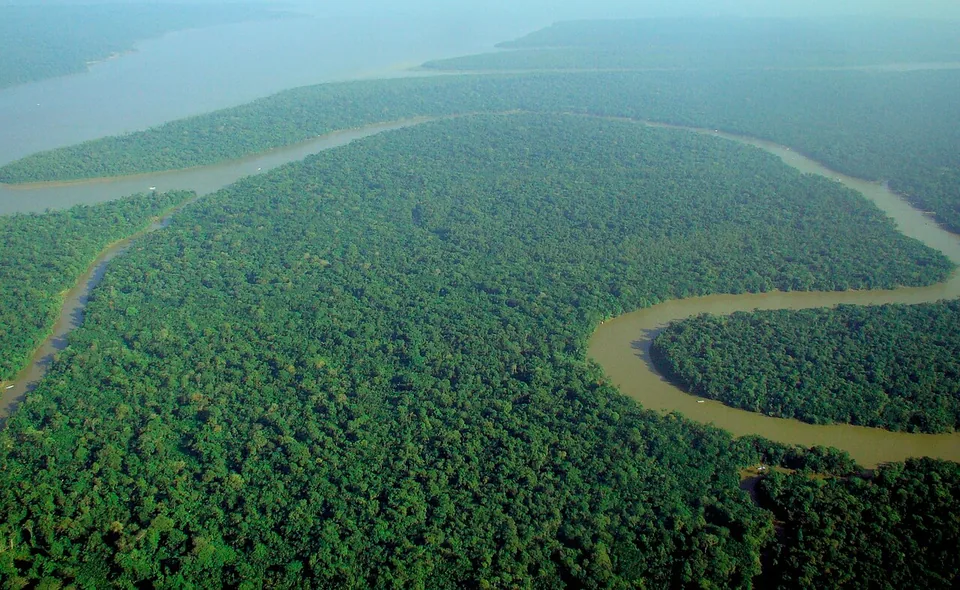
The Amazon rain forest (barsaati jungle) of South America lies mostly in the tropics. It has the most biodiversity on Earth:
| Group | Species |
|---|---|
| Plants | More than 40,000 |
| Fishes, birds | 3,000; 1,300 |
| Mammals, amphibians | 427 each |
| Reptiles | 378 |
| Invertebrates | More than 1,25,000 (125,000, or 1.25 lakh) |
Scientists estimate that these rain forests may have at least 2 million (20 lakh) insect species still to be found and named.
Try it (paper and pen): draw a straight line. Write Colombia and India (tropics), New York (41° N) and Greenland (71° N) on it. Above each one, write its bird species: do you see the number fall?
Why are there so many species in the tropics?
Think first: what is special about the tropics? Think of one reason, then read on.
Ecologists and evolutionary biologists have given many hypotheses. A hypothesis is a suggested reason that is not fully proved yet. Here are three important ones:
| Hypothesis | Picture | NCERT point |
|---|---|---|
| (a) Time | An old city that was never knocked down | No glaciations in the tropics, so a long evolutionary time |
| (b) Weather | The same weather every day | Constant weather, so niche specialisation |
| (c) Sunlight | More sunlight, more food | More solar energy, so more productivity |
(a) Time: the formation of new species (speciation, Chapter 6) is mostly a matter of time. The longer the time, the more new species. The temperate regions were covered again and again by ice ages (glaciations), like a reset button pressed again and again.
The tropics stayed almost free of big changes for many millions of years. So they got a long evolutionary time to build up a variety of species.
Did all living things die in the ice ages? Not all, but many species were lost, and there was less time for new species to form.
(b) Weather: the weather in the tropics stays nearly the same (constant) all year, and it can be known in advance (predictable). NCERT says it is less seasonal.
The same weather every year lets living things become experts at their own food or work, like each shop selling its own special thing. This is niche specialisation: a niche is a living thing's special job and place (NCERT does not define it). So more kinds can live together.
(c) Sunlight: the tropics get more solar energy (sunlight), so there is more productivity. Remember, productivity is how fast plants make food (biomass) (Chapter 12), not "productivity at work".
More food may feed more kinds of living things. In NCERT's words, this "might" increase diversity "indirectly" (in a roundabout way). It is not certain.
How far is this true? People build cities and shops. Here everything came from evolution and natural selection; living things do not really think.
Trick: the 3 reasons for the tropics = "Time, Weather, Sunlight." The latitudinal gradient = from the crowded market (equator) to the empty lane (poles).
RiyaSir, species increase as we go from the equator towards the poles, right?
SirThe other way round! They decrease. Colombia 1,400, New York 105, Greenland only 56.
RiyaAnd are these three reasons fixed rules?
SirNo, they are hypotheses: suggested reasons. That is why NCERT uses words like "might".
NCERT exercise 3: "Give three hypotheses for explaining why tropics show greatest levels of species richness."
- Time: speciation depends on time. The temperate regions had repeated glaciations before, but the tropics stayed undisturbed for millions of years. So there was a long evolutionary time for species diversification.
- Constant environment: the tropics are less seasonal, more constant and predictable. Such an environment leads to niche specialisation and more species diversity.
- Solar energy: the tropics get more solar energy, so there is higher productivity. This can lead to more diversity indirectly.
Don't mix them up: diversity goes down towards the poles, not up; the tropics are 23.5° N to 23.5° S. A hypothesis is not a fixed rule, and do not swap New York 105 and Greenland 56.
Hindi medium? See the Hindi names (tap to open)
| English | Hindi name | Meaning of the pieces |
|---|---|---|
| Latitude | अक्षांश | Distance from the equator, in degrees |
| Equator | भूमध्य रेखा | The line around the middle of the Earth, 0° |
| Poles | ध्रुव | The top and bottom ends, 90° |
| Tropics | उष्णकटिबंध | The warm belt from 23.5° N to 23.5° S |
| Temperate | शीतोष्ण | Between the tropics and the poles |
Revise: 5 cards (tap one to flip it)
Latitudinal gradient
Species diversity falls from the equator towards the poles.
Bird species
Colombia 1,400; India 1,200+; New York (41° N) 105; Greenland (71° N) 56.
Ecuador vs Midwest USA
Up to 10 times as many vascular plants in the same area.
Amazon
The most biodiversity; 2 million insect species still to be found.
Time, Weather, Sunlight
A long evolutionary time; constant weather, niche specialisation; more solar energy, productivity.
Check yourself
What is the latitude range of the tropics?
23.5° N to 23.5° S: the warm belt on both sides of the equator.
The repeated glaciations belong to which hypothesis?
Time: the tropics had no glaciations, so they got a long evolutionary time.
How many bird species does Greenland (71° N) have?
56. If you got it wrong, no problem: now you will remember.
One question: in a new city, the more lanes you walk through, the more new foods you find. Is it the same amount every time?
In the next part: bigger area, more species (the species-area relationship).
4If you make the area bigger, how many more species do you find?
In short: the bigger the area you look at, the more species you find. But each time, fewer new species get added. On a log scale this bent line turns straight, and its steepness (Z) tells the whole story.
Guess firstIn the first lane of a new city you find 10 kinds of food. If you walk 100 lanes, how many kinds will you find?
Maybe around 50! Every new lane gives something new, but a little less each time. The same happens with species.
What did Humboldt see in the jungle?
In Part 03 you saw the tropics pattern. The second pattern is about the size of the region: the species-area relationship.
Alexander von Humboldt was a German naturalist (a scientist of nature) and geographer (an expert on lands and places). He made long first-of-their-kind journeys through the thick jungles of South America.
He saw this: inside one region, the more area you look at, the more species richness you find, but only up to a limit. Species richness means how many species live in a place; NCERT uses this word along with species diversity.
Think of it as a new lane, a new taste. The first lane has 10 kinds of food; after 10 lanes maybe 30, after 100 lanes maybe 50. Each time you find fewer new things.
What does the graph look like?
The same pattern shows up in many taxa (groups of living things): angiosperm plants (flowering plants), birds, bats and freshwater fishes.
Their species-area relationship looks like a rectangular hyperbola. That is NCERT's name; just remember the shape: fast rise, then almost flat. NCERT Fig 13.2 has two lines: Y axis (upright) = species richness, X axis (flat) = area:
| Line | What it looks like | What is written on it |
|---|---|---|
| Blue curve | Rises fast at first, then bends and goes almost flat | S = CAZ |
| Red straight line | Same steepness from start to end | "log-log scale" and log S = log C + Z log A |
Caption: on a log scale this relationship becomes a straight line (linear).
What is this "log"?
Step 1 (the idea): a bigger area gives more species, but each time fewer new ones. Taking logs turns this bent line straight. Then the steepness of the straight line, one number (Z), tells the whole story.
Here log means: count the zeros after the 1 in a number. Trick: "log = count the zeros."
| Number | How many zeros? | log |
|---|---|---|
| 1 | 0 | log 1 = 0 |
| 10 | 1 | log 10 = 1 |
| 100 | 2 | log 100 = 2 |
| 1000 | 3 | log 1000 = 3 |
This is the log with base 10 (base 10), not the ln button of Chapter 11's calculator. A log scale is like the floors of a lift, where each floor is ten times the one below: 1, 10, 100, 1000. On the graph, these sit at equal distances.
In log S = log C + Z log A, what is what?
This is NCERT's formula for the straight line on the log graph. Z tells you how fast species grow as the area grows.
log S = log C + Z log A
Step 2 (the symbols):
- S = species (species richness, meaning how many species)
- A = area (the size of the region)
- Z = the steepness of the line (slope); NCERT also calls it the regression coefficient
- C = where the line starts (Y-intercept): the point where the line touches the Y axis
Remember: C = Constant start (where the line begins), Z = steepness (slope).
A regression line is the best straight line drawn through the data points. Slope Z is like how steeply a hill road climbs: a small Z (0.1-0.2) is a gentle climb; a big Z (0.6-1.2) is steep.
And C? When A = 1, log A = 0, so Z log A is also 0. Then log S = log C, which means S = C.
The curve form is S = CAZ, meaning C times AZ. AZ is A to the power Z, like 23 = 2 to the power 3 = 2 × 2 × 2 = 8. The two formulas are two forms of one relationship.
How does it work with small numbers?
Step 3 (a small example): say C = 10, so log C = 1. Take areas 1, 10, 100, 1000, and try two slopes.
- Take one row: A = 100. Count the zeros: log A = 2.
- Multiply by Z: at Z = 0.2 you get 0.2 × 2 = 0.4; at Z = 1 you get 1 × 2 = 2.
- Add log C (which is 1). At Z = 0.2, log S = 1.4, so S is about 25 (with a calculator). At Z = 1, log S = 3, so S = 1,000 (three zeros).
| Area A | log A | Z = 0.2 (gentle) | Z = 1 (steep) |
|---|---|---|---|
| 1 | 0 | log S = 1, S = 10 | log S = 1, S = 10 |
| 10 | 1 | log S = 1.2, S ≈ 16 | log S = 2, S = 100 |
| 100 | 2 | log S = 1.4, S ≈ 25 | log S = 3, S = 1,000 |
| 1000 | 3 | log S = 1.6, S ≈ 40 | log S = 4, S = 10,000 |
Each time the area becomes 10 times bigger, Z gets added to log S. At Z = 0.2 species grow only about 1.6 times (10, 16, 25, 40); at Z = 1 they grow 10 times. At A = 1, S = 10 = C: that is the Y-intercept.
Note: numbers like 16, 25 and 40 came from a calculator. The exam does not ask for this working; it asks only for the formula, the meaning of Z and the values of Z.
If you like maths (optional): 101.2 ≈ 15.8 (about 16), and 100.2 ≈ 1.6. Check it with a calculator.
Step 4 (how far it is true): a food lane is built by people; species are not made like that. Also, on another continent most living things are completely new, so the line there is much steeper.
Try it: on paper, build the Z = 0.2 table yourself: multiply log A by 0.2, then add 1. Did you get log S = 1, 1.2, 1.4, 1.6?
How big is Z in real life?
Ecologists measured it in many places. Whatever the taxonomic group or the region, Z came out about the same inside a region:
| Where | Z |
|---|---|
| Inside one region: plants in Britain, birds in California, molluscs (snail-like animals) in New York state | 0.1 to 0.2; the slopes are surprisingly alike |
| Very large areas, like entire continents | 0.6 to 1.2: much steeper |
| Frugivorous (fruit-eating) birds and mammals in the tropical forests of different continents | 1.15 |
Trick: "Small region, small Z (0.1-0.2); big continent, big Z (0.6-1.2)." Fruit-eaters: 1.15.
What does a steeper slope mean?
NCERT asks: "What do steeper slopes mean in this context?" First think for yourself. If the line is steeper, how do species grow as the area grows?
NCERT does not give a direct answer; this is a model answer. A steeper slope means species richness rises very fast as the area grows. On different continents, every new region adds many new species.
The opposite is also true: if the same amount of area is lost, species will be lost fast too. Discuss this with your teacher.
RiyaSir, Z is the point where the line touches the Y axis, right?
SirThe other way round! That is C, the Y-intercept. Z is the steepness of the line, the slope (regression coefficient).
RiyaSo if we keep making the area bigger, will species keep growing without stopping?
SirNo. Humboldt saw it only up to a limit. The curve rises fast first, then bends and becomes almost flat.
NCERT exercise 4 (slope of the regression): in log S = log C + Z log A, Z is the slope of the regression line. It tells how fast richness grows with area.
- Inside a region, Z = 0.1-0.2, whatever the group or region (plants in Britain, birds in California, molluscs in New York state).
- For entire continents, Z = 0.6-1.2; for frugivorous birds and mammals of tropical forests, 1.15.
- A steeper slope = species richness grows very fast with area.
Don't mix them up: Z = slope (regression coefficient), C = Y-intercept; not the other way round. Z is 0.1-0.2 in regions and 0.6-1.2 for continents. Species do not grow without a limit, and the log here is the base 10 one.
Hindi medium? See the Hindi names (tap to open)
| English | Hindi name | Meaning of the pieces |
|---|---|---|
| Species diversity | जातीय विविधता | जाति = species, विविधता = variety |
| Angiosperms | आवृतबीजी | आवृत = covered; the seed is covered inside a fruit |
| Tropics | उष्णकटिबंध | उष्ण = hot, कटिबंध = belt |
Revise: 6 cards (tap one to flip it)
Humboldt
German naturalist and geographer. In South America: more area, more species richness, but only up to a limit.
Species richness
The count of how many species live in a region.
Rectangular hyperbola
The shape of the species-area graph: fast rise first, then a bend and almost flat.
log S = log C + Z log A
A straight line on a log scale. S = species richness, A = area, Z = slope, C = Y-intercept. The curve: S = CAZ.
Values of Z
0.1-0.2 inside a region; 0.6-1.2 for entire continents; 1.15 for frugivorous birds and mammals.
Steeper slope
Species richness grows very fast with area.
Check yourself
What is log 100?
2. Count the zeros: 100 has two zeros.
In log S = log C + Z log A, what is Z?
The slope. The Y-intercept is C.
What is Z for a very large area, like entire continents?
0.6 to 1.2, which is much steeper. If you got it wrong, no problem: now you will remember.
Now you know where species are more plentiful. But does the number of species really matter? What if one or two are lost?
In the next part: diversity and stability, and the airplane with rivets.
5Does an ecosystem work better with more species?
In short: scientists do not have a sure answer yet. But experiments show that a community with more species is more stable. An airplane example explains why losing species matters.
Guess firstOne species of tree frog (a frog that lives on trees) in the Western Ghats is lost forever. Will the ecosystem there become weaker?
This one is the best! NCERT also says there is no direct answer. The airplane with rivets below explains it.
Does the number of species really matter?
Remember: a community is the populations of different species living together in one place (Chapter 11). And an ecosystem is the living and non-living parts working together as one unit (Chapter 12).
NCERT's question: does the number of species in a community change how the ecosystem works? Ecologists have not yet been able to give a sure (definitive) answer.
But for many decades ecologists believed this: communities with more species are usually more stable than those with fewer species.
What is a stable community?
Note: in Chapter 11, "stable" was about the age pyramid, a population that is neither growing nor shrinking. Here a stable community means something different. NCERT gives 3 signs.
First, few ups and downs: productivity should not change much from year to year. Productivity here is Chapter 12's rate of biomass production, not work output. Picture: a field that gives about the same crop every year.
Second, takes the shock: the community can bear occasional shocks (disturbances), natural or man-made. There are two ways to do this:
| Word | Meaning | Picture |
|---|---|---|
| Resistant | Does not change at all when the shock comes | A strong wall: you push, and it does not move |
| Resilient | Changes, but comes back quickly | A rubber ball: it gets pressed, but quickly becomes round again |
Third, keeps outsiders out: it should also be resistant to invasions by alien species. Picture: a full class with no empty seat, so an outsider cannot sit down.
Here "alien" does not mean a visitor from space; the "alien from a distant galaxy" in Part 01 was only imagination. An alien species is one brought from another place to a new place, the same as Chapter 11's exotic species.
Trick: "Few ups and downs, takes the shock, keeps outsiders out."
What did Tilman's experiments show?
How are these three signs linked to species richness (how many species, Part 04)? NCERT says we do not know for sure yet. But the long experiments of David Tilman give some answers.
Tilman ran experiments for several years on outdoor plots, in open ground:
| Plot | Total biomass, year to year | Productivity |
|---|---|---|
| Plot with fewer species | More up and down | Lower |
| Plot with more species | Less up and down | Higher |
So in Tilman's plots a link showed up: more species, more stability. But why this happens, and how sure it is, scientists are still not fully certain. That is why NCERT calls these answers tentative, meaning they hold for now but are not final.
Think of it as "do not put all your eggs in one basket." If one species does badly in a year, another takes over.
How far it is true: NCERT says "we don't know" how this link works. The field, the wall, the ball and the basket are only there to help you understand.
NCERT summary: communities with more diversity change less and are more productive. They also resist biological invasions (attacks by outsiders) better.
We do not understand the whole way it works yet. But we know this much: rich biodiversity is needed for the health of the ecosystem. It is also very important (imperative) for human survival.
What difference does it make if one or two species are lost?
Species are being lost fast today (Part 06), so NCERT asks three direct questions:
- If some species become extinct, will it matter to us?
- If one tree frog species of the Western Ghats is lost forever, will the ecosystem there work less well?
- If the world had only 15,000 species of ants (cheenti) instead of 20,000 (Part 01), how would our life be affected?
There are no direct answers. But Paul Ehrlich, an ecologist at Stanford (a university in America), gave a good example: the 'rivet popper hypothesis'.
A rivet is a small metal pin that joins the plates of an airplane. Now the story:
- The airplane = the ecosystem. Its thousands of rivets = the species.
- Each passenger takes one rivet home = one species goes extinct.
- At first the flight's safety (the ecosystem working well) may not change.
- But as more rivets are removed, over time the airplane becomes dangerously weak.
- Which rivet is removed also matters. The rivets on the wings = key species, the ones that run the big jobs of an ecosystem.
| In the airplane | In the ecosystem |
|---|---|
| Thousands of rivets | Species |
| A passenger removing a rivet | One species becoming extinct |
| Safety of the flight | The ecosystem working well |
| Rivets on the wings | Key species: losing these is the most serious |
| A few rivets in a seat or window | Other species: losing these is less serious |
Remember Pisaster (the referee of the field) from Chapter 11: when all the starfish were removed, more than 10 invertebrate species disappeared within a year. That is the effect of a key species.
Do we know in advance which species is the key species? Often we are not sure; the effect shows only after the species is gone. So it is wise to protect every species.
The airplane and the rivets are only names to explain. How far it is true: an airplane's rivets are all alike and lifeless. In an ecosystem the species are different, alive, and depend on each other.
Trick: "Wing rivets = key species."
RiyaSir, resistant and resilient are the same thing, right?
SirNo. Resistant = a strong wall, it does not change at all. Resilient = a rubber ball, it changes but comes back quickly.
RiyaAnd Tilman proved for sure that more species = more stable?
SirNo. NCERT calls his answers tentative, meaning they hold for now but are not final. Ecologists do not have a sure answer yet.
NCERT exercise 6: rich diversity makes a community stable: few ups and downs, takes the shock (resistant or resilient), keeps alien species out. Tilman: plots with more species had less change in biomass and higher productivity. Rivet popper: if many species, or some key species, are lost, the ecosystem becomes weaker (3 effects: Part 06).
Don't mix them up: NCERT has no final answer, and Tilman's answers are tentative. Resistant (does not change at all) and resilient (changes, then recovers) are different. This "stable" is not Chapter 11's stable age pyramid, and key species = the wing rivets, not every rivet.
Hindi medium? See the Hindi names (tap to open)
| English | Hindi name | Meaning of the pieces |
|---|---|---|
| Biodiversity | जैव विविधता | जैव = of living things, विविधता = variety |
| Ecosystem | पारितंत्र | तंत्र = system: living things and their surroundings together |
| Alien species | विदेशी जातियाँ | विदेशी = from outside, जातियाँ = species |
Revise: 6 cards (tap one to flip it)
Stable community
Few ups and downs, takes the shock, keeps outsiders (alien species) out.
Resistant vs resilient
Resistant = a wall, does not change at all. Resilient = a ball, changes but comes back quickly.
David Tilman
Outdoor plots: more species = less year-to-year change in biomass, and higher productivity. The answers are tentative.
Rivet popper hypothesis
Paul Ehrlich (Stanford). Airplane = ecosystem, rivets = species; remove the rivets, and the airplane gets weak.
Key species
The wing rivets: species that run the big jobs of an ecosystem.
High diversity community
Less variable, more productive, more resistant to biological invasions.
Check yourself
Which of these is NOT a sign of a stable community?
A population doubling is not stability. The 3 signs: few ups and downs, takes the shock, keeps outsiders out.
A drought weakened a community, but it came back quickly. What is this?
Resilient: like a rubber ball that gets pressed and then becomes round again. If it were resistant, it would not change at all.
In the rivet popper hypothesis, what are the rivets on the wings?
Key species, the ones that run the big jobs of an ecosystem. If you got it wrong, no problem: now you will remember.
The rivets are coming out, but how many and how fast? How is today's loss different from the past?
In the next part: biodiversity loss, the IUCN numbers and the 'Sixth Extinction'.
6How many species have been lost, and why is today's loss different?
In short: species are being lost steadily, and human activities are the reason. Extinctions happened before too, but today's speed is 100 to 1,000 times faster. Read this like a doctor's report; the ways to protect are in Parts 08-09.
Guess firstFive times before, many species on Earth were lost together. So what is new in today's loss?
That is the one! The difference is speed: today it is 100 to 1,000 times faster. The full story is below.
Are species increasing or decreasing?
New species are formed by speciation (the making of new species; Part 03, Chapter 6). But it is not certain whether any new species are being added to Earth's treasure today.
One thing is sure: species are being lost steadily. Earth's wealth of living things is going down fast, and human activities are the reason.
NCERT's example: humans settled on the tropical Pacific Islands (warm islands of the Pacific Ocean). It is said that more than 2,000 native bird species there became extinct after that.
What does the IUCN Red List tell us?
The IUCN is a worldwide organisation (Part 02). Its IUCN Red List is a red register of species in danger. How far it is true: the list does not save anyone; it only tells us which ones need saving.
According to the IUCN Red List (2004), 784 species became extinct in the last 500 years:
| Group | How many extinct | Which number |
|---|---|---|
| Invertebrates (no backbone) | 359 | First: the most |
| Vertebrates (with a backbone) | 338 | Second |
| Plants | 87 | Third: the least |
So invertebrates (359) > vertebrates (338) > plants (87). The most losses were animals without a backbone, not those with one.
Trick: "784 = 338 + 359 + 87" (with backbone + without backbone + plants). Check: 338 + 359 = 697, and 697 + 87 = 784.
The NCERT summary says "nearly 700 species" instead. In the exam, for the IUCN 2004 line, write 784 (338 + 359 + 87).
Which species have been lost in recent times?
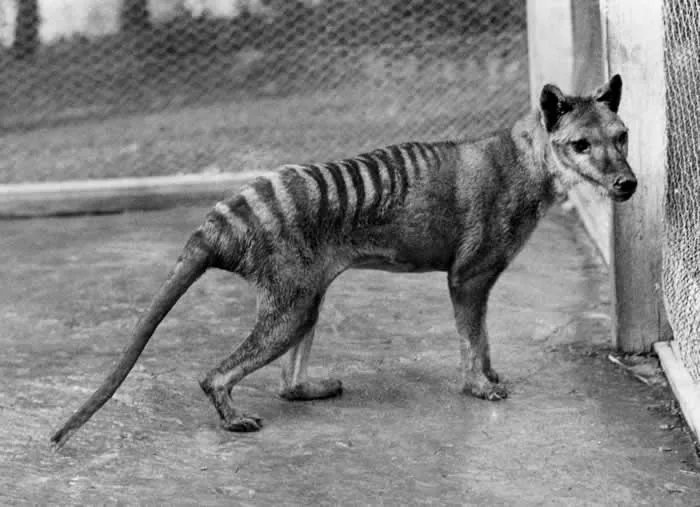
| Name (where) | What it was |
|---|---|
| Dodo (Mauritius) | A big bird that could not fly |
| Quagga (Africa) | Like a zebra, with stripes only at the front |
| Thylacine (Australia) | The Tasmanian wolf (Chapter 6) |
| Steller's Sea Cow (Russia) | A big, gentle mammal of the sea |
| Bali, Javan, Caspian tiger | 3 subspecies of tiger |
A subspecies is a kind of one species from a particular region. Our Bengal tiger is also a subspecies of the tiger.
In the last 20 years alone, 27 species have been lost (NCERT's count up to 2004).
This is a report, not a reason to panic. The ways to protect species are in Parts 08-09.
Is every group in equal danger?
When the records were studied closely, they showed that extinction is not random. Some groups, like amphibians (frog-like animals), seem more vulnerable.
Here vulnerable has its plain meaning: more easily put in danger. NCERT does not mean the IUCN category 'Vulnerable' here.
Also, more than 15,500 species in the world (about fifteen and a half thousand) are facing the threat of extinction. The NCERT summary says more than 650 of them are from India.
Such species are called threatened or endangered. NCERT gives both the same meaning: living things with a very high risk of dying out soon in their own natural home (the wild).
| Group (in the world) | How many species are threatened |
|---|---|
| Birds | 12 per cent (12 out of 100) |
| Mammals | 23 per cent (23 out of 100) |
| Amphibians | 32 per cent (32 out of 100) |
| Gymnosperms (Class 11: seeds with no covering, like pine) | 31 per cent (31 out of 100) |
Trick: "Birds 12, mammals 23, flip it for amphibians 32, one less for gymnosperms 31."
Fact box: in the exam, write NCERT's number: more than 15,500. Today's number is only for information: by the IUCN (July 2026), 49,505 (about 50 thousand) species are threatened. The count also went up because far more species (1,75,909, or 175,909) are now assessed.
Have this many species been lost together before?
Yes. Fossil records (Chapter 6) show that large losses of species happened before too, even before humans arrived.
Since life began, a long time of more than 3 billion (300 crore) years has passed. In that time there were 5 mass extinctions, meaning many species disappearing together.
The NCERT summary says life began nearly 3.8 billion (380 crore) years ago; Chapter 6 said about 4 billion. Both are NCERT's estimates; in this chapter's question, write 3.8 billion.
How is today's 'Sixth Extinction' different from the past five?
NCERT's question: how is the 'Sixth Extinction' going on today different from the earlier ones? The answer: the difference is speed.
Today species are thought to disappear 100 to 1,000 times faster than in pre-human times. Our activities are behind this speed; which activities, the 4 causes ('The Evil Quartet'), is in Part 07.
Think of it as a slowly dripping tap vs a tap turned fully on. Extinction happened before too, just drop by drop; today the tap is fully on.
How far it is true: it is easy to shut a tap; stopping extinction takes time and effort (Parts 08-09). 'Sixth Extinction' is only a name to explain this.
Trick: "Five before, the sixth now; the difference is speed (100-1,000 times)."
Ecologists warn: if today's trend continues like this, nearly half of all species may be lost in the next 100 years. Note that this is an "if", not a sure prediction.
The loss that human actions caused can also be slowed by human actions. That is why Parts 08-09 are about ways to protect.
What happens when the biodiversity of a region goes down?
In Part 05 you saw that with more species, productivity (Chapter 12: the rate of biomass production) changes less from year to year. Now think the other way round: when species go down, NCERT says three effects usually follow:
- (a) The production of plants (plant production) in the ecosystem goes down.
- (b) Resistance goes down against sudden disturbances (environmental perturbations), such as drought.
- (c) The ups and downs (variability) go up in some ecosystem processes. For example, plant productivity, water use, and the cycles of pests (insects that harm crops) and diseases.
This is the opposite of Part 05's stable community, where there were few ups and downs and the community took the shock.
RiyaSir, among the 784, the most would be vertebrates, right?
SirNo. Invertebrates are the most: 359. Vertebrates are 338 and plants 87.
RiyaAnd is the large-scale loss of species happening because of humans for the first time?
SirNo. There were 5 mass extinctions even before humans. In the Sixth Extinction the difference is speed: 100 to 1,000 times faster.
In the exam:
- IUCN Red List (2004): 784 extinctions in the last 500 years = 338 vertebrates + 359 invertebrates + 87 plants (invertebrates the most).
- Sixth Extinction: the speed is 100 to 1,000 times faster than in pre-human times.
- 3 effects of loss: plant production goes down; resistance goes down against perturbations like drought; variability goes up in some ecosystem processes.
Don't mix them up: the biggest group in the 784 is invertebrates (359), not vertebrates (338). Mass extinctions happened before humans too; the Sixth Extinction differs in speed. Amphibians 32 per cent, mammals 23.
Hindi medium? See the Hindi names (tap to open)
| English | Hindi name | Meaning of the pieces |
|---|---|---|
| Extinct / extinction | विलुप्त / विलोपन | लुप्त = vanished |
| Amphibians | उभयचर | उभय = both; on water and on land |
| Mammals | स्तनधारी | Those that feed milk to their young |
| Gymnosperms | अनावृतबीजी | अन् + आवृत = seeds with no covering |
Revise: 7 cards (tap one to flip it)
IUCN Red List (2004)
784 extinct in 500 years. The most are invertebrates (359), then vertebrates (338), then plants (87).
Recent extinctions
Dodo (Mauritius), quagga (Africa), thylacine (Australia), Steller's Sea Cow (Russia), Bali, Javan, Caspian tiger.
Threatened / endangered
A very high risk of dying out soon in the natural home. More than 15,500; more than 650 from India.
12-23-32-31
Threatened: birds 12, mammals 23, amphibians 32, gymnosperms 31 per cent.
Mass extinction
Many species lost together. It happened 5 times before humans.
Sixth Extinction
The one today; the difference is speed: 100 to 1,000 times faster, from human activities.
3 effects of loss
Plant production goes down; resistance goes down against disturbances like drought; variability goes up in ecosystem processes.
Check yourself
Which is the biggest group among the 784 extinctions of the IUCN 2004 list?
Invertebrates (359). Vertebrates are 338 and plants 87: animals with a backbone come second.
In what way is the Sixth Extinction different from the past five?
The speed. Five before, the sixth now; the difference is speed.
What share of the world's amphibian species is threatened?
32 per cent. Birds 12, mammals 23, flip it for amphibians 32. If you got it wrong, no problem: now you will remember.
Why is the speed so high? NCERT names four big causes.
In the next part: 'The Evil Quartet', which is Home, Greed, Guest, Partner.
7Why are species disappearing so fast today?
In short: most of today's fast extinction comes from human activities. NCERT names four big causes, with the nickname 'The Evil Quartet'. We will remember them as: Home, Greed, Guest, Partner.
Guess firstA road and fields were cut through a big forest. The forest broke into small pieces. Who will struggle the most?
An animal that needs a big area, or travels far, finds a small piece too small. Below, we will call this fragmentation.
What is the Evil Quartet?
In Part 06 we saw that species are going extinct 100 to 1,000 times faster than before. NCERT says the main reason is human activities.
There are four big causes, with the nickname (sobriquet) 'The Evil Quartet'. Quartet means a group of four, and evil means bad.
We will call them four villains: Home, Greed, Guest, Partner. These are only names to explain. All four are results of human activities, not a wicked plan made on purpose.
Home: what are habitat loss and fragmentation?
Every living thing has a home where it lives: its habitat. When the home is destroyed, it is called habitat loss. NCERT says this is the most important cause of extinction.
The biggest examples come from tropical rain forests (barsaati jungle). They once covered more than 14 per cent of the Earth's land. Today they cover no more than 6 per cent, and they are still being cut.
NCERT's estimate: by the time you finish this chapter, 1000 more hectares are gone (1 hectare = 100 metres × 100 metres).
The Amazon in South America is so big that NCERT calls it the 'lungs of the planet'. It may hold well over a million species.
It is being cleared for growing soya beans, and for grassy fields for beef cattle (cattle raised for meat). These names, like 'lungs of the planet', are only names to explain.
Losing the whole home is not the only danger. A spoiled home (degradation) is also a danger. For example, pollution damages many habitats.
Now think of a big house cut into small rooms, with walls in between: a road, a field, a settlement. When a big habitat breaks into small pieces like this, it is called fragmentation.
Mammals and birds that need large territories suffer the most. So do animals with migratory habits (animals that travel long distances). Their numbers go down (population decline, Chapter 11).
Greed: what is over-exploitation?
Humans have always depended on nature for food and shelter. But when 'need' turns to 'greed', we start taking more than nature can give. This is called over-exploitation.
Remember the hen that laid golden eggs from Chapter 11. Take one egg a day, and the eggs keep coming. Be greedy and eat the hen, and all the future eggs are gone too.
Here the hen is a species of nature, and the eggs are the benefit it gives every day. Just a way to explain: you can buy another hen, but an extinct species cannot be brought back from anywhere.
In the last 500 years, Steller's sea cow (Part 06) and the passenger pigeon (a wild pigeon of North America) were lost this way. Even today, many marine fish are over harvested. Because of this, some commercially important species (valuable for trade) are in danger.
Guest: what are alien species invasions?
Here "alien" does not mean a visitor from another planet. An alien species is one that is brought from outside into a new place; it is Chapter 11's exotic species.
They are brought either unintentionally or deliberately, for any purpose. Some of them become invasive: they spread with nobody to stop them. Then the indigenous (native) species decline or become extinct.
Why are some brought deliberately? Often for farming, for decoration or for fish farming. But once they spread, they are very hard to remove.
Remember Chapter 11's newcomer that nobody can stop: the prickly pear in Australia, and the Abingdon tortoise, which was lost after goats arrived.
The NCERT example: the Nile perch was introduced into Lake Victoria in east Africa. In the end, more than 200 species of cichlid fish in the lake became extinct. Together they were a group found nowhere else in the world (NCERT: ecologically unique).
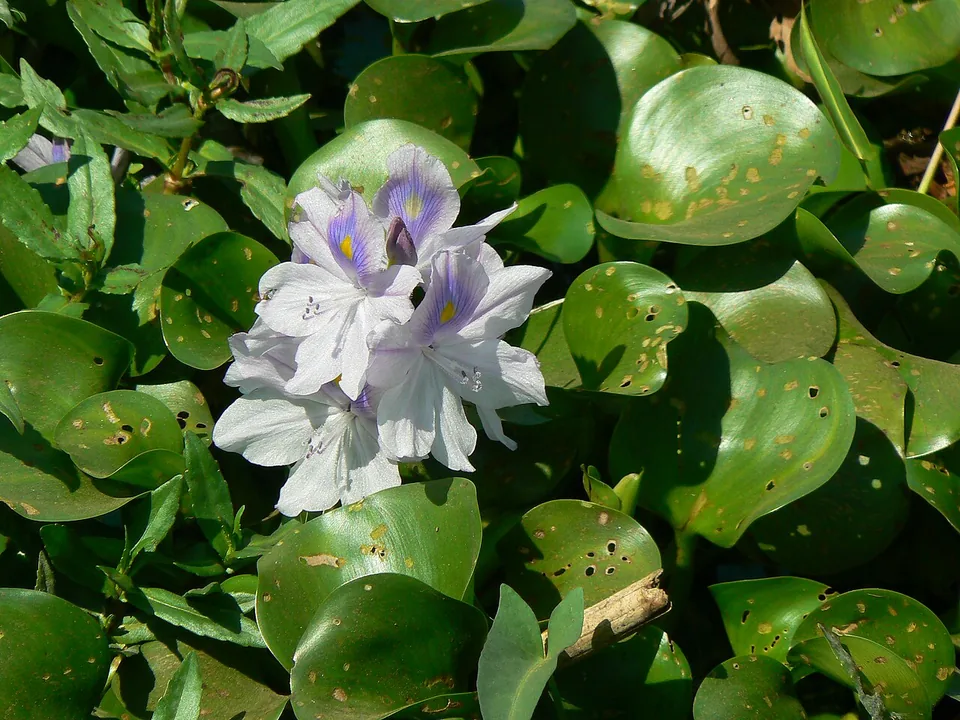
In our own country, invasive weeds are also a danger. Examples are carrot grass (gajar ghaas, Parthenium; Chapters 1 and 11), Lantana and water hyacinth (jalkumbhi, Eichhornia).
Recently the African catfish Clarias gariepinus was brought in illegally for fish farming (aquaculture). It is a danger to the native catfishes of our rivers.
Spelling note: NCERT prints "Eicchornia"; the correct spelling is Eichhornia. In the market, the African catfish is sold as Thai magur.
Partner: what is co-extinction?
Some species have an obligatory (must-have) bond: one cannot live without the other. When one becomes extinct, its partner species also becomes extinct. This is called co-extinction.
First example: when the house falls, its tenants go too. If a host fish species becomes extinct, its own unique parasites are lost with it.
Here the host is the living thing that a parasite lives on or inside, not Chapter 9's DNA factory (Chapters 7 and 11). Just a way to explain: a tenant can find a new house, but a host-specific parasite has no second home.
Second example: a coevolved plant-pollinator mutualism, like Chapter 11's "one fig, one wasp". If one becomes extinct, the other also becomes extinct, invariably.
All four in one table
The NCERT summary states the first cause like this: loss and fragmentation of habitat, especially forests.
| Cause | Meaning | NCERT example |
|---|---|---|
| Habitat loss and fragmentation (Home) | The home is destroyed, spoiled or cut into pieces | Rain forests 14 to 6 per cent; Amazon |
| Over-exploitation (Greed) | Taking more than we need | Steller's sea cow, passenger pigeon, marine fish |
| Alien species invasions (Guest) | Species brought from outside spread widely | Nile perch and cichlids; Parthenium, Lantana, water hyacinth; African catfish |
| Co-extinctions (Partner) | One is lost, and its must-have partner goes too | Host fish and its parasites; plant-pollinator mutualism |
Trick: "Home, Greed, Guest, Partner." Home is the biggest villain.
Try it (from a distance): look at photos of carrot grass and water hyacinth in a book or on the internet. Then try to spot them from far away around you. Do not touch carrot grass: its pollen can cause allergy (Chapter 1: Sexual Reproduction in Flowering Plants).
RiyaSir, over-exploitation is the biggest cause, right? Greed is the worst.
SirNot according to NCERT. The biggest cause is habitat loss and fragmentation. Home comes first.
RiyaAnd in Lake Victoria, the cichlids finished off the Nile perch?
SirThe other way round! The Nile perch was the guest brought in from outside. After it came, more than 200 cichlid species became extinct.
NCERT exercise 5 (main causes of species loss): there are four causes, 'The Evil Quartet':
- Habitat loss and fragmentation, the biggest: rain forests 14 to 6 per cent; Amazon.
- Over-exploitation: Steller's sea cow, passenger pigeon; many marine fish today.
- Alien species invasions: Nile perch led to more than 200 cichlids becoming extinct; Parthenium, Lantana, water hyacinth; African catfish.
- Co-extinctions: a host fish with its parasites; plant-pollinator mutualism.
Don't mix them up: the biggest cause is habitat loss and fragmentation. The Nile perch is the guest, and the cichlids are the victims. Co-extinction needs an obligatory bond, and rain forests fell from 14 to 6 per cent.
Hindi medium? See the Hindi names (tap to open)
| English | Hindi name | Meaning of the pieces |
|---|---|---|
| Habitat | आवास | A place to live |
| Over-exploitation | अतिदोहन | अति = too much, दोहन = milking, taking out |
| Alien species | विदेशी जातियाँ | विदेशी = from outside, जाति = species |
| Extinct / extinction | विलुप्त / विलोपन | Gone forever |
Revise: 5 cards (tap one to flip it)
The Evil Quartet
The 4 big causes of species loss: Home, Greed, Guest, Partner.
Habitat loss and fragmentation
The biggest cause. Rain forests 14 to 6 per cent.
Over-exploitation
'Need' turns to 'greed'. Steller's sea cow, passenger pigeon.
Alien species invasions
Nile perch led to more than 200 cichlids becoming extinct. Parthenium, Lantana, Eichhornia, African catfish.
Co-extinction
An obligatory partner also becomes extinct: parasites of a host fish, plant-pollinator mutualism.
Check yourself
According to NCERT, which is the biggest cause of species loss?
Habitat loss and fragmentation. Home comes first.
The arrival of which species made more than 200 cichlid species in Lake Victoria extinct?
The Nile perch: a guest brought in from outside.
A host fish became extinct, and its parasites were lost too. What is this called?
Co-extinction: when the house falls, its tenants go too. If you got it wrong, no problem. Now you will remember.
The loss report is complete: all four causes are human activities, so they can be recognised and also stopped. That is why Parts 08-09 give the reasons and the ways to save.
In the next part: why should we save biodiversity? Pocket, Services, Duty.
8Why is it important to save biodiversity?
In short: NCERT puts the reasons for saving into three groups. Direct benefits (narrowly utilitarian), nature's free services (broadly utilitarian), and the value of every living thing in itself (the ethical duty). Trick: Pocket, Services, Duty.
Guess firstWhat does one tree give us?
Some benefits come straight into our hands, and some are free services. Both are in this part.
How many kinds of reasons are there to save it?
Some reasons are obvious, and some are not. But NCERT says all of them are equally important.
They fall into three groups: narrowly utilitarian, broadly utilitarian and ethical. Utilitarian means about use or benefit.
Trick: "Pocket, Services, Duty." Pocket = direct benefit, Services = nature's services, Duty = moral responsibility.
Pocket: what is narrowly utilitarian?
Narrowly means direct, close-up benefit. Nature gives us countless direct economic benefits (benefits in money terms). This is the most obvious argument.
- Food (cereals, pulses, fruits), firewood, fibre and building material.
- Industrial products: tannins (chemicals from trees used to make leather) and lubricants (oil that keeps machines smooth).
- Dyes (colours), resins (sticky gum from trees) and perfumes; and products of medicinal importance.
More than 25 per cent of the drugs sold in the world today are made from plants. That means more than 25 out of every 100. The chemicals that work as medicine come from plants.
Native peoples all over the world use 25,000 species of plants in their traditional medicines. This is the knowledge of their ancestors (Chapter 10), and we respect it.
No one knows how many more medicinal plants are waiting to be discovered in the tropical rain forests.
Searching the molecular, genetic and species-level diversity of living things for useful products is 'bioprospecting'. Think of it as searching living things for useful treasure.
The more resources are put into it, the bigger the benefit that countries rich in biodiversity may get. Remember Chapter 10: treasure must be taken with respect and permission. Taking it without asking and without payment is biopiracy.
Services: what is broadly utilitarian?
Broadly means wide, big. This argument says that nature gives us many ecosystem services, and biodiversity plays a big part in them. Think of them as free services that never send a bill.
First service: oxygen. The Amazon forest is shrinking fast. NCERT's estimate: through photosynthesis it makes 20 per cent of the total oxygen in the Earth's atmosphere (20 out of 100).
NCERT asks: can we put an economic value on this service? To make a guess, think of how much your nearby hospital spends on a cylinder of oxygen.
Find out: ask an adult at home, or look on the internet, to find out what one oxygen cylinder costs. Do not go to a hospital and trouble anyone there. Now think: what would be the bill for all the oxygen on Earth?
NCERT vs today: in the exam, write NCERT's number: 20 per cent. Today's estimates are lower: about 6 to 9 per cent of the oxygen made by photosynthesis on Earth. Almost all of it is used up again by the forest's own plants (in respiration) and microbes, but the forest is still very precious.
Second service: pollination (Chapter 1). Without it, plants cannot give us fruits or seeds.
The work is done by pollinators: bees, bumblebees (big, hairy bees), birds and bats.
NCERT asks: what would it cost to do pollination ourselves, if natural pollinators were gone? There is no single fixed answer; discuss it with your teacher.
Some benefits cannot be touched or counted. They are intangible benefits. Examples: a walk in a dense forest, the full spring flowers, or waking up to a bulbul's song (Chapter 11).
These are the pleasures of beauty (aesthetic pleasures). NCERT asks: can we put a price tag on them? It is an open question; discuss it with your teacher.
The NCERT summary lists direct benefits as food, fibre, firewood and pharmaceuticals.
It lists indirect benefits from ecosystem services as pollination and pest control (Chapter 8's biocontrol). Also climate moderation (keeping the weather in balance) and flood control.
Duty: what does the ethical argument say?
We share this Earth with many millions of species (1 million = 10 lakh): plants, animals and microbes. What is our duty towards them?
NCERT says: look at it philosophically or spiritually (in thought and in the heart). Every species has a value of its own: intrinsic value. This is true even if it gives us no economic benefit today or ever.
So it is our moral duty to take care of them. And we must pass on our biological legacy (an inheritance of living things) to future generations in good condition.
Just a way to explain: nature does not ask for money for these services. But if the services stop, we will have to bear the cost. And a duty is not measured in money.
| Argument | In plain words | NCERT examples |
|---|---|---|
| Narrowly utilitarian (Pocket) | Direct economic benefits from nature | Food, wood, fibre, industrial products, medicines; bioprospecting |
| Broadly utilitarian (Services) | Ecosystem services | The Amazon's 20 per cent oxygen, pollination, aesthetic pleasures |
| Ethical (Duty) | Intrinsic value of every species; a moral duty | Handing the biological legacy to the next generation in good condition |
RiyaSir, oxygen and pollination are also direct benefits. So are they narrowly utilitarian?
SirNo. Narrowly means what we take directly: food, wood, medicine. Oxygen and pollination are services of nature: broadly utilitarian.
RiyaAnd a living thing that is of no use to us, do we not need to save it?
SirWe do. The ethical argument says every species has intrinsic value, even if it gives no economic benefit.
NCERT exercise 8 (floods and soil erosion): NCERT gives no direct answer in its text; this is a model answer. The living (biotic) parts of an ecosystem, especially plants, do this work as follows:
- Roots of trees and grass hold the soil together, and the cover of leaves breaks the force of rain. So there is less soil erosion (soil being washed away).
- Fallen leaves and the humus made by decomposers (Chapter 12) soak up water like a sponge. The water flows slowly, so floods are smaller.
NCERT exercise 10 (deliberately removing a species): a model answer. Yes, for example a virus or microbe that makes people ill. Example: the smallpox virus, which immunisation programmes wiped out completely (Chapter 7: Human Health and Disease).
The justification: it caused serious illness and death, and we know of no useful role for it. But a lot of careful thought is needed before removing any species.
The ethical argument says every species has intrinsic value. And one species going can take another with it (co-extinction, Part 07). So this applies only to pathogens (disease-causing germs) that do harm, and only after careful study by scientists.
Why could smallpox be wiped out? There was a vaccine, and the virus lived only in humans. NCERT raises it here as an ethical question: is it right to remove a species?
Fact box: WHO declared smallpox eradicated from the world in 1980. A few samples of its virus are kept safely in two labs.
Don't mix them up: narrowly = direct products (food, wood, medicine); broadly = ecosystem services (oxygen, pollination). Ethical = intrinsic value, not money. And bioprospecting is not biopiracy.
Hindi medium? See the Hindi names (tap to open)
| English | Hindi name | Meaning of the pieces |
|---|---|---|
| Biodiversity | जैव विविधता | जैव = of living things, विविधता = variety |
| Conservation | संरक्षण | Saving, protection |
| Ecosystem | पारितंत्र | One system of living and non-living parts |
| Pollination | परागण | पराग = pollen |
Revise: 6 cards (tap one to flip it)
Narrowly utilitarian
Direct economic benefits: food, wood, fibre, industrial products, medicines.
Medicines from plants
More than 25 per cent of the drugs sold; 25,000 plant species in traditional medicines.
Bioprospecting
Searching molecular, genetic and species-level diversity for useful products.
Broadly utilitarian
Ecosystem services: the Amazon's 20 per cent oxygen, pollination, aesthetic pleasures.
Pollinators
Bees, bumblebees, birds and bats.
Ethical
Intrinsic value of every species; handing the biological legacy on in good condition.
Check yourself
Under which argument does pollination come?
Broadly utilitarian: it is an ecosystem service, a free service of nature.
NCERT: what share of the drugs sold in the market are made from plants?
More than 25 per cent. And 25,000 plant species are used in traditional medicines.
"Every species has a value of its own, even if it gives no benefit." Which argument is this?
Ethical: intrinsic value. If you got it wrong, no problem. Now you will remember.
Now we know why to save it. But how? Should we save the whole forest, or take the endangered animal to a zoo?
In the next part: in situ and ex situ conservation.
9How do we save biodiversity?
In short: there are two ways. Save the living thing's whole home (in situ), or give a living thing in danger special care outside its home (ex situ). Living things do not respect the borders of countries, so all countries also work together.
Guess firstYou want to save the tiger of a forest. What is the best way?
NCERT says: to save the tiger, save the entire forest. That also saves all the other biodiversity of the forest.
What is the difference between in situ and ex situ?
If we save the whole ecosystem, the biodiversity at every level is saved: the entire forest for the tiger. This is called in situ (on site, in its own place) conservation.
But sometimes an animal or a plant is endangered or threatened.
From Part 06: it has a very high risk of extinction in the wild in the near future. If it must be saved at once, ex situ (off site, outside its own place) conservation is the right way.
Think of it like this: in situ = protection at home; ex situ = moving a very sick patient to the ICU. Just a way to explain: a zoo is not a hospital. And NCERT says that some animals now survive only in zoos.
Trick: "In = inside the home; Ex = exit."
Why can't we save everything everywhere at once?
In many countries there is a conflict between development and conservation. Saving all the biological wealth is neither practical nor affordable. There are far too many species to save, and far fewer resources (money, people).
So the world's leading conservationists (experts in saving nature) chose certain special regions for the strongest protection. These are the 'biodiversity hotspots'; this is not a mobile hotspot.
What is a biodiversity hotspot?
Think of hotspots as the richest and most at-risk neighbourhoods. They have very high species richness, and also high endemism.
An endemic species is found only in that region and nowhere else: a village's special sweet that you can get only there. Just a way to explain: you can send the sweet out, but taking an endemic species away does not save its home.
NCERT says there are 34 hotspots in the world: 25 were chosen first, and nine more were added. They were chosen for intensive conservation, because their habitat is also being lost fast.
Three of them cover the richest regions of our country: Western Ghats and Sri Lanka, Indo-Burma and Himalaya.
Trick: "Ghat, Burma, Himalaya."
All the hotspots together cover a very small part of the Earth's land (less than 2 per cent). But they hold a huge number of species. If they are protected strictly, today's mass extinction could come down by almost 30 per cent.
Which areas are protected by law in India?
The regions of India that are unique in ecology and rich in biodiversity are protected by law. First: biosphere reserves.
Second: national parks. Third: wildlife sanctuaries.
The NCERT numbers: 14 biosphere reserves, 90 national parks and 448 wildlife sanctuaries. The summary says sanctuaries are "more than 450".
What is the difference between a national park and a sanctuary? NCERT does not explain it; it only says all three are areas protected by law. Trick: "14-90-448."
Not in NCERT: in short, human activities are stopped more strictly in a national park, and a sanctuary allows a few exceptions.
NCERT vs today: in the exam, write NCERT's number. Today's numbers are higher, because the lists grew later:
| Exam (NCERT) | Today | |
|---|---|---|
| Hotspots in the world | 34 | 36 |
| Hotspots in India | 3 | 4 (Nicobar Islands too) |
| Biosphere reserves | 14 | 18 |
Government data of November 2023 shows 106 national parks and 573 wildlife sanctuaries.
What are sacred groves?
India has a long history of religious and cultural traditions that stressed the protection of nature. In many cultures, some patches of forest were set apart.
People held every tree and every animal there as sacred (pavitra), and gave them full respect. They got total protection: no cutting of trees, no hunting.
Such patches of forest are called sacred groves (pavitra van). Just a way to explain: here the protection came from the people's tradition, not from a law.
| Where the sacred groves are | State (according to NCERT) |
|---|---|
| Khasi and Jaintia Hills | Meghalaya |
| Aravalli Hills | Rajasthan |
| Western Ghat regions | Karnataka and Maharashtra |
| Sarguja, Chanda and Bastar | Madhya Pradesh |
In Meghalaya, the sacred groves are the last refuges of many rare and threatened plants.
NCERT vs today: in the exam, write NCERT's name: Madhya Pradesh. Today Sarguja and Bastar are in Chhattisgarh (formed in 2000), and Chanda is Chandrapur district in Maharashtra.
Fact box (not in NCERT): some local names for sacred groves: devrai in Maharashtra, devarakadu in Karnataka, oran in Rajasthan.
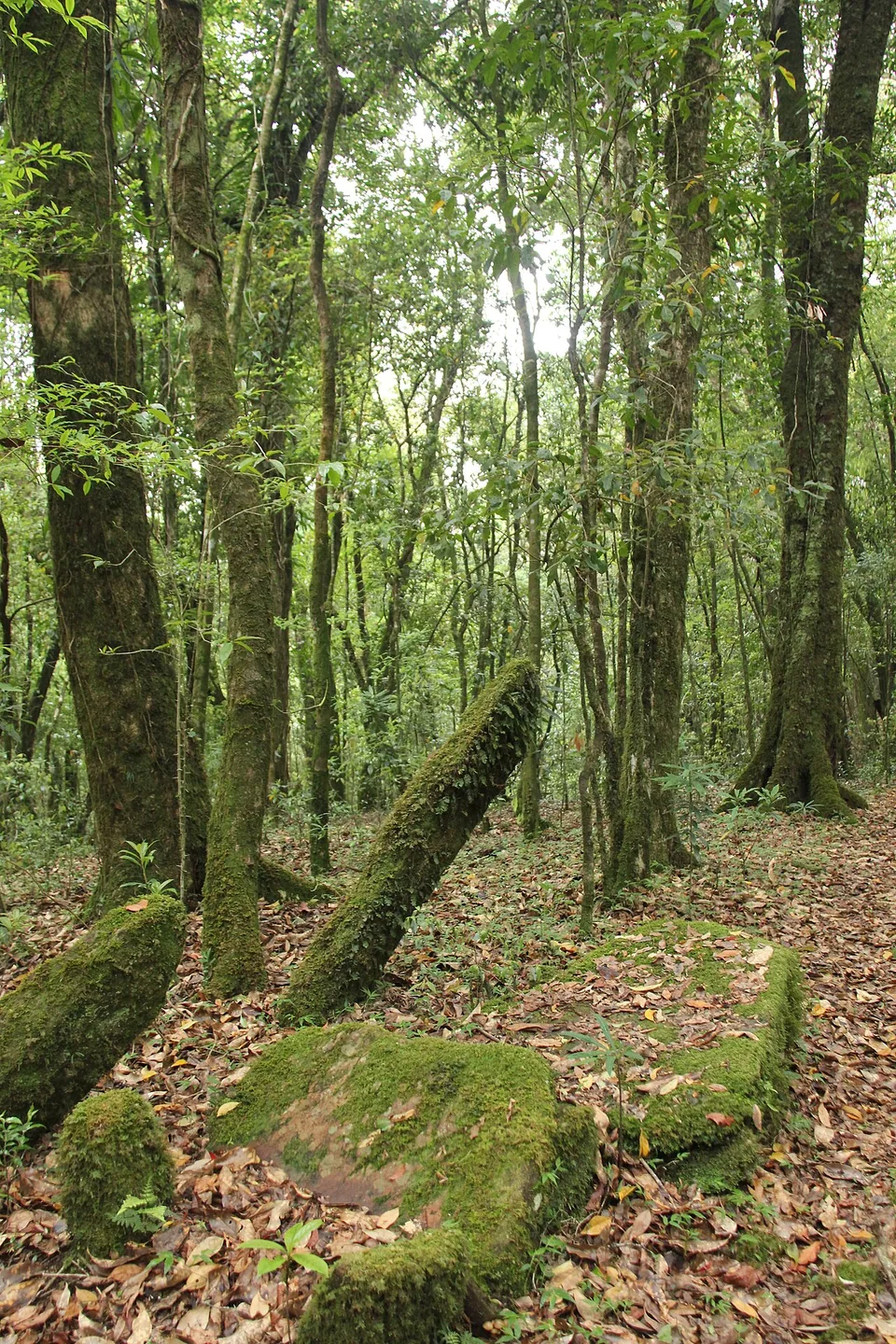
What happens in ex situ conservation?
Threatened animals and plants are taken out of their natural habitat and kept in special places, where they get protection and special care.
This is done by zoological parks (zoos) and botanical gardens (special gardens of plants).
Wildlife safari parks do this too. Many animals are extinct in the wild, but still live in zoos.
Today ex situ is not limited to enclosures. The gametes of threatened species are also saved.
Gametes are the sperm and egg of Chapter 2 (Human Reproduction). The new ways are:
- Cryopreservation: keeping gametes alive for a long time in a very cold freezer (like Chapter 1's pollen bank).
- Fertilising eggs in vitro (in a lab; Chapter 3's IVF).
- Growing plants by tissue culture (Chapter 10).
- Keeping seeds of different genetic strains of useful plants in seed banks (a locker for seeds).
Just a way to explain: a home freezer is not cold enough (Chapter 1: liquid nitrogen). NCERT Chapter 13 does not give the temperature.
| In situ | Ex situ | |
|---|---|---|
| Where | In the living thing's own natural home | Outside its natural home, in a special place |
| When | When the whole ecosystem is to be saved | When the living thing is threatened and quick action is needed |
| NCERT examples | Hotspots; biosphere reserves, national parks, sanctuaries; sacred groves | Zoological parks, botanical gardens, safari parks; cryopreservation, in vitro fertilisation, tissue culture, seed banks |
What are the countries of the world doing together?
Biodiversity does not stop at borders. Like air and rivers, living things do not see the borders between countries. So saving it is the shared responsibility of all countries.
In 1992, in Rio de Janeiro, the historic Convention on Biological Diversity took place. NCERT calls it 'The Earth Summit'.
It asked all countries to save biodiversity, and to use its benefits by sustainable utilisation. That means using it in a way that keeps it alive for the future.
Strictly, the Earth Summit was the name of the big Rio meeting, and countries signed the convention there. In the exam, write it as NCERT does.
As a follow-up, in 2002 the World Summit on Sustainable Development (WSSD) was held in Johannesburg (South Africa). There 190 countries promised to achieve, by 2010, a significant reduction in today's rate of biodiversity loss, at global, regional and local levels.
Trick: "92 Rio, 02 Johannesburg, target 2010."
NCERT vs today: in the exam, write NCERT's number: 2010. This target and the next one, for 2020, were not met. So in 2022 countries agreed on the Kunming-Montreal plan: protect 30 per cent of land and sea by 2030.
Look it up: find the national parks and wildlife sanctuaries of your state, on a map or the internet.
RiyaSir, living things are kept safe in a sacred grove, so is it ex situ?
SirNo. A sacred grove is a patch of the forest itself, and the living things are safe in their own home. It is in situ.
RiyaAnd the Earth Summit was held in Johannesburg in 2002?
SirThe other way round! The Earth Summit was in 1992, in Rio. In 2002, the World Summit on Sustainable Development was held in Johannesburg.
NCERT exercise 7 (sacred groves): in many cultures, some patches of forest were set apart. All the trees and animals there were held sacred and were given total protection: these are sacred groves.
- Where: Khasi and Jaintia Hills (Meghalaya), Aravalli Hills (Rajasthan), Western Ghat (Karnataka, Maharashtra). And Sarguja, Chanda, Bastar (Madhya Pradesh, according to NCERT).
- Role: they save a whole patch of forest in its own place (in situ). In Meghalaya they are the last refuges of many rare and threatened plants.
Don't mix them up: in situ = in its own home (hotspots, protected areas, sacred groves). Ex situ = outside its home (zoos, botanical gardens, safari parks, cryopreservation, seed banks). NCERT: 34 hotspots, 3 in India; Earth Summit 1992 Rio, WSSD 2002 Johannesburg.
Hindi medium? See the Hindi names (tap to open)
| English | Hindi name | Meaning of the pieces |
|---|---|---|
| Endemic | स्थानिक | स्थान = place; found only in that place |
| National park | राष्ट्रीय उद्यान | राष्ट्र = nation, उद्यान = garden |
| Wildlife sanctuary | वन्यजीव अभयारण्य | अभय = without fear, अरण्य = forest |
| Sacred groves | पवित्र उपवन | उपवन = a small forest |
| Zoological park / botanical garden | प्राणि उद्यान / वानस्पतिक उद्यान | प्राणि = animal, वनस्पति = plants |
| Seed bank | बीज बैंक | बीज = seed |
Revise: 5 cards (tap one to flip it)
In situ vs ex situ
In situ: in its own place (the whole forest). Ex situ: special care outside (zoo, seed bank, cryopreservation).
Biodiversity hotspots
Many species, high endemism, habitat being lost fast. 25 + 9 = 34; 3 in India.
India's 3 hotspots
Western Ghats and Sri Lanka, Indo-Burma, Himalaya.
14-90-448
Biosphere reserves, national parks, wildlife sanctuaries (NCERT).
Earth Summit and WSSD
1992 Rio; 2002 Johannesburg: 190 countries, slow the rate of loss by 2010.
Check yourself
Which of these is ex situ conservation?
Seed bank: seeds kept outside their own place, in a locker. The other two are in situ.
According to NCERT, how many biodiversity hotspots are there in the world, and how many in India?
34 and 3 (NCERT). 36 and 4 is today's list; in the exam, write NCERT's.
When and where was the Earth Summit held?
1992, Rio de Janeiro. If you got it wrong, no problem. Now you will remember.
The chapter is complete! From the 3 levels to the agreements of the world.
In the next part: a quick revision of the whole chapter and all 10 NCERT exercises.
10Quick revision: the night before the exam
In short: the whole chapter on one screen: levels, species counts, patterns, stability, loss and its 4 causes, and ways to save. Plus the numbers, NCERT vs today, the in-text questions, all 10 exercises and the common mistakes.
What is in this book, and what is not?
- The 2026-27 NCERT has two sections: 13.1 Biodiversity and 13.2 Biodiversity Conservation.
- 13.1 covers how many species, patterns, the importance of species diversity, and the 4 causes of loss. 13.2 covers why we save and how.
- Some things from older guides are not in this book (see "Common mistakes" below). Write NCERT's own words.
Biodiversity and the 3 levels (Part 01)
- NCERT begins like this: even an imaginary alien from a distant galaxy would be amazed by the variety of life on Earth.
- An ordinary person finds it hard to believe: more than 20,000 species of ants, and 3,00,000 (300,000) of beetles. 28,000 species of fishes and nearly 20,000 species of orchids.
- In the biosphere (the part of the Earth with life), the variety (heterogeneity) is not only at the species level but at every level.
- It runs from macromolecules to biomes (Chapter 11's zoom-out).
- Biodiversity = the combined diversity at all these levels. The sociobiologist Edward Wilson made this word popular.
- The three most important levels: "G-S-E" (small to big).
| Level | Meaning | NCERT example |
|---|---|---|
| Genetic diversity | Differences inside one species (different kinds of the same mango) | Rauwolfia vomitoria: in different Himalayan ranges, the potency and concentration of reserpine differ |
| Genetic diversity (India) | Many strains or varieties of one species | More than 50,000 genetically different strains of rice; 1,000 varieties of mango |
| Species diversity | Variety at the species level (different fruits in one basket) | The Western Ghats have more amphibian species than the Eastern Ghats |
| Ecological diversity | Variety at the ecosystem level (the different homes of living things) | India has more ecosystem diversity than Norway; India's 7 ecosystems are listed below |
- India's ecosystems (the NCERT list): deserts, rain forests and mangroves.
- Then coral reefs and wetlands.
- And estuaries and alpine meadows.
- This variety came from millions of years of evolution. If species keep being lost at today's rate, we may lose this wealth in less than 200 years.
- So biodiversity and its conservation are a worldwide concern today: they matter for our survival and well-being.
- Summary: conservation is to save the diversity at all three levels.
How many species are there? (Part 02)
- We know how many species are recorded (published records). We do not know how many there are on Earth in all.
- IUCN (International Union for Conservation of Nature and Natural Resources), 2004: slightly more than 1.5 million (15 lakh) plant and animal species described.
- The estimates differ a lot, and many are only educated guesses. For many groups, species inventories (counted lists) are more complete in temperate countries.
- And most of the unknown species are in the tropics.
- The method (exercise 2): find the ratio of temperate to tropical species richness for one exhaustively studied group of insects. Then extrapolate it to other animals and plants (apply the same ratio).
- Extreme estimates: 20 to 50 million (2 to 5 crore). Robert May's sound estimate: about 7 million (70 lakh).
- Trick: "One and a half named, seven real." Summary: nearly 6 million (60 lakh) species are still waiting to be discovered and named.
- "70-70": more than 70 per cent of recorded species are animals, and more than 70 per cent of animals are insects. That is, 7 out of every 10 animal species are insects.
- Plants are no more than 22 per cent; they include bryophytes, gymnosperms and angiosperms.
- NCERT also counts algae and fungi as plants in this count.
- The fungi species are more than the fishes, amphibians, reptiles and mammals put together.
- In the summary NCERT adds birds too: all the vertebrates.
- Fig 13.1 has three pie charts, with no numbers. In invertebrates the insect slice is the biggest; in vertebrates fishes are nearly half; in plants fungi and angiosperms are the biggest.
- Prokaryotes (like bacteria) are not in this count. Many of their species cannot be grown in a lab (not culturable).
- Conventional taxonomic methods do not suit microbes. By biochemical or molecular criteria, their diversity alone could run into millions.
How rich is India? (Part 02)
- India has only 2.4 per cent of the world's land area, but 8.1 per cent of its species. So India is one of the 12 mega diversity countries. Trick: "2.4 land, 8.1 life, 12 mega."
- India has nearly 45,000 species of plants and twice as many (90,000) animal species recorded.
- By May's reckoning, only 22 per cent of species have been recorded so far. So India may have more than 1,00,000 (100,000) plant and more than 3,00,000 (300,000) animal species still unknown.
- To complete the inventory we need many trained taxonomists (people who identify and name living things) and a lot of time.
- Many species may become extinct before they are discovered. NCERT's picture: nature's biological library is burning, before the titles of its books are written down.
Where are there more species? (Part 03)
- Diversity is not equal everywhere. The best known pattern is the latitudinal gradient. Species diversity falls as we go from the equator towards the poles.
- With very few exceptions, the tropics (23.5° N to 23.5° S) have more species than temperate or polar regions.
| Place | Latitude | Bird species |
|---|---|---|
| Colombia | Near the equator | Nearly 1,400 |
| India | Mostly tropical | More than 1,200 |
| New York | 41° N | 105 |
| Greenland | 71° N | Only 56 |
- A tropical forest in Ecuador (NCERT prints "Equador") has up to 10 times the vascular plants of a same-size Midwest USA forest.
- The Amazonian rain forest (South America) has the greatest biodiversity on Earth: more than 40,000 plants, 3,000 fishes, 1,300 birds, 427 mammals.
- The Amazon also has 427 amphibians, 378 reptiles, and more than 1,25,000 (125,000) invertebrates. At least two million (20 lakh) insect species are still unknown.
- Why more species in the tropics? Three hypotheses (suggested reasons): "Time, Weather, Sunlight."
- (a) Time: speciation is a function of time. Temperate regions were hit again and again by glaciations (ice ages); the tropics stayed free of big changes for millions of years.
- (b) Weather: the tropics are less seasonal, more constant and predictable. Such an environment promotes niche specialisation, and so more species.
- (c) Sunlight: more solar energy means more productivity. This might indirectly mean more diversity.
If the area grows, do species grow? (Part 04)
- The German naturalist and geographer Alexander von Humboldt walked through South American jungles and saw this. As the explored area of a region grows, species richness grows, but only up to a limit.
- For many taxa (angiosperm plants, birds, bats, freshwater fishes) the graph is a rectangular hyperbola. It rises fast at first, then turns nearly flat.
- On a logarithmic scale it becomes a straight line: log S = log C + Z log A. In Fig 13.2 the curve is labelled S = CAZ.
| Symbol | Meaning |
|---|---|
| S | Species richness (how many species in the region) |
| A | Area |
| Z | Slope of the line (regression coefficient): how steeply a hill road climbs |
| C | Y-intercept: where the line meets the Y-axis (at A = 1, S = C) |
| log | "Count the zeros": log 1 = 0, log 10 = 1, log 100 = 2, log 1000 = 3 (not Chapter 11's ln) |
- Z is about 0.1 to 0.2, whatever the group or region: plants in Britain, birds in California, molluscs in New York state.
- For very large areas like entire continents the slope is very steep: Z = 0.6 to 1.2. For example, frugivorous (fruit-eating) birds and mammals in the tropical forests of different continents: 1.15.
- Trick: "Small region, small Z (0.1-0.2); big continent, big Z (0.6-1.2)." A steep slope means species rise very fast as the area grows.
More species, more stable? (Part 05)
- Does the number of species in a community affect how an ecosystem works? Ecologists have no firm answer. For decades people believed: more species, more stable.
- A stable community: little change in productivity from year to year, and resistant or resilient against disturbances (natural or man-made).
- It also resists invasions by alien species. Trick: "Few ups and downs, takes the shock, keeps outsiders out."
- David Tilman's long-term outdoor plots: plots with more species had less year-to-year change in total biomass, and more productivity. The answers are tentative.
- Summary: communities with high diversity are less variable, more productive and more resistant to biological invasions.
- Rich biodiversity is very important (imperative) for the health of ecosystems and for human survival.
- The 3 NCERT questions: what if some species go? What if a tree frog of the Western Ghats goes? What if there were 15,000 ant species instead of 20,000? No direct answer.
- The Stanford ecologist Paul Ehrlich's 'rivet popper hypothesis': the airplane = the ecosystem, the rivets = species. Each passenger pulls out one rivet = one species goes extinct.
- At first it makes no difference, but if rivets keep going, the plane becomes dangerously weak. Wing rivets = key species; losing them is more serious than losing rivets of seats or windows.
How much has been lost? (Part 06)
- It is doubtful whether new species are being added (by speciation); there is no doubt about the loss. The reason: human activities.
- It is said that more than 2,000 species of native birds became extinct after humans settled on the tropical Pacific Islands.
- IUCN Red List (2004): 784 species became extinct in the last 500 years. Trick: "784 = 338 + 359 + 87" (vertebrates + invertebrates + plants). The summary says "nearly 700".
| Recent extinctions | Where |
|---|---|
| Dodo | Mauritius |
| Quagga | Africa |
| Thylacine | Australia |
| Steller's Sea Cow | Russia |
| 3 subspecies of tiger | Bali, Javan, Caspian |
- In the last twenty years alone, 27 species were lost (by the 2004 list). Extinctions are not random: groups like amphibians are more vulnerable (easily put in danger).
- More than 15,500 species in the world are threatened; the summary says more than 650 of them are from India.
- Threatened or endangered = a very high risk of extinction in the wild in the near future (NCERT gives both one meaning).
- Threatened: 12 per cent of birds, 23 per cent of mammals, 32 per cent of amphibians, 31 per cent of gymnosperms. Trick: "Birds 12, mammals 23, flip it for amphibians 32, one less for gymnosperms 31."
- Fossils tell us: in the more than 3 billion (300 crore) years since life began, there were 5 mass extinctions, even before humans.
- Summary: life began nearly 3.8 billion (380 crore) years ago. The 'Sixth Extinction' differs in speed: 100 to 1,000 times faster today, because of our activities.
- Trick: "Five before, the sixth now; the difference is speed".
- If this trend continues, nearly half the species might be lost within the next 100 years (NCERT says "might"). That is why Parts 08-09 give ways to save.
- 3 effects of loss: (a) a decline in plant production; (b) less resistance to environmental perturbations such as drought.
- (c) More ups and downs in some ecosystem processes: plant productivity, water use, and pest and disease cycles.
The Evil Quartet: Home, Greed, Guest, Partner (Part 07)
| Cause | NCERT examples |
|---|---|
| Habitat loss and fragmentation (the biggest) | Rain forests: more than 14 per cent of the land before, no more than 6 per cent now; 1000 more hectares gone by chapter's end |
| Amazon ('lungs of the planet') | Being cleared for soya beans and for grassy fields for beef cattle |
| Degradation | A spoiled habitat, for example by pollution, is also a danger |
| Effect of fragmentation | Mammals and birds that need large territories, and migratory animals; their populations decline |
| Over-exploitation | 'Need' turns to 'greed': Steller's sea cow, passenger pigeon; many marine fish are over harvested today |
| Alien species invasions | Nile perch in Lake Victoria: more than 200 cichlid fish species became extinct |
| Invasive weeds and fish | Carrot grass (Parthenium), Lantana, water hyacinth (Eichhornia); African catfish Clarias gariepinus |
| Co-extinctions | A host fish with its own parasites; a coevolved plant-pollinator pair |
Why save it: Pocket, Services, Duty (Part 08)
| Argument | What it says |
|---|---|
| Narrowly utilitarian (Pocket) | Direct economic benefits: food, wood, fibre, building material, medicines |
| Industrial products | Tannins, lubricants, dyes, resins, perfumes |
| Medicines and bioprospecting | More than 25 per cent of the drugs sold come from plants; 25,000 plant species are used in the traditional medicines of native peoples |
| Broadly utilitarian (Services) | Ecosystem services: the Amazon makes 20 per cent of the total oxygen; pollination |
| Pollinators | Bees, bumblebees, birds and bats |
| Intangible benefits | Aesthetic pleasures: a dense forest, spring flowers, a bulbul's song in the morning |
| Ethical (Duty) | Intrinsic value of every species; the biological legacy goes to the next generation in good condition |
- Bioprospecting = searching molecular, genetic and species-level diversity for things of economic importance. It is not biopiracy.
- Summary: direct benefits include pharmaceuticals too. Ecosystem services include pollination, pest control, climate moderation and flood control.
How to save it: in situ vs ex situ (Part 09)
- In situ (on site): save the whole ecosystem, the entire forest for the tiger. Ex situ (off site): special care outside for a threatened living thing. Trick: "In = inside the home; Ex = exit."
- There is a conflict between development and conservation: saving all the wealth is not possible. So the conservationists chose 'biodiversity hotspots'.
- A hotspot has very high species richness and very high endemism (species found only there); its habitat is also being lost fast.
- First 25, then nine more: 34 in all. India has 3: "Ghat, Burma, Himalaya" (Western Ghats and Sri Lanka, Indo-Burma, Himalaya).
- All hotspots together are less than 2 per cent of the land, but hold a great many species. Strict protection could cut mass extinctions by almost 30 per cent.
- India's areas protected by law: 14 biosphere reserves, 90 national parks, 448 wildlife sanctuaries (summary: more than 450). Trick: "14-90-448." NCERT does not explain the difference between them.
- Sacred groves: patches of forest where all the trees and animals were held sacred and got total protection.
- Where the sacred groves are: Khasi and Jaintia Hills (Meghalaya), Aravalli Hills (Rajasthan), Western Ghat (Karnataka, Maharashtra), Sarguja, Chanda, Bastar (Madhya Pradesh, according to NCERT).
- In Meghalaya they are the last refuges of rare and threatened plants.
- Ex situ: zoological parks, botanical gardens and wildlife safari parks. Many animals are extinct in the wild, but alive in zoos.
- New ways: cryopreservation (a very cold freezer) of the gametes of threatened species.
- Gametes = sperm and egg (Chapter 2).
- In vitro fertilisation of eggs; propagation of plants by tissue culture.
- Seeds of genetic strains of commercially important plants go into seed banks.
Agreements of the world (Part 09)
- Biodiversity does not stop at borders, so conservation is the shared responsibility of all countries.
- 1992, Rio de Janeiro: the Convention on Biological Diversity ('The Earth Summit').
- It said: all countries should save biodiversity, and use its benefits by sustainable utilisation.
- 2002, Johannesburg (South Africa): World Summit on Sustainable Development (WSSD). The promise of 190 countries: by 2010, a significant reduction in the rate of biodiversity loss, at global, regional and local levels.
- Trick: "92 Rio, 02 Johannesburg, target 2010."
The NCERT summary, in 2 lines
Life began nearly 3.8 billion years ago, and has diversified a lot since. Biodiversity is the diversity at every level, especially genetic, species and ecosystem. More than 1.5 million are recorded and nearly 6 million remain; there are more in the tropics and in larger areas.
Today extinction is 100 to 1,000 times faster, because of the Evil Quartet. The reasons to save are narrowly utilitarian, broadly utilitarian and ethical; the ways are in situ and ex situ.
Numbers in one table
| Number | Meaning |
|---|---|
| 20,000+ / 3,00,000 / 28,000 / 20,000 | Species: ants / beetles / fishes / orchids (nearly) |
| 50,000+ / 1,000 | India: genetic strains of rice / varieties of mango |
| Less than 200 years (two centuries) | The wealth could be lost in this time at today's rate |
| 1.5 million (15 lakh) | Described species (IUCN 2004) |
| 20-50 million / 7 million | Extreme estimates / Robert May's estimate |
| 6 million (60 lakh) | Still waiting to be discovered (summary) |
| 70+ / 70+ / 22 | Per cent: animals / insects (of animals) / plants (at most) |
| 2.4 / 8.1 / 12 | India: per cent of land / per cent of species / mega diversity countries |
| 45,000 / 90,000 | India: plant / animal species recorded |
| 22 per cent | Recorded so far (by May's reckoning) |
| 1,00,000+ / 3,00,000+ | Unknown plant / animal species in India |
| 23.5° N to 23.5° S | The tropics |
| 1,400 / 1,200+ / 105 / 56 | Bird species: Colombia / India / New York (41° N) / Greenland (71° N) |
| Up to 10 times | Ecuador vs Midwest USA: vascular plants |
| 40,000+ / 3,000 / 1,300 | Amazon: plants / fishes / birds |
| 427 / 427 / 378 | Amazon: mammals / amphibians / reptiles |
| 1,25,000+ / 2 million | Amazon: invertebrates / unknown insect species |
| 0.1-0.2 / 0.6-1.2 / 1.15 | Z: within a region / continents / frugivorous birds and mammals |
| 20,000 vs 15,000 | NCERT's question about ant species |
| 2,000+ | Extinct bird species of the Pacific Islands |
| 784 = 338 + 359 + 87 | IUCN 2004: extinct in 500 years (vertebrates + invertebrates + plants) |
| 27 | Species extinct in the last 20 years |
| 15,500+ / 650+ | Threatened species in the world / the Indian ones among them |
| 12 / 23 / 32 / 31 | Per cent threatened: birds / mammals / amphibians / gymnosperms |
| 3 billion+ / 3.8 billion / 5 | Time since life began / start of life (summary) / mass extinctions |
| 100-1,000 times / half, 100 years | Speed of extinction today / the loss if the trend continues |
| 14 → 6 per cent / 1000 hectares | Land under rain forests / loss by the time you finish the chapter |
| 200+ / 500 years | Cichlids of Lake Victoria / time span of the over-exploitation extinctions |
| 25 per cent+ / 25,000 / 20 per cent | Drugs from plants / plants in traditional medicine / the Amazon's oxygen |
| 25 + 9 = 34 / 3 / 2 / 30 | Hotspots / in India / less than 2 per cent of land / per cent less extinction |
| 14 / 90 / 448 | Biosphere reserves / national parks / wildlife sanctuaries |
| 1992 / 2002 / 190 / 2010 | Earth Summit / WSSD / countries / target |
NCERT vs today
In the exam, write NCERT's number; this is only today's information.
| NCERT's line | Today |
|---|---|
| Rauwolfia vomitoria, Himalaya | India's medicinal sarpagandha is Rauvolfia serpentina; R. vomitoria is an African plant (Part 01) |
| 1.5 million described | Today more than 2 million (20 lakh) have been named (Part 02) |
| 12 mega diversity countries | Today's usual list has 17 megadiverse countries; India is among them (Part 02) |
| 15,500+ threatened (2004) | IUCN July 2026: 1,75,909 (175,909) species assessed, 49,505 threatened (Part 06) |
| Amazon 20 per cent oxygen | Today's estimate is 6-9 per cent, and nearly all of it is used up again there (Part 08) |
| 34 hotspots, 3 in India | 36 today; with Nicobar (Sundaland) India has 4 (Part 09) |
| 14 / 90 / 448 | Today 18 biosphere reserves (13 in the UNESCO list); Nov 2023: 106 national parks, 573 sanctuaries (Part 09) |
| Sarguja, Chanda, Bastar: Madhya Pradesh | Sarguja and Bastar are now in Chhattisgarh; Chanda = Chandrapur, Maharashtra (Part 09) |
| Reduce loss by 2010 | Not met; the 2022 Kunming-Montreal framework: 30 per cent of land and sea by 2030 (Part 09) |
| "Equador", "Eicchornia" | Correct spelling: Ecuador, Eichhornia (Parts 03, 07) |
- Two numbers inside NCERT itself: 50,000 strains of rice (here) vs 2 lakh (200,000) varieties (Chapter 10). Use the number of the chapter the question is from.
- Life: more than 3 billion (text), 3.8 billion (summary), nearly 4 billion (Chapter 6). For this chapter's questions, 3.8 billion.
In-text questions, in one line each
- The first 6 questions: why so many species, were they always there, how did they come about? Why they matter for the biosphere, what if they decrease, what the benefit is for humans (Parts 02-08)?
- Why are insects so diverse? See the model answer to exercise 9 (Part 02).
- How many species are unknown? In India more than 1 lakh (100,000) plants and more than 3 lakh (300,000) animals (Part 02).
- Will the inventory ever be complete? It needs many taxonomists and time; many species may be lost before that (Part 02).
- What is special about the tropics? Time, Weather, Sunlight (Part 03).
- What does a steep slope mean? Species rise very fast as the area grows; a model answer, discuss it with your teacher (Part 04).
- Does the number of species affect how an ecosystem works? No firm answer; Tilman's tentative answers (Part 05).
- What is stability? Few ups and downs, takes the shock, keeps outsiders out (Part 05).
- Would losing a few species, a tree frog, or 5,000 ant species make a difference? No direct answer; the rivet popper (Part 05).
- How is the Sixth Extinction different? Speed: 100-1,000 times faster (Part 06).
- The price of oxygen? Find out the cost of one oxygen cylinder (Part 08).
- The cost of pollination without pollinators? And a price tag for a bulbul's song? Open questions; discuss them with your teacher (Part 08).
All 10 NCERT exercises
- Genetic diversity (Rauwolfia, rice, mango), species diversity (amphibians of the Western vs Eastern Ghats), ecological diversity (India vs Norway) (Part 01).
- Temperate inventories are more complete. Find the temperate-tropical ratio of a fully counted insect group and extrapolate it to other groups. Extreme 20-50 million, May about 7 million (Part 02).
- (a) The tropics had a long evolutionary time, with no repeated glaciations for millions of years. (b) Less seasonal, constant environment gives niche specialisation. (c) More solar energy, more productivity (Part 03).
- Z is the slope of the line of log S vs log A: how fast species richness rises with area. 0.1-0.2 within a region; 0.6-1.2 for continents, such as 1.15 (Part 04).
- The Evil Quartet: habitat loss and fragmentation (the biggest), over-exploitation, alien species invasions, co-extinctions; an example of each is in the table above (Part 07).
- Rich diversity = a stable community: few ups and downs, resistant or resilient, protected from alien invasions. Tilman's plots, and the rivet popper: losing key species is the most serious (Part 05).
- Sacred groves: patches of forest held sacred and given total protection; places are listed above. Role: in situ protection; in Meghalaya, the last refuges of rare and threatened plants (Part 09).
- A model answer: roots hold the soil; the cover of plants breaks the force of rain; leaves and humus soak up water. The water flows slowly: fewer floods and less soil erosion (Part 08).
- A model answer: animals can move, and have taken up new homes and ways of living; by behaviour they use one place in different ways. Insects are small, have quick generations, many young and wings, and many eat only one kind of plant. Plants stay in one place, and all need the same light, water and minerals; so there are fewer ways to become different (Part 02).
- A model answer: yes, such as the smallpox virus that makes people ill, which was wiped out by immunisation. But only harmful microbes, with careful thought; every species has intrinsic value (Part 08).
In exercise 9, NCERT writes 72 per cent for animals, while the text says "more than 70". The answers to exercises 8, 9 and 10 are not given directly in the NCERT text; these are model answers.
Common mistakes
- Thinking biodiversity is only the number of species. It is genetic, species and ecological: all three levels.
- Writing 50,000 strains of rice as 50,000 species. Strains of one species = genetic diversity.
- Swapping 1.5 million and 7 million. 1.5 million is recorded (IUCN 2004), 7 million is May's estimate.
- Swapping 2.4 and 8.1. 2.4 per cent of land, 8.1 per cent of species.
- Writing that insects are 70 per cent of all life. They are 70 per cent of animal species.
- Writing that diversity rises towards the poles. It falls. And New York 105, Greenland 56.
- Writing Z as the intercept and C as the slope. Z = slope (regression coefficient), C = Y-intercept.
- Writing 0.1-0.2 for continents. Continents 0.6-1.2; inside one region 0.1-0.2.
- Thinking resistant and resilient mean the same. Resistant = does not shake at all; resilient = shakes, then comes back.
- Writing vertebrates as the biggest group in 784. Invertebrates, 359, are the most.
- Writing the Sixth Extinction as "the first time". Five happened before; the difference is speed.
- Writing over-exploitation as the biggest cause. The biggest is habitat loss and fragmentation.
- Writing the cichlids as the invader. The Nile perch is the invader, and the cichlids are the victims.
- Writing pollination as narrowly utilitarian. It is an ecosystem service: broadly utilitarian.
- Writing a sacred grove or a hotspot as ex situ. Both are in situ; zoos and seed banks are ex situ.
- Writing today's 36 hotspots and India's 4 in the exam. NCERT: 34 and 3.
- Writing the Earth Summit as 2002 Johannesburg. The Earth Summit is 1992 Rio; WSSD is 2002 Johannesburg.
- Studying the IUCN category lists of older guides (like critically endangered), Bishnoi, Chipko or "keystone species". These are not in this book; NCERT says "key species".
11Self-check: 10 quick questions
How it works: tap an answer. You will see at once if it is right, with a one-line reason.
Q1.The three levels of biodiversity that NCERT calls most important are:
Genetic, species and ecological diversity.
Q2.According to IUCN (2004), the species described so far number slightly more than:
1.5 million. Robert May's estimate for all species on Earth is about 7 million.
Q3.India has 2.4 per cent of the world's land area. Its share of global species diversity is:
8.1 per cent, which makes India one of the 12 mega diversity countries.
Q4.In the species-area relationship, the slope Z usually lies between:
0.1 to 0.2. For very large areas like whole continents, the slope is steeper (0.6 to 1.2).
Q5.The 'rivet popper hypothesis' was given by:
Paul Ehrlich, a Stanford ecologist: species are like the rivets that hold an airplane together.
Q6.The IUCN Red List (2004) documents how many extinctions in the last 500 years?
784 species: 338 vertebrates, 359 invertebrates and 87 plants.
Q7.Which of these is NOT part of the 'Evil Quartet'?
Seed banks save species. The fourth cause of loss is co-extinction.
Q8.The Nile perch introduced into Lake Victoria led to the extinction of:
More than 200 species of cichlid fish: an example of an alien species invasion.
Q9.Which is an example of ex situ conservation?
A seed bank. National parks, sacred groves and biosphere reserves protect species in their own home (in situ).
Q10.NCERT says the world has how many biodiversity hotspots, and how many cover India?
34 hotspots; 3 cover India: Western Ghats and Sri Lanka, Indo-Burma, and Himalaya.
Tap an answer to check it.
Words to know
Tip: any word with a dotted line under it is explained here too. Tap one in the notes to see its meaning without leaving your place.
All 395 words, A to Z
- Abingdon tortoise
- A giant tortoise of Abingdon Island (now Pinta Island) in the Galapagos. NCERT says it died out within about ten years after goats were brought to the island, as the goats ate the plants better; its last known member, 'Lonesome George', died in 2012.
- Abiotic
- Non-living. The abiotic parts of a living thing's surroundings are things like sunlight, water, soil and heat (physico-chemical factors); wind and water are the abiotic carriers of pollen. Abiotic stresses are non-living troubles for crops, such as cold, drought, salt and heat.
- Acquired immunity
- The defence the body builds up during life after meeting a germ. It is specific to each germ and has memory: the first meeting gives a weak response, the next one a much faster, stronger one. It works through B cells (antibodies) and T cells.
- Adaptive radiation
- When many kinds of living things arise from one starting kind in one area, each suited to a different habitat. It is like brothers of one family settling in different cities.
- Adenine (A)
- One of the four bases (letters) of DNA, written A. It is a purine. In DNA it pairs with thymine (T) by two hydrogen bonds; in RNA it pairs with uracil (U).
- African catfish (Clarias gariepinus)
- A big catfish from Africa, sold in India as Thai magur. It was brought into India illegally for fish farming (aquaculture), and it now threatens the native catfishes of our rivers.
- Age pyramid (age distribution)
- A drawing of how many people (in per cent) are in each age group, like the floors of a building: children at the bottom, old people at the top, males on one side and females on the other. Its shape shows whether a population is growing, stable or declining.
- AIDS (Acquired Immuno Deficiency Syndrome)
- Acquired Immuno Deficiency Syndrome: the disease caused by HIV, in which the body's defence system (immune system) becomes weak, so even common germs cause serious infections. 'Acquired' means caught during life, not present from birth. It has no cure, but medicines can keep HIV under control.
- Alexander Fleming
- A scientist who was growing Staphylococci bacteria and saw that they could not grow around a mould on an unwashed plate. That is how he found Penicillin, by chance; he shared the 1945 Nobel Prize with Chain and Florey.
- Alexander von Humboldt
- A great German naturalist and geographer of more than 200 years ago. Exploring the jungles of South America, he found that species richness rises with the area explored, but only up to a limit.
- Algae (alga)
- Simple plant-like living things, mostly in water, that make their own food from sunlight, like the green slime (kaai) on a pond; some, like Chlamydomonas, have only one cell. Blue-green algae (cyanobacteria) are bacteria, not algae.
- Alien DNA (foreign DNA)
- DNA taken from another living thing and put into a host. Here 'alien' means 'from outside', not from space!
- Alkaline pH
- pH is a scale that tells how acidic or alkaline something is. Alkaline is the opposite of acidic, like soapy water (pH above 7); the gut of many insect larvae is alkaline, and this dissolves Bt crystals.
- Allele
- One of the slightly different forms (versions) of the same gene. For height in pea, T (tall) and t (dwarf) are alleles of each other.
- Allergy
- An over-strong reaction of the body's defence system to harmless things around us, like pollen, dust or animal hair. It brings sneezing, watery eyes, a runny nose and sometimes difficulty in breathing.
- Alpine meadow
- A grassland high up on mountains, above the height where trees can grow, full of small flowers in summer.
- Amazon rain forest
- The huge rain forest of South America, the richest place on earth for species. NCERT calls it the 'lungs of the planet' and says it makes 20 per cent of the earth's oxygen; scientists today estimate about 6 to 9 per cent of the oxygen made by photosynthesis on Earth, and say its own trees and microbes use up about as much.
- Amino acids
- Small building blocks that join in a long chain to make a protein, like beads on a string.
- Amphibian
- An animal that lives both on land and in water, like frogs and salamanders. The first amphibians came from lobefins, and amphibians later gave rise to reptiles.
- Anaemia
- A condition in which the blood has too little working haemoglobin, so the body gets less oxygen and the person feels weak and tired.
- Ancestor (common ancestor)
- An earlier living thing from which later ones came, like a great-grandparent. A common ancestor is shared by two or more kinds of today, like the grandparents shared by cousins.
- Angiosperm
- Any plant that has flowers and makes its seeds inside a fruit. Mango, rose, wheat and most plants around you are angiosperms.
- Anther
- The small bag on top of a stamen. It makes the pollen and bursts open to let it out.
- Antibiotic
- A medicine that kills bacteria or stops them from growing. Many are made by microbes, like Penicillin by a mould; 'anti' means against and 'bio' means life. It does not work against viruses, such as the cold virus.
- Antibiotic resistance gene
- A gene that lets a bacterium survive an antibiotic that would kill other bacteria. Such genes, often carried on plasmids, are used as selectable markers in DNA work.
- Antibodies
- Y-shaped protective proteins in the blood that fight germs. Each kind fits only its own antigen (a germ's 'badge'), like a key that fits just one lock. A mother passes some to her baby through the placenta and in colostrum.
- Antigen
- Anything foreign, like a part of a germ, that the immune system recognises and makes antibodies against. It is like a badge that tells the army: this is an enemy.
- Aphids
- Tiny, soft insects that suck the juice of plants and harm crops. Ladybirds eat them.
- Aquaculture
- Raising fish, prawns and other water animals in ponds or tanks for food, like farming but in water.
- Ascariasis
- A disease caused by the roundworm Ascaris living in the intestine. Signs: internal bleeding, muscle pain, fever, anaemia and a blocked intestine. It spreads through water, vegetables and fruits made dirty by the worm's eggs.
- Ascaris (common roundworm)
- The common roundworm, a helminth that lives in the human intestine and causes ascariasis. Its eggs come out with the faeces of an infected person.
- Autotrophic (autotrophs)
- Able to make its own food, usually from sunlight, air and water, like green plants and cyanobacteria.
- B-lymphocytes (B cells)
- Lymphocytes that make antibodies, an army of proteins sent into the blood to fight germs. Humoral (antibody) immunity depends on them.
- Bacillus thuringiensis (Bt)
- A soil bacterium whose different strains make proteins (Bt toxins) that kill certain insects: caterpillars of butterflies and moths, beetles, or flies and mosquitoes. Its dried spores are sprayed on crops (Chapter 8); the toxin is released in the insect's gut and kills it, while other insects stay safe. Its toxin genes have been put into crops such as Bt cotton (Chapter 10).
- Bacteriophage (phage)
- A virus that infects bacteria. It sticks to a bacterium and sends its genetic material inside, and the bacterium then starts making more viruses.
- Bio-resources
- Useful things that come from living things, such as plants, animals, microbes, seeds and their genes, used for food, medicine and industry.
- Biocontrol (biological control)
- Controlling plant diseases and pests with living things, such as their natural enemies or microbes, instead of chemicals. Ladybirds, Bt and Trichoderma are biocontrol agents.
- Biodiversity
- The variety of life at every level, on the earth or in one place: the differences within one species (genetic diversity), the many kinds of species (species diversity) and the many kinds of ecosystems (ecological diversity). The word was made popular by the scientist Edward Wilson.
- Biodiversity hotspot
- A region with a very large number of species, many of them found nowhere else (endemic), whose habitat is being lost fast; not a mobile hotspot. NCERT counts 34 in the world, 3 of them covering India (Western Ghats and Sri Lanka, Indo-Burma, Himalaya); today 36 are counted.
- Biogas (gobar gas)
- A fuel gas, mostly methane, made by bacteria (methanogens) breaking down cattle dung and other wet waste without air. It is also called gobar gas and is used for cooking and lighting.
- Biomass
- The total weight of living (or once-living) material in a place, such as all the cells in a bioreactor (more biomass, more product) or one huge banyan tree. It is a way to measure a population's size when counting heads makes little sense. In an ecosystem it is the weight of the living things at one level, plants or animals, weighed fresh or, more truly, dry.
- Biome
- A very large region of the earth with the same kind of climate, plants and animals all over it, such as a desert like the Thar, a grassland or a rainforest.
- Biopiracy
- Use of a country's bio-resources, often with its traditional knowledge, by multinational companies or other organisations without proper permission from that country and its people. They also pay nothing in return, so both are missing: no permission and no payment.
- Bioprospecting
- Searching through the variety of living things, their genes and molecules, for useful products like new medicines, like a search for treasure. Done with fair permission and payment, it is not biopiracy.
- Bioreactor
- A large vessel (NCERT: 100-1000 litres) in which living cells turn raw materials into a product, such as an enzyme or a protein. It keeps the best growth conditions: temperature, pH, food (substrate, salts, vitamins) and oxygen, like the fermentors of Chapter 8.
- Biosphere
- The part of the earth where life is found: the land, the water and the lower air, with all their living things. It is all the ecosystems of the earth joined together, like all the cities and villages making one country.
- Biosphere reserves, national parks and wildlife sanctuaries
- Areas protected by law, where plants and animals are saved in their own home (in situ conservation). When NCERT wrote this, India had 14 biosphere reserves, 90 national parks and 448 wildlife sanctuaries; today there are more.
- Biotechnology
- Using living things, or enzymes from them, to make products and processes useful to people, from curd and bread to medicines and safer vaccines. Today the word mostly means doing this on a large scale with genetically modified living things. You will study it in Chapters 9 and 10.
- Biotic
- Living. The biotic parts of a living thing's surroundings are the other living things (other species) around it; bees, birds and bats are the biotic carriers of pollen.
- Blood clot
- A clot is a lump of thickened, set blood; when blood clots at a cut, it thickens and sets like this and stops the bleeding. A clot that blocks a blood vessel of the heart causes a heart attack.
- Bollworm (cotton boll)
- A boll is the round fruit of the cotton plant, inside which the cotton fibre forms (doda). Bollworms are moth caterpillars that bore into the bolls and destroy the cotton; Bt cotton was made to fight them.
- Bone marrow
- The soft tissue inside bones. It is the main lymphoid organ, where all blood cells, including lymphocytes, are made.
- Brood parasitism
- A bird laying its eggs in another bird's nest and letting that host hatch them and bring up the young, like the cuckoo (koel) in a crow's nest. Over evolution, the parasite's eggs have come to look like the host's eggs in size and colour.
- Bt toxin (Cry protein)
- The insect-killing protein made by Bacillus thuringiensis, also called Cry protein. Inside the bacterium it is an inactive protoxin in crystals. In the insect's alkaline gut it becomes active, makes holes in the gut cells and kills the insect.
- Bt-cotton
- Cotton plants given Bt toxin genes (cryIAc and cryIIAb) by genetic engineering. They make the toxin themselves and resist cotton bollworms without insecticide sprays. It has been grown in India since 2002; in many areas the pink bollworm has since learnt to survive its toxin.
- Bumblebee
- A big, round, hairy bee that buzzes loudly as it flies; it pollinates many flowers.
- C: Y-intercept
- C in log S = log C + Z log A: the point where the line meets the Y-axis (the up-down line of the graph). It is the number of species when the area is 1, because then log A = 0.
- Carnivore (primary and secondary carnivore)
- An animal that eats other animals (meat), like a tiger or a lion. A primary carnivore eats herbivores, so it is a secondary consumer; a secondary carnivore eats primary carnivores.
- Caterpillar
- The worm-like larva of a butterfly or a moth, which eats leaves (illi or sundi).
- Cell
- The smallest living piece of any living thing. A house is made of bricks; a plant is made of cells.
- Cell membrane
- The thin, oily skin of every cell, a layer of lipids with some proteins in it, which controls what goes in and out. Water-loving (hydrophilic) molecules such as DNA cannot pass through it on their own.
- Cell wall
- A stiff outer wall outside the cell membrane of plant, fungal and bacterial cells; animal cells have none. Plant cell walls are made of cellulose and fungal cell walls of chitin, so special enzymes are needed to break them open.
- Cell-mediated immunity (CMI)
- Acquired immunity carried out by T cells themselves, not by antibodies. It tells 'self' from 'non-self', and it is why an organ from an unmatched person is rejected.
- Cellular barrier
- Part of innate immunity: white blood cells that destroy germs, mostly by swallowing them. These are neutrophils (PMNL), monocytes and natural killer cells in the blood, and macrophages in the tissues.
- Cellulose
- The tough material that plant walls are made of. Cotton and paper are mostly cellulose. Cows can digest it with the help of bacteria in their rumen, but humans cannot.
- Cervix
- The narrow lower neck of the uterus, which opens into the vagina.
- Charles Darwin
- The scientist who sailed round the world on the ship H.M.S. Beagle and gave the theory of evolution by natural selection. Alfred Wallace reached the same idea at about the same time.
- Chitinase (chitin)
- Chitin is the tough material of the cell wall of fungi and of insect shells; it rots only slowly in the soil. Chitinase is an enzyme that breaks chitin down; in the lab it opens fungal cells to free their DNA.
- Chlamydomonas
- A tiny one-celled green alga that swims in pond water. One pond can hold millions of them.
- Chlorophyll
- The green colouring in leaves that catches sunlight, so that the plant can make its own food (photosynthesis).
- Chromosome
- A thread-like packet of genes inside the nucleus. A human cell has 46 chromosomes, 23 from each parent.
- Cloning (gene cloning)
- Making many exact copies of a piece of DNA, such as one gene. The piece is joined to a vector with an origin of replication and put into a host, which copies it again and again, like many idols from one mould (saancha).
- Co-evolution
- Two species changing together over many generations, each in step with the other, like a host and its parasite (a chor-police race) or a flower and its pollinator. If one changes, the other must change too.
- Co-extinction
- When one species dies out and the species that cannot live without it die out too, like the parasites that live only on one kind of fish, or a plant and its only pollinator.
- Coelacanth
- A lobefin fish that was thought to be extinct, until one was caught in South Africa in 1938.
- Colostrum
- The thick yellowish milk of the first few days. It is full of antibodies that protect the baby.
- Community (biological community)
- In ecology, all the populations of different species (plants, animals and microbes) that live together in one area and affect each other, like the people, dogs, crows, trees and bacteria of one city. Here it does not mean a group of people.
- Conservation
- Protecting and saving nature, its plants, animals and their homes, so that they are not lost and can be used wisely for a long time.
- Consumers (primary, secondary, tertiary)
- Animals that cannot make their own food and so eat plants or other animals (heterotrophs); here it does not mean a shop's customer. Primary consumers (herbivores) eat plants, secondary consumers eat herbivores, and tertiary consumers eat those.
- Copepods
- Tiny shrimp-like animals of the sea and of fresh water; some live stuck to fish as ectoparasites.
- Copy number
- How many copies of a plasmid (or of a bacteriophage's DNA) there are in one cell: 1-2 for some plasmids, 15-100 or more for others. Alien DNA joined to it is copied to the same number; the ori decides it.
- Coral reef
- A rocky ridge in warm, shallow sea, built up over many years by tiny sea animals called corals. It is home to very many kinds of fish and other sea life.
- Corn borer
- The caterpillar of a moth that bores tunnels into the stems and cobs of maize (corn, makka). In Bt corn, the protein of the cryIAb gene controls it.
- Crustacean
- An animal with a hard outer shell and jointed legs that mostly lives in water, like a prawn or a crab.
- cry genes (cryIAc, cryIIAb, cryIAb)
- The Bacillus thuringiensis genes that carry the recipe for Bt toxins (Cry proteins); most of these toxins work against only one group of insects. The proteins of cryIAc and cryIIAb control cotton bollworms, and that of cryIAb controls the corn borer; today they are often written cry1Ac, cry2Ab and cry1Ab.
- Cryopreservation
- Keeping cells, such as sperm, eggs or pollen, alive for a very long time by freezing them very cold, as in liquid nitrogen at −196 °C, like a super-cold freezer.
- Cuckoo (koel)
- The koel, a bird whose loud 'kuhoo' call is heard in spring and summer. It lays its eggs in crows' nests, and the crows bring up its young (brood parasitism).
- Cuscuta (amarbel)
- Amarbel: a yellow, thread-like plant that winds around hedge plants (bushes grown in a row as a fence) as a parasite. In the course of evolution it has lost its chlorophyll and leaves, so it takes all its food from the host plant.
- Cyanobacteria (blue-green algae)
- Tiny living things that make their own food from sunlight, like plants; many also fix nitrogen. Their old name is blue-green algae, but they are bacteria, not algae.
- Cyclosporin A
- A medicine that calms down (suppresses) the immune system, so that the body does not reject a transplanted organ. NCERT says it is made by the fungus Trichoderma polysporum.
- Cytokine barrier
- Part of innate immunity: cells infected by a virus release proteins called interferons, which protect the healthy cells around them from the virus. Cytokines are such message proteins sent out by cells.
- Cytosine (C)
- A base found in both DNA and RNA, written C. It is a pyrimidine, and it pairs with guanine (G) by three hydrogen bonds.
- Darwin's finches
- Small black birds of the Galapagos Islands. From one seed-eating kind, many kinds with different beaks arose there, some eating insects and some eating plants. They are the best example of adaptive radiation.
- David Tilman
- An ecologist who ran long experiments on outdoor plots of plants. Plots with more species had less year-to-year change in total biomass and higher productivity; NCERT calls these answers tentative (not yet final).
- Decomposers (decomposition)
- Living things, mainly bacteria and fungi, that break down dead plants, dead animals and dung into simple things like carbon dioxide, water and nutrients; this breaking down is decomposition. The nutrients go back to the soil for plants to use again, like a kitchen compost pit turning peels and dry leaves into khaad.
- Deoxyribose
- The sugar of DNA, a five-carbon (pentose) sugar. 'Deoxy' means it does not have the -OH group that ribose has at its 2' carbon. The D of DNA comes from it.
- Detritivores
- Small animals, like the earthworm, that feed on detritus and break it into smaller pieces (fragmentation). They only cut it up; the chemical breaking down is done by bacteria and fungi.
- Detritus
- Dead plant parts such as leaves, bark and flowers, and the dead remains of animals, including their dung (fecal matter). It is the raw material that decomposers break down, like the peels and dry leaves put in a compost pit.
- Dinosaur
- The huge land reptiles that ruled the earth for millions of years and suddenly disappeared about 65 mya. Nobody knows why: some say the climate changed, some say most of them evolved into birds.
- DNA
- The chemical that genes are made of. It sits inside the chromosomes and stores the instructions for every feature, like the recipe book of a cell.
- DNA ligase
- An enzyme that joins pieces of DNA together, like glue. During copying, it joins the short pieces made on one strand into one long strand; in genetic engineering, it joins a cut piece of DNA into a cut vector.
- DNA polymerase
- The main enzyme of DNA copying. It reads the old strand (the template) and adds matching nucleotides one by one to build the new strand, fast and with very few mistakes. It can build only in the 5'→3' direction.
- Dodo, quagga, thylacine and Steller's sea cow
- Four animals that died out in recent centuries. The dodo was a big bird of Mauritius that could not fly, the quagga a zebra-like animal of Africa, the thylacine (Tasmanian wolf) a meat-eater of Australia, and Steller's sea cow a huge, gentle sea mammal near Russia.
- Drought
- A long time with too little rain, when the soil and crops dry up.
- Dung (gobar)
- Cow and buffalo potty, called gobar. It is full of methanogen bacteria, so it is used to make biogas, and it is good manure too.
- E. coli (Escherichia coli)
- A tiny, common bacterium that scientists use a lot in the lab. It grows fast: it divides about every 20 minutes.
- Earth Summit (Convention on Biological Diversity)
- The big world meeting at Rio de Janeiro, Brazil, in 1992, where countries signed the Convention on Biological Diversity. It asked all nations to save biodiversity and to use its benefits in a way that lasts (sustainable use).
- Ecological diversity
- The variety of ecosystems in a place, such as deserts, rain forests, mangroves, coral reefs, wetlands, estuaries and alpine meadows. India has far more of it than a country like Norway.
- Ecology
- The study of how living things live with each other and with their non-living (abiotic) surroundings, such as sunlight, water, soil and heat. A scientist who studies this is an ecologist; population ecology studies populations.
- EcoRI
- A restriction enzyme from E. coli strain RY 13. Its name shows the naming rule: E (genus Escherichia) + co (species coli) + R (strain RY 13) + I (the first enzyme found in that strain). It cuts DNA at GAATTC, between G and A, leaving sticky ends.
- Ecosystem
- All the living things of a place (plants, animals and microbes) together with their non-living surroundings (soil, water, air and sunlight), working as one system: a functional unit of nature. It can be as small as a pond or as big as a forest or a sea; a crop field and an aquarium are man-made ecosystems.
- Ecosystem services
- The free benefits we get from the work of ecosystems, such as forests cleaning the air and water, bees pollinating crops, natural pest control and flood control. Nobody sends a bill for them, so they are easy to forget.
- Ectoparasite
- A parasite that lives on the outside of its host's body and feeds there, like lice on humans, ticks on dogs and copepods on many sea fish. Ecto = outside.
- Edward Wilson
- An American scientist who studied how animals, especially ants, live and behave together (a sociobiologist). He made the word 'biodiversity' popular.
- Effector cells
- Lymphocytes that have met their antigen and multiplied, and are now ready to do the actual fighting, such as B cells making antibodies.
- Egg
- The female gamete (ovum), which joins a sperm to start a new life; in ex situ conservation, eggs can be fertilised in a lab. In the golden-egg story of Part 07, it is just a hen's egg.
- Embryo
- The young form of a plant or animal in its earliest stage, growing from the zygote: inside a seed in plants, inside an egg or the mother's body in animals.
- Embryo transfer (ET)
- Putting the zygote or early embryo made in the lab into the mother's fallopian tube or uterus.
- Endemic (endemism)
- Found only in one region and nowhere else in the world, like a village's special sweet that you get only there. Endemism is having many such species.
- Enzyme
- A protein made by cells that speeds up one chemical change, such as breaking a substance down or building one up. Each enzyme does its own job.
- Epiphyte
- A plant that grows on another plant only for support and a place to live, not for food, like an orchid on a mango branch.
- Eradicate (eradication)
- To remove something completely, from the root, so that it never comes back. Smallpox has been eradicated from the world.
- Ernest Chain and Howard Florey
- The two scientists who showed, years after Fleming's chance find, that Penicillin works as a powerful medicine. All three shared the Nobel Prize in 1945.
- Estuary
- The place where a river meets the sea, and fresh water and salt water mix. It is an aquatic ecosystem.
- Ethanol
- The alcohol that yeast makes when it breaks down sugar without oxygen. It is the alcohol in drinks, and factories also make it for other uses. In DNA labs, ice-cold (chilled) ethanol makes DNA come out of a liquid as fine threads.
- Ethics (ethical issues and arguments)
- Ideas of right and wrong (morality). Ethical issues in biotechnology are questions such as how far people should change living things, and who should own them. The ethical argument for saving nature (Chapter 13) is that every species has its own value, so we have a duty to care for it.
- Evolution (organic evolution)
- The slow change of living things over a very long time, generation after generation, so that new kinds come from old ones. It is like one huge family tree of all life.
- Exotic (alien) and invasive species
- An exotic (alien) species is one brought into a new area from somewhere else. It becomes invasive when it spreads fast and takes over, harming or wiping out the local species, because its natural predators were left behind, like the prickly pear cactus in Australia or the Nile perch in Lake Victoria.
- Explant
- Any small piece of a plant, like a bit of leaf, stem or root, cut out and grown in a test tube in tissue culture.
- Extinct (extinction)
- Died out completely, so that not even one is alive any more, like the dinosaurs. Extinction is this dying out of a whole kind of living thing.
- Extrapolate
- To use a ratio or pattern you know to guess what you do not know. If a well-studied insect group has 3 times more species in the tropics, scientists guess the same ratio for other groups.
- Faeces (excreta)
- The solid waste (potty) that leaves the body. Excreta means body waste, both faeces and urine. Many germs spread when faeces get into food or water.
- Fallopian tube (oviduct)
- The tube that carries the egg from the ovary towards the uterus. Fertilisation happens inside it. A woman has two.
- Fermentor
- A very large closed tank in a factory in which microbes are grown in huge numbers, with the right food, warmth and air, to make a product such as an antibiotic. Think of it as a giant cooking pot (patila) for microbes.
- Fertilisation
- The joining of a male gamete with the egg, which forms a zygote.
- Fig and fig wasp
- A fig wasp is a tiny insect, smaller than a rice grain; it does not sting people. Each kind of fig (anjeer) tree is pollinated only by its own partner kind of fig wasp: the female lays her eggs inside the fig and pollinates its hidden flowers, and her young (larvae) eat some of its developing seeds.
- Filariasis (elephantiasis)
- A disease caused by filarial worms (Wuchereria) living in the lymph vessels. Over years the legs slowly swell and can become huge, like an elephant's; the genital organs can also be affected. It spreads through the bite of female mosquitoes.
- Flamingo
- A tall pink water bird with long thin legs and a bent beak, which feeds in shallow lakes by filtering tiny food out of the water.
- Fossil
- The remains of hard parts of old living things, such as bones, shells or pollen, kept in rock for millions of years. Fossils show which living things lived when.
- Fragmentation
- Breaking something big into small pieces. In decomposition, detritivores like earthworms break dead leaves into small bits, like chopping vegetables; in Chapter 13, habitat fragmentation is a big forest broken into small patches.
- Frugivorous
- Fruit-eating. NCERT's example: for fruit-eating birds and mammals in the tropical forests of different continents, the slope Z is 1.15.
- Fungus (plural: fungi)
- A group of living things that are neither plants nor animals and cannot make their own food, such as mushrooms, yeast and moulds (the fuzz on stale roti). Some cause diseases, like ringworm; others give us medicines, like Penicillin.
- Galapagos Islands
- A group of islands far out in the sea that Darwin visited on his journey. There he saw a huge variety of creatures, including Darwin's finches.
- Galaxy (plural: galaxies)
- A huge group of stars, with clouds of gas and dust. Our sun and earth are in the Milky Way galaxy, and huge clusters of galaxies make up the universe.
- Gamete
- A male or female reproductive cell, such as a sperm or an egg. It carries only one allele of each gene.
- Gene
- The unit of inheritance: an instruction from the parents that decides a feature, such as height or flower colour. Genes sit on chromosomes; Mendel called them factors.
- Genetic diversity
- The variety within one species, in its genes, like the many kinds of mango (Alphonso, Dasheri, Langda) or India's more than 50,000 strains of rice. NCERT's example: Rauwolfia vomitoria plants of different Himalayan ranges make different amounts of a medicine chemical.
- Genetic engineering
- Changing the genes (DNA) of a living thing in a lab, for example by cutting a gene out of one living thing and putting it into another, so that the host gets a new feature (phenotype). Bt-cotton and the improved streptokinase were made this way. It is also called recombinant DNA technology (Chapters 9 and 10).
- Genetic material
- The chemical that carries the instructions passed from parents to children, like a family recipe book. In most living things it is DNA.
- Genus (plural: genera)
- A group of closely related kinds of living things, such as plants, animals or fungi. For example, all roses are in the genus Rosa.
- Globin chains
- The protein chains that make up haemoglobin. There are two kinds: alpha (α) chains and beta (β) chains.
- Glomus
- A genus of fungi that form mycorrhiza with plant roots. The fungus takes up phosphorus (not nitrogen) from the soil and passes it to the plant.
- Griffith's experiment
- Frederick Griffith's 1928 experiment with pneumonia bacteria and mice. A mix of heat-killed deadly (S) bacteria and live harmless (R) bacteria killed the mice, so something from the dead S bacteria had changed the R bacteria.
- Guanine (G)
- One of the bases of DNA and RNA, written G. It is a purine, and it pairs with cytosine (C) by three hydrogen bonds.
- Gymnosperm
- A seed plant whose seeds are not inside a fruit but lie open (naked seeds), like pine and deodar trees. NCERT says 31 per cent of gymnosperm species are threatened.
- H.M.S. Beagle
- The sailing ship on which Charles Darwin went round the world. What he saw on this sea journey led him to his theory of evolution.
- Habitat
- The natural home of a living thing, where it lives and finds its food. A pond, a forest and a desert are habitats.
- Habitat loss and fragmentation
- Habitat loss is the destruction of the natural home of plants and animals, like a forest cut down for farms. Habitat fragmentation is a big habitat broken into small, separate patches by roads, farms and towns, which hurts animals that need large areas or travel far. NCERT calls the two together the biggest cause of species dying out.
- Haemoglobin
- The red protein inside red blood cells that carries oxygen. It is made of globin chains: alpha (α) and beta (β).
- Haemozoin
- A poisonous substance (toxin) released when red blood cells burst in malaria. It causes the chill and high fever that come back every three to four days.
- Hectare
- A unit of land area: a square 100 metres long on each side, about two and a half acres.
- Helminths (parasitic worms)
- Worms that live as parasites inside the body, such as the roundworm Ascaris and the filarial worm Wuchereria.
- Herbivore (herbivory)
- An animal that eats plants, like a cow, a goat or a caterpillar; herbivory is this eating of plants. Herbivores are the primary consumers, on the second trophic level; in ecology they are also called the predators of plants.
- Heredity
- Features being passed down in a family, from parents to children, so children look like their parents. Hereditary means passed down in this way.
- Heterotrophic (heterotrophs)
- Not able to make its own food, so it must eat food made by others, like animals, fungi and most bacteria.
- Hippocrates
- A famous doctor of ancient Greece, often called the father of medicine. He believed in the old 'humors' idea of health.
- HIV (Human Immunodeficiency Virus)
- Human Immunodeficiency Virus, the virus that causes AIDS by slowly killing the 'general' cells of the body's defence army. It spreads only through body fluids: sex, shared needles, infected blood, and from an infected mother to her baby. It does not spread by touching, hugging or eating together.
- Hormone
- A chemical messenger made by a gland. It travels in the blood and tells other parts of the body what to do.
- Host
- The living thing in or on which a parasite or germ lives and feeds, like humans and mosquitoes for the malaria germ; for the koel, a brood parasite, the host is the crow that hatches its eggs. In DNA cloning, the host is the cell (a bacterium, yeast, or a plant or animal cell) that a piece of DNA is put into, so that it gets copied.
- Host-specific
- Able to live on or in only one kind (species) of host. Such a parasite and its host tend to co-evolve.
- Humoral immune response
- Acquired immunity carried out by antibodies, which float in the blood ('humors' is an old word for body fluids). It is antibody-mediated, and B cells make the antibodies.
- Humors (the old idea of health)
- An old idea of health from the early Greeks, such as Hippocrates, and from Indian Ayurveda: the body has certain fluids called humors, and good health means they are in balance. People with too much 'black bile' were thought to have a hot nature and get fevers. Experiments later proved this idea wrong.
- Humus (humification)
- Humus is the dark, shapeless material that forms in the soil from dead matter; humification is its forming. Microbes break it down only very slowly, and it holds water and nutrients for a long time, like a piggy bank (gullak) of the soil.
- Hydrogen bond (H-bond)
- A weak pull that holds two bases together across the DNA ladder. A and T are held by two hydrogen bonds, and G and C by three. Because they are weak, the two strands can come apart and join again.
- Hydrophilic
- Water-loving: mixing easily with water. DNA is hydrophilic, so on its own it cannot pass through the oily (lipid) cell membrane.
- Hypothesis
- An explanation that scientists put forward and test, but that is not yet fully proved, like a doctor's first guess before the test reports come.
- Ice age (glaciation)
- A very long cold time when much of the earth was covered with ice; a glaciation is such a time, when thick sheets of ice spread over large lands. Modern humans arose during the ice age, 75,000-10,000 years ago. The temperate lands had many glaciations, but the tropics did not.
- Immunisation (vaccination)
- Giving vaccines (teeke) so that the body learns to fight a disease before it comes; it is also called vaccination. It works because the immune system remembers. Child immunisation protects children from serious diseases.
- Immunity (immune system)
- The body's overall power to fight disease-causing germs. It is given by the immune system, the body's defence army of special organs, cells and proteins such as antibodies.
- In situ and ex situ conservation
- In situ means 'in its place': protecting plants and animals in their own natural home, like saving a whole forest to save the tiger. Ex situ means 'out of its place': taking threatened species to safe places like zoos, botanical gardens and seed banks, like moving a seriously ill patient to the ICU.
- In vitro
- Done outside a living body, in a test tube or a lab dish; 'in vitro' means 'in glass'. IVF and PCR are done in vitro.
- Inheritance
- The passing of features (characters) from parents to their children, like a child getting the father's curly hair. It is the basis of heredity.
- Innate immunity
- The defence we are born with. It is non-specific, the same against every germ, and works through four barriers: physical, physiological, cellular and cytokine.
- Insecticide
- A chemical that kills insects, such as the spray used in ditches and drains to kill mosquitoes. It is one kind of pesticide.
- Interferons
- Proteins released by cells infected with a virus. They warn and protect the healthy cells nearby against the virus (the cytokine barrier). α-interferon is also given to cancer patients to wake up their immune system.
- Intrinsic value
- The worth a thing has in itself, whether or not it is any use to us. The ethical argument says every species has intrinsic value, so we have a duty to care for it and pass it on to future generations.
- Invertebrate
- An animal without a backbone, such as an earthworm, an insect or a snail. Invertebrates were formed and active by about 500 mya.
- IUCN
- The International Union for Conservation of Nature and Natural Resources: a world-wide organisation that keeps count of the earth's species and of those in danger. NCERT quotes its 2004 numbers, such as more than 1.5 million species described.
- IUCN Red List
- IUCN's list of species that have died out or are in danger of dying out, like a red register of species at risk. Its 2004 list showed 784 extinctions in the last 500 years.
- IUD (Intra Uterine Device)
- A small device that a doctor or trained nurse puts inside the uterus through the vagina, to prevent pregnancy.
- IVF (in vitro fertilisation)
- Joining the egg and sperm in a lab, outside the body. The zygote or early embryo is then placed in the mother's body (embryo transfer).
- Keystone species (key species)
- A species that holds its whole community together, so that removing it changes the community a lot, like the top stone that holds up an arch. The starfish Pisaster is a famous keystone predator; in Chapter 13 NCERT calls such species key species, the rivets on a plane's wings.
- Ladybird
- A small, round beetle, red with black spots. It eats aphids, so it is used for biocontrol.
- Lantana
- A thorny bush with small, bright flowers that was brought to India from abroad. It now spreads over forests and empty land and crowds out the local plants: an invasive weed.
- Larva (plural: larvae)
- The young, worm-like baby stage of an insect, before it becomes an adult. Mosquito larvae live in still water.
- Latitude (latitudinal gradient)
- Latitude is how far a place is north or south of the equator, in degrees: the equator is 0° and the poles are 90°. The latitudinal gradient is the pattern that the number of species falls as you go from the equator towards the poles.
- Legumes
- Plants of the pea and bean family, such as chana, moong and groundnut. Their seed leaves are thick and full of food, and their roots have nodules where Rhizobium bacteria fix nitrogen.
- Leukocytes (white blood cells, WBC)
- The soldier cells of the blood, also called WBC, that fight germs. Neutrophils, monocytes and lymphocytes are all leukocytes.
- Lice and ticks
- Small blood-sucking ectoparasites. Lice (joon) live in human hair; ticks (kilni) cling to the skin of dogs and cattle.
- Lichen
- A thin, patchy, often whitish growth on tree trunks and rocks. It is really a fungus and an alga (or cyanobacteria) living together as one, each helping the other (mutualism). It does not grow where the air is polluted, so it shows whether the air is clean.
- Lipids
- Fats and oils, and fat-like substances in cells. The cell membrane is made of a lipid (oily) layer, so water-loving DNA cannot pass through it on its own.
- Liquid nitrogen
- A super-cold liquid, at -196 °C. Things frozen in it stay unchanged for years.
- Lobefins (lobe-finned fish)
- Fish with thick, strong fins that could move on land and go back to water, about 350 mya. They evolved into the first amphibians; the Coelacanth is one of them.
- Log (logarithmic) scale
- A scale on which each step is 10 times the last: 1, 10, 100, 1000, like lift floors where each floor's number is 10 times bigger. The log of a number counts its zeros: log 1 = 0, log 10 = 1, log 100 = 2, log 1000 = 3.
- Lymph (lymphatic system)
- A clear, watery fluid that comes from the blood and flows in its own thin tubes, the lymphatic vessels, before going back into the blood. These tubes, with the lymph nodes on them, make up the lymphatic system.
- Lymph nodes
- Small, solid lumps along the lymph vessels. They trap germs and other antigens in the lymph and tissue fluid, and the lymphocytes there start the immune response.
- Lymphocytes
- A kind of white blood cell made in the bone marrow. B-lymphocytes make antibodies, T-lymphocytes help them and run cell-mediated immunity, and natural killer cells are lymphocytes too.
- Lymphoid organs
- The organs where lymphocytes are made, mature and multiply. Primary ones (bone marrow, thymus) make and train them; secondary ones (spleen, lymph nodes, tonsils, Peyer's patches, appendix, MALT) are where they meet germs.
- Macromolecules
- Very big molecules made of many small units joined together, such as DNA, RNA, proteins and polysaccharides.
- Macrophages
- Big 'eating' white blood cells that live in the tissues and swallow and destroy germs. HIV enters macrophages and turns them into an HIV factory.
- MALT (mucosa-associated lymphoid tissue)
- Lymphoid tissue in the lining (mucosa) of the breathing, food and urogenital passages. It makes up about 50 per cent of the lymphoid tissue in the human body.
- Mammal
- An animal that feeds its young on milk and has hair on its body, like humans, cows, dogs and whales. Most mammals give birth to live young.
- Mangrove
- Trees and shrubs that grow in salty, muddy water along sea coasts, like the Sundarbans. Their roots hold the mud, and many young fish grow up among them.
- Marsupial (pouched mammal)
- A mammal whose young are born very small and then grow in a pouch on the mother's belly, like the kangaroo. Australia has many different marsupials, an example of adaptive radiation.
- Mass extinction (the Sixth Extinction)
- A time in the earth's history when a very large number of species died out together; fossils show five such times, all before humans. The 'Sixth Extinction' is the one going on now, 100 to 1,000 times faster than before humans, because of human activities.
- Mega diversity countries
- The few countries of the world that hold the largest share of its species. NCERT says India, with only 2.4 per cent of the world's land but 8.1 per cent of its species, is one of the 12 mega diversity countries; today a list of 17 is commonly used, and India is on it.
- Methane
- A gas that burns easily with a clean flame. It is the main gas in biogas and in CNG, and methanogen bacteria make it.
- Methanobacterium
- A common methanogen: a bacterium that makes methane gas. It lives in cattle dung and in sewage sludge, and gives us biogas.
- Methanogens
- Bacteria (archaebacteria in Class 11) that grow without oxygen and make methane while breaking down plant waste such as cellulose. They live in sewage sludge and in the rumen of cattle; Methanobacterium is one.
- Microbe (micro-organism)
- A living thing too small to see without a microscope, such as bacteria, yeast and protozoa; NCERT counts viruses as microbes too. Some cause disease, but many are useful, like the bacteria that turn milk into curd.
- Migratory
- Travelling far every year between two places, usually with the seasons, like birds that fly to India for the winter. Breaking up their habitat hurts such animals badly.
- Mollusc
- An animal with a soft body, often inside a hard shell, like a snail (ghongha) or an octopus. In ponds and lakes many molluscs are herbivores.
- Monocytes
- Large white blood cells in the blood that swallow and destroy germs. When they move into the tissues, they grow into macrophages.
- Mould
- A fungus that grows as soft, fuzzy threads, like the fuzz on stale roti or old fruit (fafoondi); Penicillin comes from a mould. In DNA copying (Chapter 5), 'mould' has another meaning: a shape-giver (saancha), like a template.
- Mutualism
- An interaction in which both species gain (+ +), like a dhaba and a truck driver. Lichens, mycorrhizae and the fig tree with its wasp are examples; Chapter 8 called such a partnership symbiosis.
- mya (million years ago)
- Short for 'million years ago'. For example, 500 mya means 500 million (50 crore) years before today.
- Mycorrhiza
- A partnership (symbiosis) between a fungus and plant roots; Chapter 11 calls it mutualism. The fungus takes up phosphorus and other nutrients from the soil for the plant and gets food (sugars) in return; the plant also resists root diseases and bears salt and drought better.
- Narrowly and broadly utilitarian
- Two reasons to save nature that are about its use to us. Narrowly utilitarian: the direct products we get, such as food, firewood, fibre and medicines; broadly utilitarian: the free services of ecosystems, such as oxygen, pollination, pest control and flood control.
- Natality and birth rate
- Natality is the number of births in a population in a given time. The birth rate is the births per member (per capita): 8 new lotus plants from 20 in a year gives 8/20 = 0.4 per lotus per year.
- Natural killer cells
- A type of lymphocyte in the blood that is part of the cellular barrier of innate immunity. It destroys microbes and infected cells.
- Natural selection
- Darwin's idea of how evolution works. Living things differ a little; those that suit their surroundings better leave more young ones, so their features spread. Nature works like a sieve that keeps the better-suited ones.
- Nectar
- The sweet juice inside flowers. Bees drink it and make honey from it.
- Neutrophils (PMNL)
- The most common white blood cells, also called PMNL (polymorpho-nuclear leukocytes). They are part of the cellular barrier: they rush to germs, swallow them and destroy them.
- Niche (niche specialisation)
- A species' own special job and place in its community: what it eats, where and when. In niche specialisation each species takes a narrow, special niche; a steady, predictable climate like that of the tropics allows this, so more species can live together.
- Nile perch and cichlid fish
- The Nile perch is a big fish that eats other fish. It was brought into Lake Victoria in east Africa, and it led to the extinction of more than 200 species of small cichlid fish found nowhere else.
- Nitrogen fixation
- Turning the nitrogen gas of the air, which plants cannot use, into a form that they can use. Some bacteria and cyanobacteria can do this.
- Nitrogenous base
- The 'letter' part of a nucleotide. DNA has four letters: adenine (A), guanine (G), cytosine (C) and thymine (T); RNA has uracil (U) in place of T. The order of these letters is a gene's message.
- Nucleic acid
- The family of long chain chemicals that store and carry a cell's information. DNA and RNA are the two nucleic acids, and both are chains of small units called nucleotides.
- Nucleoid
- The area inside a bacterium where its DNA sits, because a bacterium has no proper nucleus. The DNA (negative charge) is held there in large loops by proteins with a positive charge.
- Nucleotide
- One small unit of DNA or RNA, like one bead of a necklace. It has three parts: a nitrogenous base, a sugar and a phosphate group. The units of DNA are also called deoxyribonucleotides.
- Nucleus
- The control centre of a cell. It holds the chromosomes, and so the genes.
- Nutritive media
- A jelly or liquid with food in it, on which microbes, cells or small plant pieces are grown in a lab, like a plate of food (thaali) for them. For plant tissue culture it must have sucrose, inorganic salts, vitamins, amino acids and growth regulators such as auxins and cytokinins.
- Orchid
- A plant with beautiful flowers of many unusual shapes; many grow on tree branches as epiphytes. One orchid fruit holds thousands of tiny seeds, and many orchid flowers are shaped to attract just the right insect to pollinate them.
- Organic matter
- Material that comes from living things, such as food waste, potty, dead leaves and dung. Microbes feed on it and break it down.
- Origin of replication (ori)
- The fixed spot on DNA where copying (replication) starts, called ori. A piece of DNA can be copied in a cell only if it is joined to such a spot, which is why a vector is needed; the ori also decides how many copies are made (copy number).
- Ovary
- The round base of the pistil. It holds the ovules, and after fertilisation it grows into the fruit.
- Overexploit (over-exploitation)
- To use up something so much that little or none is left, like catching so many fish from a pond that none are left to breed. NCERT says it happens when 'need' turns to 'greed'; Steller's sea cow and the passenger pigeon died out this way.
- Ovule
- A tiny bead inside the ovary. It holds the egg, and after fertilisation it grows into a seed.
- Ovum (plural: ova)
- The female gamete, made in the ovary. It is the biggest cell in the human body and cannot move on its own.
- Parasite (parasitism)
- A living thing that lives in or on another living thing, its host, and feeds on it, harming it; this way of life is parasitism (+ for the parasite, − for the host). Lice, many worms and the malaria germ are parasites, and so are some plants, like Cuscuta.
- Passenger pigeon
- A wild pigeon of North America that once flew in flocks of millions; it was hunted so much that it died out more than 100 years ago.
- Patent (biopatent)
- A legal right, given by a government for a fixed time (usually 20 years), that only the inventor may make, use or sell a new invention. A patent on something living, such as a plant variety or a gene, is called a biopatent.
- Pathogen
- A living thing that causes disease, such as some bacteria, viruses, fungi, protozoans and worms (helminths). Think of it as an intruder that gets into the body and makes us ill.
- PCR (polymerase chain reaction)
- A way to make a huge number of copies (about a billion) of a chosen piece of DNA in a test tube. A heat-proof DNA polymerase copies it again and again, and the copies double in each round. With it, DNA from even a single cell is enough for testing.
- Penicillin
- The first antibiotic ever found, made by the mould Penicillium notatum. Alexander Fleming found it by chance; Ernest Chain and Howard Florey later showed its full power, and all three got the Nobel Prize in 1945.
- Penicillium notatum
- The mould (a fungus) that makes Penicillin, the first antibiotic.
- Pentose sugar
- A sugar with five carbon atoms. Every nucleotide has one: ribose in RNA, and deoxyribose in DNA.
- Per capita
- For each member, 'per head'. You divide the total by the number of members you started with, like per capita income: 8 new lotus plants among 20 is 8/20 = 0.4 per lotus.
- Pest
- An insect or other creature that harms crops, stored food or people, like aphids and caterpillars on crops.
- Pesticide
- A chemical that kills pests. Insecticides kill insects and weedicides kill weeds; such chemicals are toxic and pollute soil, water and food.
- Phagocytes
- Cells that swallow and destroy germs (phagocytosis), such as neutrophils, monocytes and macrophages. The spleen has many of them.
- Phagocytosis
- Cells swallowing and destroying something, such as a germ. The body's 'eating' guard cells kill many germs this way, and an IUD increases phagocytosis of sperms inside the uterus.
- Phenotype
- How a feature looks or shows from outside, such as tall or dwarf. TT and Tt pea plants have the same phenotype: both are tall.
- Phosphorus
- A chemical element (P) that all living things need: it is part of DNA, and plants need it to grow well. Glomus fungi help roots take it up from the soil.
- Photosynthesis
- How green plants make their own food from air, water and sunlight.
- Phytophagous
- Plant-eating: feeding on plant sap (juice) and other parts of plants. Nearly 25 per cent of all insects are phytophagous.
- Phytoplankton
- Tiny, mostly green living things, too small to see one by one, that float in water and make food from sunlight; they are the main producers of ponds and seas. Trick: phyto = plant, zoo = animal (zooplankton eat them).
- Pisaster (starfish)
- A starfish of the rocky seashore of the American Pacific coast, which eats many kinds of shelled sea animals. When scientists removed it from a closed-off area, more than 10 kinds of invertebrates there died out (gone from that patch only, not from the Earth) within a year, because the strongest competitors took over.
- Pistil
- The female part in the centre of a flower. It has a sticky top (stigma), a thin neck (style) and a round base (ovary).
- Placenta
- In placental mammals, including humans, the organ that joins the unborn young to the mother's uterus and passes food and oxygen to it.
- Placental mammal
- A mammal whose baby grows inside the mother's womb until it is well formed, like humans, cows and dogs. Some of them look like matching Australian marsupials: the placental wolf looks like the Tasmanian wolf (now extinct).
- Plant growth regulators (auxins, cytokinins)
- Chemicals that work as 'grow' signals in a plant, like auxins and cytokinins (Class 11). In tissue culture they are added to the medium so that the explant forms roots and shoots.
- Plasmid
- A small ring of DNA found in some bacteria, outside their main chromosome (extra-chromosomal), which copies itself on its own (autonomously replicating). Some plasmids carry useful genes, such as antibiotic resistance genes, and plasmids are used as vectors to carry a piece of DNA into a host.
- Pneumonia
- A serious infection of the lungs, in which their tiny air sacs fill with fluid and breathing becomes hard. It is caused by bacteria such as Streptococcus pneumoniae; in Griffith's experiment, mice given the S strain died of it.
- Pollen
- The fine yellow powder you see on flowers. Each tiny grain carries the male cells, which join the egg to make a seed.
- Pollen tube
- A very thin tube that grows out of a pollen grain after it lands on the stigma. Like a pipe, it carries the male cells down to the egg.
- Pollination
- Moving pollen from an anther to a stigma, by wind, water, insects or birds. It must happen before a seed can form.
- Pollinator
- An animal, such as a bee, a butterfly, a bird or a bat, that carries pollen from flower to flower and so pollinates them. Plants pay it 'fees' of nectar and pollen.
- Polysaccharide
- A long chain of many sugars joined together, such as starch, cellulose and chitin.
- Population
- All the members of one species living in one area at the same time, which can breed with each other, like all the people of a city or all the lotus plants in a pond. A population has things that one member does not have, such as a birth rate and a sex ratio.
- Predator (predation)
- A living thing that catches and eats another living thing, its prey, like a tiger eating a deer or a ladybird eating aphids; predation is this eating. In ecology, a sparrow eating seeds and a goat eating leaves are predators too.
- Prey
- An animal or plant that is caught and eaten by a predator, like a deer for a tiger or a seed for a sparrow.
- Prickly pear cactus (Opuntia)
- A thorny cactus with flat, pad-like stems (nagphani). Brought into Australia, it spread over 2 crore hectares (about 24 million) of rangeland by the mid-1920s, until a cactus-eating moth from its home was brought in and controlled it.
- Producers
- Living things that make their own food from sunlight: green plants, algae, phytoplankton and some bacteria (autotrophs). They are the first trophic level, and every other living thing depends on them for food; here it does not mean a film producer.
- Productivity
- How much is made in a given time. In ecology it is the rate at which plants make biomass (organic matter), in grams per square metre per year: production is the amount, productivity the amount per year. In daily life (Chapter 7) it means how much work people get done.
- Prokaryote (prokaryotic)
- A living thing whose cell has no proper nucleus, like bacteria. Its DNA lies in an open area of the cell called the nucleoid.
- Protoxin
- The inactive, 'before' form of a toxin (pro = before). Bt toxin is a protoxin inside the bacterium, so it does not harm it; it becomes active only in the insect's alkaline gut.
- Protozoan (plural: protozoans)
- A tiny living thing made of just one cell, like amoeba, that moves and eats like a little animal. Some protozoans cause diseases in humans, such as malaria.
- Puberty
- The age when a boy or girl's body becomes ready for reproduction, because the sex hormones start working.
- Purine
- The bigger, two-ring kind of nitrogenous base: adenine (A) and guanine (G). Across the DNA ladder a purine always faces a pyrimidine, so the ladder stays the same width all along.
- Pyrimidine
- The smaller, one-ring kind of nitrogenous base: cytosine (C), thymine (T) and uracil (U). In DNA it always pairs with a purine across the ladder.
- Rain forest
- A thick, tall forest that stays green all year, in a place where it rains a lot, mostly in the tropics, like the Amazon. Rain forests hold more species than any other kind of place. Tropical rain forests once covered more than 14 per cent of the earth's land; now they cover no more than 6 per cent.
- Rangeland
- Large open grassland where cattle and sheep graze (charne ki zameen).
- Rauwolfia (reserpine)
- A medicinal plant. NCERT's example of genetic diversity: Rauwolfia vomitoria of different Himalayan ranges makes the chemical reserpine in different strengths and amounts. The Himalayan medicinal plant sarpagandha is really Rauvolfia serpentina, and R. vomitoria grows in Africa; in the exam, write NCERT's name.
- Recognition sequence (recognition site)
- The short, fixed order of bases that a restriction enzyme looks for on DNA, like the word you type in a phone's 'Find'. For EcoRI it is GAATTC; the enzyme cuts only where it finds it.
- Recombinant (non-recombinant)
- Made by joining DNA from two different sources. In cloning, a recombinant is a plasmid (or a cell with such a plasmid) that carries the alien DNA insert; a non-recombinant plasmid has no insert. Do not mix it up with a transformant.
- Recombinant DNA technology
- DNA made by joining a piece of DNA from one living thing into the DNA of another; it is also written rDNA for short. Recombinant DNA technology uses this to make bacteria or yeast produce useful proteins, for example a vaccine made in yeast.
- Rectangular hyperbola
- NCERT's name for the shape of the species-area graph: a curve that first rises steeply and then bends and becomes almost flat.
- Replication
- The copying of DNA. The two strands come apart and each one guides the making of a new matching strand, so one DNA becomes two exact copies. A virus is also said to replicate when it makes copies of itself inside a cell.
- Reproductive health
- Being fully well in every part of reproduction: body, mind, behaviour and society. Healthy reproductive organs alone are not enough.
- Reptile
- A crawling animal with dry, scaly skin, like a lizard, snake, turtle or crocodile. Reptiles came from amphibians; their young grow inside a thick shell that does not dry up in the sun.
- Resistant and resilient
- Two ways a community can face a shock. Resistant: it hardly changes, like a strong wall; resilient: it changes but soon recovers, like a rubber ball that springs back.
- Respiration
- The breaking down of food inside cells to get energy, using oxygen and giving out carbon dioxide; part of the energy comes out as heat. Plants respire too, day and night.
- Restriction endonuclease (restriction enzyme)
- An enzyme that cuts DNA only at its own short code of bases (its recognition sequence), like scissors that cut only at one particular word. Bacteria make them; NCERT calls them 'molecular scissors', used to cut DNA into pieces.
- Rhizobium
- A bacterium that lives in the root nodules of pea-family plants, such as chana and matar. It fixes nitrogen from the air for the plant, and gets food from the plant in return.
- Ribose
- The sugar of RNA, a five-carbon (pentose) sugar. It has an extra -OH group at its 2' carbon, so RNA reacts and breaks down more easily than DNA.
- Ringworm
- A common skin disease caused by fungi, not by a worm. It makes dry, scaly, very itchy patches on the skin, nails or scalp, often in warm, damp folds like the groin. It spreads through soil and shared towels, clothes or combs.
- Rivet popper hypothesis (Paul Ehrlich)
- Paul Ehrlich's picture of an ecosystem as an airplane held together by thousands of rivets, its species. Losing a few may not matter at first, but losing many, or the key ones on the wings, makes it dangerously weak.
- RNA (ribonucleic acid)
- The second nucleic acid, a close cousin of DNA. It is usually a single strand, its sugar is ribose, and it has uracil (U) in place of thymine (T). It mostly carries a gene's message, but in some viruses it is the genetic material itself.
- Robert May
- A scientist whose careful estimate puts the total number of species on earth at about 7 million (70 lakh), of which only about 22 per cent have been named so far.
- Root nodules
- Small, round swellings on the roots of pea-family plants (legumes), such as chana and matar. Rhizobium bacteria live inside them and fix nitrogen for the plant.
- Rumen
- The first and biggest part of the stomach of cattle, such as cows and buffaloes. Bacteria there break down the cellulose in grass and other cattle feed (chaara), which helps the animal get food from it.
- S strain and R strain
- Two kinds of pneumonia bacteria. S (smooth) bacteria have a shiny, slimy coat and are deadly (virulent); R (rough) bacteria have no coat and do not cause pneumonia.
- Saccharomyces cerevisiae
- The scientific name of common yeast. It makes bread dough rise, and it turns sugar into ethanol, for drinks and for factories.
- Sacred groves
- Patches of forest that people of many cultures set aside as holy, where every tree and animal was respected and fully protected: no cutting, no hunting. In Meghalaya they are the last homes of many rare and threatened plants.
- Secondary lymphoid organs
- The spleen, lymph nodes, tonsils, Peyer's patches of the small intestine, and the appendix. Here grown-up lymphocytes meet antigens and multiply into effector cells.
- Seed bank
- A store where seeds of many kinds and strains of plants are kept dry and cold for many years, like a locker for seeds, to save their genetic diversity. A pollen bank keeps pollen in the same way.
- Selectable marker
- A gene on a vector that lets us pick out the cells that took in the vector, like an entry pass. Usually it is an antibiotic resistance gene: on a plate with that antibiotic, only cells with the gene (transformants) grow and the rest die.
- Self and non-self
- 'Self' means the body's own cells and molecules; 'non-self' means anything foreign, such as germs or another person's organ. The immune system attacks non-self and normally leaves self alone.
- Sewage
- The dirty waste water of cities and towns, from toilets, kitchens and bathrooms; most of it is human excreta. It carries a lot of organic matter and germs, so it must be cleaned before it goes into rivers.
- Sex ratio
- How many members of a population are female and how many are male, for example 60 per cent females and 40 per cent males. One member is either male or female; only a group has a sex ratio.
- Sludge
- The thick, muddy solid that settles at the bottom of a tank of sewage.
- Smallpox
- A deadly disease that caused fever and blisters all over the body. Vaccines have wiped it out completely from the world.
- Speciation
- The making of a new species. A group of living things changes so much over many generations that it becomes a new kind.
- Species
- One kind of living thing, such as humans, tigers or mango trees. Members of a species are alike and can breed with each other to have fertile young.
- Species diversity
- The number and variety of different species living in one place, like the many kinds of frogs in the Western Ghats, more than in the Eastern Ghats. Predators help keep it high by stopping one strong species from taking over.
- Species inventory
- A counted list of all the species found in a place. Such lists are more complete for temperate (cooler) countries than for the tropics.
- Species richness
- The number of different species found in an area. A tropical forest has a much higher species richness than a forest of the same size in a cooler, temperate country.
- Species-area relationship
- The pattern that the bigger the area you explore, the more species you find, but only up to a limit, as Alexander von Humboldt saw in South America. On a graph it is a curve (a rectangular hyperbola) that becomes a straight line on a log scale: log S = log C + Z log A.
- Sperm
- The male gamete: a tiny cell with a head and a tail, made in the testis. It swims to the egg.
- Spleen
- A large, bean-shaped organ full of lymphocytes and phagocytes. It filters the blood by trapping the germs in it, and it stores a lot of red blood cells.
- Spore
- A tiny, tough cell, like a seed, that can survive dry, harsh times and later grow into a new living thing. Fungi and some bacteria, such as Bt, make spores.
- Stability (stable community)
- In ecology, a stable community is one whose productivity changes little from year to year, which can stand up to shocks like a drought or recover from them, and which keeps out alien species. This is not the 'stable' age pyramid of Chapter 11.
- Stamen
- The male part of a flower. It looks like a thin stick with a small bag on top, and that bag makes pollen.
- Staphylococci
- Round bacteria that grow in bunches, like grapes; some cause boils and skin infections. Fleming was growing them when he found Penicillin. Do not mix them up with Streptococcus.
- Sticky ends
- Short single-stranded tails left at the ends of DNA when a restriction enzyme cuts the two strands a little apart, in a zig-zag. They pair (by hydrogen bonds) with the matching tails of any DNA cut by the same enzyme, like jigsaw puzzle edges, which helps DNA ligase join them.
- Stigma
- The sticky top of the pistil. Pollen lands and sticks here.
- Strain
- One particular type within a species, a bit like the different varieties of mango; strains of one species differ a little in their genes. EcoRI comes from the RY 13 strain of E. coli, and India has more than 50,000 strains of rice.
- Strand (single and double)
- One single chain of DNA or RNA. DNA is double-stranded: two strands are wound around each other. RNA is usually single-stranded.
- Streptococcus
- A group (genus) of round bacteria that grow in chains. One kind, Streptococcus pneumoniae, causes pneumonia; another kind makes streptokinase, the clot-buster medicine. Do not mix it up with Staphylococci.
- Streptococcus pneumoniae (pneumococcus)
- The bacterium that causes pneumonia. Griffith used its S and R strains in his experiment.
- Streptokinase (clot buster)
- A protein medicine made by the bacterium Streptococcus and improved by genetic engineering. It is a 'clot buster': it dissolves the blood clot that blocks a blood vessel of the heart in a heart attack.
- Style
- The thin neck of the pistil, between the stigma and the ovary. The pollen tube grows down through it.
- Subspecies
- A group within one species that lives in its own region and looks a little different, like the Bengal tiger. Three subspecies of tiger, the Bali, Javan and Caspian tigers, have died out.
- Substrate
- The substance that an enzyme works on and changes. If the enzyme is a flour mill (chakki), the wheat is its substrate. For microbes, the substrate is the food they grow on and break down.
- Sucrose
- The everyday sugar (cheeni). In tissue culture it is the carbon source in the medium, which gives the plant piece energy.
- Sustainable
- Able to go on for a very long time without harming nature or using it up.
- Symbiosis (symbiotic, symbiont)
- Two different living things living closely together so that both gain. Rhizobium gives the pea plant nitrogen and gets food in return; each partner is called a symbiont. Chapter 11 calls this mutualism.
- Syndrome
- A group of signs and symptoms that come together in one condition.
- T-lymphocytes (T cells)
- Lymphocytes that do not make antibodies themselves but help B cells make them. They also run cell-mediated immunity (CMI), which rejects transplanted organs. They mature in the thymus and bone marrow.
- Taxonomic group
- A group in the naming and sorting (classification) of living things, such as plants, insects, fishes, birds or mammals. Such a group is also called a taxon (plural: taxa).
- Taxonomist
- A scientist who identifies living things and gives each species its name, like a librarian who writes every book's name in the register.
- Template
- A pattern that is copied from, like a mould. In DNA copying, each old strand is the template for a new strand; in transcription, one DNA strand is the template for the RNA.
- Terrestrial and aquatic
- Terrestrial means on land, like a forest, a grassland or a desert; aquatic means in water, like a pond, a lake, a river or an estuary. Trick: Terra = land, Aqua = water.
- Testis (plural: testes)
- The male organ that makes sperms and the male hormone. A man has two, hanging in a bag outside the belly.
- The Evil Quartet
- NCERT's nickname for the four main causes of species loss: habitat loss and fragmentation, over-exploitation, alien species invasions and co-extinctions. Trick: Home, Greed, Guest, Partner.
- Threatened (endangered) species
- Species that face a very high risk of dying out in the wild in the near future. NCERT uses threatened and endangered for the same idea; for example, 23 per cent of mammal species and 32 per cent of amphibian species are threatened.
- Thylacine (Tasmanian wolf)
- The Tasmanian wolf: a striped, dog-like, meat-eating marsupial (pouched mammal) of Australia. It died out in the 20th century.
- Thymine (T)
- A base found only in DNA, written T. It is a pyrimidine and pairs with adenine (A). In RNA, uracil (U) takes its place; thymine also makes DNA more stable.
- Thymus
- A lobed organ near the heart, under the breastbone, where T-lymphocytes mature. It is large at birth and becomes very small by puberty.
- Tissue culture (plant tissue culture)
- Growing a small piece of a plant (an explant) in a germ-free test tube on a nutrient medium, so that it grows into whole new plants. It uses the plant's own power (totipotency); it does not change the plant's genes.
- Tonsils
- Two small lumps of lymphoid tissue at the back of the throat. They are secondary lymphoid organs that catch germs coming in through the mouth and nose.
- Totipotency
- The power of a single plant cell or explant to grow into a whole new plant, because every cell has the full recipe book (DNA).
- Toxin
- A poison made by a living thing, such as a germ or a snake, like the tetanus poison, haemozoin in malaria and the Bt toxin that kills insects. Toxic means poisonous; toxic substances can also be factory chemicals.
- Traditional knowledge
- Knowledge passed down for generations by farmers and local people, such as home remedies with turmeric or neem and old seed varieties. India's TKDL (Traditional Knowledge Digital Library, 2001) records it so that it cannot be wrongly patented.
- Transcription
- Copying the message of a gene from DNA into RNA, like making a photocopy of one page of the recipe book. Only one strand, and only a small part of the DNA, is copied at a time.
- Transformant (non-transformant)
- A cell that has taken in a vector (a plasmid) during transformation; a non-transformant has not. Do not mix it up with a recombinant, which is a plasmid (or cell) that carries the alien DNA.
- Transformation
- A change in a cell's nature when it takes in DNA from outside, as when Griffith's harmless R bacteria became deadly S bacteria. In DNA labs, it is the method of putting a piece of DNA into a host bacterium. A normal cell turning into a cancer cell is also called a transformation.
- Trichoderma
- A fungus that lives freely in the soil around plant roots. It is used as a biocontrol agent against several plant pathogens. It is not the Trichoderma polysporum that makes cyclosporin A.
- Trichoderma polysporum (Tolypocladium inflatum)
- The fungus that NCERT names as the maker of cyclosporin A. Scientists now call it Tolypocladium inflatum; write NCERT's name in the exam. It is not the biocontrol fungus Trichoderma.
- Trophic level
- A step on the food ladder, set by what a living thing eats: producers (green plants) on the first step, herbivores on the second and carnivores on the third, like grass, deer and tiger. Energy passes up from step to step and gets less each time. It is a role (a functional level), not a species: a sparrow eating seeds is a primary consumer, and eating insects a secondary consumer.
- Tropics and temperate regions
- The tropics are the hot belt of the earth on both sides of the equator, from 23.5° north to 23.5° south, where much of India lies; they have the most species. Temperate regions lie farther from the equator, with warm summers and cold winters, like most of Europe and the USA.
- Turmeric and neem patents
- Turmeric (haldi) and neem are Indian plants used in home remedies for centuries. Patents abroad on their uses, like a US patent on turmeric for healing wounds, were cancelled after India showed that this knowledge was already in old texts.
- Universe
- Everything that exists: all the stars, galaxies and planets, and the space between them. It is about 13.8 billion years old, and the earth is only a tiny speck in it.
- Uracil (U)
- A base found in RNA in place of thymine, written U. It is a pyrimidine and pairs with adenine (A).
- Urogenital tract
- The urine passages and the reproductive passages together, which lie close to each other.
- Uterus (womb)
- The pear-shaped organ where the baby grows during pregnancy. It has a thick muscle wall.
- Vaccine
- A 'practice dose' that trains the body: a killed or weakened germ, or just some of its proteins. The body learns to fight it and remembers, so the real germ is beaten quickly later.
- Vagina
- The muscular tube from the cervix to the outside of the body. Sperms enter through it, and the baby comes out through it.
- Vascular plants
- Plants with tubes inside them (xylem and phloem) that carry water and food, such as ferns, gymnosperms and flowering plants.
- Vector
- A carrier. In Chapters 7 and 11, a vector is a living thing, like a mosquito, that carries a disease germ or parasite to a new host. In DNA work (Chapter 9), a vector is a carrier, such as a plasmid or a virus, that takes a piece of DNA into a host cell and gets it copied there, because it has an origin of replication.
- Vertebrate (animal with a backbone)
- An animal with a backbone, such as a fish, a frog, a lizard, a bird or a mammal, including humans.
- Virulent
- Able to cause serious disease. The S strain bacteria were virulent: mice given them died of pneumonia.
- Water hyacinth (Eichhornia)
- Jalkumbhi: a floating water plant whose purple flowers rise above the water. It came to India from abroad, and it spreads fast and covers ponds and lakes, harming the native plants and animals.
- Weedicide
- A chemical sprayed to kill weeds, the unwanted wild plants that grow among crops. It pollutes the soil.
- Western Ghats and Eastern Ghats
- Two long ranges of hills along India's west and east coasts (Pashchimi Ghat and Poorvi Ghat). The Western Ghats have far more kinds of frogs and other amphibians, and with Sri Lanka they make a biodiversity hotspot.
- Wetland
- Land that stays wet or under shallow water for much of the year, like a daldal or the edge of a jheel; many water birds live and feed there.
- WHO (World Health Organisation)
- The World Health Organisation, the world body that looks after health. It runs health programmes, for example to stop the spread of HIV. NCERT uses its meaning of reproductive health.
- World Summit on Sustainable Development (2002)
- A world meeting in Johannesburg, South Africa, in 2002, where 190 countries promised to greatly slow down the loss of biodiversity by 2010. That target was not met, and neither was the next one, for 2020. So in 2022 countries agreed a new plan for 2030.
- Wuchereria (filarial worm)
- The filarial worms, W. bancrofti and W. malayi, which cause filariasis (elephantiasis). They live for many years in the lymph vessels, usually of the legs, and spread through the bite of female mosquitoes.
- Yeast (baker's and brewer's yeast)
- A tiny one-celled fungus, called khameer. It breaks down sugar into CO₂ and alcohol, so it makes dough rise. The same yeast, Saccharomyces cerevisiae, is called baker's yeast in bread-making and brewer's yeast in making drinks.
- Z: slope (regression coefficient)
- Z in log S = log C + Z log A: the slope (steepness) of the straight line, which tells how fast species richness rises with area. Within a region Z is about 0.1 to 0.2, whatever the group; for whole continents it is much steeper, 0.6 to 1.2.
- Zoological parks, botanical gardens and safari parks
- Places outside the natural home where threatened animals and plants are kept and cared for (ex situ conservation): zoos for animals, botanical gardens for plants, and large fenced safari parks. Many animals that have died out in the wild now live only in zoos.
- Zooplankton
- Tiny animals that float and drift in water, most of them too small to see well with the eye. They eat phytoplankton, and many fishes, and birds such as flamingoes, eat them.
- Zygote
- The first cell of a new individual, made when a male gamete joins the egg. It has two alleles of each gene, one from each parent.
Questions students ask
What is biodiversity?
Biodiversity is the sum total of diversity at all levels of biological organisation. NCERT stresses three levels: genetic diversity (India has more than 50,000 strains of rice), species diversity (the Western Ghats have more amphibian species than the Eastern Ghats) and ecological diversity (deserts, rain forests, mangroves, coral reefs, wetlands, estuaries and alpine meadows).
Why are there more species in the tropics?
NCERT gives three ideas. Tropical areas stayed relatively undisturbed for millions of years, so species had a long time to diversify. Their climate is less seasonal and more constant, which promotes niche specialisation. They also get more solar energy, which gives higher productivity.
What is the species-area relationship?
Alexander von Humboldt saw that species richness increases with the area explored, but only up to a limit. On a log scale the relation is a straight line: log S = log C + Z log A. The slope Z is usually 0.1 to 0.2, but for very large areas like whole continents it is steeper, 0.6 to 1.2.
What are the causes of biodiversity loss?
The four major causes, the 'Evil Quartet', are habitat loss and fragmentation, over-exploitation, alien species invasions and co-extinction. Habitat loss is the most important cause. Tropical rain forests once covered more than 14 per cent of the Earth's land surface; now they cover no more than 6 per cent.
What is the difference between in situ and ex situ conservation?
In situ conservation protects species in their own home: hotspots, biosphere reserves, national parks, sanctuaries and sacred groves. Ex situ conservation keeps threatened species outside their habitat, in zoos, botanical gardens and seed banks, or saves their gametes by cryopreservation. NCERT gives India 14 biosphere reserves, 90 national parks and 448 wildlife sanctuaries; today there are more.

Read next
- Ecosystem: ecosystems, energy flow and food webs
- Organisms and Populations: populations and how species live together
- Evolution: how new species arise
Picture credits
- Amazon aerial: lubasi, CC BY-SA 2.0
- Thylacine: Benjamin A. Sheppard., Public domain
- Water hyacinth: Dinesh Valke from Thane, India, CC BY-SA 2.0
- Mawphlang grove: Arshiya Urveeja Bose, CC BY 2.0


