Microbes in Human Welfare
Class 12 Biology notes, explained simply
Microbes are not only germs. This chapter shows how tiny living things make our curd, bread and cheese, give us drinks, antibiotics, acids, enzymes and medicines, clean our sewage, make biogas from cow dung, and protect and feed our crops. Plain words, NCERT facts, every exercise and a 10-question self-check.
In short: Microbes are tiny living things that the eye cannot see, and they live almost everywhere. A few cause disease, but many are useful. They make our curd, bread and cheese, clean our sewage and make biogas.
Prefer Hindi? Read this chapter in Hindi notes (Hinglish).
The whole chapter in 30 seconds
- MicrobesMicrobes live almost everywhere, from hot springs to snow. They include protozoa, bacteria, fungi, viruses, viroids and prions; a few cause disease, but many are useful.
- At homeLactic acid bacteria turn milk into curd and add vitamin B12; yeast raises bread; bacteria ferment idli-dosa batter; Propionibacterium shermanii makes the holes in Swiss cheese.
- In industryFermentors grow microbes on a large scale for drinks, antibiotics such as Penicillin, acids, enzymes, streptokinase, cyclosporin A and statins.
- Sewage and biogasPrimary treatment removes particles physically; secondary treatment uses aerobic microbes (flocs) to lower BOD. Methanogens in sludge and cow dung make biogas.
- In farmingBiocontrol uses ladybirds, dragonflies, Bacillus thuringiensis, Trichoderma and baculoviruses; biofertilisers include Rhizobium, Azotobacter, Azospirillum, Glomus and cyanobacteria.
Remember: primary treatment of sewage is physical; secondary treatment is biological.
Contents11 parts · quiz · FAQ
- Microbes: tiny workers
- Curd, idli, bread and cheese
- Fermentors, drinks and antibiotics
- Acids, enzymes and special medicines
- Sewage: first the sieve and the pot
- Sewage: the feast for microbes
- Biogas: gas from gobar
- Biocontrol: a thorn for a thorn
- Microbe soldiers: Bt, Trichoderma, virus
- Biofertilisers: living fertiliser workers in the soil
- Quick revision
- Self-check quiz
- Words to know
- Questions students ask
Dotted words are explained: tap one to see what it means.
1Who are microbes, and are they all enemies?
In short: microbes are tiny living things that the eye cannot see, and they are everywhere. A few bring disease (Chapter 7: Human Health and Disease), but many are tiny workers that help us.
Guess firstDo microbes live inside your own body too?
Yes! Microbes live inside our body too.
What are microbes?
Some living things can be seen only with a microscope (a machine that makes small things look big).
These are called microbes or micro-organisms. Micro means very small.
The intruders of Chapter 7 (pathogens) were microbes too. They bring disease to humans, animals and plants. But not all microbes are bad: many are tiny workers that help us.
Apart from the plants and animals we can see (macroscopic), microbes are a very big part of life on earth.
What will we study in this chapter?
The chapter has 6 sections (NCERT 8.1 to 8.6). They are the 6 jobs of these workers:
- Home (household products): curd (dahi), idli-dosa, bread, cheese (Part 2).
- Factory (industrial products): drinks, medicines, acids, enzymes (Parts 3-4).
- Drain water (sewage treatment): cleaning dirty water (Parts 5-6).
- Dung gas (biogas): a gas for cooking (Part 7).
- Control of pests (biocontrol agents): insects and plant diseases in the field (Parts 8-9).
- Soil food (biofertilisers): giving strength to the soil (Part 10).
Fact box: how true is the "worker" story? In truth microbes do not think. They only eat and multiply, and we use what they make.
Which groups of living things have microbes?
All living things are divided into 5 big groups, called kingdoms. Microbes are found in three of them:
| Kingdom | What kind of living things? |
|---|---|
| Monera (bacteria) | Only microscopic |
| Protista (one-cell living things, like Amoeba) | Only microscopic |
| Fungi | Small ones (yeast) and big ones (mushroom) |
Where are microbes found?
Everywhere: in soil, water and air, and inside the bodies of humans, animals and plants. They live even where no other living thing can survive:
- Geysers (thermal vents), the hot-water springs deep in the earth, where the heat can reach 100 °C.
- Very deep in the soil.
- Under layers of ice many metres thick.
- Very strongly acidic places (highly acidic).
They live inside our body, so why do they not make us sick? Most microbes do no harm, and many even help. Only some pathogens make us sick.
What kinds of microbes are there?
- Protozoa: like Plasmodium, which causes malaria (Chapter 7).
- Bacteria: like the bacteria that set curd (Part 2).
- Fungi: like yeast, and the mould (fafoondi) that grows on stale roti.
- Viruses: microscopic viruses of animals and plants.
- Viroids: only a small piece of RNA, with not even a protein cover.
- Prions: tiny particles made only of protein that spread disease (infectious agents).
RNA is a small recipe thread, like DNA (Chapter 5: Molecular Basis of Inheritance).
How do they look under a microscope?
"1500X" means 1500 times bigger. Bacteria are shown at 1500X and 50,000X. Viruses are shown at about 1,00,000–1,50,000 times (100,000 to 150,000 times).
- Figure 8.1: stick-shaped (rod-shaped) and round (spherical) bacteria.
- Figure 8.1: the flagella of a rod-shaped bacterium. These are thin tails like a whip, and the bacterium moves forward with them.
The three viruses of Figure 8.2:
- Bacteriophage: a virus of bacteria (Chapter 5).
- Adenovirus: causes infections of the windpipe and lungs (respiratory infections).
- Tobacco Mosaic Virus (TMV): a rod-shaped virus.
How do we see microbes without a microscope?
Bacteria and many fungi are grown in a plate on a jelly-like food. This is their plate of food: nutritive media.
There, millions of children of one microbe gather in one spot and make a patch that the eye can see. This is a settlement of microbes: a colony.
Figure 8.3: colonies of bacteria in round plates with lids (petri dish), and one colony of a fungus.
Microbes grown like this (a culture) are used to study them.
Trick: 6 jobs = Home, Factory, Sewage, Gas, Pests, Fertiliser.
RiyaSir, microbes bring disease, don't they? Should we stay away from them?
SirOnly a few do, Riya. Curd, medicines and dung gas are also gifts of microbes.
RiyaThe patch on the plate is one big microbe, right?
SirNo! It is a colony, a heap of millions of microbes. A single microbe still cannot be seen by the eye.
Write in the exam: microbes are everywhere, even in geysers (100 °C), deep soil, thick ice and acidic places. Types: protozoa, bacteria, fungi, viruses, viroids, prions.
Don't mix them up: a colony is not one microbe, it is a heap of millions. A viroid has only RNA, a prion has only protein.
Hindi medium? See the Hindi names (tap to open)
| English | Hindi name | Meaning of the pieces |
|---|---|---|
| Microbes | सूक्ष्मजीव | सूक्ष्म (very small) + जीव |
| Bacteria | जीवाणु | जीव + अणु (very tiny particle) |
| Fungi | कवक | Yeast, mould, mushroom |
| Virus | विषाणु | विष (poison) + अणु |
Revise: 4 cards (tap one to flip it)
Microbes
Living things the eye cannot see. A few are enemies, many are workers.
6 types
Protozoa, bacteria, fungi, viruses, viroids, prions.
Viroid / prion
Viroid: only a small RNA. Prion: only protein.
Colony
A settlement of microbes on nutritive media. The eye can see it.
Check yourself
Which two kingdoms have only microscopic living things?
Monera and Protista. Fungi also have big living things, like the mushroom.
Up to what heat are microbes found inside geysers?
Up to 100 °C, as hot as boiling water.
Which infectious agent is made only of protein?
Prion. If you got it wrong, no problem, now you will remember it.
One spoon of curd in milk at night, and the whole milk is curd by morning! Who did this work?
In the next part: curd, idli-dosa, bread and cheese.
2How does milk become curd, and why does dough rise?
In short: bacteria turn milk into curd (dahi), and bacteria also make the idli-dosa batter rise. The dough of bread is raised by yeast (khameer). The holes and taste of cheese are also gifts of microbes.
Guess firstWhy do we add a little old curd to milk to set it?
That little curd is a packet of millions of bacteria.
How does milk become curd?
We use microbes, or things made by them, every day. Curd is a common example.
At night, add one spoon of old curd to lukewarm milk. By morning it has set into curd. That little curd is the starter (jaaman).
The starter holds millions of tiny bacteria, like Lactobacillus. Such bacteria are called lactic acid bacteria (LAB).
LAB multiply in the milk and make acid. The acid makes the milk proteins clump together (coagulate) and digests them a little. So thin milk becomes thick curd.
The science name for the starter is inoculum or starter. In the right warmth its LAB multiply fast, and turn the whole milk into curd.
Why does curd set slowly in winter? LAB need mild warmth, and in the cold they work slowly.
Why is curd better than milk?
Curd has more vitamin B12, so it is more nutritious than milk.
LAB also help in our stomach. There they stop the microbes that bring disease.
How does the idli-dosa batter rise?
The batter (dough) of idli and dosa is kept overnight. Bacteria ferment it too, and the batter rises.
The reason for the rise is CO2 gas, which the bacteria make. A risen batter means tiny CO2 balloons trapped in the dough.
NCERT asks: by which route is this CO2 made? Inside the microbe, chemical changes happen one after another, in a fixed order. This order, or route, is called a metabolic pathway.
The route that gives CO2 is fermentation. In it the microbes break down sugar without oxygen, and give out acid, alcohol or gas.
Think of it as the microbes' meal and what they leave behind. Sugar is their meal. The CO2 or acid is what they throw out, useless for the microbe but useful for us.
NCERT's second question: where do these bacteria come from? They are already there on the dal and rice, on the hands, in the utensils and in the air.
Who raises the dough of bread?
The dough of bread is fermented by baker's yeast. This yeast is called Saccharomyces cerevisiae.
It is the same yeast (khameer) that raises the dough of bhatura too (Chapter 6 and 7). Yeast is a fungus, not a bacterium.
Which other foods are made by microbes?
Many traditional foods and drinks are also made by fermentation:
- Toddy (taadi): a traditional drink of some parts of south India. It is made by fermenting the juice (sap) of palm trees.
- Fish, soyabean and bamboo shoots are fermented to make foods.
What do microbes do in cheese?
Cheese is one of the oldest foods made with microbes. Every cheese has its own texture, smell and taste, because its microbes are different.
| Cheese | Microbe | What it does |
|---|---|---|
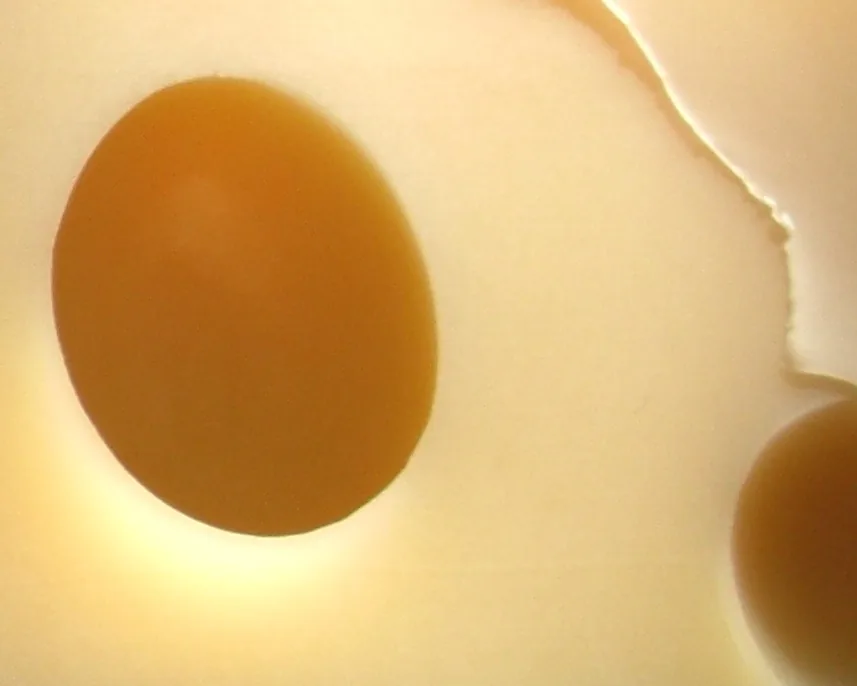
| Swiss cheese | Propionibacterium shermanii (a bacterium) | Makes a lot of CO2, so the cheese has big holes |
| Roquefort cheese | A special fungus | It is grown on the cheese to ripen it, which gives a special flavour |
Trick: the product is in the name: Lactobacillus → lactic acid. And: curd and idli-dosa = bacteria; bread = yeast.
RiyaSir, the idli batter is raised by yeast, like bread, right?
SirNo. As per NCERT, bacteria raise the idli-dosa batter. Yeast is for bread.
RiyaMillions of bacteria in curd? Then eating curd is dangerous!
SirNo! LAB are useful workers. They stop the disease-causing microbes in the stomach.
NCERT exercise 1: take the curd, because:
- it has millions of LAB;
- it is easy to get at home, and easy to carry;
- under the microscope these bacteria are easy to see.
NCERT exercise 3: LAB are found in curd (and milk), and in our stomach. Their jobs:
- to turn milk into curd;
- to increase vitamin B12;
- to stop disease-causing microbes in the stomach.
NCERT exercise 4: traditional foods made with microbes:
- Wheat (gehun): bread (NCERT), bhatura.
- Rice (chawal): idli, dosa (NCERT). These are made from rice and urad dal.
- Bengal gram (chana, besan): dhokla. This is the common answer, but it is not in the NCERT text.
Don't mix them up: idli-dosa has urad dal, not Bengal gram (chana). The holes of Swiss cheese come from CO2 (a bacterium); the flavour of Roquefort comes from a fungus.
Spelling note: the NCERT print says "sharmanii"; the correct spelling is Propionibacterium shermanii.
Hindi medium? See the Hindi names (tap to open)
| English | Hindi name | Meaning of the pieces |
|---|---|---|
| Curd | दही | Made from milk |
| Fermentation | किण्वन | Breaking sugar without oxygen |
| Yeast | खमीर | The fungus that raises dough |
Revise: 5 cards (tap one to flip it)
LAB
Lactic acid bacteria, like Lactobacillus. They turn milk into curd.
Inoculum (starter)
The starter (jaaman): a little curd with millions of LAB.
Fermentation
Breaking sugar without oxygen. Acid, alcohol or gas comes out.
Baker's yeast
Saccharomyces cerevisiae. It raises the dough of bread.
Swiss cheese
Big holes from the CO2 of Propionibacterium shermanii.
Check yourself
What raises the dough of bread?
Baker's yeast, that is, Saccharomyces cerevisiae.
Which gas makes the big holes of Swiss cheese?
CO2, which Propionibacterium shermanii makes.
Which vitamin increases in curd?
Vitamin B12. If you got it wrong, no problem, now you will remember it.
After the home, now the factory. What does the same yeast make in big vessels? And how was the first antibiotic found on an unwashed plate?
In the next part: drinks and antibiotics.
3How are drinks and antibiotics made by microbes in a factory?
In short: in a factory, microbes are grown in very big vessels (fermentors). Yeast makes ethanol, which is used for several drinks. Some microbes make antibiotics, which stop disease-causing microbes.
Guess firstHow was the world's first antibiotic, Penicillin, found?
By chance! The whole story is below.
Where are microbes grown in a factory?
In a factory too, microbes make things like drinks (beverages) and antibiotics. So much product needs crores of microbes, so they are grown in very big vessels (fermentors).
Think of a fermentor as a giant cooking pot (patila) for microbes. Food, warmth and air are set just right, and crores of microbes grow together.
How far is this picture true? In a home pot, food gets cooked. In a fermentor nothing is cooked: the microbes eat and multiply.
Figure 8.4: fermentors, that is, big closed tanks. Figure 8.5: a fermentation plant, that is, a factory with such tanks.
How are drinks made from yeast?
For a very long time, yeast has been used to make several drinks. It is the same Saccharomyces cerevisiae that makes bread. Here it is called brewer's yeast.
One worker, two shops: baker's yeast in the bakery, brewer's yeast in the drinks factory.
Brewer's yeast ferments sprouted dried grain (malted cereals) and fruit juices. This makes ethanol.
NCERT asks: by which reaction is ethanol made? The answer is alcoholic fermentation (Class 11). The yeast breaks down sugar without oxygen:
Sugar → ethanol + CO2 (without oxygen)
How is it decided which drink is made?
Two things decide the drink: which raw material was fermented, and whether distillation was done in the processing.
The liquid mixture left in the vessel after fermentation is called the fermented broth.
Distillation means turning liquid into steam and back into drops. It is like the drops under the lid of a pot of hot tea.
| Processing | Drinks |
|---|---|
| Without distillation | Wine, beer |
| Distillation of the fermented broth | Whisky, brandy, rum |
Here we study only the science. Remember Chapter 7: alcohol harms the liver and the nervous system, and teenagers most of all.
What does antibiotic mean?
Antibiotics made by microbes are among the biggest discoveries of the 20th century. They have done humans a great deal of good.
The name comes from Greek: anti = against, bio = life. So it means "against life": it ends the life of the disease-causing germ.
For humans it is the opposite: an antibiotic saves our life. So for humans it is called "pro life".
An antibiotic is a chemical made by some microbes. It kills other (disease-causing) microbes, or slows their growth.
How was Penicillin found?
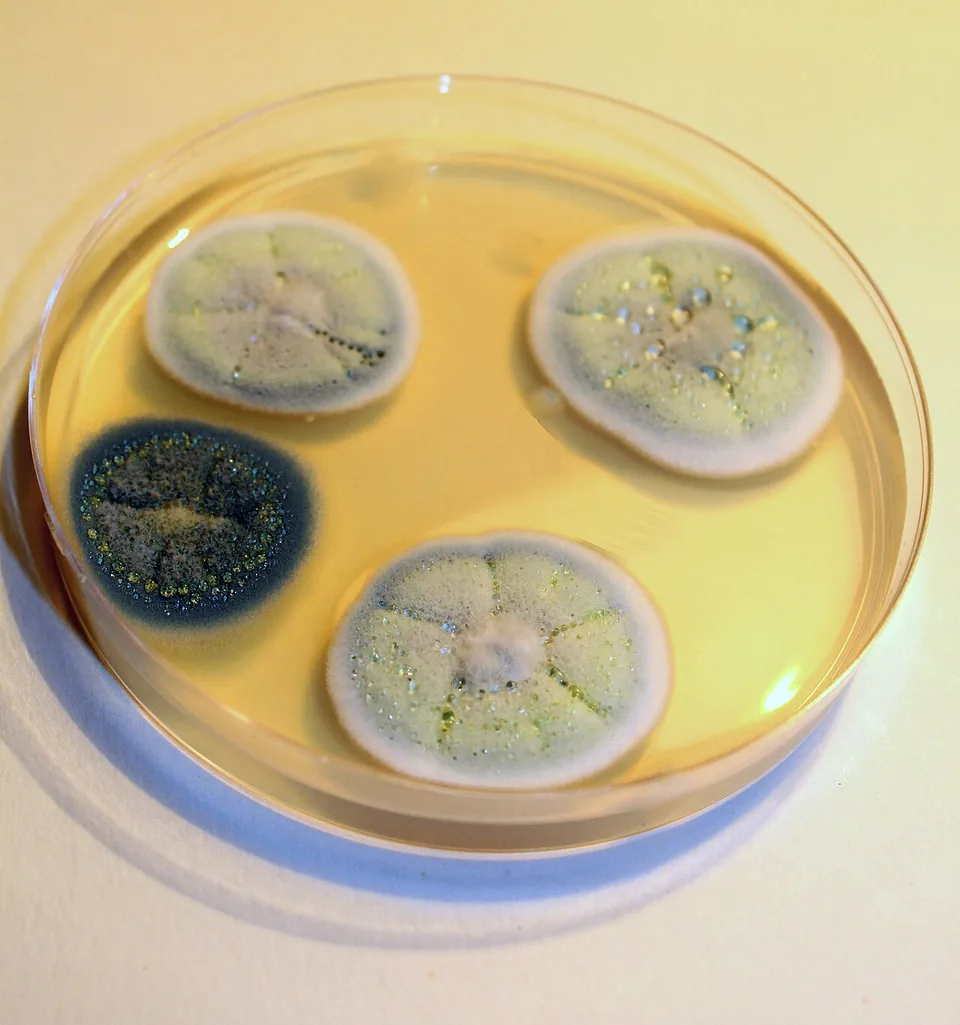
Penicillin was the first antibiotic to be found, and it was found by chance (chance discovery):
- Alexander Fleming was working on Staphylococci bacteria.
- A mould (fafoondi), the fuzz on stale roti or fruit, grew on one of his unwashed culture plates.
- No Staphylococci grew around the mould. This was the mould's "no-entry" ring.
- The reason was a chemical made by the mould. The mould was Penicillium notatum, so the chemical was named Penicillin.
- Its full power was shown later by Ernest Chain and Howard Florey.
- In World War II it was used a great deal to treat wounded American soldiers.
- In 1945 Fleming, Chain and Florey got the Nobel Prize for it.
What happened after Penicillin?
Later, other antibiotics were taken from other microbes. NCERT says: find some more antibiotics and their sources.
Fact box (not in the NCERT text): two more antibiotics.
| Antibiotic | Source |
|---|---|
| Streptomycin | Streptomyces (a bacterium) |
| Cephalosporin | Cephalosporium acremonium (a fungus; today called Acremonium chrysogenum) |
Antibiotics made it possible to treat these deadly diseases, which earlier killed millions of people around the world:
- Plague, whooping cough (kali khansi)
- Diphtheria (gal ghotu), leprosy (kusht rog)
- Pneumonia (in the NCERT summary)
Today the world cannot even be imagined without antibiotics.
Note: take an antibiotic only on a doctor's advice. Among many bacteria, a few are already resistant by chance.
The medicine kills the rest, so these few multiply and take over (Chapter 6: Evolution). Needless or half-done courses help this happen.
Remember: Penicillin = Fleming (discovery), Chain and Florey (power), Nobel 1945.
RiyaSir, beer and whisky are both made by distillation, right?
SirNo. Wine and beer are made without distillation; whisky, brandy and rum with distillation.
RiyaAnd Penicillin came from a bacterium?
SirNo, from a mould (a fungus). Staphylococci were the bacteria that did not grow near the mould.
NCERT exercise 5: some microbes make antibiotics (like Penicillin from Penicillium notatum), which kill or stop disease-causing bacteria. This made it possible to treat plague, whooping cough, diphtheria, leprosy and pneumonia.
NCERT exercise 6: Penicillium notatum (Penicillin; NCERT) and Cephalosporium acremonium (today called Acremonium chrysogenum), which gives cephalosporins. The second name is not in the NCERT text, but it is the common answer.
Don't mix them up: Streptomyces is a bacterium, not a fungus; do not write it in exercise 6. And baker's yeast and brewer's yeast are the same: Saccharomyces cerevisiae.
Hindi medium? See the Hindi names (tap to open)
| English | Hindi name | Meaning of the pieces |
|---|---|---|
| Antibiotic | प्रतिजैविक | प्रति (against) + जैविक (of life) |
| Distillation | आसवन | Steam, then drops |
| Mould | फफूंद | Fafoondi |
Revise: 4 cards (tap one to flip it)
Brewer's yeast
Saccharomyces cerevisiae: ethanol from malted cereals and fruit juices.
Distillation
Without: wine, beer. With: whisky, brandy, rum.
Antibiotic
A chemical of a microbe that kills other microbes or slows them.
Penicillin
Penicillium notatum. Fleming; Chain and Florey; Nobel 1945.
Check yourself
Which of these drinks is made by distillation?
Rum. Wine and beer are made without distillation.
Which microbe gave Penicillin?
Penicillium notatum, a mould.
When did Fleming, Chain and Florey get the Nobel Prize?
1945. If you got it wrong, no problem, now you will remember it.
The work of microbes does not end here. Vinegar, washing powder, clear juice and a medicine for the heart: microbes are in these too!
In the next part: acids, enzymes and special medicines.
4Which acids, enzymes and medicines do microbes make?
In short: in factories, microbes make acids, alcohol and enzymes. Enzymes clean stains from clothes and clear the juice. Some microbes also make medicines for the heart, for transplants and for cholesterol.
Guess firstWhy does bottled juice from the market look clearer than juice made at home?
With enzymes! Enzymes made by microbes remove the cloudiness of juice.
Which acids do microbes make?
In factories, microbes make some chemicals on a big scale: organic acids, alcohols and enzymes.
First the acids. Every acid has its own microbe:
| Acid | Microbe | Type |
|---|---|---|
| Citric acid | Aspergillus niger | Fungus |
| Acetic acid | Acetobacter aceti | Bacterium |
| Butyric acid | Clostridium butylicum | Bacterium |
| Lactic acid | Lactobacillus | Bacterium |
From daily life: citric acid is sour like lemon, and acetic acid is in vinegar. Lactic acid is the acid of curd (Part 2).
And alcohol? In factories, ethanol is made on a big scale by yeast (Saccharomyces cerevisiae). It is the same worker as in Part 3.
What are enzymes used for?
Think of an enzyme as a tiny pair of scissors that does only one job. How far is this true? An enzyme is not alive; it is a protein made by a microbe.
Lipases are scissors that cut oily stains. They are added to washing powders (detergents) so that oily stains come out.
Bottled juice looks clearer than home juice. The reason: it is cleared with pectinases and proteases. These are scissors that clear the cloudiness of juice.
What does streptokinase do?
Streptokinase is made by a bacterium, Streptococcus.
Then it is changed by genetic engineering. A gene is a recipe of the living thing, which makes one job or one thing (Chapter 5).
Genetic engineering means a human change in that recipe. With the changed recipe, the microbe makes more or better streptokinase (details in Chapters 9-10).
The hepatitis B vaccine of Chapter 7 was also made in changed yeast like this.
In a heart attack, a lump (clot) gets stuck in the heart's own blood pipe. So a part of the heart muscle gets no blood, and starts to be damaged.
The medical name for a heart attack is myocardial infarction. These are two names for one event.
Streptokinase dissolves this clot, so it is called a clot buster: a drain cleaner that opens a blocked pipe of the heart.
Which medicine does a transplant patient get?
Some microbes make chemicals that act on the body. These are called bioactive molecules.
Remember Chapter 7: in a transplant, the fort's army takes the new organ for an outsider and attacks it.
Cyclosporin A is a medicine that keeps the army calm. It is made by the fungus Trichoderma polysporum.
A medicine that holds down the army like this is called an immunosuppressive agent.
Fact box: in the exam write the NCERT name, Trichoderma polysporum. Today this fungus is called Tolypocladium inflatum.
How do statins lower cholesterol?
Statins are medicines that lower the cholesterol of the blood, and they are sold in the market.
They are made by the yeast Monascus purpureus.
In the body, an enzyme makes cholesterol. Imagine that this enzyme has only one chair to work on.
Two come for that chair: the raw material of cholesterol, and the statin. The statin sits on the chair. So the raw material often gets no place, and the making of cholesterol slows down a lot.
This is a contest for one chair, a fake key in the lock. That is why it is called competitive inhibition; inhibition means stopping.
Fact box: in the exam write "yeast Monascus purpureus". In truth it is a mould; it is called yeast because of "red yeast rice".
Note: streptokinase, cyclosporin A and statins are medicines given only on a doctor's advice.
Don't mix up the names: these four names look alike, but they are different.
| Name | What it is | Job |
|---|---|---|
| Streptococcus | Bacterium (Part 4) | Makes streptokinase: the clot buster |
| Staphylococci | Bacteria (Part 3) | The bacteria on Fleming's plate |
| Trichoderma polysporum | Fungus (Part 4) | Makes cyclosporin A: for transplants |
| Trichoderma | Fungus (Part 9) | Biocontrol: protects plants from disease |
Trick: the product is in the name: Lactobacillus → lactic, Acetobacter → acetic. And 3 medicines, 3 jobs: streptokinase → clot, cyclosporin A → transplant, statins → cholesterol.
RiyaSir, the bacteria on Fleming's plate make streptokinase, right?
SirNo! Fleming had Staphylococci. Streptokinase is made by Streptococcus; the names look alike, but the microbes are different.
RiyaAnd Trichoderma fights plant diseases, right?
SirThat is the biocontrol Trichoderma of Part 9. The Trichoderma polysporum of cyclosporin A is a different one.
NCERT exercise 12: cyclosporin A comes from the fungus Trichoderma polysporum. Statins come from the yeast Monascus purpureus.
Don't mix them up: Aspergillus niger is a fungus, not a bacterium; the other three acid makers are bacteria.
Hindi medium? See the Hindi names (tap to open)
| English | Hindi name | Meaning of the pieces |
|---|---|---|
| Acid | अम्ल | Sour |
| Citric acid | साइट्रिक अम्ल | The sour acid like lemon |
| Lactic acid | लैक्टिक अम्ल | The acid of curd |
Revise: 6 cards (tap one to flip it)
Citric acid
Aspergillus niger, a fungus.
Acetic, butyric, lactic acid
Acetobacter aceti, Clostridium butylicum, Lactobacillus: all three are bacteria.
Lipases
In detergents; they remove oily stains from clothes.
Pectinases + proteases
They clear bottled juice.
Streptokinase
From Streptococcus, changed by genetic engineering. The clot buster.
Cyclosporin A / statins
Trichoderma polysporum: transplant. Monascus purpureus: cholesterol.
Check yourself
Which microbe makes citric acid?
Aspergillus niger, a fungus.
Which one removes oily stains in a detergent?
Lipases, the scissors that cut oily stains.
How do statins work?
They sit on the enzyme's chair and stop it. If you got it wrong, no problem, now you will remember it.
So far microbes have made things. Now a completely different job: cleaning the dirty water of a city.
In the next part: sewage, and its first cleaning.
5Where does a city's dirty water go, and how is it cleaned?
In short: cities and towns make a huge amount of dirty water every day, called sewage. It holds rotting waste and disease germs, so it cannot go straight into a river. First it is cleaned, and step one is a sieve and a pot.
Guess firstWhere does a big part of the dirty water in a city's drains come from?
From the toilets! A big part of it is human waste.
We have seen the kitchen, the factory and the medicines (Parts 2-4). Now let us see how microbes clean a city's dirty water.
What is sewage?
Think of a city with lakhs of homes. Every day, water from the toilet, bathroom and kitchen of each home goes into a drain.
A big part of this water is human waste, called excreta. This dirty water of a city is called municipal waste water, or sewage.
Sewage has two things in large amounts. First, rotting waste, called organic matter: things made by living beings, like waste and bits of food.
Second, microbes. Many of them are pathogenic, that is, intruders that bring disease (Chapter 7). So not every microbe is a helpful worker.
Why can we not pour sewage straight into a river?
Have you ever wondered where all this sewage goes every day? Can we let it flow straight into a river or stream? No, and the reason is easy.
People drink river water, bathe in it and water their fields with it. The germs of sewage would reach our stomach through the same water.
These diseases of Chapter 7 spread through dirty food and water:
- Typhoid
- Amoebiasis
- Ascariasis
On top of that, the rotting waste spoils the river water. This spoiling of water is called pollution.
So what do we do with sewage?
Before it goes into a river, sewage is cleaned so that it spoils the river less. This work is done in a sewage treatment plant, short name STP.
Now the twist: the real cleaning is also done by microbes! The same microbes that already live in the sewage.
These microbes cannot make their own food, as plants do. They eat food made by others, here the organic waste of the sewage. Such microbes are called heterotrophic (hetero = other, troph = food).
In truth the microbes do not know they are cleaning. They just eat the waste and grow, and the water gets cleaner.
In how many steps is the cleaning done?
In two steps: first primary treatment, then secondary treatment. In one line: first a sieve and a clay pot (matka), then a feast for microbes.
What happens in primary treatment?
In primary treatment, sieves and tanks take out the small and big solid pieces (particles) from the sewage. Microbes do no work here, things are only separated, so it is called physical removal.
There are two ways. One is sieving, called filtration. The other is letting solid bits settle at the bottom of still water, called sedimentation.
- The sieve: first the floating waste (floating debris), like plastic and leaves, is taken out. The sewage passes through many sieves one after another (sequential filtration).
- The pot: then the water rests in a tank (the primary settling tank). Mud and small stones, called grit, settle at the bottom, like mud settling in a clay pot of water.
- The mud at the bottom: all the solid stuff that settled is called primary sludge.
- The water on top: after the mud settles, the water left on top is called supernatant (the top part). The water that flows out of the tank and goes ahead is called effluent (the water that flowed out). Here the supernatant leaves the tank as primary effluent and goes to secondary treatment.
Trick: Primary = first, Physical: sieving (filtration) + settling at the bottom (sedimentation).
Secondary = the microbes' work, biological. And remember: bottom = primary sludge, top = effluent.
RiyaSir, after the sieve and the pot the water looks clean. Can we let it into the river now?
SirNot yet. The sieve and the pot take out only solid waste. The waste dissolved in the water and the germs are still there.
RiyaDo microbes work in primary treatment too?
SirNo. Primary = physical: sieves and tanks. The step with microbes is secondary, so it is also called biological treatment.
NCERT exercise 7: sewage = the dirty water of a city (municipal waste water), and a big part of it is human excreta. It has a lot of organic matter and microbes, and many microbes are pathogenic. If it goes into a river without treatment, it causes pollution, and water-borne diseases, like typhoid, spread.
Don't mix them up: microbes do not work in primary treatment; it is a physical step. The mud at the bottom is primary sludge and the water on top is effluent; do not write it the other way round.
Hindi medium? See the Hindi names (tap to open)
| English | Hindi name | Meaning of the pieces |
|---|---|---|
| Sewage | वाहित मल | Waste that flows in a drain |
| Pathogen | रोगजनक | रोग (disease) + जनक (one that makes) |
| Primary treatment | प्राथमिक उपचार | The first step |
| Sedimentation | अवसादन | Settling at the bottom |
Revise: 4 cards (tap one to flip it)
Sewage
The dirty water of a city, a big part is human excreta. Organic matter + pathogenic microbes.
Heterotrophic microbes
They do not make their own food; they eat food made by others. Already present in sewage.
Primary sludge
The solid mud that settled at the bottom.
Effluent
The water on top (supernatant). It goes ahead to secondary treatment.
Check yourself
Which are the two ways of primary treatment?
Filtration and sedimentation, that is, the sieve and the pot.
What is grit?
Mud and small stones. They settle at the bottom by sedimentation.
Where do the microbes that clean sewage come from?
They are already in the sewage! No worry if you got it wrong; now you will remember.
Even after primary treatment, dissolved waste and germs are still in the water. Who will reduce them?
In the next part: secondary treatment, the feast for microbes.
6How do microbes clean dirty water in secondary treatment?
In short: the water left after primary treatment goes into big tanks. There, air is pumped in and microbes are fed the waste dissolved in the water, so the water's BOD keeps falling. The mud left at the bottom goes into closed tanks and gives a gas that burns.
Guess firstThe BOD of some water is very high. What does that mean?
A lot of waste! High BOD = dirtier water. We will see why in this part.
What happens in the aeration tank?
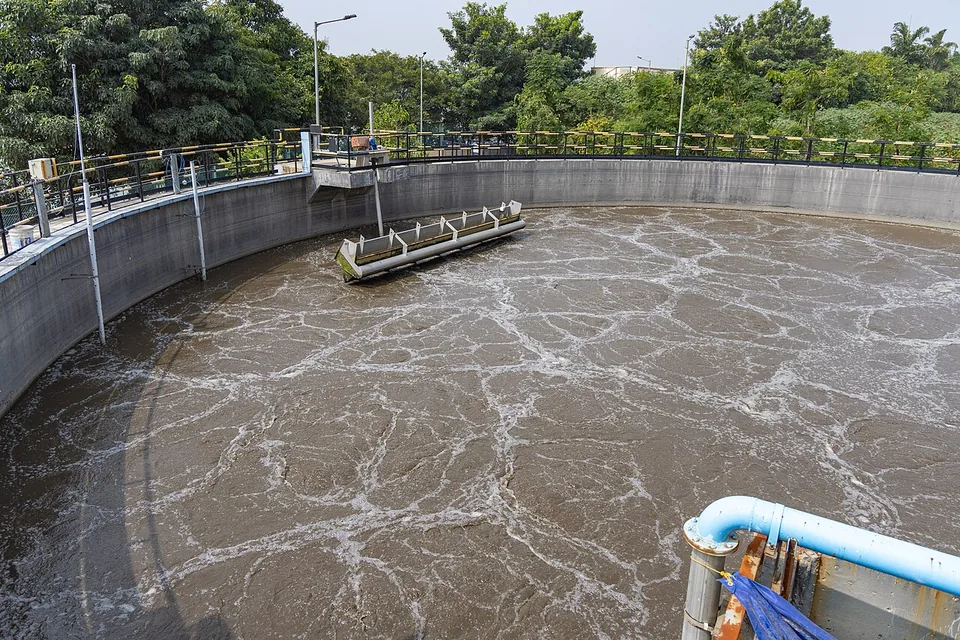
The primary effluent now goes into big tanks called aeration tanks. Aeration means filling the water with air. Figure 8.6 of NCERT shows one such tank.
Here machines keep stirring the water, and air keeps getting pumped in. Because of this, the useful aerobic microbes, those that live on oxygen, grow very fast.
This is the feast (bhandara) for microbes: the waste dissolved in the water is their food. How far is this true? Nobody feeds them out of love; the microbes just eat and grow.
What are flocs?
These microbes are mostly bacteria, along with some fungi (mould-like living things).
Bacteria stick to the thin threads (filaments) of fungi and make net-like clumps. These clumps are called flocs.
As they grow, the flocs eat most of the organic waste of the water. Because of this, the BOD of the water falls a lot.
What is BOD?
Think of BOD as the oxygen bill of the dirt. The more waste in the water, the more oxygen the bacteria use to break it down, and the bigger the bill.
Now the definition, in two steps:
- Bacteria break down all the organic waste in one litre of water using oxygen, that is, they oxidise it.
- The oxygen used up in this work is the BOD of that water. Full name: biochemical oxygen demand.
So high BOD = more waste = dirtier water. Sewage is treated until its BOD comes well down.
How is BOD tested? A water sample is kept in a closed bottle for a few days, and we see how much its oxygen has dropped. The answer is written in mg/L, that is, milligrams of oxygen used up per litre of water.
Note this: BOD does not count the waste directly; it measures only the oxygen used. But a bill tells you about the spending, and in the same way the oxygen used tells you about the waste. So BOD is an indirect (roundabout) measure of waste.
What is activated sludge?
When the BOD has fallen enough, the water goes into a settling tank. Here the flocs settle at the bottom, as in a clay pot (matka). This mud is called activated sludge.
A small part of this sludge is pumped back into the aeration tank, like an inoculum. It is a starter, like the spoon of old curd (jaaman) that sets new curd: these microbes start work on the new water at once.
What happens to the rest of the sludge?
Most of the sludge goes into big closed tanks with no oxygen. They are called anaerobic sludge digesters (anaerobic = without oxygen).
Here a different kind of bacteria grows without oxygen. They digest the bacteria and fungi of the sludge itself.
While digesting, they give off gases: methane, hydrogen sulphide (H2S) and CO2.
This mix is called biogas. It burns (inflammable), so it is used as energy (Part 7).
Where does the clean water go?
The water after secondary treatment (secondary effluent) is usually let into a river or stream. Figure 8.7 of NCERT shows such a plant from above (an aerial view).
All over the world, millions of gallons of dirty water are cleaned this way every day, for more than a century.
Until today, no technology made by humans has matched microbes at this. This activated sludge method also recycles water in nature.
Why are our rivers still dirty?
Cities are growing (urbanisation), so far more sewage is made than before. But STPs have not grown as much.
So a lot of sewage goes straight into rivers without cleaning. Rivers get dirty, and water-borne diseases increase.
That is why the Ministry of Environment and Forests started the Ganga Action Plan and the Yamuna Action Plan. They plan to build many STPs, so that only cleaned sewage goes into the river.
Fact box: in the exam, write the NCERT line: Ministry of Environment and Forests.
Since 2014 its name is Ministry of Environment, Forest and Climate Change. Since then the cleaning of the Ganga has also been done under the "Namami Gange" programme.
NCERT's suggestion: go and visit a nearby STP; you will learn a lot.
Remember: P-P: Primary = Physical, secondary = biological. High BOD = more dirt. Activated sludge: a little goes back (starter), the rest goes to the digester (biogas).
RiyaSir, high BOD means more oxygen in the water? Then it is good water, right?
SirThe other way round! BOD is the demand for oxygen, not the oxygen lying in the water. More waste = more demand = dirtier water.
RiyaDo we pump air into the sludge digester too?
SirNo. Air goes only into the aeration tank. The digester is closed and anaerobic.
NCERT exercise 8: primary treatment is physical, secondary treatment is biological.
| Point | Primary | Secondary |
|---|---|---|
| How | Filtration and sedimentation | Aerobic microbes (flocs) eat the waste in the aeration tank |
| What is removed | Floating waste and grit | Dissolved organic waste; BOD falls |
| What is left at the bottom | Primary sludge | Activated sludge |
NCERT exercise 11: BOD: A = 20 mg/L, B = 8 mg/L, C = 400 mg/L.
- High BOD = dirtier. C is the highest (400), so C = untreated sewage, the most polluted.
- River water is taken as fairly clean. So B, the lowest BOD (8) = river water.
- That leaves A (20) = secondary effluent: treated, but not as clean as the river.
Don't mix them up: high BOD = dirtier water, not cleaner. The aeration tank is aerobic (with air); the sludge digester is anaerobic (without oxygen).
Hindi medium? See the Hindi names (tap to open)
| English | Hindi name | Meaning of the pieces |
|---|---|---|
| Secondary treatment | द्वितीयक उपचार | The second step |
| Aerobic | वायवीय | With oxygen |
| Anaerobic | अवायवीय | अ (without) + वायवीय |
Revise: 4 cards (tap one to flip it)
Flocs
A net of bacteria and fungal threads. They form in the aeration tank.
BOD
The oxygen bacteria use to break down the organic waste of 1 litre of water. More = dirtier.
Activated sludge
Flocs settled in the settling tank. A little goes back = inoculum.
Sludge digester
Anaerobic bacteria. Methane, H2S, CO2 = biogas.
Check yourself
Why does a small part of the activated sludge go back to the aeration tank?
As an inoculum: it starts work on the new water at once.
Which gases are made in the sludge digester?
Methane, H2S and CO2, that is, biogas.
Which sample has a BOD of 400 mg/L?
Untreated sewage. No worry if you got it wrong; now you will remember.
The gas from the digester burns. How is the same gas made from gobar in villages?
In the next part: biogas.
7How is a gas that burns made from dung (gobar)?
In short: dung (gobar) gives a gas that burns, called biogas. Some tiny living things make it without oxygen, and it is mostly methane. In villages it is used for cooking and for light.
Guess firstWhich gas is there the most in the burning gas of a gobar gas plant?
Methane! CO2 does not burn; methane does.
What is biogas?
Microbes give off different gases as they grow. Which gas comes out depends on two things: which microbe it is, and what it is eating. The food of the microbe is called the organic substrate.
Remember Parts 2-3: the dough for idli-dosa and bread, cheese, and drinks. In all of them, mainly CO2 came out.
But some bacteria are different. They grow without oxygen, that is, in an anaerobic way.
Their food is things rich in cellulose. Cellulose is the fibre of plants, found in grass, straw and leaves.
These bacteria make a lot of methane, along with CO2 and hydrogen (H2). All such bacteria together are called methanogens (methane + gen = makers of methane).
One common methanogen is Methanobacterium. This burning mix with methane is what we call biogas.
Where do methanogens live?
In two places. One: the anaerobic sludge of the sewage plant (the digester of Part 6).
Two: a part of the stomach of animals like cows and buffaloes (cattle), called the rumen.
The food of cattle, grass and straw, has a lot of cellulose. In the rumen, methanogens break it down, and play a big role in the animal's nutrition.
Think of the rumen as the cow's own fermentation tank. How far is this true? The bacteria do not help the cow on purpose; they just eat and grow.
Can we humans digest cellulose?
This is what NCERT asks. The answer: no. The fibre of vegetables and fruits mostly passes on undigested, because our stomach has no tank like the rumen.
Why is it called gobar gas?
The bacteria of the rumen come out with the dung. So the waste of cattle (dung), the gobar, is full of methanogens.
Gobar has two things together: the cellulose food, and the methanogens that break it down. So gobar is both food and starter.
That is why biogas is made easily from gobar, and it is called gobar gas.
What does a biogas plant look like?
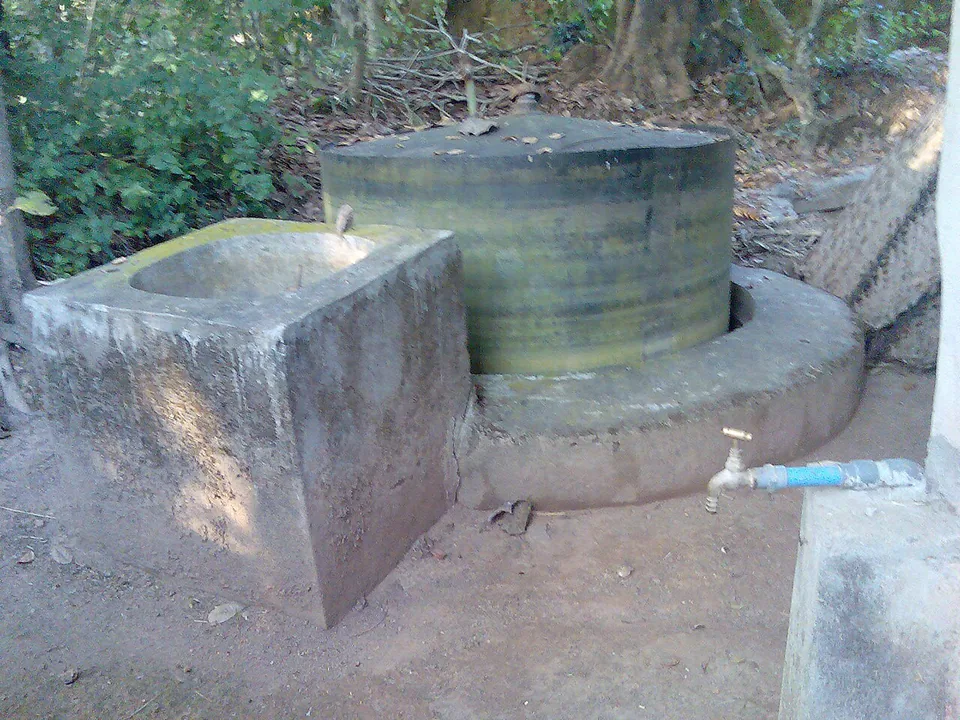
Figure 8.8 of NCERT shows a common biogas plant. Think of it as a closed dung tank with a floating lid.
- The tank: a concrete tank, 10-15 feet deep, as tall as a room or more. Waste made by living things (bio-wastes) collects in it.
- The slurry: a thick mix of gobar and water (slurry) is filled into the tank.
- The floating lid: over the slurry there is a floating cover. As the microbes make gas, it keeps rising.
- The gas pipe: a pipe joined to an outlet takes the gas to nearby homes.
- The leftover slurry: the slurry that has done its work (spent slurry) comes out by another outlet. It is used in the fields as manure (fertiliser).
Is this gas dangerous? It burns, so a leak near a flame can start a fire. That is why it stays in a closed tank and pipe and is burnt only at the stove or lamp.
Never climb into a biogas tank: the gas can choke a person.
Why are biogas plants more common in villages?
In villages, cattle are kept for many jobs, like milk and farming. So a lot of gobar is available there, and biogas plants are set up there more.
The gas is used for cooking and lighting. So in villages biogas is a source of energy, and gobar is a resource: gas as well as manure.
In India, biogas technology came mainly from the hard work of two institutions. They are IARI (Indian Agricultural Research Institute) and KVIC (Khadi and Village Industries Commission).
NCERT's suggestion: if your school is near a village, visit a nearby biogas plant and learn from the people who run it.
Remember: biogas = mainly methane, not CO2. Methanogens → methane, like Methanobacterium. Gobar = both food and starter.
RiyaSir, biogas must also be mostly CO2, like the dough of bread?
SirNo. Methane is the most; CO2 is less. And methane burns, CO2 does not.
RiyaThen do they pump air into the tank so that the bacteria grow faster?
SirNo, the tank is closed. Methanogens are anaerobic; they work without oxygen.
NCERT exercise 2: microbes give off gases as they grow. Examples:
- CO2: the rising dough of idli-dosa and bread, the big holes of Swiss cheese, drinks (see Parts 2-3).
- Methane + CO2 + H2: methanogens, in gobar and in the rumen.
- Methane, H2S, CO2: the sludge digester (Part 6).
NCERT exercise 9: yes. Methanogens in the sludge of gobar and sewage make biogas (gobar gas), which is mainly methane. It burns, so it is used for cooking and lighting.
NCERT exercise 14: any order will do, if the reason is good. A model: Penicillin (saves lives) > Curd (daily food, vitamin B12) > Biogas (fuel + manure) > Citric acid (industry).
Don't mix them up: biogas is mainly methane, not CO2. And methanogens are anaerobic; the tank stays closed.
Hindi medium? See the Hindi names (tap to open)
| English | Hindi name | Meaning of the pieces |
|---|---|---|
| Biogas | जैव गैस | Gas made by living things |
| Fertiliser | उर्वरक | Manure |
| IARI | भारतीय कृषि अनुसंधान संस्थान | Research on farming |
| KVIC | खादी और ग्रामोद्योग आयोग | Industries of the village |
Revise: 5 cards (tap one to flip it)
Biogas
A mix of gases, mainly methane. It burns, so it is a fuel.
Methanogens
They grow without oxygen, on cellulose. Methane + CO2 + H2. Like Methanobacterium.
Rumen
A part of the stomach of cattle. Methanogens break down cellulose there.
Biogas plant
Concrete tank (10-15 feet), floating lid, gas pipe, spent slurry = manure.
IARI and KVIC
Biogas technology in India was developed by their hard work.
Check yourself
Which of these is a methanogen?
Methanobacterium. Methane is right in the name!
When does the floating lid of a biogas plant rise?
When the microbes make gas.
Why are biogas plants mostly set up in villages?
A lot of gobar is available. No worry if you got it wrong; now you will remember.
Microbes help in the field too. But first a question: how do we stop the pests of a crop without poison?
In the next part: biocontrol.
8How do we stop the pests in the field without poison?
In short: stopping the pests and plant diseases of a crop with other living things, instead of poisonous chemicals, is biocontrol. This way does not wipe out the pests completely, it only keeps them under control. For example, a small beetle eats the insects that harm plants.
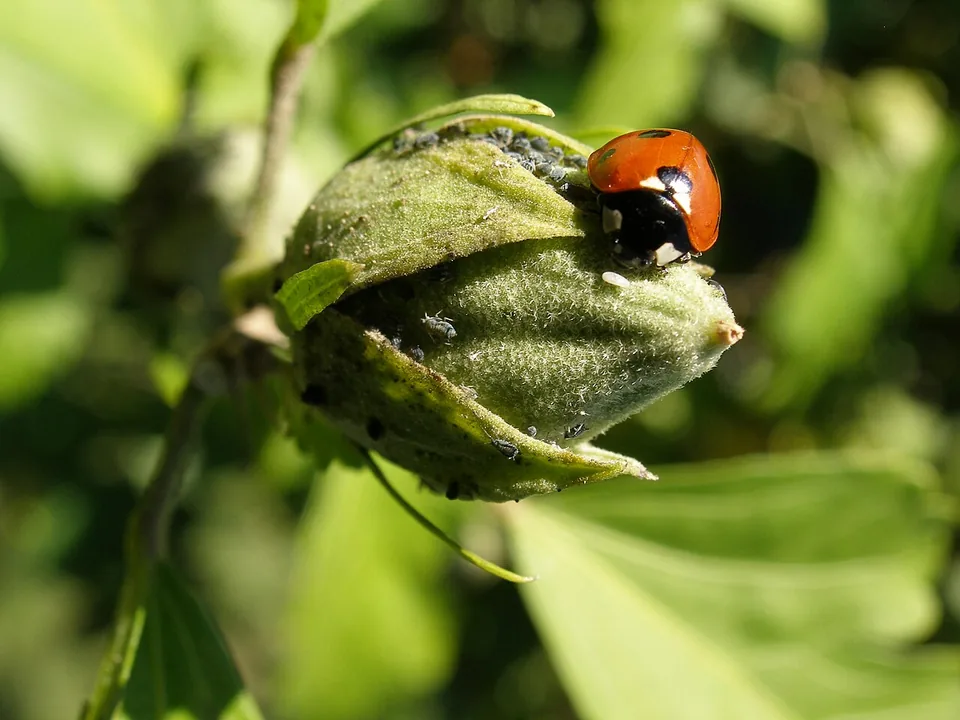
Guess firstWhat does a Ladybird, the small red and black beetle, do in a field?
It eats small insects (aphids)! It is the farmer's friend.
What is biocontrol?
Two troubles come in a field. Diseases of plants, and insects and bugs that eat the crop, called pests.
Keeping both under control with the help of living things is called biocontrol (bio = living, control = control). In this part we see insects; in the next part, microbes.
What is wrong with chemical sprays?
Today most farms use chemicals. Insecticides kill insects, and other pesticides kill other pests.
These chemicals are poisonous (toxic), and very harmful to humans and animals. They are spoiling the soil, the groundwater, and the fruits, vegetables and crops.
There are also chemicals that remove weeds from the field, called weedicides. They spoil the soil too.
Farmers spray these to save the crop. Biocontrol gives them another way.
How does an organic farmer think?
In biological control, the pest is not stopped by a chemical. One living thing stops another by eating it, as happens in nature. This is called natural predation.
Think of it as using a thorn to pull out a thorn: the enemy's enemy is a friend. How far is this true? The hunting insect does not care about the crop; it is just eating its own food.
A farmer who farms without poisonous chemicals is called an organic farmer.
His belief: the more kinds of living things in a field, the healthier the field. This variety of living things is called biodiversity.
Such a field keeps giving a good crop, year after year, for a long time. It is called a sustainable field (one that lasts a long time).
What does an organic farmer do with pests?
He does not wipe out (eradicate) the pests. He keeps them so low that the crop does not suffer much. NCERT calls this manageable levels.
How low is fine? The farmer and farming experts (krishi visheshagya) decide this by looking at the field.
Who keeps the pests low? Other living things of the field. All the living things of a field and their surroundings make one living system, called an ecosystem.
In this system many creatures eat others and are eaten in turn. So no one creature grows too much; NCERT calls this checks and balances.
The organic farmer is the farm's weighing balance (tarazu): pests are not zero, they are in balance.
How is this different from usual farming?
The usual, common farming is called conventional farming. In it a chemical spray kills both the useful and the harmful creatures.
The spray does not know who is a friend and who is an enemy. NCERT's word is indiscriminately, that is, without making a difference. It is like a bomb that hits everyone.
Biocontrol looks at the whole field, not one insect at a time. So it is called a holistic way (one that looks at the whole).
It understands how the animals (fauna) and plants (flora) of the field are linked. Who eats whom, and who lives on whom? NCERT calls this webs of interaction.
Why is it not right to remove all pests?
The organic farmer believes it is not right to remove pests completely (NCERT's word: undesirable). Why?
Some useful insects of the field eat pests. They are called predatory insects (hunting insects).
Some other useful insects live in or on the body of pests, and take their food from them. They are called parasitic insects.
For these insects the pest is food as well as home, that is, the pest is their host.
If there were no pests, these useful insects would starve.
The big gain of biocontrol: our dependence on poisonous chemicals and pesticides becomes much less.
How do we choose the right biocontrol?
First know the living things of the field: which is a hunter (predator) and which is a pest.
Then understand their life cycle and feeding patterns. See also where they like to live, that is, their habitat. This is how the right biocontrol is chosen.
Which insects help us?
Two examples from NCERT:
- Ladybird: the well-known beetle with black spots on red. It eats aphids, the small insects that suck the sap of plants.
- Dragonflies: long, thin insects that fly near ponds. They eat mosquitoes.
Remember Chapter 7? The mosquito is a delivery boy for disease, and the Gambusia fish ate its larvae. That was biocontrol too.
Trick: a Dragon is a big hunter, and the mosquito is its food: Dragonfly → mosquitoes. Ladybird → aphids.
RiyaSir, would it not be best to kill all the pests in one go?
SirNo. If there were no pests, the useful insects that eat them would not survive either. An organic farmer keeps pests under control, not at zero.
RiyaAnd a Ladybird eats mosquitoes, right?
SirDo not swap them. A Ladybird eats aphids; dragonflies eat mosquitoes.
In the exam: biocontrol = controlling plant diseases and pests by biological ways instead of chemicals. An organic farmer believes that health comes from biodiversity; he does not eradicate pests, he keeps them at a manageable level by checks and balances. Examples: Ladybird → aphids, Dragonflies → mosquitoes.
Don't mix them up: Ladybird → aphids, Dragonflies → mosquitoes; do not write it the other way round. And in biocontrol the pests are not eradicated, they are kept under control.
Hindi medium? See the Hindi names (tap to open)
| English | Hindi name | Meaning of the pieces |
|---|---|---|
| Biocontrol | जैव नियंत्रण | जैव (living) + नियंत्रण (control) |
| Pest | पीड़क | One that gives पीड़ा (pain) |
| Insecticide | कीटनाशी | कीट (insect) + नाशी (killer) |
| Predator | परभक्षी | पर (other) + भक्षी (eater) |
Revise: 5 cards (tap one to flip it)
Biocontrol
Controlling plant diseases and pests with living things, not chemicals.
The organic farmer's belief
Health comes from biodiversity. More variety = more sustainable.
What about pests?
Not eradicated, kept at a manageable level. Checks and balances.
Ladybird
A red and black beetle. It eats aphids.
Dragonflies
They eat mosquitoes.
Check yourself
What do dragonflies eat?
Mosquitoes! Aphids are eaten by the Ladybird.
What does an organic farmer do with pests?
Keeps them under control, at a manageable level. If they were wiped out, the useful insects would not survive either.
What is the biggest problem with the chemical spray of conventional farming?
It kills useful and harmful creatures alike. No worry if you got it wrong; now you will remember.
Insects eat insects. Can tiny microbes stop pests too?
In the next part: three microbes that stop pests.
9Can microbes also stop farm pests and plant diseases?
In short: yes. One bacterium kills caterpillars, one fungus stops plant diseases, and one virus attacks only chosen insects. So we need less poisonous chemical spray.
Guess firstA caterpillar (the baby of a butterfly) is eating cabbage leaves. What will kill only that caterpillar and not the honeybee?
The bacterium's spores! They release poison only inside the caterpillar's gut.
In Part 8, one insect ate another insect and saved the crop. We called this biocontrol: using a thorn to pull out a thorn (the enemy's enemy is a friend). Now we get the same job done by microbes.
Who is Bt?
The first soldier is a bacterium: Bacillus thuringiensis. The name is long, so we write it short as Bt.
Bt kills the babies of butterflies and moths, the caterpillars. A caterpillar is the childhood form of a butterfly or moth. It is called a larva (many of them are larvae).
How does Bt work in the field?
First a new word: spore. This is the tough, resting form of a bacterium. It stays alive even in dry conditions, and wakes up again when the surroundings are right.
- Dry Bt spores are sold in small packets, called sachets.
- Farmers mix them in water and spray them on plants in danger, such as brassicas (the cabbage and mustard family) and fruit trees.
- The caterpillar eats the spores along with the leaf.
- In its gut, a toxin (poison) is released, and the caterpillar dies.
Think of it as a poison packet that opens only in a caterpillar's gut. How far is this true? The 'packet' is a crystal of inactive poison; the caterpillar's gut switches it on (Chapter 10: Biotechnology and its Applications).
This disease kills caterpillars, but the other insects stay fine. That is the big difference from a chemical spray.
What is Bt-cotton?
Genetic engineering means putting the gene of one living thing (a recipe for a protein, Chapter 5) into another living thing.
Scientists used this method to put the poison-making genes of the Bt bacterium into plants. One example is Bt-cotton: a cotton plant that carries the Bt poison gene.
Fact box: NCERT says 'in the last decade or so', but the book is old. Bt plants were first made in the late 1980s, and India has grown Bt-cotton since 2002.
Now the poison recipe is inside the plant, so the plant makes its own insect killer. That is why such plants can stand the attack of crop-eating insects (insect pests).
Bt-cotton is grown in some states of India. How the gene is put in, and the other questions about Bt-cotton, come in Chapter 10.
What does Trichoderma do?
The second soldier is a fungus: Trichoderma. It does not kill insects. It is being developed as a treatment for plant diseases.
It is free-living: it does not live inside another living thing, but in the soil by itself. It is very common in the world around the roots (the root ecosystem).
It controls many plant pathogens, the germs that bring disease to plants, very well.
Why is the baculovirus called a sniper?
The third soldier is a virus: the baculoviruses. They are pathogens of insects and other arthropods (animals with jointed legs, like spiders and crabs), so they make those animals sick.
To control insects, mostly baculoviruses from one genus (a group of very close kinds) are used. The name of that genus is Nucleopolyhedrovirus.
A chemical spray is a bomb that hits everyone: friend and enemy insects, all die. A baculovirus is like a sniper: only one kind of insect is the target.
How far is this true? A sniper chooses by thinking, but a virus chooses nothing. It can grow only inside one particular kind of insect, so only that insect falls sick.
This is called species-specific (only one kind of insect) and narrow spectrum (a small range).
They do no harm to plants, mammals (animals that feed milk), birds or fish. They also do no harm to insects that were not the target (non-target insects).
This good quality is most useful in two places:
- When you want to save the friendly insects in the field. This is part of IPM (Integrated Pest Management): using many methods together to control pests.
- When you must control pests in an ecologically sensitive area. That means a place where nature can be disturbed easily.
Trick, 3 soldiers, 3 types: Bt = Bacterium (caterpillars). Baculovirus = virus (it is right in the name). Trichoderma = the fungus (plant disease).
RiyaSir, Bt is also a disease-causing bacterium. Will it kill all insects then?
SirNo. The Bt disease kills only caterpillars, and the other insects survive.
RiyaAnd Trichoderma must kill insects too?
SirNo! It is a fungus, and it stops the germs that bring plant disease, not insects.
Exam tip: controlling pests and plant diseases with microbes is microbial biocontrol. It saves us from the heavy use of poisonous pesticides.
| Agent | Type | Against what | How |
|---|---|---|---|
| Bacillus thuringiensis (Bt) | Bacterium | Caterpillars of butterflies and moths | Spores are eaten, toxin in the gut |
| Bt-cotton | Plant, with Bt genes | Insect pests | Makes the poison itself |
| Trichoderma | Fungus (free-living) | Plant pathogens | Lives near the roots |
| Baculoviruses (Nucleopolyhedrovirus) | Virus | Insects, arthropods | Species-specific, narrow spectrum |
Don't mix them up: Bt = bacterium, Trichoderma = fungus, baculovirus = virus. And do not mix these two names:
- Part 4: Trichoderma polysporum → makes a medicine (cyclosporin A).
- Part 9: Trichoderma → stops plant diseases (biocontrol).
Hindi medium? See the Hindi names (tap to open)
| English | Hindi name | Meaning of the pieces |
|---|---|---|
| Biocontrol | जैव नियंत्रण | जैव = by living things; नियंत्रण = control |
| Bacterium | जीवाणु | जीव + अणु: a very small living thing |
| Fungus | कवक | The mould (fafoondi) family |
| Virus | विषाणु | विष (poison) + अणु (tiny particle) |
| Spore | बीजाणु | बीज + अणु: the dry, sleeping form |
Revise: 5 cards (tap one to flip it)
Bt
A bacterium. Toxin in the caterpillar's gut; other insects are safe.
Bt-cotton
Cotton with the Bt poison genes inside the plant.
Trichoderma
A free-living fungus near the roots. Controls plant pathogens.
Baculoviruses
Viruses of insects, mostly Nucleopolyhedrovirus. A species-specific sniper.
IPM
Integrated Pest Management: control pests and save the friendly insects.
Check yourself
What kind of microbe is Bt?
A bacterium: Bacillus thuringiensis.
Most of the baculoviruses used for control belong to which genus?
Nucleopolyhedrovirus.
Trichoderma works against what?
Plant pathogens. No problem if you got it wrong, now you will remember.
Microbes have taken care of insects and diseases. But what about chemical fertiliser?
In the next part: can microbes give the soil its fertiliser by themselves?
10Can microbes give fertiliser to the soil?
In short: yes. Some microbes in the soil work as fertiliser for plants. We call them living fertilisers, or biofertilisers, and they reduce the need for chemical fertiliser.
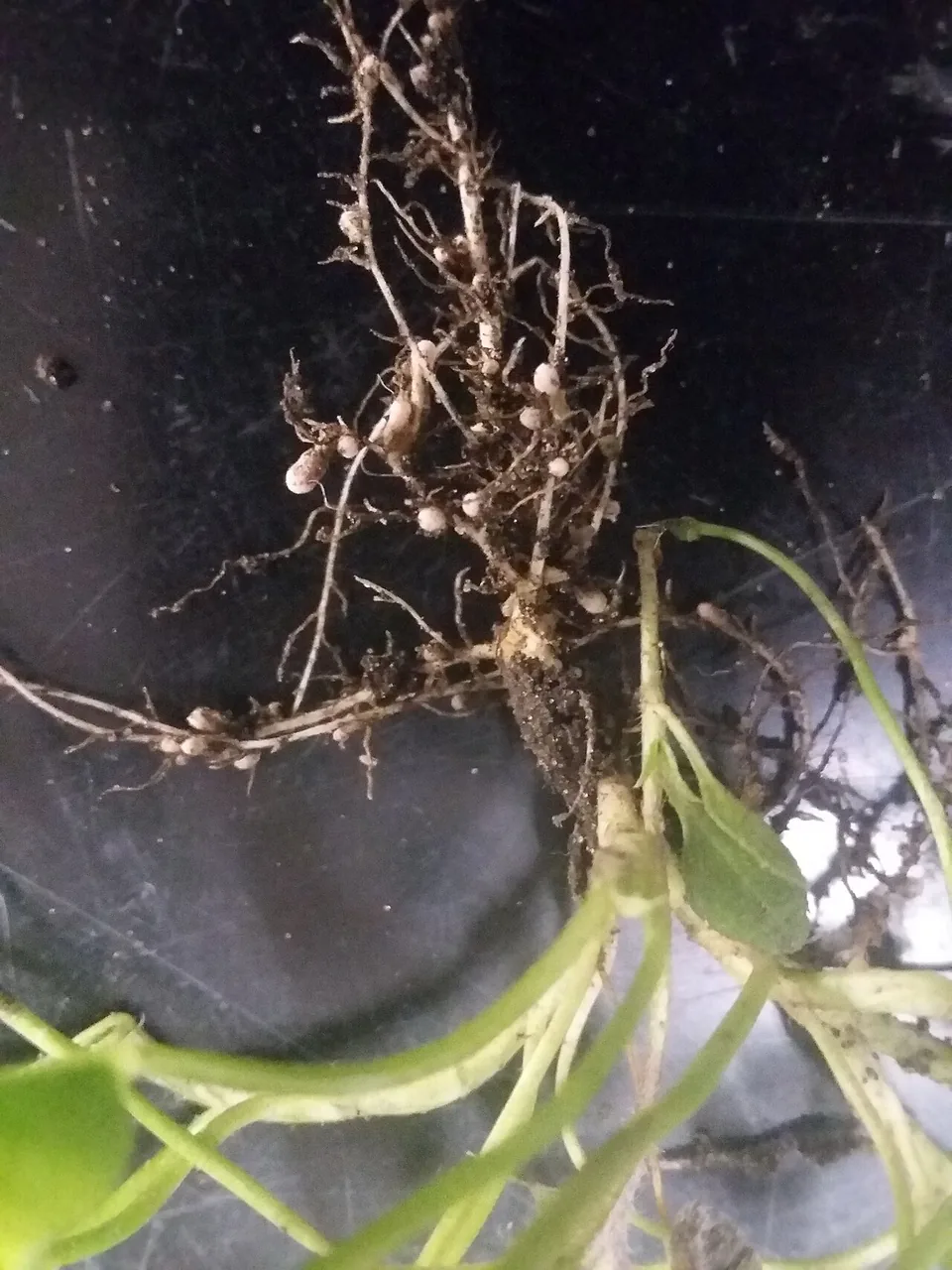
Guess firstPull out a chana or pea plant and look at its roots. You see small round bumps on them. What are they?
Homes of bacteria! These bacteria turn the nitrogen of the air into something the plant can use.
What is the problem with chemical fertiliser?
Today pollution is a big worry. To meet the growing need for farming, a lot of chemical fertilisers were used.
The problem is this: too much chemical fertiliser causes pollution. So there is now strong pressure to move to organic farming, which means using biofertilisers.
What is a biofertiliser?
Biofertilisers are living things that improve the quality of the plant's food (nutrients) in the soil. Think of them as living fertiliser workers in the soil. They come from three groups:
- Bacteria
- Fungi
- Cyanobacteria
Where does a plant get its nitrogen?
A plant needs nitrogen to grow. The air is full of nitrogen gas, but the plant cannot use it directly.
This is like an uncashed cheque: there is a lot of money, but you must first cash it at the bank. Changing the nitrogen of the air into a form the plant can use is like cashing the cheque. It is called nitrogen fixation.
Where does Rhizobium live?
Plants of the pulse and pod family, such as chana and peas, are called leguminous plants. On their roots there are small round bumps, called root nodules.
Inside the nodules lives a bacterium: Rhizobium. Remember, the plant cannot use the nitrogen of the air directly.
Rhizobium changes that nitrogen into a form the plant can use (NCERT: organic forms). This is nitrogen fixation, and the plant uses this nitrogen as food.
Rhizobium is a tenant in the root's house (the nodule), who pays rent in nitrogen. Both gain, so this relationship is called a symbiotic association (symbiosis). A real tenant pays rent on purpose, but Rhizobium just lives and grows.
Do bacteria living alone in the soil do this too?
Yes. Some bacteria live alone in the soil (free-living), not inside any root. Still, they fix the nitrogen of the air and add nitrogen to the soil:
- Azospirillum
- Azotobacter
How does a fungus help the root?
Some fungi also live in symbiosis with roots. This pair of a fungus and a root is called mycorrhiza.
It is an extension of the root: a net of thin fungal threads pulls phosphorus from the soil and gives it to the plant. The net is not a part of the plant, but a different living thing.
NCERT asks: what does the fungus get from this? The answer: it is a give-and-take. The fungus gives phosphorus to the plant, and in return it takes food (sugar) from the plant, which the plant makes from sunlight.
Many fungi of one genus (a group of very close kinds), Glomus, form mycorrhiza. Such plants get more benefits too:
- Protection from germs that come through the root (root-borne pathogens)
- Stronger against too much salt in the soil (salinity)
- Stronger against dry weather (drought)
- Better overall growth and development
What are cyanobacteria?
Cyanobacteria make their own food from sunlight, like plants, so they are autotrophic. They are common in both water and on land. Many of them fix nitrogen, for example:
- Anabaena
- Nostoc
- Oscillatoria
In paddy (dhaan) fields they are an important biofertiliser. They also add organic matter (material made by living things) to the soil, and they improve the fertility of the soil.
Fact box: cyanobacteria are bacteria, not algae. NCERT also calls them blue green algae; that is their old name.
What is happening in the fields today?
Today in India many biofertilisers are sold in the market, and farmers use them regularly. This refills the nutrients of the soil, and we depend less on chemical fertiliser. The lesson of NCERT: we must promote biofertilisers in place of chemical fertiliser.
| Group | Example | How it lives | What it gives |
|---|---|---|---|
| Bacterium | Rhizobium | Symbiotic: in the nodules of pulse plants | Nitrogen |
| Bacterium | Azospirillum | Free-living: in the soil | Nitrogen |
| Bacterium | Azotobacter | Free-living: in the soil | Nitrogen |
| Fungus | Glomus | Symbiotic: mycorrhiza | Phosphorus |
| Cyanobacterium | Anabaena | In water and on land | Nitrogen, organic matter |
| Cyanobacterium | Nostoc | In water and on land | Nitrogen, organic matter |
| Cyanobacterium | Oscillatoria | In water and on land | Nitrogen, organic matter |
Remember: Glomus gives phosphorus (and takes sugar in return); all the others give nitrogen. Rhizobium lives in the root's house (symbiotic); the "Azo" ones live alone in the soil (free-living).
RiyaSir, all biofertilisers give only nitrogen, right? Even Glomus?
SirNo. Glomus is a fungus, and it gives phosphorus. Nitrogen is fixed by bacteria and cyanobacteria.
RiyaAnd blue green algae are small plants, right?
SirThe name is old. They are bacteria that make their own food, as plants do.
NCERT exercise 15: biofertilisers make the soil rich like this:
- Rhizobium: fixes nitrogen in the nodules.
- Azospirillum: fixes nitrogen alone in the soil.
- Azotobacter: fixes nitrogen alone in the soil.
- Glomus (mycorrhiza): gives phosphorus; protects from disease, salt and dry weather.
- Cyanobacteria: give nitrogen and organic matter in paddy fields.
NCERT exercise 10: microbes reduce two kinds of chemicals:
- In place of chemical fertiliser: biofertilisers (the table above).
- In place of chemical sprays: Bt and baculoviruses (insects), Trichoderma (plant diseases) (Part 9).
- And the friendly insects are saved too: ladybird, dragonfly (Part 8).
NCERT exercise 13 (a): single cell protein (SCP) is not in the text of this chapter. NCERT asks you to discuss it with your teacher. The common answer:
- Microbes such as bacteria, yeast or Spirulina are grown on a large scale.
- They give protein-rich food for humans and animals.
- They are often grown on waste material.
NCERT exercise 13 (b): what microbes do in the soil:
- Fix nitrogen: the bacteria and cyanobacteria above.
- Bring phosphorus: Glomus.
- Protect roots from disease: Trichoderma (Part 9).
- Break down dead leaves, dung and dead bodies and return nutrients to the soil (decomposers).
Don't mix them up: Glomus gives phosphorus, not nitrogen. Rhizobium is symbiotic (in a nodule); Azotobacter is free-living. And blue green algae are really bacteria.
Hindi medium? See the Hindi names (tap to open)
| English | Hindi name | Meaning of the pieces |
|---|---|---|
| Biofertiliser | जैव उर्वरक | जैव = from living things; उर्वरक = fertiliser |
| Nitrogen fixation | नाइट्रोजन स्थिरीकरण | स्थिर = to make firm, fixed |
| Symbiotic | सहजीवी | सह (together) + जीवी (living) |
| Mycorrhiza | कवकमूल | कवक (fungus) + मूल (root) |
| Blue green algae | नील-हरित शैवाल | Blue-green algae |
Revise: 4 cards (tap one to flip it)
Nitrogen fixation
Making the nitrogen of the air usable for the plant. Cashing the cheque.
Rhizobium
In the root nodules of pulse plants, symbiotic. Nitrogen.
Mycorrhiza
Fungus + root. Glomus gives phosphorus and takes sugar in return.
Cyanobacteria
Autotrophic; Anabaena, Nostoc, Oscillatoria. Paddy fields.
Check yourself
Where does Rhizobium live?
In the root nodules, in symbiosis.
What does Glomus give to the plant?
Phosphorus.
Which microbe is an important biofertiliser in paddy fields?
Cyanobacteria. No problem if you got it wrong, now you will remember.
That's it, the chapter is complete! From curd to the farm, microbes do a lot for human welfare.
In the next part: quick revision and all 15 exercises.
11Quick revision: the night before the exam
In short: the whole chapter on one screen: where microbes live, the products of home and factory, sewage, biogas, biocontrol and biofertilisers. Plus the abbreviations, all 15 NCERT exercises, and the common mistakes.
Microbes: where and who
- Besides big plants and animals, microbes are a large part of life on Earth.
- Chapter 7: microbes cause disease in humans, animals and plants. But not all are bad; very many are useful to us.
- Microbes do not help us on purpose. They just eat and grow, and we use what they make.
- They are everywhere: soil, water, air, inside our body, and inside other animals and plants.
They live even where no other living thing can:
- Inside geysers (thermal vents), where the heat goes up to 100 °C
- Deep down in the soil
- Under ice many metres thick
- Very acidic places
There are many kinds of microbes:
- Protozoa
- Bacteria
- Fungi
- Microscopic animal and plant viruses
- Viroids: only a small piece of RNA, no protein coat
- Prions: infectious agents made of protein
- The kingdoms of Class 11: microbes are found in Monera, Protista and Fungi. Only Monera and Protista are fully microscopic.
- Fungi have both: the tiny yeast and the big mushroom.
- Bacteria and many fungi are grown on nutritive media (their plate of food).
- There they form colonies (a settlement of microbes) that you can see with the eye. Such cultures are used to study microbes.
| Figure | What it shows | How big (X = times) |
|---|---|---|
| 8.1 (a, b) | Bacteria: rod-shaped and spherical (round) | 1500X |
| 8.1 (c) | Rod-shaped bacterium with flagella (whip-like tails for moving) | 50,000X |
| 8.2 (a) | Bacteriophage (a virus of bacteria) | About 1,00,000–1,50,000 times (100,000 to 150,000 times) |
| 8.2 (b) | Adenovirus: breathing infections (respiratory infections) | About 1,00,000–1,50,000 times (100,000 to 150,000 times) |
| 8.2 (c) | Rod-shaped Tobacco Mosaic Virus (TMV) | About 1,00,000–1,50,000 times (100,000 to 150,000 times) |
| 8.3 | Colonies of bacteria in a petri dish, and a colony of fungus | Visible to the eye |
Home and factory: which product, which microbe
| Product | Microbe | Type | Job or special point |
|---|---|---|---|
| Curd (dahi) | LAB, such as Lactobacillus | Bacteria | Sets the milk; vitamin B12 increases |
| Idli, dosa batter | Bacteria | Bacteria | CO2 makes the batter rise |
| Bread dough | Baker's yeast, Saccharomyces cerevisiae | Yeast (fungus) | CO2 makes the dough rise |
| Toddy | Palm sap is fermented | NCERT gives no name | A traditional drink of some parts of Southern India |
| Fish, soyabean, bamboo shoots | Microbes | NCERT gives no name | Become food by fermentation |
| Swiss cheese | Propionibacterium shermanii | Bacterium | A lot of CO2 makes big holes |
| Roquefort cheese | A special fungus | Fungus | Grown on the cheese to ripen it; special flavour |
| Wine, beer, whisky, brandy, rum | Brewer's yeast, Saccharomyces cerevisiae | Yeast | Ethanol from malted cereals and fruit juice |
| Penicillin | Penicillium notatum | Fungus (mould) | The first antibiotic |
| Citric acid | Aspergillus niger | Fungus | Organic acid |
| Acetic acid | Acetobacter aceti | Bacterium | Organic acid |
| Butyric acid | Clostridium butylicum | Bacterium | Organic acid |
| Lactic acid | Lactobacillus | Bacterium | Organic acid |
| Ethanol (in a factory) | Saccharomyces cerevisiae | Yeast | Alcohol on a large scale |
| Lipases | Enzyme made by microbes | Enzyme | Remove oily stains in detergents |
| Pectinases, proteases | Enzymes made by microbes | Enzyme | Make bottled fruit juice clear |
| Streptokinase | Streptococcus | Bacterium | Changed by genetic engineering; clot buster |
| Cyclosporin A | Trichoderma polysporum | Fungus | Immunosuppressive medicine for transplant patients |
| Statins | Monascus purpureus | Yeast (as per NCERT) | Lower blood cholesterol |
- Fermentation: microbes break down sugar without oxygen, and release acid, alcohol or gas.
- LAB grow in milk and make acid. This acid makes the milk protein set (coagulate) and partly digests it.
- A little old curd = a starter (jaaman), also called an inoculum. It has millions of LAB, which grow at the right warmth.
- Curd has more vitamin B12. In our stomach too, LAB stop disease-causing microbes.
- The CO2 in idli and dosa comes from fermentation. The bacteria are already in the dal and rice, on hands and utensils, and in the air.
- Cheese is one of the oldest foods made with microbes. The texture, flavour and taste of each cheese come from its own microbes.
- Baker's yeast and brewer's yeast: one worker, two shops (a bakery and a drinks factory). Both are Saccharomyces cerevisiae.
Trick, the product is in the name: Lactobacillus → lactic acid, Acetobacter → acetic acid.
Drinks: with or without distillation
| Without distillation | With distillation | |
|---|---|---|
| Drinks | Wine, beer | Whisky, brandy, rum |
- Yeast has been used for making drinks since very ancient times.
- Which drink is made depends on the raw material (malted cereals or fruit juice) and the processing.
- The ethanol reaction is alcoholic fermentation. Yeast breaks sugar into ethanol and CO2 without oxygen.
- Distillation = turning liquid into steam and back into drops, like the drops under the lid of a pot of hot tea. For whisky, brandy and rum, the fermented broth is distilled.
- The very big pots of a factory are fermentors (Figure 8.4), a giant cooking pot (patila) for microbes. Figure 8.5: a fermentation plant.
- Remember Chapter 7: alcohol damages the liver and the nervous system, and teenagers most of all.
Antibiotics and the story of Penicillin
- Antibiotics: chemicals made by some microbes, which kill other (disease-causing) microbes or slow their growth.
- One of the greatest discoveries of the 20th century; a huge help to human welfare.
- Greek: anti = against, bio = life. "Against life" for the germ, "pro life" for the human.
- Alexander Fleming was working on Staphylococci bacteria.
- In one unwashed culture plate a mould grew, and no Staphylococci grew around it.
- The reason: a chemical made by the mould. Fleming named it Penicillin, after the mould Penicillium notatum.
- Its full power as a medicine was shown later by Ernest Chain and Howard Florey.
- In World War II, wounded American soldiers were treated with it.
- 1945: Fleming, Chain and Florey got the Nobel Prize.
Penicillin was the first antibiotic, and the discovery happened by chance. Later, more antibiotics were made from other microbes. With them these deadly diseases began to be cured:
- Plague
- Whooping cough (kali khansi)
- Diphtheria (gal ghotu)
- Leprosy (kusht rog)
- Pneumonia (NCERT summary)
- It is hard to imagine the world today without antibiotics.
- Take an antibiotic only on a doctor's advice. Needless use lets resistant bacteria take over (Chapter 6).
Three medicines, three jobs
- Streptokinase = clot buster, a drain cleaner that opens a blocked pipe. It dissolves the clot in the blood vessels of the heart.
- Myocardial infarction is the medical name for a heart attack. A clot blocks the heart's own vessel, and a part of the heart muscle is damaged.
- Cyclosporin A = a medicine that keeps the fort's army calm (immunosuppressive), so the army does not reject the new organ of a transplant.
- Statins = a fake key in the lock. The statin sits in the lock of the enzyme that makes cholesterol (competitive inhibition).
- All these medicines are only on a doctor's advice.
Trick: streptokinase → clot, cyclosporin A → transplant, statins → cholesterol.
Fact box: Monascus purpureus is really a mould (a fungus that grows as threads). Fermented rice made with it is sold as "red yeast rice", so people often call it a yeast.
Fact box: the scientific name of Trichoderma polysporum today is Tolypocladium inflatum. In the exam, write the NCERT names in both places.
Sewage treatment
- Cities and towns make a lot of dirty water every day, mostly with human excreta. This is called sewage (municipal waste water).
- It has a lot of organic matter and microbes, and many of these microbes are pathogenic.
- It cannot be let straight into rivers and streams: it causes pollution and spreads water-borne diseases (Chapter 7).
- So it is cleaned in sewage treatment plants (STPs). The work is done by the sewage's own heterotrophic microbes (they cannot make their own food).
| Primary treatment | Secondary treatment | |
|---|---|---|
| Kind | Physical | Biological |
| How | Floating debris is filtered out again and again (filtration); then mud and grit settle at the bottom (sedimentation) | Big aeration tanks (Figure 8.6): constant stirring by machine and pumping in air |
| Picture | A sieve and a clay pot (matka) | A feast for microbes: flocs of aerobic microbes (a net of bacteria and fungal threads) |
| What settles below | Primary sludge | Activated sludge (in the settling tank) |
| Water on top | Effluent: goes on to secondary treatment | Effluent: let out into rivers and streams (Figure 8.7) |
- BOD (the oxygen bill of the dirt): the oxygen needed if bacteria oxidise all the organic matter in 1 litre of water.
- The BOD test checks how fast microbes take up oxygen. So BOD is an indirect measure of organic matter.
- More BOD = dirtier water. Flocs eat the organic matter, and the sewage is treated until BOD falls a lot.
- A little of the activated sludge goes back into the aeration tank: the starter (inoculum).
- The rest of the sludge goes to anaerobic sludge digesters. There, bacteria that live without oxygen digest the bacteria and fungi of the sludge.
- This makes methane, hydrogen sulphide (H2S) and CO2: that is biogas, which burns and gives energy.
- This method has been used almost everywhere for more than a century. Microbes clean millions of gallons of water every day all over the world.
- No human machine has matched this microbial method so far. Activated sludge recycles water in nature.
- As cities grew (urbanisation), sewage increased a lot, but STPs were not built in the same number. Raw sewage goes into rivers: pollution and water-borne diseases.
- The Ministry of Environment and Forests started the Ganga Action Plan and the Yamuna Action Plan. They plan many STPs, so that only clean sewage goes into the river.
- NCERT's suggestion: visit a nearby STP, and a biogas plant if there is one near a village.
Trick, P-P: Primary = Physical. Secondary = biological.
Fact box: since 2014 this ministry is called the Ministry of Environment, Forest and Climate Change. The cleaning of the Ganga now runs under the "Namami Gange" programme (2014). In the exam, write the NCERT line.
Biogas
- Biogas: a mix of gases made by microbes, mostly methane. It is a fuel.
- Which gas is made depends on the microbe and its food (the organic substrate). In dough, cheese and drinks it was mainly CO2.
- Methanogens (such as Methanobacterium): grow without oxygen, on material with cellulose. While breaking plant waste, they make a lot of methane, with some CO2 and H2.
- They are found in the anaerobic sludge of sewage, and in the rumen (a part of the stomach) of cattle.
- In the rumen they break down cellulose and help the animal's nutrition. We humans cannot digest cellulose.
- So dung (gobar) has many methanogens, and the biogas made from it is called gobar gas.
| Part of the biogas plant (Figure 8.8) | Job |
|---|---|
| Concrete tank | 10-15 feet deep; bio-waste and a slurry of dung are put in |
| Floating cover | On top of the slurry; rises as gas forms |
| Gas outlet and pipe | Gas goes to nearby houses |
| Second outlet | The leftover slurry (spent slurry) comes out; used as fertiliser |
- More plants are made in villages, because animals are kept there for many jobs, and there is a lot of dung.
- Uses of the gas: cooking and lighting. In India this technology was developed mainly by the work of IARI and KVIC.
Biocontrol
- Biocontrol: controlling plant diseases and pests with the help of living things.
- Today mostly chemicals (insecticides, pesticides) are used. They are poisonous and very harmful to both humans and animals.
- They pollute the soil, ground water, fruit, vegetables and crops. Weedicides, which kill weeds, also pollute the soil.
- Biological pest control runs on natural predation, not on chemicals.
- An organic farmer believes in biodiversity for health; the more variety, the more sustainable the land.
- The aim is not to wipe out (eradicate) pests, but to keep them in check with checks and balances (the farm's weighing balance, tarazu).
- Wiping out pests completely is not right: useful predators and parasitic insects live by eating them or living in them.
- Common farm chemicals kill friend and enemy without choosing (a bomb that hits everyone). Biocontrol is holistic: it looks at the web between all the living things of the farm.
- Learn about the predators and pests in the field, their life cycle, how they feed and where they like to live. Only then will you choose the right biocontrol.
| Agent | Type | Against what |
|---|---|---|
| Ladybird (the red-and-black spotted beetle) | Insect | Aphids |
| Dragonflies | Insect | Mosquitoes |
| Bacillus thuringiensis (Bt) | Bacterium | Caterpillars of butterflies and moths |
| Trichoderma | Fungus (free-living, near the roots) | Plant pathogens |
| Baculoviruses (Nucleopolyhedrovirus) | Virus | Insects and other arthropods |
- Dry Bt spores are sold in sachets. They are mixed in water and sprayed on brassicas and fruit trees.
- The larva eats the spores; a toxin is released in its gut, and it dies. The other insects are safe.
- Through genetic engineering, the Bt toxin genes were put into plants. Bt-cotton is grown in some states of India (Chapter 10).
- Baculoviruses are species-specific and narrow spectrum. Plants, mammals, birds, fish and non-target insects are safe.
- So they are especially useful in IPM, and in an ecologically sensitive area.
- Biocontrol saves us from the heavy use of poisonous pesticides.
Biofertilisers
- Chemical fertilisers increased pollution, and using too much of them causes problems. So there is pressure to move to organic farming, that is, biofertilisers.
- Biofertilisers: living things that improve the nutrient quality of the soil. They come from bacteria, fungi and cyanobacteria.
- Nitrogen fixation: changing the nitrogen of the air into a form the plant can use (cashing the cheque).
| Group | Example | How it lives | What it gives |
|---|---|---|---|
| Bacterium | Rhizobium | Symbiotic: in the root nodules of pulse (leguminous) plants | Nitrogen |
| Bacterium | Azospirillum | Free-living: in the soil | Nitrogen |
| Bacterium | Azotobacter | Free-living: in the soil | Nitrogen |
| Fungus | Glomus | Symbiotic: mycorrhiza with the root | Phosphorus |
| Cyanobacterium | Anabaena | In water and on land; autotrophic | Nitrogen, organic matter |
| Cyanobacterium | Nostoc | In water and on land; autotrophic | Nitrogen, organic matter |
| Cyanobacterium | Oscillatoria | In water and on land; autotrophic | Nitrogen, organic matter |
- Plants with mycorrhiza: protection from germs of the root (root-borne pathogens), stronger against salt (salinity) and dry weather (drought), and better growth.
- Give-and-take: the fungus gives phosphorus to the plant, and in return takes the food (sugar) the plant makes.
- Cyanobacteria are an important biofertiliser in paddy (dhaan) fields. Blue green algae is their old name; they are bacteria.
- Today many biofertilisers are in the market, and farmers use them regularly. We must promote them in place of chemical fertiliser.
- The lesson of the chapter: microbes do so many jobs that they play a big part in human welfare.
Abbreviations
| Short | Full form |
|---|---|
| LAB | Lactic acid bacteria |
| STP | Sewage treatment plant |
| BOD | Biochemical oxygen demand |
| IPM | Integrated pest management |
| Bt | Bacillus thuringiensis |
| IARI | Indian Agricultural Research Institute |
| KVIC | Khadi and Village Industries Commission |
| SCP | Single cell protein |
| TMV | Tobacco Mosaic Virus |
| CO2, H2, H2S | Carbon dioxide, hydrogen, hydrogen sulphide |
All 15 NCERT exercises
- Take a little curd. It has millions of LAB, it is easy to carry, and under a microscope they are easy to see. Part 2.
- CO2: idli-dosa and bread dough, the holes of Swiss cheese, the yeast of drinks. Methanogens: methane, CO2, H2. Sludge digesters: methane, H2S, CO2. Part 7.
- LAB are in curd and milk, and in our stomach. Their job: milk into curd, more vitamin B12, stopping bad microbes; in industry, lactic acid (Part 4). Part 2.
- Wheat: bread, bhatura. Rice: idli, dosa (rice and urad dal). Bengal gram (chana, besan): dhokla is the common answer, but it is not in the NCERT text. Idli-dosa has urad, not Bengal gram. Part 2.
- Microbes make antibiotics, which kill disease-causing bacteria or stop their growth. With them, plague, whooping cough, diphtheria, leprosy and pneumonia could be treated. Part 3.
- Penicillium notatum (Penicillin) is in NCERT. The other is not in the NCERT text: the common answer is Cephalosporium acremonium (today called Acremonium chrysogenum), which gives cephalosporins. Streptomyces is a bacterium, not a fungus. Part 3.
- Sewage = dirty water of cities, mostly human excreta; it has organic matter and pathogenic microbes. If it goes into a river without cleaning, it causes pollution and water-borne diseases. Part 5.
- Primary = physical (filtration and sedimentation). Secondary = biological: aerobic microbes in the aeration tank eat the organic matter, and BOD falls. Part 6.
- Yes. Methanogens make biogas (gobar gas) from dung and sewage sludge, and it is used for cooking and lighting. Part 7.
- Biofertilisers in place of chemical fertiliser. In place of chemical sprays: Bt, baculoviruses, ladybird and dragonfly (insects), Trichoderma (plant diseases). Parts 8-10.
- C (400 mg/L) has the highest BOD: untreated sewage, the dirtiest. River water is taken as clean, so the lowest is B (8 mg/L) = river water. A (20 mg/L) = secondary effluent. Part 6.
- Cyclosporin A: the fungus Trichoderma polysporum. Statins: the yeast Monascus purpureus. Part 4.
- (a) SCP is not in the text of this chapter; NCERT asks you to discuss it with your teacher. Common answer: growing bacteria, yeast or Spirulina on a large scale for protein-rich food. (b) Soil: nitrogen fixers, Glomus (phosphorus), Trichoderma (protecting roots). Decomposers break down dead leaves, dung and dead bodies and return nutrients to the soil. Part 10.
- One model: Penicillin (saves lives), then Curd (daily food, B12, stops bad germs). Then Biogas (clean fuel and fertiliser), and last Citric acid (industry). Another order is fine if you give good reasons. Part 7.
- Rhizobium fixes nitrogen in nodules, and Azospirillum and Azotobacter fix it in the soil. Glomus gives phosphorus; cyanobacteria give nitrogen and organic matter in paddy fields. Part 10.
Common mistakes
- Writing one microbe for bread, curd and idli. Bread = yeast; curd and idli-dosa = bacteria.
- Writing baker's yeast and brewer's yeast as different microbes. Both are Saccharomyces cerevisiae.
- Writing wine and beer as distilled. They are made without distillation; whisky, brandy and rum are distilled.
- Writing "Propionibacterium sharmanii". This is how NCERT prints it, but the correct spelling is shermanii.
- Thinking Streptococcus and Staphylococci are the same. Streptokinase comes from Streptococcus; Staphylococci were in Fleming's plate.
- Mixing up the two Trichoderma. Trichoderma polysporum = cyclosporin A; the Trichoderma of biocontrol = stops plant diseases.
- Writing Aspergillus niger as a bacterium. It is a fungus (citric acid).
- Writing Streptomyces as a fungus. It is a bacterium.
- Writing primary treatment as biological. Primary = physical; secondary = biological.
- Writing low BOD as dirty water. It is the opposite: more BOD = dirtier.
- Writing biogas as mainly CO2. Biogas is mainly methane.
- Swapping ladybird and dragonfly. Ladybird → aphids; dragonfly → mosquitoes.
- Writing Bt as a fungus. Bt = bacterium, Trichoderma = fungus, baculovirus = virus.
- Writing Rhizobium as free-living. It is symbiotic (nodules); Azotobacter and Azospirillum are free-living.
- Writing Glomus as a nitrogen giver. Glomus gives phosphorus.
- Thinking blue green algae are algae. They are cyanobacteria, that is, bacteria.
12Self-check: 10 quick questions
How it works: tap an answer. You will see at once if it is right, with a one-line reason.
Q1.Milk is turned into curd by:
Lactic acid bacteria such as Lactobacillus. They also increase vitamin B12 in curd.
Q2.The large holes in Swiss cheese are made by CO2 from:
Propionibacterium shermanii, a bacterium.
Q3.Penicillin was discovered by:
Alexander Fleming, while working on Staphylococci. Chain and Florey later showed its full use; all three won the 1945 Nobel Prize.
Q4.Streptokinase, a 'clot buster', is made by:
The bacterium Streptococcus. It removes clots from the blood vessels of heart attack patients.
Q5.Statins, which lower blood cholesterol, come from:
Monascus purpureus (NCERT calls it a yeast; it is really a mould).
Q6.Primary treatment of sewage is a:
Physical process. Secondary treatment is the biological one.
Q7.A high BOD of water means it is:
Highly polluted: microbes need a lot of oxygen to break down its organic matter.
Q8.Biogas is made mainly by:
Methanogens, anaerobic bacteria that make methane, for example in cow dung and sludge.
Q9.In Bt-cotton, Bt stands for:
Bacillus thuringiensis, a bacterium whose toxin kills certain caterpillars.
Q10.Which bacterium fixes nitrogen in the root nodules of legumes?
Rhizobium, which lives in symbiosis in the root nodules. Azotobacter lives free in the soil.
Tap an answer to check it.
Words to know
Tip: any word with a dotted line under it is explained here too. Tap one in the notes to see its meaning without leaving your place.
All 370 words, A to Z
- Abiotic
- Non-living. The abiotic parts of a living thing's surroundings are things like sunlight, water, soil and heat (physico-chemical factors); wind and water are the abiotic carriers of pollen. Abiotic stresses are non-living troubles for crops, such as cold, drought, salt and heat.
- Acetic acid
- The sour acid of vinegar (sirka). Factories make it with the bacterium Acetobacter aceti.
- Acetobacter aceti
- A bacterium that factories use to make acetic acid, the acid of vinegar. Trick: Aceto-bacter makes acetic acid.
- Acquired immunity
- The defence the body builds up during life after meeting a germ. It is specific to each germ and has memory: the first meeting gives a weak response, the next one a much faster, stronger one. It works through B cells (antibodies) and T cells.
- Activated sludge
- The flocs that settle in the settling tank after secondary treatment. A small part goes back to the aeration tank as inoculum (starter), and most of it goes to the sludge digesters.
- Adenine (A)
- One of the four bases (letters) of DNA, written A. It is a purine. In DNA it pairs with thymine (T) by two hydrogen bonds; in RNA it pairs with uracil (U).
- Adenovirus
- A virus that causes infections of the breathing passages, such as a cold, a sore throat or a chest infection.
- Aeration tank
- A large tank in which sewage is stirred all the time by machines while air is pumped in, so useful aerobic microbes grow fast and eat the organic matter.
- Aerobic
- Needing oxygen (air) to live and grow.
- AIDS (Acquired Immuno Deficiency Syndrome)
- Acquired Immuno Deficiency Syndrome: the disease caused by HIV, in which the body's defence system (immune system) becomes weak, so even common germs cause serious infections. 'Acquired' means caught during life, not present from birth. It has no cure, but medicines can keep HIV under control.
- Air-borne, water-borne and vector-borne diseases
- '-borne' means 'carried by'. Air-borne diseases (pneumonia, cold) spread through the air, food- or water-borne ones (typhoid, amoebiasis, ascariasis) through dirty food and water, and vector-borne ones (malaria, filariasis, dengue) by insects such as mosquitoes. Root-borne pathogens attack plants through their roots.
- Alexander Fleming
- A scientist who was growing Staphylococci bacteria and saw that they could not grow around a mould on an unwashed plate. That is how he found Penicillin, by chance; he shared the 1945 Nobel Prize with Chain and Florey.
- Algae (alga)
- Simple plant-like living things, mostly in water, that make their own food from sunlight, like the green slime (kaai) on a pond; some, like Chlamydomonas, have only one cell. Blue-green algae (cyanobacteria) are bacteria, not algae.
- Alien DNA (foreign DNA)
- DNA taken from another living thing and put into a host. Here 'alien' means 'from outside', not from space!
- Alkaline pH
- pH is a scale that tells how acidic or alkaline something is. Alkaline is the opposite of acidic, like soapy water (pH above 7); the gut of many insect larvae is alkaline, and this dissolves Bt crystals.
- Alpine meadow
- A grassland high up on mountains, above the height where trees can grow, full of small flowers in summer.
- Amazon rain forest
- The huge rain forest of South America, the richest place on earth for species. NCERT calls it the 'lungs of the planet' and says it makes 20 per cent of the earth's oxygen; scientists today estimate about 6 to 9 per cent of the oxygen made by photosynthesis on Earth, and say its own trees and microbes use up about as much.
- Amino acids
- Small building blocks that join in a long chain to make a protein, like beads on a string.
- Amoebiasis (amoebic dysentery)
- A disease of the large intestine caused by Entamoeba histolytica. Signs: constipation, stomach pain and cramps, and stools with too much mucus and blood clots. It spreads through food and water made dirty by faeces, often carried there by houseflies.
- Amphibian
- An animal that lives both on land and in water, like frogs and salamanders. The first amphibians came from lobefins, and amphibians later gave rise to reptiles.
- Anabaena, Nostoc and Oscillatoria
- Cyanobacteria that fix nitrogen from the air. In paddy (rice) fields they work as a natural biofertiliser.
- Anaemia
- A condition in which the blood has too little working haemoglobin, so the body gets less oxygen and the person feels weak and tired.
- Anaerobic (anaerobiosis)
- Living and growing without oxygen (air). Anaerobiosis is a condition with no oxygen, as in waterlogged soil; it slows down decomposition, so dead matter piles up.
- Anaerobic sludge digester
- Large closed tanks in which bacteria that grow without oxygen digest the sludge from sewage. They give off biogas: methane, hydrogen sulphide and CO₂.
- Anopheles mosquito
- The mosquito that spreads malaria. The infected female Anopheles carries Plasmodium from one person to another, so it is the vector of malaria, and it is also one of the germ's two hosts.
- Antibiotic
- A medicine that kills bacteria or stops them from growing. Many are made by microbes, like Penicillin by a mould; 'anti' means against and 'bio' means life. It does not work against viruses, such as the cold virus.
- Antibiotic resistance gene
- A gene that lets a bacterium survive an antibiotic that would kill other bacteria. Such genes, often carried on plasmids, are used as selectable markers in DNA work.
- Antibodies
- Y-shaped protective proteins in the blood that fight germs. Each kind fits only its own antigen (a germ's 'badge'), like a key that fits just one lock. A mother passes some to her baby through the placenta and in colostrum.
- Antigen
- Anything foreign, like a part of a germ, that the immune system recognises and makes antibodies against. It is like a badge that tells the army: this is an enemy.
- Aphids
- Tiny, soft insects that suck the juice of plants and harm crops. Ladybirds eat them.
- Arthropods
- Animals with jointed legs and a hard outer cover, such as insects, spiders, crabs and centipedes. They are the biggest group of animals.
- Ascariasis
- A disease caused by the roundworm Ascaris living in the intestine. Signs: internal bleeding, muscle pain, fever, anaemia and a blocked intestine. It spreads through water, vegetables and fruits made dirty by the worm's eggs.
- Ascaris (common roundworm)
- The common roundworm, a helminth that lives in the human intestine and causes ascariasis. Its eggs come out with the faeces of an infected person.
- Aspergillus niger
- A black mould (a fungus) that factories use to make citric acid.
- Autotrophic (autotrophs)
- Able to make its own food, usually from sunlight, air and water, like green plants and cyanobacteria.
- Azotobacter and Azospirillum
- Bacteria that live freely in the soil, not inside roots, and fix nitrogen from the air. They make the soil richer in nitrogen.
- B-lymphocytes (B cells)
- Lymphocytes that make antibodies, an army of proteins sent into the blood to fight germs. Humoral (antibody) immunity depends on them.
- Bacillus thuringiensis (Bt)
- A soil bacterium whose different strains make proteins (Bt toxins) that kill certain insects: caterpillars of butterflies and moths, beetles, or flies and mosquitoes. Its dried spores are sprayed on crops (Chapter 8); the toxin is released in the insect's gut and kills it, while other insects stay safe. Its toxin genes have been put into crops such as Bt cotton (Chapter 10).
- Bacteriophage (phage)
- A virus that infects bacteria. It sticks to a bacterium and sends its genetic material inside, and the bacterium then starts making more viruses.
- Baculoviruses
- Viruses that attack insects and other arthropods. They are good biocontrol agents because each kind kills only its own target pest, and does not harm plants, mammals, birds, fish or other insects.
- Beverages
- Drinks. In this chapter, NCERT means drinks made by fermentation with yeast.
- Bioactive molecules
- Substances that have an effect on the body, like medicines. Cyclosporin A and statins are bioactive molecules made by microbes.
- Biocontrol (biological control)
- Controlling plant diseases and pests with living things, such as their natural enemies or microbes, instead of chemicals. Ladybirds, Bt and Trichoderma are biocontrol agents.
- Biodiversity
- The variety of life at every level, on the earth or in one place: the differences within one species (genetic diversity), the many kinds of species (species diversity) and the many kinds of ecosystems (ecological diversity). The word was made popular by the scientist Edward Wilson.
- Biodiversity hotspot
- A region with a very large number of species, many of them found nowhere else (endemic), whose habitat is being lost fast; not a mobile hotspot. NCERT counts 34 in the world, 3 of them covering India (Western Ghats and Sri Lanka, Indo-Burma, Himalaya); today 36 are counted.
- Biofertiliser
- Living things, such as some bacteria, fungi and cyanobacteria, that make the soil richer in nutrients. They are used in place of chemical fertilisers.
- Biogas (gobar gas)
- A fuel gas, mostly methane, made by bacteria (methanogens) breaking down cattle dung and other wet waste without air. It is also called gobar gas and is used for cooking and lighting.
- Biogas plant
- A concrete tank, 10-15 feet deep, fed with dung slurry. A floating cover rises as gas forms, a pipe takes the gas to nearby houses, and the spent slurry comes out by another outlet to be used as fertiliser.
- Bioreactor
- A large vessel (NCERT: 100-1000 litres) in which living cells turn raw materials into a product, such as an enzyme or a protein. It keeps the best growth conditions: temperature, pH, food (substrate, salts, vitamins) and oxygen, like the fermentors of Chapter 8.
- Blood clot
- A clot is a lump of thickened, set blood; when blood clots at a cut, it thickens and sets like this and stops the bleeding. A clot that blocks a blood vessel of the heart causes a heart attack.
- BOD (biochemical oxygen demand)
- The amount of oxygen that bacteria would use up to break down all the organic matter in one litre of water. More organic waste means a higher BOD, so a higher BOD means dirtier water.
- Bollworm (cotton boll)
- A boll is the round fruit of the cotton plant, inside which the cotton fibre forms (doda). Bollworms are moth caterpillars that bore into the bolls and destroy the cotton; Bt cotton was made to fight them.
- Bone marrow
- The soft tissue inside bones. It is the main lymphoid organ, where all blood cells, including lymphocytes, are made.
- Brassicas
- The mustard and cabbage family of plants, such as sarson, cabbage, cauliflower and radish.
- Brood parasitism
- A bird laying its eggs in another bird's nest and letting that host hatch them and bring up the young, like the cuckoo (koel) in a crow's nest. Over evolution, the parasite's eggs have come to look like the host's eggs in size and colour.
- Bt toxin (Cry protein)
- The insect-killing protein made by Bacillus thuringiensis, also called Cry protein. Inside the bacterium it is an inactive protoxin in crystals. In the insect's alkaline gut it becomes active, makes holes in the gut cells and kills the insect.
- Bt-cotton
- Cotton plants given Bt toxin genes (cryIAc and cryIIAb) by genetic engineering. They make the toxin themselves and resist cotton bollworms without insecticide sprays. It has been grown in India since 2002; in many areas the pink bollworm has since learnt to survive its toxin.
- Butyric acid
- An acid that smells like stale (rancid) butter. Factories make it with the bacterium Clostridium butylicum.
- Caterpillar
- The worm-like larva of a butterfly or a moth, which eats leaves (illi or sundi).
- Cell
- The smallest living piece of any living thing. A house is made of bricks; a plant is made of cells.
- Cell-mediated immunity (CMI)
- Acquired immunity carried out by T cells themselves, not by antibodies. It tells 'self' from 'non-self', and it is why an organ from an unmatched person is rejected.
- Cellular barrier
- Part of innate immunity: white blood cells that destroy germs, mostly by swallowing them. These are neutrophils (PMNL), monocytes and natural killer cells in the blood, and macrophages in the tissues.
- Cellulose
- The tough material that plant walls are made of. Cotton and paper are mostly cellulose. Cows can digest it with the help of bacteria in their rumen, but humans cannot.
- Cephalosporium (cephalosporins)
- A mould (a fungus; today called Acremonium chrysogenum) that makes the antibiotics called cephalosporins. It is the usual answer for a second antibiotic-making fungus, though it is not in the NCERT text.
- Cervix
- The narrow lower neck of the uterus, which opens into the vagina.
- Checks and balances
- Natural controls that stop any one creature from growing too much; for example, predators keep the number of pests low.
- Chlamydomonas
- A tiny one-celled green alga that swims in pond water. One pond can hold millions of them.
- Chlorophyll
- The green colouring in leaves that catches sunlight, so that the plant can make its own food (photosynthesis).
- Cholesterol
- A waxy, fat-like substance made in our body and also found in some foods. Too much of it in the blood can narrow the blood vessels and lead to a heart attack.
- Chromosome
- A thread-like packet of genes inside the nucleus. A human cell has 46 chromosomes, 23 from each parent.
- Citric acid
- The sour acid of lemons and oranges. Factories make it with the fungus Aspergillus niger.
- Cloning (gene cloning)
- Making many exact copies of a piece of DNA, such as one gene. The piece is joined to a vector with an origin of replication and put into a host, which copies it again and again, like many idols from one mould (saancha).
- Clostridium butylicum
- A bacterium that lives without oxygen, which factories use to make butyric acid.
- Coagulate (coagulation)
- To thicken and set into a soft solid, as milk sets into curd.
- Coelacanth
- A lobefin fish that was thought to be extinct, until one was caught in South Africa in 1938.
- Colony (of microbes)
- A heap of millions of microbes, all grown from one, sitting together on a plate of food (nutritive medium). One microbe cannot be seen, but its colony can be seen with the naked eye.
- Colostrum
- The thick yellowish milk of the first few days. It is full of antibodies that protect the baby.
- Competitive inhibition
- Stopping an enzyme with a look-alike substance that sits in the enzyme's working spot, like a fake key in a lock, so the real substance cannot get in. Statins stop the cholesterol-making enzyme this way.
- Contaminated (contamination)
- Made dirty or unsafe by something harmful mixing in, such as germs or faeces getting into food or water. In a lab or a bioreactor, contamination means unwanted microbes getting in.
- Conventional farming
- Today's usual way of farming, which depends on chemical fertilisers and pesticides.
- Copepods
- Tiny shrimp-like animals of the sea and of fresh water; some live stuck to fish as ectoparasites.
- Copy number
- How many copies of a plasmid (or of a bacteriophage's DNA) there are in one cell: 1-2 for some plasmids, 15-100 or more for others. Alien DNA joined to it is copied to the same number; the ori decides it.
- Coral reef
- A rocky ridge in warm, shallow sea, built up over many years by tiny sea animals called corals. It is home to very many kinds of fish and other sea life.
- Corn borer
- The caterpillar of a moth that bores tunnels into the stems and cobs of maize (corn, makka). In Bt corn, the protein of the cryIAb gene controls it.
- cry genes (cryIAc, cryIIAb, cryIAb)
- The Bacillus thuringiensis genes that carry the recipe for Bt toxins (Cry proteins); most of these toxins work against only one group of insects. The proteins of cryIAc and cryIIAb control cotton bollworms, and that of cryIAb controls the corn borer; today they are often written cry1Ac, cry2Ab and cry1Ab.
- Cuckoo (koel)
- The koel, a bird whose loud 'kuhoo' call is heard in spring and summer. It lays its eggs in crows' nests, and the crows bring up its young (brood parasitism).
- Cuscuta (amarbel)
- Amarbel: a yellow, thread-like plant that winds around hedge plants (bushes grown in a row as a fence) as a parasite. In the course of evolution it has lost its chlorophyll and leaves, so it takes all its food from the host plant.
- Cyanobacteria (blue-green algae)
- Tiny living things that make their own food from sunlight, like plants; many also fix nitrogen. Their old name is blue-green algae, but they are bacteria, not algae.
- Cyclosporin A
- A medicine that calms down (suppresses) the immune system, so that the body does not reject a transplanted organ. NCERT says it is made by the fungus Trichoderma polysporum.
- Cytokine barrier
- Part of innate immunity: cells infected by a virus release proteins called interferons, which protect the healthy cells around them from the virus. Cytokines are such message proteins sent out by cells.
- Cytosine (C)
- A base found in both DNA and RNA, written C. It is a pyrimidine, and it pairs with guanine (G) by three hydrogen bonds.
- Debris
- Broken bits of rubbish, such as plastic, paper, cloth and leaves. In sewage, floating debris is removed first.
- Decomposers (decomposition)
- Living things, mainly bacteria and fungi, that break down dead plants, dead animals and dung into simple things like carbon dioxide, water and nutrients; this breaking down is decomposition. The nutrients go back to the soil for plants to use again, like a kitchen compost pit turning peels and dry leaves into khaad.
- Deoxyribose
- The sugar of DNA, a five-carbon (pentose) sugar. 'Deoxy' means it does not have the -OH group that ribose has at its 2' carbon. The D of DNA comes from it.
- Dependence
- Needing something and not being able to do without it. With drugs or alcohol, the body gets so used to them that stopping suddenly brings a withdrawal syndrome, and this can push a person to break social rules to get them. NCERT also wants farms to have less dependence on toxic chemicals.
- Dinosaur
- The huge land reptiles that ruled the earth for millions of years and suddenly disappeared about 65 mya. Nobody knows why: some say the climate changed, some say most of them evolved into birds.
- Diphtheria (gal ghotu)
- A bacterial disease (gal ghotu) in which a thick grey layer forms in the throat and makes breathing and swallowing hard. A vaccine prevents it, and antibiotics help treat it.
- Distillation
- Heating a liquid into vapour (steam) and cooling it back into drops, like the drops that form under the lid of a pot of hot tea. Whisky, brandy and rum are made with distillation; wine and beer are not.
- DNA
- The chemical that genes are made of. It sits inside the chromosomes and stores the instructions for every feature, like the recipe book of a cell.
- DNA ligase
- An enzyme that joins pieces of DNA together, like glue. During copying, it joins the short pieces made on one strand into one long strand; in genetic engineering, it joins a cut piece of DNA into a cut vector.
- DNase, RNase (ribonuclease) and protease
- Enzymes that break things down: DNase breaks DNA, RNase (ribonuclease) breaks RNA, and protease breaks proteins. In Avery's work only DNase stopped the transformation, so the transforming principle had to be DNA. In DNA labs, RNase and protease clean RNA and proteins away from DNA, and proteases made by microbes help make bottled juice clear.
- Dragonfly
- A flying insect with a long, thin body and two pairs of clear wings. It eats mosquitoes, so it helps in biocontrol.
- Drought
- A long time with too little rain, when the soil and crops dry up.
- Dung (gobar)
- Cow and buffalo potty, called gobar. It is full of methanogen bacteria, so it is used to make biogas, and it is good manure too.
- E. coli (Escherichia coli)
- A tiny, common bacterium that scientists use a lot in the lab. It grows fast: it divides about every 20 minutes.
- Ecological diversity
- The variety of ecosystems in a place, such as deserts, rain forests, mangroves, coral reefs, wetlands, estuaries and alpine meadows. India has far more of it than a country like Norway.
- Ecologically sensitive area
- A place where nature is easily harmed, such as a forest, a lake or a home of rare animals, so only very safe pest control can be used there.
- Ecology
- The study of how living things live with each other and with their non-living (abiotic) surroundings, such as sunlight, water, soil and heat. A scientist who studies this is an ecologist; population ecology studies populations.
- EcoRI
- A restriction enzyme from E. coli strain RY 13. Its name shows the naming rule: E (genus Escherichia) + co (species coli) + R (strain RY 13) + I (the first enzyme found in that strain). It cuts DNA at GAATTC, between G and A, leaving sticky ends.
- Ecosystem
- All the living things of a place (plants, animals and microbes) together with their non-living surroundings (soil, water, air and sunlight), working as one system: a functional unit of nature. It can be as small as a pond or as big as a forest or a sea; a crop field and an aquarium are man-made ecosystems.
- Ectoparasite
- A parasite that lives on the outside of its host's body and feeds there, like lice on humans, ticks on dogs and copepods on many sea fish. Ecto = outside.
- Edward Wilson
- An American scientist who studied how animals, especially ants, live and behave together (a sociobiologist). He made the word 'biodiversity' popular.
- Effector cells
- Lymphocytes that have met their antigen and multiplied, and are now ready to do the actual fighting, such as B cells making antibodies.
- Effluent
- The liquid that flows out of a tank or a treatment plant. The primary effluent goes on to secondary treatment; the secondary effluent is let into rivers.
- Egg (egg cell)
- The female cell. When a male cell from the pollen joins it, a new plant begins; in animals, too, a male cell joins the egg to start a new life.
- Endemic (endemism)
- Found only in one region and nowhere else in the world, like a village's special sweet that you get only there. Endemism is having many such species.
- Entamoeba histolytica
- A protozoan parasite that lives in the large intestine of humans and causes amoebiasis (amoebic dysentery).
- Enzyme
- A protein made by cells that speeds up one chemical change, such as breaking a substance down or building one up. Each enzyme does its own job.
- Eradicate (eradication)
- To remove something completely, from the root, so that it never comes back. Smallpox has been eradicated from the world.
- Ernest Chain and Howard Florey
- The two scientists who showed, years after Fleming's chance find, that Penicillin works as a powerful medicine. All three shared the Nobel Prize in 1945.
- Estuary
- The place where a river meets the sea, and fresh water and salt water mix. It is an aquatic ecosystem.
- Ethanol
- The alcohol that yeast makes when it breaks down sugar without oxygen. It is the alcohol in drinks, and factories also make it for other uses. In DNA labs, ice-cold (chilled) ethanol makes DNA come out of a liquid as fine threads.
- Evolution (organic evolution)
- The slow change of living things over a very long time, generation after generation, so that new kinds come from old ones. It is like one huge family tree of all life.
- Explant
- Any small piece of a plant, like a bit of leaf, stem or root, cut out and grown in a test tube in tissue culture.
- Extinct (extinction)
- Died out completely, so that not even one is alive any more, like the dinosaurs. Extinction is this dying out of a whole kind of living thing.
- Faeces (excreta)
- The solid waste (potty) that leaves the body. Excreta means body waste, both faeces and urine. Many germs spread when faeces get into food or water.
- Fermentation
- Microbes breaking down sugar without oxygen, and giving off acid, alcohol or a gas such as CO₂. Curd, idli and dosa batter and bread dough are all made with fermentation.
- Fermented broth
- The liquid in which microbes have grown. The fermented broth is the liquid left after yeast has fermented it.
- Fermentor
- A very large closed tank in a factory in which microbes are grown in huge numbers, with the right food, warmth and air, to make a product such as an antibiotic. Think of it as a giant cooking pot (patila) for microbes.
- Fertilisation
- The joining of a male cell with a female cell (the egg). It is the start of a new plant.
- Fig and fig wasp
- A fig wasp is a tiny insect, smaller than a rice grain; it does not sting people. Each kind of fig (anjeer) tree is pollinated only by its own partner kind of fig wasp: the female lays her eggs inside the fig and pollinates its hidden flowers, and her young (larvae) eat some of its developing seeds.
- Filariasis (elephantiasis)
- A disease caused by filarial worms (Wuchereria) living in the lymph vessels. Over years the legs slowly swell and can become huge, like an elephant's; the genital organs can also be affected. It spreads through the bite of female mosquitoes.
- Filtration (sequential filtration)
- Separating solid bits from a liquid by passing it through a sieve or filter (chhalni). In a sewage plant it is done again and again, with finer filters each time (sequential filtration).
- Flagella (flagellum)
- Long, thin, whip-like tails that some bacteria and other cells use to swim.
- Flocs
- Fluffy clumps of bacteria held together by fungal threads into a net-like mass. They grow in the aeration tank and eat the organic matter in sewage.
- Flora and fauna
- Flora means all the plants of a place or a time, and fauna means all its animals.
- Free-living
- Living on its own in soil or water, not inside another living thing. Azotobacter is free-living, but Rhizobium lives inside root nodules.
- Fungus (plural: fungi)
- A group of living things that are neither plants nor animals and cannot make their own food, such as mushrooms, yeast and moulds (the fuzz on stale roti). Some cause diseases, like ringworm; others give us medicines, like Penicillin.
- Gallon
- A unit for measuring liquids, about 4.5 litres (3.8 litres in the USA).
- Gambusia fish
- A small fish that eats mosquito larvae. Putting it in ponds helps control mosquitoes, and so malaria and filariasis.
- Ganga Action Plan and Yamuna Action Plan
- Plans to save the Ganga and the Yamuna from pollution, by building many sewage treatment plants so that only treated sewage goes into the rivers. NCERT says the Ministry of Environment and Forests started them; since 2014, Ganga cleaning runs under the 'Namami Gange' programme.
- Gene
- A tiny instruction inside a cell that decides a feature, such as flower colour. Young ones get their genes from their parents.
- Genetic diversity
- The variety within one species, in its genes, like the many kinds of mango (Alphonso, Dasheri, Langda) or India's more than 50,000 strains of rice. NCERT's example: Rauwolfia vomitoria plants of different Himalayan ranges make different amounts of a medicine chemical.
- Genetic engineering
- Changing the genes (DNA) of a living thing in a lab, for example by cutting a gene out of one living thing and putting it into another, so that the host gets a new feature (phenotype). Bt-cotton and the improved streptokinase were made this way. It is also called recombinant DNA technology (Chapters 9 and 10).
- Genetic material
- The chemical that carries the instructions passed from parents to children, like a family recipe book. In most living things it is DNA.
- Genus (plural: genera)
- A group of closely related kinds of living things, such as plants, animals or fungi. For example, all roses are in the genus Rosa.
- Geysers (thermal vents)
- A geyser is a hot spring that shoots boiling water and steam out of the ground (not the bathroom water heater!). Thermal vents are cracks that let out very hot water; some microbes live there at up to 100 °C.
- Globin chains
- The protein chains that make up haemoglobin. There are two kinds: alpha (α) chains and beta (β) chains.
- Glomus
- A genus of fungi that form mycorrhiza with plant roots. The fungus takes up phosphorus (not nitrogen) from the soil and passes it to the plant.
- Griffith's experiment
- Frederick Griffith's 1928 experiment with pneumonia bacteria and mice. A mix of heat-killed deadly (S) bacteria and live harmless (R) bacteria killed the mice, so something from the dead S bacteria had changed the R bacteria.
- Grit
- Soil, sand and small pebbles. In a sewage plant, grit is removed by letting it settle at the bottom.
- Guanine (G)
- One of the bases of DNA and RNA, written G. It is a purine, and it pairs with cytosine (C) by three hydrogen bonds.
- Habitat
- The natural home of a living thing, where it lives and finds its food. A pond, a forest and a desert are habitats.
- Haemoglobin
- The red protein inside red blood cells that carries oxygen. It is made of globin chains: alpha (α) and beta (β).
- Haemozoin
- A poisonous substance (toxin) released when red blood cells burst in malaria. It causes the chill and high fever that come back every three to four days.
- Helminths (parasitic worms)
- Worms that live as parasites inside the body, such as the roundworm Ascaris and the filarial worm Wuchereria.
- Hepatitis-B
- A virus infection of the liver. It spreads by sex, shared needles, infected blood and from an infected mother to her baby, and it is not completely curable. A vaccine, made in yeast, protects against it.
- Heterotrophic (heterotrophs)
- Not able to make its own food, so it must eat food made by others, like animals, fungi and most bacteria.
- Hippocrates
- A famous doctor of ancient Greece, often called the father of medicine. He believed in the old 'humors' idea of health.
- HIV (Human Immunodeficiency Virus)
- Human Immunodeficiency Virus, the virus that causes AIDS by slowly killing the 'general' cells of the body's defence army. It spreads only through body fluids: sex, shared needles, infected blood, and from an infected mother to her baby. It does not spread by touching, hugging or eating together.
- Holistic
- Looking at the whole picture, not just one part. In farming it means understanding how all the plants, animals and microbes of a field affect each other.
- Hormone
- A chemical messenger made by a gland. It travels in the blood and tells other parts of the body what to do.
- Host
- The living thing in or on which a parasite or germ lives and feeds, like humans and mosquitoes for the malaria germ; for the koel, a brood parasite, the host is the crow that hatches its eggs. In DNA cloning, the host is the cell (a bacterium, yeast, or a plant or animal cell) that a piece of DNA is put into, so that it gets copied.
- Humoral immune response
- Acquired immunity carried out by antibodies, which float in the blood ('humors' is an old word for body fluids). It is antibody-mediated, and B cells make the antibodies.
- Humors (the old idea of health)
- An old idea of health from the early Greeks, such as Hippocrates, and from Indian Ayurveda: the body has certain fluids called humors, and good health means they are in balance. People with too much 'black bile' were thought to have a hot nature and get fevers. Experiments later proved this idea wrong.
- Hydrogen bond (H-bond)
- A weak pull that holds two bases together across the DNA ladder. A and T are held by two hydrogen bonds, and G and C by three. Because they are weak, the two strands can come apart and join again.
- Hydrogen sulphide
- A gas that smells like rotten eggs, made when microbes break down waste without air.
- IARI (Indian Agricultural Research Institute)
- The Indian Agricultural Research Institute in New Delhi, India's top centre for farm research. With KVIC, it developed India's biogas technology.
- Immunity (immune system)
- The body's overall power to fight disease-causing germs. It is given by the immune system, the body's defence army of special organs, cells and proteins such as antibodies.
- Immunosuppressants (immunosuppressive drugs)
- Medicines that calm down (suppress) the immune system. A person with a transplanted organ takes them all their life, so the body does not reject it; cyclosporin A, made by a fungus, is one.
- Indiscriminately
- Without choosing; hitting everything alike. Chemical sprays kill useful and harmful creatures indiscriminately.
- Infectious and non-infectious disease
- An infectious disease spreads easily from one person to another, like the common cold, typhoid or AIDS. A non-infectious disease does not spread this way; cancer is the biggest killer among them.
- Inflammable
- Catches fire and burns easily. 'Inflammable' does not mean 'not flammable'!
- Innate immunity
- The defence we are born with. It is non-specific, the same against every germ, and works through four barriers: physical, physiological, cellular and cytokine.
- Inoculum (starter)
- A small amount of something full of live microbes, added to start the same work in a fresh batch, like the spoon of old curd (jaaman) that sets new curd. In a sewage plant, a little activated sludge is sent back to the aeration tank as inoculum.
- Insecticide
- A chemical that kills insects, such as the spray used in ditches and drains to kill mosquitoes. It is one kind of pesticide.
- Interferons
- Proteins released by cells infected with a virus. They warn and protect the healthy cells nearby against the virus (the cytokine barrier). α-interferon is also given to cancer patients to wake up their immune system.
- IPM (integrated pest management)
- Controlling pests by combining several gentle methods, such as natural enemies and biocontrol microbes, and using chemicals only when really needed, so that useful insects are protected.
- IUD (Intra Uterine Device)
- A small device that a doctor or trained nurse puts inside the uterus through the vagina, to prevent pregnancy.
- KVIC (Khadi and Village Industries Commission)
- The Khadi and Village Industries Commission, a Government of India body that helps khadi and village industries grow. With IARI, it developed India's biogas technology.
- Lactic acid
- The mild acid that makes curd sour. Lactic acid bacteria (LAB) make it in milk, and factories make it with Lactobacillus.
- Lactic acid bacteria (LAB)
- Bacteria, such as Lactobacillus, that turn the sugar of milk into lactic acid, so the milk sets into curd. In our stomach, they also help keep disease germs in check.
- Lactobacillus
- A rod-shaped bacterium that turns milk into curd; it is the best-known lactic acid bacterium (LAB). Factories also use it to make lactic acid.
- Ladybird
- A small, round beetle, red with black spots. It eats aphids, so it is used for biocontrol.
- Larva (plural: larvae)
- The young, worm-like baby stage of an insect, before it becomes an adult. Mosquito larvae live in still water.
- Legumes
- Plants of the pea and bean family, such as chana, moong and groundnut. Their seed leaves are thick and full of food, and their roots have nodules where Rhizobium bacteria fix nitrogen.
- Leprosy (kusht rog)
- A long-lasting bacterial disease (kusht rog) of the skin and nerves, which causes pale patches and loss of feeling. It is fully curable with medicines.
- Leukocytes (white blood cells, WBC)
- The soldier cells of the blood, also called WBC, that fight germs. Neutrophils, monocytes and lymphocytes are all leukocytes.
- Lice and ticks
- Small blood-sucking ectoparasites. Lice (joon) live in human hair; ticks (kilni) cling to the skin of dogs and cattle.
- Lichen
- A thin, patchy, often whitish growth on tree trunks and rocks. It is really a fungus and an alga (or cyanobacteria) living together as one, each helping the other (mutualism). It does not grow where the air is polluted, so it shows whether the air is clean.
- Lipase
- An enzyme that breaks down fats and oils. Lipases made by microbes are added to washing powders (detergents) to remove oily stains from clothes.
- Lobefins (lobe-finned fish)
- Fish with thick, strong fins that could move on land and go back to water, about 350 mya. They evolved into the first amphibians; the Coelacanth is one of them.
- Lymph (lymphatic system)
- A clear, watery fluid that comes from the blood and flows in its own thin tubes, the lymphatic vessels, before going back into the blood. These tubes, with the lymph nodes on them, make up the lymphatic system.
- Lymph nodes
- Small, solid lumps along the lymph vessels. They trap germs and other antigens in the lymph and tissue fluid, and the lymphocytes there start the immune response.
- Lymphocytes
- A kind of white blood cell made in the bone marrow. B-lymphocytes make antibodies, T-lymphocytes help them and run cell-mediated immunity, and natural killer cells are lymphocytes too.
- Lymphoid organs
- The organs where lymphocytes are made, mature and multiply. Primary ones (bone marrow, thymus) make and train them; secondary ones (spleen, lymph nodes, tonsils, Peyer's patches, appendix, MALT) are where they meet germs.
- Macrophages
- Big 'eating' white blood cells that live in the tissues and swallow and destroy germs. HIV enters macrophages and turns them into an HIV factory.
- Malignant malaria
- The most serious kind of malaria, caused by Plasmodium falciparum. If not treated, it can kill.
- MALT (mucosa-associated lymphoid tissue)
- Lymphoid tissue in the lining (mucosa) of the breathing, food and urogenital passages. It makes up about 50 per cent of the lymphoid tissue in the human body.
- Malted cereals
- Grain, such as barley, that is soaked, allowed to sprout a little and then dried. Sprouting helps turn its starch into sugar, which yeast can then ferment.
- Mammal
- An animal that feeds its young on milk and has hair on its body, like humans, cows, dogs and whales. Most mammals give birth to live young.
- Mangrove
- Trees and shrubs that grow in salty, muddy water along sea coasts, like the Sundarbans. Their roots hold the mud, and many young fish grow up among them.
- Metabolism
- All the chemical work going on inside a living body, such as breaking down food and building new substances.
- Methane
- A gas that burns easily with a clean flame. It is the main gas in biogas and in CNG, and methanogen bacteria make it.
- Methanobacterium
- A common methanogen: a bacterium that makes methane gas. It lives in cattle dung and in sewage sludge, and gives us biogas.
- Methanogens
- Bacteria (archaebacteria in Class 11) that grow without oxygen and make methane while breaking down plant waste such as cellulose. They live in sewage sludge and in the rumen of cattle; Methanobacterium is one.
- Microbe (micro-organism)
- A living thing too small to see without a microscope, such as bacteria, yeast and protozoa; NCERT counts viruses as microbes too. Some cause disease, but many are useful, like the bacteria that turn milk into curd.
- Ministry of Environment and Forests
- The Government of India ministry that looks after the environment, forests and pollution. Since 2014 it is called the Ministry of Environment, Forest and Climate Change; NCERT uses the old name.
- Monascus purpureus
- The microbe that makes statins. NCERT calls it a yeast, but it is really a mould (a fungus that grows as threads); rice fermented with it is sold as 'red yeast rice'. Write NCERT's 'yeast' in the exam.
- Monera
- The kingdom of bacteria, including cyanobacteria (Class 11). Its members are single, simple cells with no proper nucleus.
- Monocytes
- Large white blood cells in the blood that swallow and destroy germs. When they move into the tissues, they grow into macrophages.
- Mould
- A fungus that grows as soft, fuzzy threads, like the fuzz on stale roti or old fruit (fafoondi); Penicillin comes from a mould. In DNA copying (Chapter 5), 'mould' has another meaning: a shape-giver (saancha), like a template.
- Mucus
- A thick, sticky, slippery fluid made by the inner linings of the body, such as in the nose, airways, gut and cervix. In the airways it traps germs and dust.
- Mutualism
- An interaction in which both species gain (+ +), like a dhaba and a truck driver. Lichens, mycorrhizae and the fig tree with its wasp are examples; Chapter 8 called such a partnership symbiosis.
- mya (million years ago)
- Short for 'million years ago'. For example, 500 mya means 500 million (50 crore) years before today.
- Mycorrhiza
- A partnership (symbiosis) between a fungus and plant roots; Chapter 11 calls it mutualism. The fungus takes up phosphorus and other nutrients from the soil for the plant and gets food (sugars) in return; the plant also resists root diseases and bears salt and drought better.
- Myocardial infarction
- The medical name of a heart attack: a clot blocks a blood vessel of the heart, so part of the heart muscle gets no blood and is damaged. NCERT says it 'leads to' a heart attack, but the two are one and the same.
- Natality and birth rate
- Natality is the number of births in a population in a given time. The birth rate is the births per member (per capita): 8 new lotus plants from 20 in a year gives 8/20 = 0.4 per lotus per year.
- Natural killer cells
- A type of lymphocyte in the blood that is part of the cellular barrier of innate immunity. It destroys microbes and infected cells.
- Neutrophils (PMNL)
- The most common white blood cells, also called PMNL (polymorpho-nuclear leukocytes). They are part of the cellular barrier: they rush to germs, swallow them and destroy them.
- Nitrogen fixation
- Turning the nitrogen gas of the air, which plants cannot use, into a form that they can use. Some bacteria and cyanobacteria can do this.
- Nitrogenous base
- The 'letter' part of a nucleotide. DNA has four letters: adenine (A), guanine (G), cytosine (C) and thymine (T); RNA has uracil (U) in place of T. The order of these letters is a gene's message.
- Nucleic acid
- The family of long chain chemicals that store and carry a cell's information. DNA and RNA are the two nucleic acids, and both are chains of small units called nucleotides.
- Nucleopolyhedrovirus
- The genus of baculoviruses most used to control insect pests. Each one kills only its own target species.
- Nucleotide
- One small unit of DNA or RNA, like one bead of a necklace. It has three parts: a nitrogenous base, a sugar and a phosphate group. The units of DNA are also called deoxyribonucleotides.
- Nucleus (plural: nuclei)
- The control centre inside a cell, like its brain. It holds the cell's genes.
- Nutritive media
- A jelly or liquid with food in it, on which microbes, cells or small plant pieces are grown in a lab, like a plate of food (thaali) for them. For plant tissue culture it must have sucrose, inorganic salts, vitamins, amino acids and growth regulators such as auxins and cytokinins.
- Organic farming (organic farmer)
- Farming without chemical fertilisers and pesticides, using biofertilisers, manure and the natural enemies of pests instead. The organic farmer keeps pests at a low, safe level, not wiped out.
- Organic matter
- Material that comes from living things, such as food waste, potty, dead leaves and dung. Microbes feed on it and break it down.
- Origin of replication (ori)
- The fixed spot on DNA where copying (replication) starts, called ori. A piece of DNA can be copied in a cell only if it is joined to such a spot, which is why a vector is needed; the ori also decides how many copies are made (copy number).
- Ovary
- The round base of the pistil. It holds the ovules, and after fertilisation it grows into the fruit.
- Ovule
- A tiny bead inside the ovary. It holds the egg, and after fertilisation it grows into a seed.
- Oxidise (oxidation)
- To join with oxygen. When bacteria oxidise organic matter, they use oxygen to break it down, just as our body uses oxygen to burn food.
- P. vivax and P. malariae
- Two other species of Plasmodium that cause malaria, less serious than the malaria caused by P. falciparum. The NCERT book prints the second name as 'P. malaria'; the correct name is P. malariae.
- Paddy (paddy field)
- Rice as it grows in the field, before its husk (outer cover) is removed (dhaan). A paddy field is a flooded field where rice is grown.
- Parasite (parasitism)
- A living thing that lives in or on another living thing, its host, and feeds on it, harming it; this way of life is parasitism (+ for the parasite, − for the host). Lice, many worms and the malaria germ are parasites, and so are some plants, like Cuscuta.
- Pathogen
- A living thing that causes disease, such as some bacteria, viruses, fungi, protozoans and worms (helminths). Think of it as an intruder that gets into the body and makes us ill.
- Pectin
- A jelly-like material in plant walls. It is what makes jam set.
- Pectinase
- An enzyme that breaks down pectin, the jelly-like material in fruit. Pectinases and proteases make bottled fruit juice clear.
- Penicillin
- The first antibiotic ever found, made by the mould Penicillium notatum. Alexander Fleming found it by chance; Ernest Chain and Howard Florey later showed its full power, and all three got the Nobel Prize in 1945.
- Penicillium notatum
- The mould (a fungus) that makes Penicillin, the first antibiotic.
- Pentose sugar
- A sugar with five carbon atoms. Every nucleotide has one: ribose in RNA, and deoxyribose in DNA.
- Per capita
- For each member, 'per head'. You divide the total by the number of members you started with, like per capita income: 8 new lotus plants among 20 is 8/20 = 0.4 per lotus.
- Pest
- An insect or other creature that harms crops, stored food or people, like aphids and caterpillars on crops.
- Pesticide
- A chemical that kills pests. Insecticides kill insects and weedicides kill weeds; such chemicals are toxic and pollute soil, water and food.
- Petri dish (culture plate)
- A shallow, round dish with a lid, holding a jelly of food (nutritive medium) on which microbes are grown in a lab. Fleming's 'culture plate' was such a dish.
- Phagocytes
- Cells that swallow and destroy germs (phagocytosis), such as neutrophils, monocytes and macrophages. The spleen has many of them.
- Phagocytosis
- Cells swallowing and destroying something, such as a germ. The body's 'eating' guard cells kill many germs this way, and an IUD increases phagocytosis of sperms inside the uterus.
- Phenotype
- How a feature looks or shows from outside, such as tall or dwarf. TT and Tt pea plants have the same phenotype: both are tall.
- Phosphorus
- A chemical element (P) that all living things need: it is part of DNA, and plants need it to grow well. Glomus fungi help roots take it up from the soil.
- Photosynthesis
- How green plants make their own food from air, water and sunlight.
- Pistil
- The female part in the centre of a flower. It has a sticky top (stigma), a thin neck (style) and a round base (ovary).
- Placenta
- In a flower, a shelf-like part inside the ovary that the ovules stay attached to. In humans, the organ that joins the unborn baby to its mother and brings it food and oxygen.
- Plague
- A deadly disease caused by bacteria and spread from rats to people by fleas. It once killed millions, but antibiotics can now cure it.
- Plant growth regulators (auxins, cytokinins)
- Chemicals that work as 'grow' signals in a plant, like auxins and cytokinins (Class 11). In tissue culture they are added to the medium so that the explant forms roots and shoots.
- Plasmid
- A small ring of DNA found in some bacteria, outside their main chromosome (extra-chromosomal), which copies itself on its own (autonomously replicating). Some plasmids carry useful genes, such as antibiotic resistance genes, and plasmids are used as vectors to carry a piece of DNA into a host.
- Plasmodium
- The tiny one-celled parasite (a protozoan) that causes malaria. Its species P. vivax, P. malariae and P. falciparum cause different types of malaria. It enters us through the bite of an infected female Anopheles mosquito.
- Plasmodium falciparum
- The Plasmodium species that causes malignant malaria, the most serious kind of malaria, which can even kill.
- Pneumonia
- A serious infection of the lungs, in which their tiny air sacs fill with fluid and breathing becomes hard. It is caused by bacteria such as Streptococcus pneumoniae; in Griffith's experiment, mice given the S strain died of it.
- Pollen
- The fine yellow powder you see on flowers. Each tiny grain carries the male cells, which join the egg to make a seed.
- Pollen tube
- A very thin tube that grows out of a pollen grain after it lands on the stigma. Like a pipe, it carries the male cells down to the egg.
- Population
- All the members of one species living in one area at the same time, which can breed with each other, like all the people of a city or all the lotus plants in a pond. A population has things that one member does not have, such as a birth rate and a sex ratio.
- Predator (predation)
- A living thing that catches and eats another living thing, its prey, like a tiger eating a deer or a ladybird eating aphids; predation is this eating. In ecology, a sparrow eating seeds and a goat eating leaves are predators too.
- Prey
- An animal or plant that is caught and eaten by a predator, like a deer for a tiger or a seed for a sparrow.
- Primary sludge
- All the solids that settle at the bottom during the primary treatment of sewage.
- Primary treatment (of sewage)
- The first, physical stage of cleaning sewage: floating rubbish is filtered out, and soil and pebbles are allowed to settle (sedimentation). Trick: Primary = Physical.
- Prion
- An infectious agent made only of a wrongly folded protein, with no DNA or RNA. Prions cause brain diseases, such as mad cow disease in cattle and CJD in humans.
- Propionibacterium shermanii
- The bacterium that makes the big holes in Swiss cheese by giving off a lot of CO₂ gas. NCERT prints its name as 'sharmanii'; the correct spelling is 'shermanii'.
- Protista
- The kingdom of one-celled living things that have a proper nucleus, such as amoeba and Plasmodium (Class 11).
- Protoxin
- The inactive, 'before' form of a toxin (pro = before). Bt toxin is a protoxin inside the bacterium, so it does not harm it; it becomes active only in the insect's alkaline gut.
- Protozoan (plural: protozoans)
- A tiny living thing made of just one cell, like amoeba, that moves and eats like a little animal. Some protozoans cause diseases in humans, such as malaria.
- Puberty
- The age when a boy or girl's body becomes ready for reproduction, because the sex hormones start working.
- Purine
- The bigger, two-ring kind of nitrogenous base: adenine (A) and guanine (G). Across the DNA ladder a purine always faces a pyrimidine, so the ladder stays the same width all along.
- Pyrimidine
- The smaller, one-ring kind of nitrogenous base: cytosine (C), thymine (T) and uracil (U). In DNA it always pairs with a purine across the ladder.
- Rain forest
- A thick, tall forest that stays green all year, in a place where it rains a lot, mostly in the tropics, like the Amazon. Rain forests hold more species than any other kind of place. Tropical rain forests once covered more than 14 per cent of the earth's land; now they cover no more than 6 per cent.
- Rauwolfia (reserpine)
- A medicinal plant. NCERT's example of genetic diversity: Rauwolfia vomitoria of different Himalayan ranges makes the chemical reserpine in different strengths and amounts. The Himalayan medicinal plant sarpagandha is really Rauvolfia serpentina, and R. vomitoria grows in Africa; in the exam, write NCERT's name.
- Recognition sequence (recognition site)
- The short, fixed order of bases that a restriction enzyme looks for on DNA, like the word you type in a phone's 'Find'. For EcoRI it is GAATTC; the enzyme cuts only where it finds it.
- Recombinant (non-recombinant)
- Made by joining DNA from two different sources. In cloning, a recombinant is a plasmid (or a cell with such a plasmid) that carries the alien DNA insert; a non-recombinant plasmid has no insert. Do not mix it up with a transformant.
- Recombinant DNA technology
- DNA made by joining a piece of DNA from one living thing into the DNA of another; it is also written rDNA for short. Recombinant DNA technology uses this to make bacteria or yeast produce useful proteins, for example a vaccine made in yeast.
- Replication
- The copying of DNA. The two strands come apart and each one guides the making of a new matching strand, so one DNA becomes two exact copies. A virus is also said to replicate when it makes copies of itself inside a cell.
- Reptile
- A crawling animal with dry, scaly skin, like a lizard, snake, turtle or crocodile. Reptiles came from amphibians; their young grow inside a thick shell that does not dry up in the sun.
- Restriction endonuclease (restriction enzyme)
- An enzyme that cuts DNA only at its own short code of bases (its recognition sequence), like scissors that cut only at one particular word. Bacteria make them; NCERT calls them 'molecular scissors', used to cut DNA into pieces.
- Rhizobium
- A bacterium that lives in the root nodules of pea-family plants, such as chana and matar. It fixes nitrogen from the air for the plant, and gets food from the plant in return.
- Ribose
- The sugar of RNA, a five-carbon (pentose) sugar. It has an extra -OH group at its 2' carbon, so RNA reacts and breaks down more easily than DNA.
- Ringworm
- A common skin disease caused by fungi, not by a worm. It makes dry, scaly, very itchy patches on the skin, nails or scalp, often in warm, damp folds like the groin. It spreads through soil and shared towels, clothes or combs.
- RNA (ribonucleic acid)
- The second nucleic acid, a close cousin of DNA. It is usually a single strand, its sugar is ribose, and it has uracil (U) in place of thymine (T). It mostly carries a gene's message, but in some viruses it is the genetic material itself.
- Root nodules
- Small, round swellings on the roots of pea-family plants (legumes), such as chana and matar. Rhizobium bacteria live inside them and fix nitrogen for the plant.
- Roquefort cheese
- A cheese from France that is ripened by growing a particular fungus (a blue mould) on it, which gives it its special flavour.
- Rumen
- The first and biggest part of the stomach of cattle, such as cows and buffaloes. Bacteria there break down the cellulose in grass and other cattle feed (chaara), which helps the animal get food from it.
- S strain and R strain
- Two kinds of pneumonia bacteria. S (smooth) bacteria have a shiny, slimy coat and are deadly (virulent); R (rough) bacteria have no coat and do not cause pneumonia.
- Saccharomyces cerevisiae
- The scientific name of common yeast. It makes bread dough rise, and it turns sugar into ethanol, for drinks and for factories.
- Salinity
- Saltiness: how much salt there is in soil or water. Too much salt harms most crops.
- Salmonella typhi
- The bacterium that causes typhoid fever. It enters the small intestine through dirty (contaminated) food and water, and then travels to other organs through the blood. Salmonella typhimurium (Chapter 9) is a different kind of Salmonella.
- Salmonella typhimurium
- A bacterium, a close relative of E. coli. The first recombinant DNA (Cohen and Boyer, 1972) was made with its plasmid. It is not Salmonella typhi, the typhoid germ.
- Secondary (biological) treatment
- The second, biological stage of cleaning sewage: air is pumped into the primary effluent, so useful aerobic microbes grow into flocs and eat most of the organic matter, which lowers the BOD.
- Secondary lymphoid organs
- The spleen, lymph nodes, tonsils, Peyer's patches of the small intestine, and the appendix. Here grown-up lymphocytes meet antigens and multiply into effector cells.
- Sedimentation
- Letting solid bits settle at the bottom of still water, like mud settling in a clay pot (matka). In a sewage plant, grit and other solids are removed this way.
- Selectable marker
- A gene on a vector that lets us pick out the cells that took in the vector, like an entry pass. Usually it is an antibiotic resistance gene: on a plate with that antibiotic, only cells with the gene (transformants) grow and the rest die.
- Self and non-self
- 'Self' means the body's own cells and molecules; 'non-self' means anything foreign, such as germs or another person's organ. The immune system attacks non-self and normally leaves self alone.
- Settling tank
- A tank in which water is kept still, so that the solid bits settle at the bottom.
- Sewage
- The dirty waste water of cities and towns, from toilets, kitchens and bathrooms; most of it is human excreta. It carries a lot of organic matter and germs, so it must be cleaned before it goes into rivers.
- Sewage treatment plant (STP)
- A place where sewage is cleaned before it is let into rivers: first the solids are removed (primary treatment), then microbes eat up the dirt (secondary treatment).
- Sex ratio
- How many members of a population are female and how many are male, for example 60 per cent females and 40 per cent males. One member is either male or female; only a group has a sex ratio.
- Single cell protein (SCP)
- Protein-rich food made by growing microbes, such as bacteria, yeast or Spirulina, in large amounts, often on waste. It can feed people and animals.
- Sludge
- The thick, muddy solid that settles at the bottom of a tank of sewage.
- Slurry
- A thick but runny mix of a solid and water, such as dung mixed with water. The spent slurry left after biogas is made is used as fertiliser.
- Smallpox
- A deadly disease that caused fever and blisters all over the body. Vaccines have wiped it out completely from the world.
- Species
- One kind of living thing, such as humans, tigers or mango trees. Members of a species are alike and can breed with each other to have fertile young.
- Species diversity
- The number and variety of different species living in one place, like the many kinds of frogs in the Western Ghats, more than in the Eastern Ghats. Predators help keep it high by stopping one strong species from taking over.
- Species-specific, narrow spectrum (non-target)
- Species-specific or narrow spectrum means it hits only one kind (species) of pest, like a sniper, not a bomb. Non-target creatures, the ones it is not meant to hit, stay safe.
- Spirulina
- A thread-like cyanobacterium grown in big tanks as protein-rich food (single cell protein).
- Spleen
- A large, bean-shaped organ full of lymphocytes and phagocytes. It filters the blood by trapping the germs in it, and it stores a lot of red blood cells.
- Spore
- A tiny, tough cell, like a seed, that can survive dry, harsh times and later grow into a new living thing. Fungi and some bacteria, such as Bt, make spores.
- Stanley Cohen and Herbert Boyer
- The two American scientists who made the first recombinant DNA in 1972. Boyer studied restriction enzymes that leave sticky ends; Cohen studied plasmids and how to put them back into bacteria.
- Staphylococci
- Round bacteria that grow in bunches, like grapes; some cause boils and skin infections. Fleming was growing them when he found Penicillin. Do not mix them up with Streptococcus.
- Statins
- Medicines that lower the cholesterol in the blood. A statin sits in the 'lock' of the enzyme that makes cholesterol, like a fake key, so the enzyme cannot work (competitive inhibition). NCERT says they are made by Monascus purpureus.
- Sticky ends
- Short single-stranded tails left at the ends of DNA when a restriction enzyme cuts the two strands a little apart, in a zig-zag. They pair (by hydrogen bonds) with the matching tails of any DNA cut by the same enzyme, like jigsaw puzzle edges, which helps DNA ligase join them.
- Stigma
- The sticky top of the pistil. Pollen lands and sticks here.
- Strain
- One particular type within a species, a bit like the different varieties of mango; strains of one species differ a little in their genes. EcoRI comes from the RY 13 strain of E. coli, and India has more than 50,000 strains of rice.
- Strand (single and double)
- One single chain of DNA or RNA. DNA is double-stranded: two strands are wound around each other. RNA is usually single-stranded.
- Streptococcus
- A group (genus) of round bacteria that grow in chains. One kind, Streptococcus pneumoniae, causes pneumonia; another kind makes streptokinase, the clot-buster medicine. Do not mix it up with Staphylococci.
- Streptococcus pneumoniae (pneumococcus)
- The bacterium that causes pneumonia. Griffith used its S and R strains in his experiment.
- Streptokinase (clot buster)
- A protein medicine made by the bacterium Streptococcus and improved by genetic engineering. It is a 'clot buster': it dissolves the blood clot that blocks a blood vessel of the heart in a heart attack.
- Streptomyces
- A soil bacterium that grows as thin threads, like a fungus. Many antibiotics, such as streptomycin, come from it; remember, it is a bacterium, not a fungus.
- Streptomycin
- An antibiotic made by the bacterium Streptomyces. It was the first medicine that worked against TB.
- Style
- The thin neck of the pistil, between the stigma and the ovary. The pollen tube grows down through it.
- Substrate
- The substance that an enzyme works on and changes. If the enzyme is a flour mill (chakki), the wheat is its substrate. For microbes, the substrate is the food they grow on and break down.
- Sucrose
- The everyday sugar (cheeni). In tissue culture it is the carbon source in the medium, which gives the plant piece energy.
- Supernatant
- The clear liquid on top, after the solid bits have settled (or been spun down) to the bottom.
- Sustainable
- Able to go on for a very long time without harming nature or using it up.
- Swiss cheese
- A cheese with big holes in it. The holes are made by a lot of CO₂ gas given off by the bacterium Propionibacterium shermanii.
- Symbiosis (symbiotic, symbiont)
- Two different living things living closely together so that both gain. Rhizobium gives the pea plant nitrogen and gets food in return; each partner is called a symbiont. Chapter 11 calls this mutualism.
- Syndrome
- A group of signs and symptoms that come together in one condition.
- T-lymphocytes (T cells)
- Lymphocytes that do not make antibodies themselves but help B cells make them. They also run cell-mediated immunity (CMI), which rejects transplanted organs. They mature in the thymus and bone marrow.
- Template
- A pattern that is copied from, like a mould. In DNA copying, each old strand is the template for a new strand; in transcription, one DNA strand is the template for the RNA.
- Terrestrial and aquatic
- Terrestrial means on land, like a forest, a grassland or a desert; aquatic means in water, like a pond, a lake, a river or an estuary. Trick: Terra = land, Aqua = water.
- Thymine (T)
- A base found only in DNA, written T. It is a pyrimidine and pairs with adenine (A). In RNA, uracil (U) takes its place; thymine also makes DNA more stable.
- Thymus
- A lobed organ near the heart, under the breastbone, where T-lymphocytes mature. It is large at birth and becomes very small by puberty.
- Tissue culture (plant tissue culture)
- Growing a small piece of a plant (an explant) in a germ-free test tube on a nutrient medium, so that it grows into whole new plants. It uses the plant's own power (totipotency); it does not change the plant's genes.
- Tobacco Mosaic Virus (TMV)
- A virus that attacks tobacco plants. Its genetic material is RNA, not DNA.
- Toddy
- A traditional drink of some parts of southern India, made by fermenting the sap (juice) of palm trees.
- Tonsils
- Two small lumps of lymphoid tissue at the back of the throat. They are secondary lymphoid organs that catch germs coming in through the mouth and nose.
- Totipotency
- The power of a single plant cell or explant to grow into a whole new plant, because every cell has the full recipe book (DNA).
- Toxin
- A poison made by a living thing, such as a germ or a snake, like the tetanus poison, haemozoin in malaria and the Bt toxin that kills insects. Toxic means poisonous; toxic substances can also be factory chemicals.
- Transcription
- Copying the message of a gene from DNA into RNA, like making a photocopy of one page of the recipe book. Only one strand, and only a small part of the DNA, is copied at a time.
- Transformant (non-transformant)
- A cell that has taken in a vector (a plasmid) during transformation; a non-transformant has not. Do not mix it up with a recombinant, which is a plasmid (or cell) that carries the alien DNA.
- Transformation
- A change in a cell's nature when it takes in DNA from outside, as when Griffith's harmless R bacteria became deadly S bacteria. In DNA labs, it is the method of putting a piece of DNA into a host bacterium. A normal cell turning into a cancer cell is also called a transformation.
- Transforming principle
- Griffith's name for the unknown 'something' in dead S bacteria that turned live R bacteria into deadly S bacteria. Avery, MacLeod and McCarty later showed that it was DNA.
- Transplant (graft)
- Putting a healthy organ or tissue, such as a kidney, liver, heart or part of an eye, from one person (the donor) into a patient whose organ has failed. The part put in is called a graft.
- Trichoderma
- A fungus that lives freely in the soil around plant roots. It is used as a biocontrol agent against several plant pathogens. It is not the Trichoderma polysporum that makes cyclosporin A.
- Trichoderma polysporum (Tolypocladium inflatum)
- The fungus that NCERT names as the maker of cyclosporin A. Scientists now call it Tolypocladium inflatum; write NCERT's name in the exam. It is not the biocontrol fungus Trichoderma.
- Tropics and temperate regions
- The tropics are the hot belt of the earth on both sides of the equator, from 23.5° north to 23.5° south, where much of India lies; they have the most species. Temperate regions lie farther from the equator, with warm summers and cold winters, like most of Europe and the USA.
- Typhoid fever
- A disease caused by the bacterium Salmonella typhi, spread through dirty food and water. Signs: a high fever (39-40 °C) that does not go away, weakness, stomach pain, constipation, headache and loss of appetite. It is confirmed by the Widal test.
- Uracil (U)
- A base found in RNA in place of thymine, written U. It is a pyrimidine and pairs with adenine (A).
- Urbanisation
- More and more people living in towns and cities, so the cities keep growing.
- Urogenital tract
- The urine passages and the reproductive passages together, which lie close to each other.
- Uterus (womb)
- The pear-shaped organ where the baby grows during pregnancy. It has a thick muscle wall.
- Vaccine
- A 'practice dose' that trains the body: a killed or weakened germ, or just some of its proteins. The body learns to fight it and remembers, so the real germ is beaten quickly later.
- Vagina
- The muscular tube from the cervix to the outside of the body. Sperms enter through it, and the baby comes out through it.
- Vector
- A carrier. In Chapters 7 and 11, a vector is a living thing, like a mosquito, that carries a disease germ or parasite to a new host. In DNA work (Chapter 9), a vector is a carrier, such as a plasmid or a virus, that takes a piece of DNA into a host cell and gets it copied there, because it has an origin of replication.
- Viroid
- A germ even simpler than a virus: just a small piece of RNA, with no protein coat. Viroids cause diseases in plants, such as the potato spindle tuber disease.
- Virulent
- Able to cause serious disease. The S strain bacteria were virulent: mice given them died of pneumonia.
- Weedicide
- A chemical sprayed to kill weeds, the unwanted wild plants that grow among crops. It pollutes the soil.
- Western Ghats and Eastern Ghats
- Two long ranges of hills along India's west and east coasts (Pashchimi Ghat and Poorvi Ghat). The Western Ghats have far more kinds of frogs and other amphibians, and with Sri Lanka they make a biodiversity hotspot.
- Wetland
- Land that stays wet or under shallow water for much of the year, like a daldal or the edge of a jheel; many water birds live and feed there.
- Whooping cough (kali khansi)
- A bacterial disease (kali khansi), mostly of children, with long fits of hard coughing that end in a 'whoop' sound as the child gasps for air. A vaccine prevents it, and antibiotics help treat it.
- Widal test
- A blood test that confirms typhoid fever.
- Withdrawal syndrome
- The unpleasant signs that appear when a regular dose of a drug or alcohol is suddenly stopped: anxiety, shakiness, nausea and sweating. They can be severe, so the person may need a doctor's care.
- Wuchereria (filarial worm)
- The filarial worms, W. bancrofti and W. malayi, which cause filariasis (elephantiasis). They live for many years in the lymph vessels, usually of the legs, and spread through the bite of female mosquitoes.
- Yeast (baker's and brewer's yeast)
- A tiny one-celled fungus, called khameer. It breaks down sugar into CO₂ and alcohol, so it makes dough rise. The same yeast, Saccharomyces cerevisiae, is called baker's yeast in bread-making and brewer's yeast in making drinks.
Questions students ask
How do microbes turn milk into curd?
Lactic acid bacteria (LAB), such as Lactobacillus, grow in milk and make acids that coagulate and partly digest the milk proteins. A little curd is added as a starter because it already contains millions of LAB. LAB also increase vitamin B12 and keep harmful microbes in check in our stomach.
How was Penicillin discovered?
Alexander Fleming, working on Staphylococci bacteria, saw that a mould growing on an unwashed plate stopped them from growing. The mould was Penicillium notatum, and the chemical was named Penicillin. Ernest Chain and Howard Florey later showed its full value, and the three shared the 1945 Nobel Prize.
How is sewage treated?
In primary treatment, floating and settling particles are removed physically by filtration and sedimentation. In secondary treatment, the effluent is aerated so aerobic microbes form flocs and eat the organic matter, which lowers the BOD. The settled activated sludge is partly sent back and the rest is digested by anaerobic bacteria, which also make biogas.
How is biogas made?
Methanogens such as Methanobacterium break down cellulose and other organic matter without oxygen and release methane, along with CO2 and H2. In a biogas plant, cow dung slurry goes into a concrete tank, the gas collects under a floating cover and is piped out for cooking and lighting, and the spent slurry is used as fertiliser.
What are biofertilisers?
They are living organisms that enrich the soil with nutrients. Rhizobium in the root nodules of legumes, and free-living Azotobacter and Azospirillum, fix nitrogen; the fungus Glomus (mycorrhiza) helps roots take up phosphorus; and cyanobacteria such as Anabaena, Nostoc and Oscillatoria fix nitrogen in paddy fields.

Read next
- Human Health and Disease: microbes that cause disease
- Ecosystem: decomposers and how dead matter is broken down
- Biotechnology: Principles and Processes: microbes as tools in biotechnology
Picture credits
- Emmental cheese: AlMare, CC BY-SA 3.0
- Penicillium plate: Convallaria majalis, CC BY-SA 4.0
- Aeration tank: Vraj Acharya, WELL Labs, CC BY-SA 4.0
- Gobar gas plant: Saurabh Shetty, CC BY 3.0
- Ladybird aphids: Alehandra13, CC BY-SA 4.0
- Root nodules: Bwiltz, CC BY-SA 4.0


