How to Draw and Label a Human Male Reproductive System Diagram, Step by Step
The human male reproductive system is drawn in Class 10 Biology under How do Organisms Reproduce? It is symmetrical, so most steps below are done once on the left and then repeated on the right.
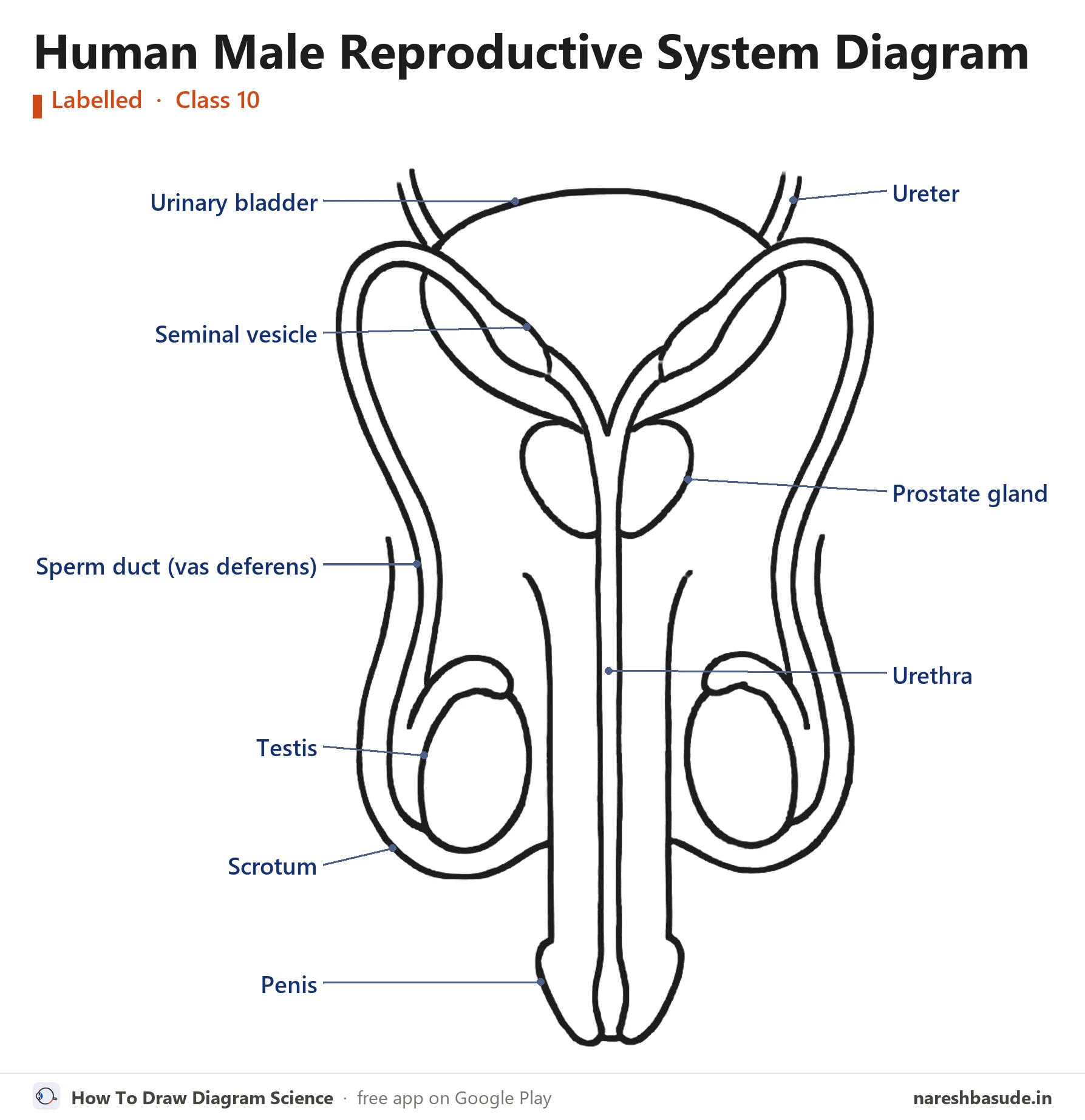
The finished human male reproductive system diagram with all 9 parts labelled. The steps below build it up one part at a time.
What the human male reproductive system does
The testes make sperm and the hormone testosterone. They sit in the scrotum, outside the body, because sperm need a lower temperature to form. Sperm travel up the sperm duct (vas deferens). The seminal vesicles and the prostate gland add fluid that makes it easier for the sperm to move and gives them nutrition. The urethra carries both sperm and urine out of the body.
Draw it in 18 steps
Use a sharp pencil and draw lightly at first. In every picture, red is what to draw in that step and grey is what you have already drawn.
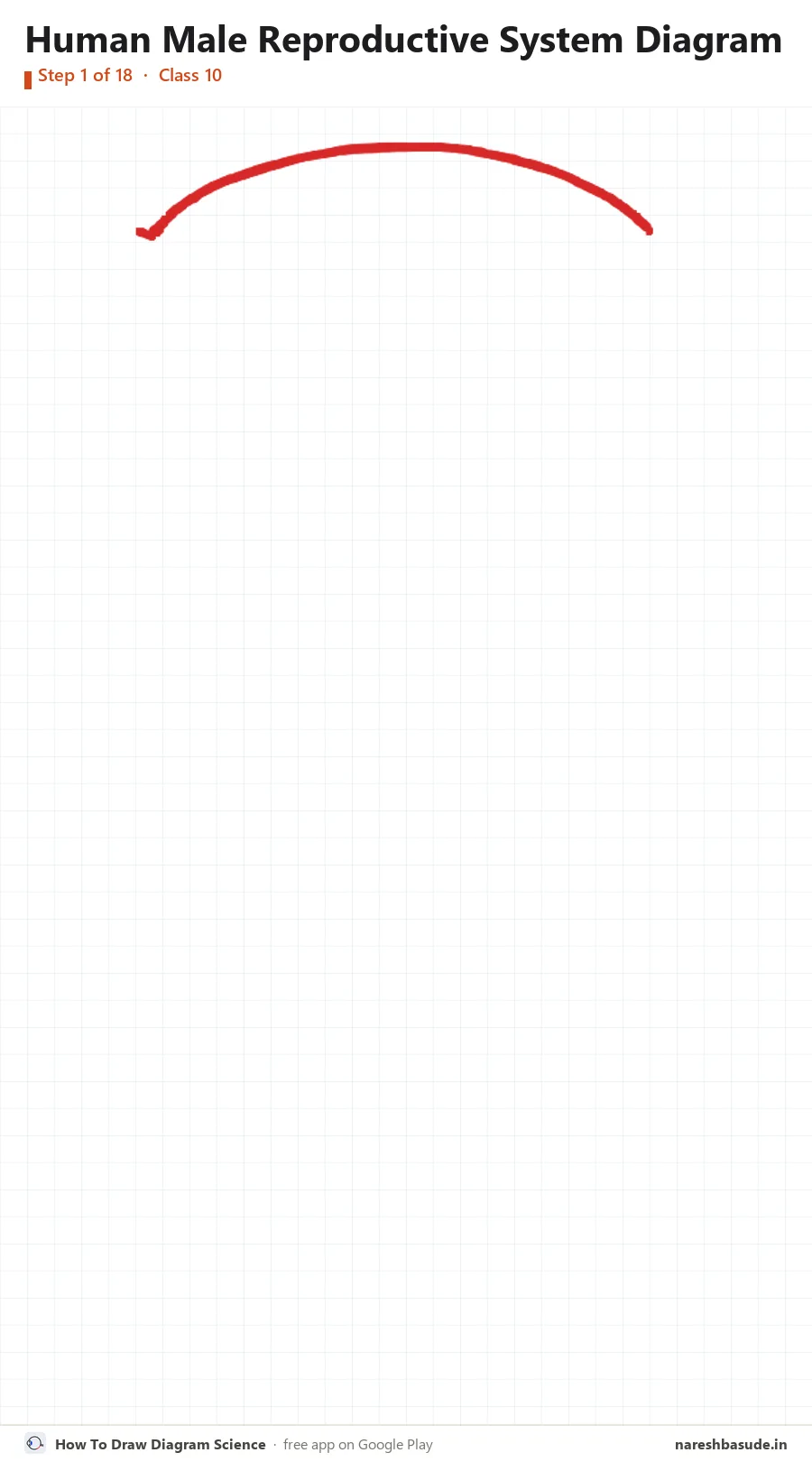
Bladder: the top
Start with the top of the urinary bladder: one wide curve like a rainbow, near the top of the page.
Parts drawn: Urinary bladder
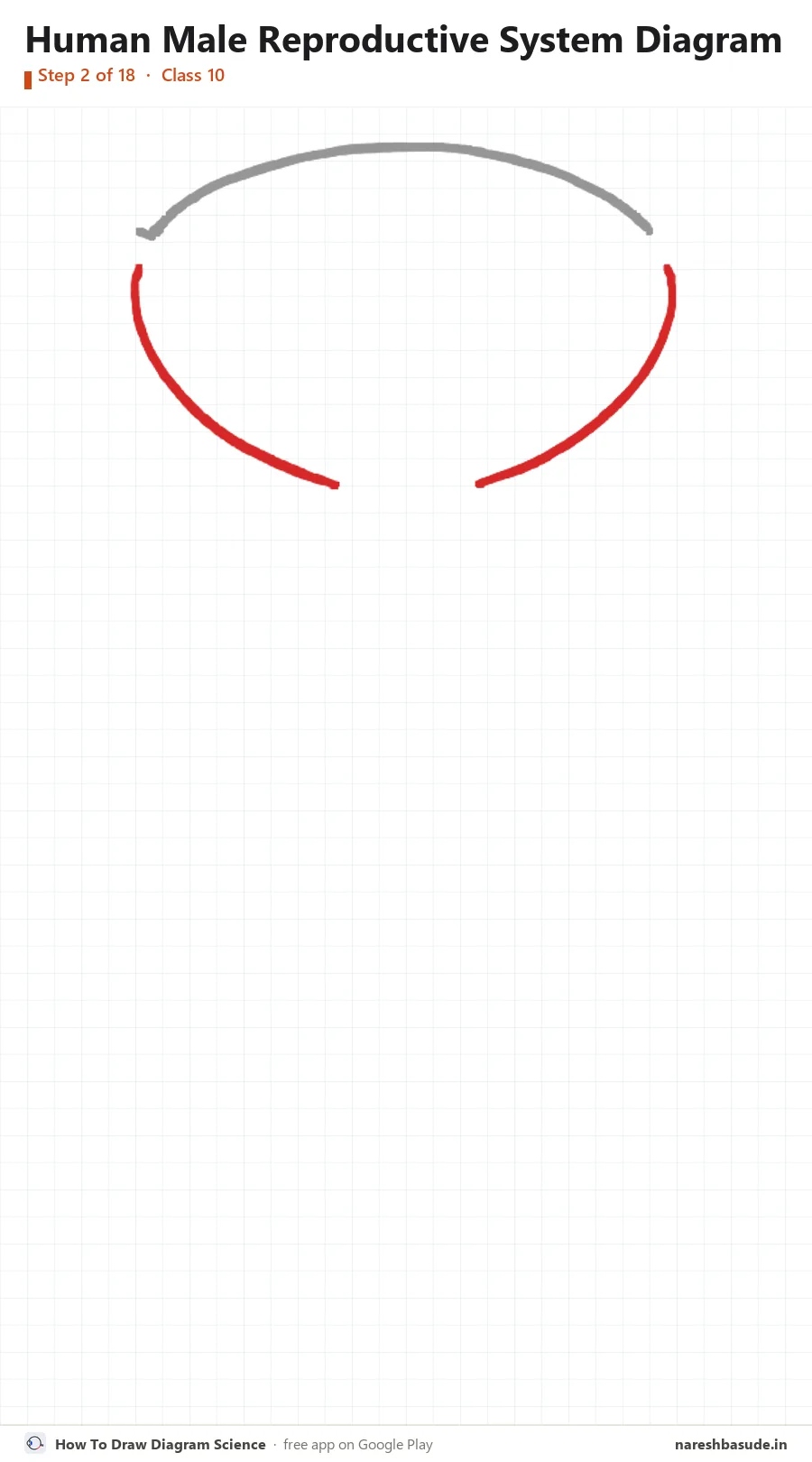
Bladder: the sides
From each end of that curve bring a line down and inwards, so the two lines meet near the middle. The bladder now looks like a bowl.
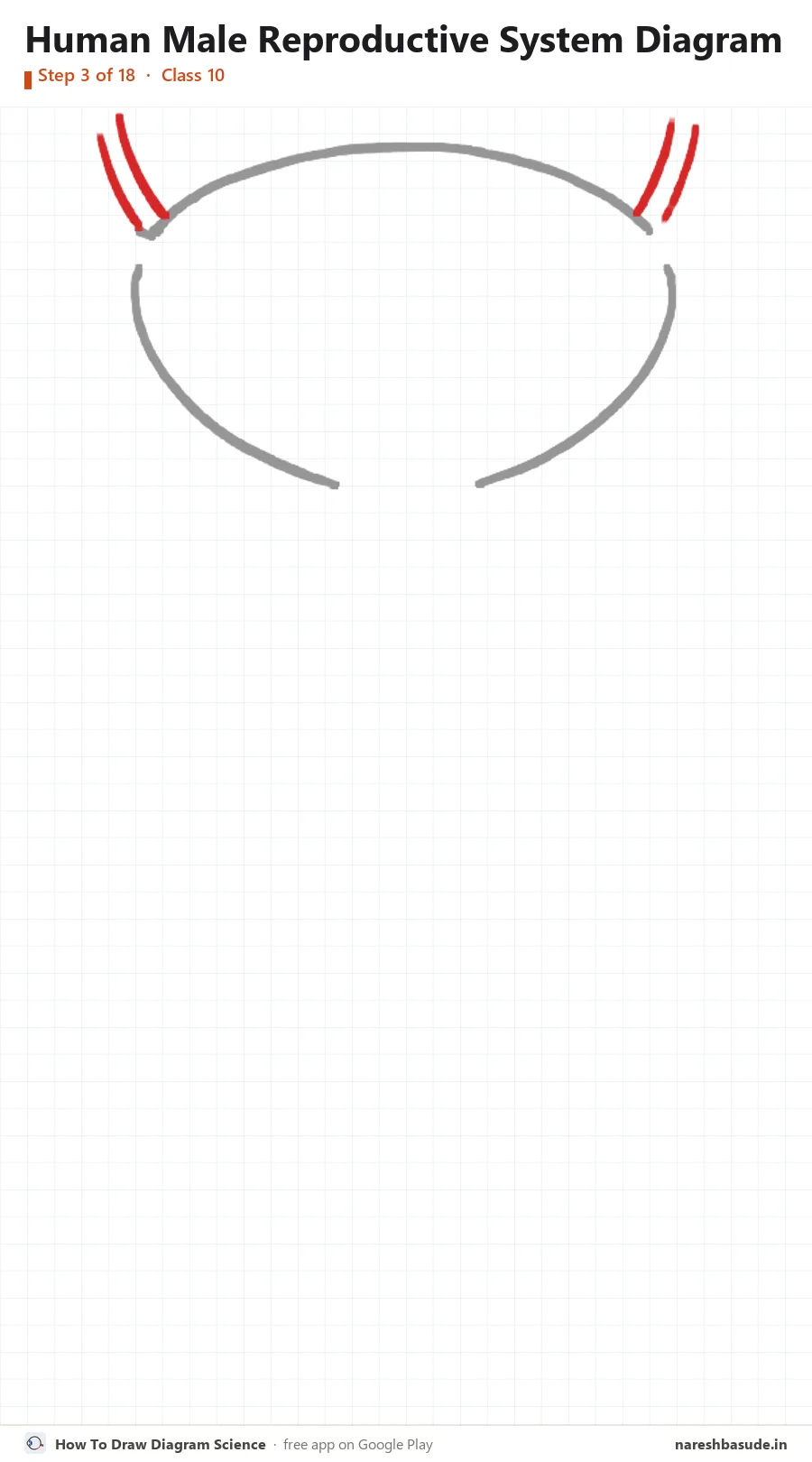
Ureters
At each top corner of the bladder draw two short thin lines going up: the ureters, which bring urine from the kidneys.
Parts drawn: Ureter
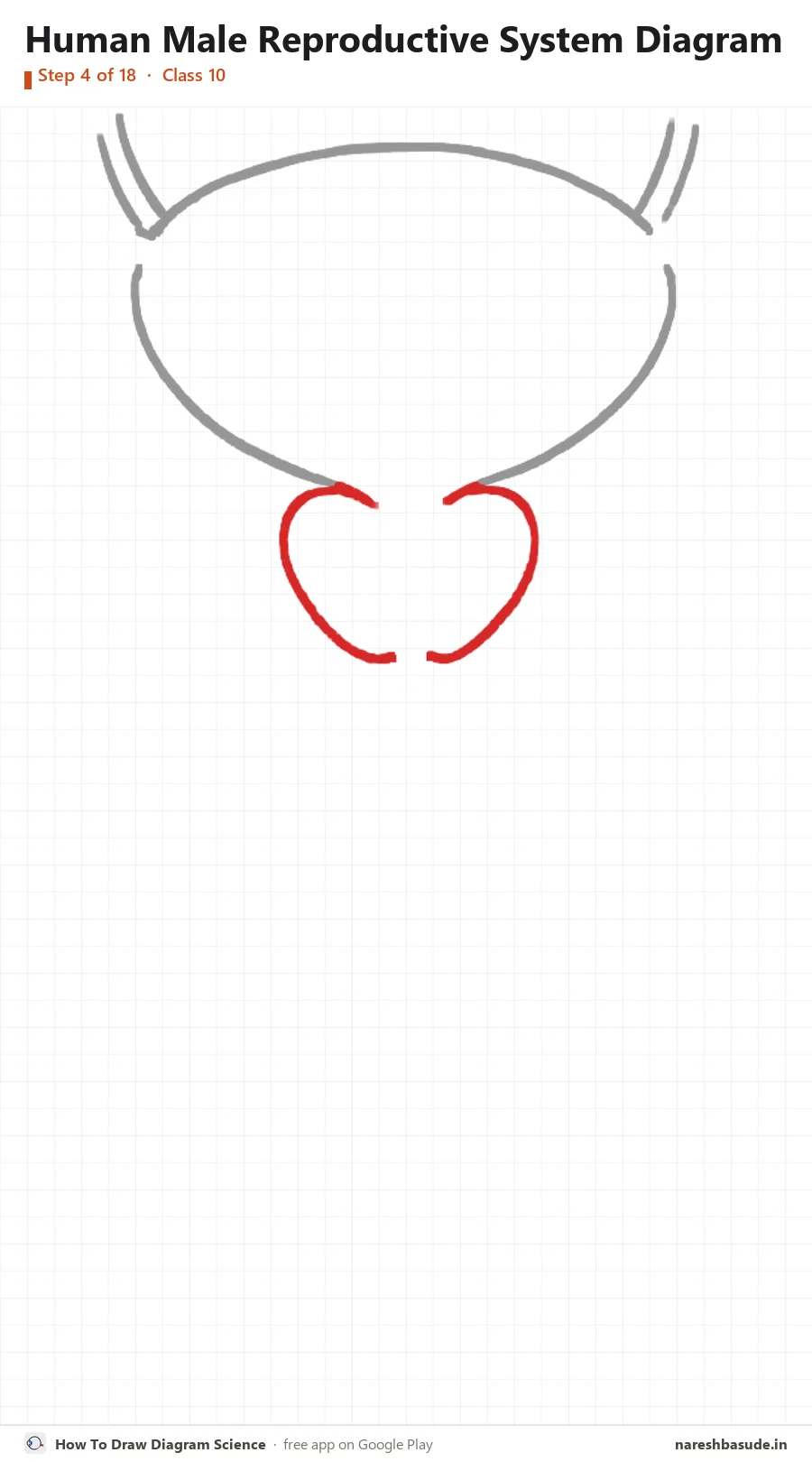
Prostate gland
Just below the bladder draw a small rounded heart shape: the prostate gland.
Parts drawn: Prostate gland
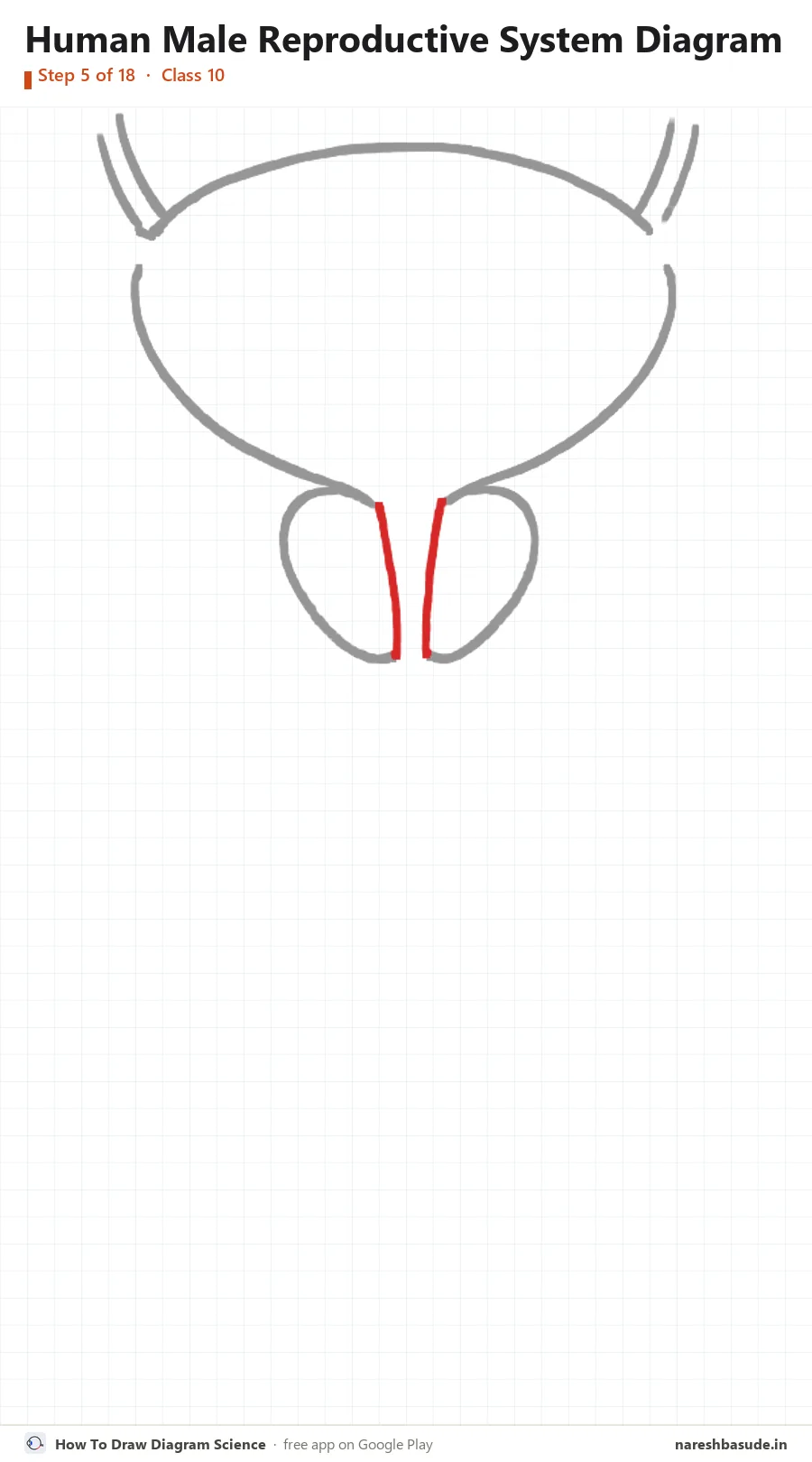
Urethra: the top part
From the bottom of the bladder draw two close lines going straight down through the middle of the prostate. This is the start of the urethra.
Parts drawn: Urethra
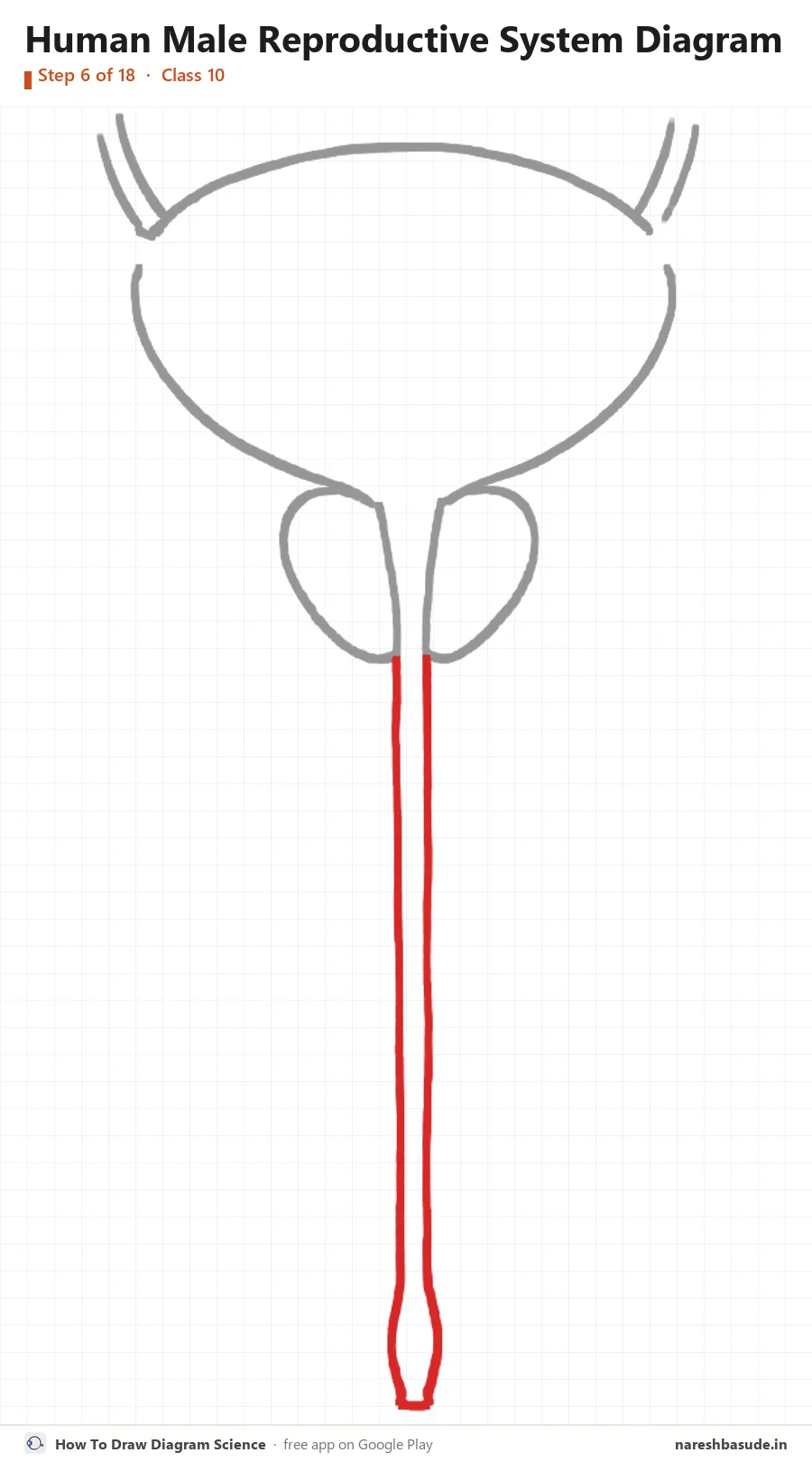
Urethra: down to the tip
Carry the two lines of the urethra straight down, all the way to the bottom.
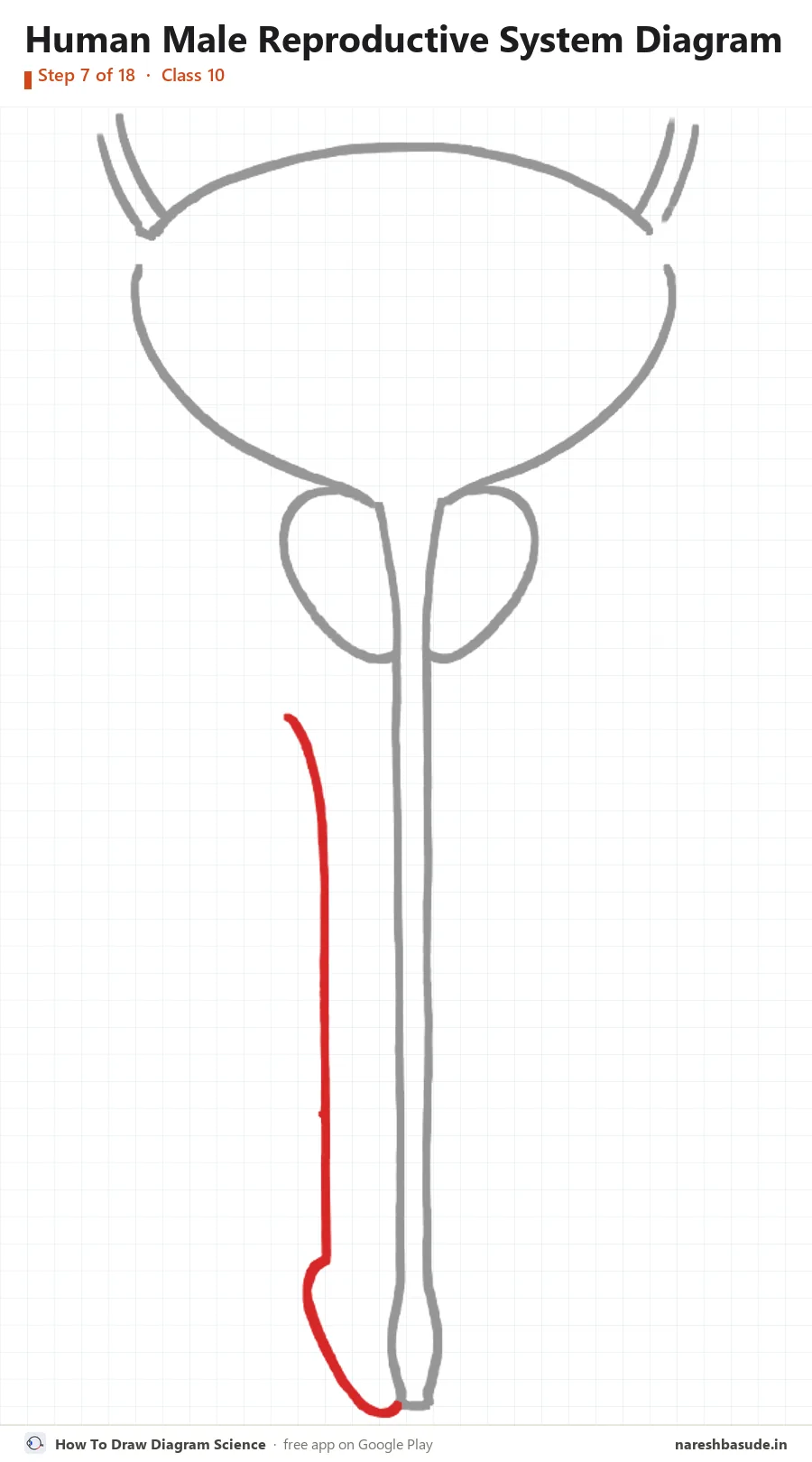
Penis: left side
Left of the urethra draw a long straight line going down, ending in a rounded bump at the bottom.
Parts drawn: Penis
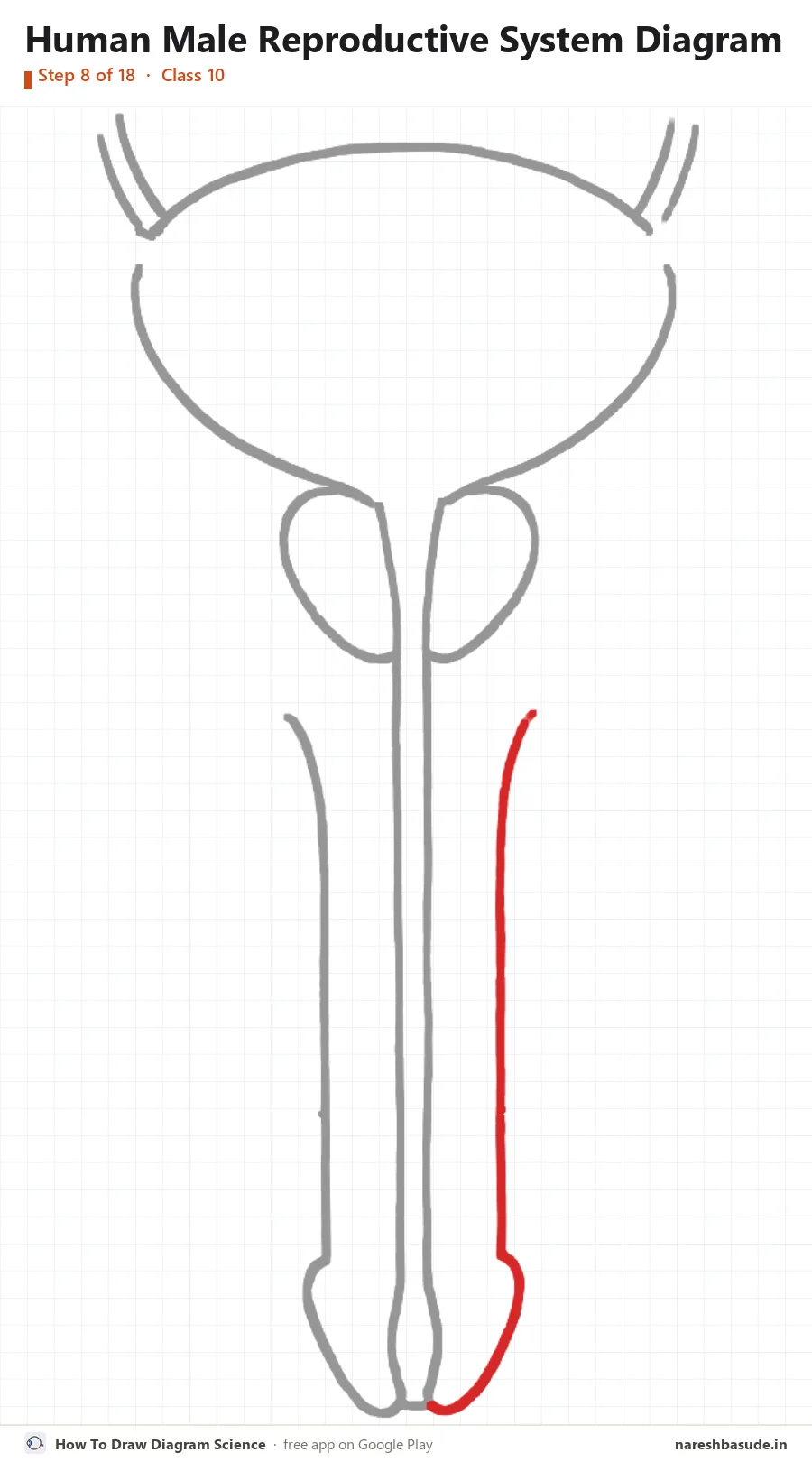
Penis: right side
Draw the same line on the right side, so the penis wraps around the urethra.
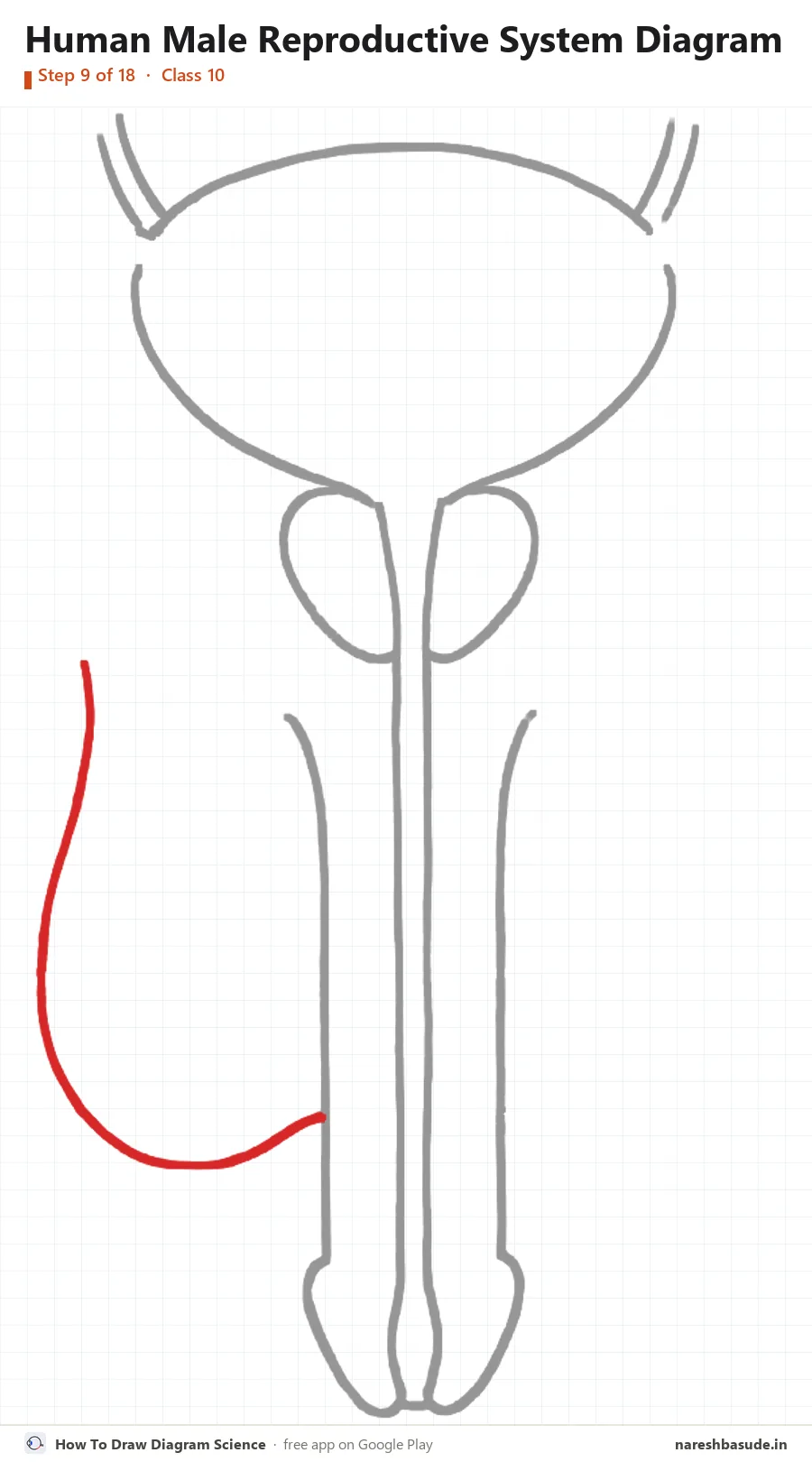
Scrotum: left
Out on the left draw a long curved pouch: down the side, round the bottom and back in to the penis. This is the scrotum.
Parts drawn: Scrotum
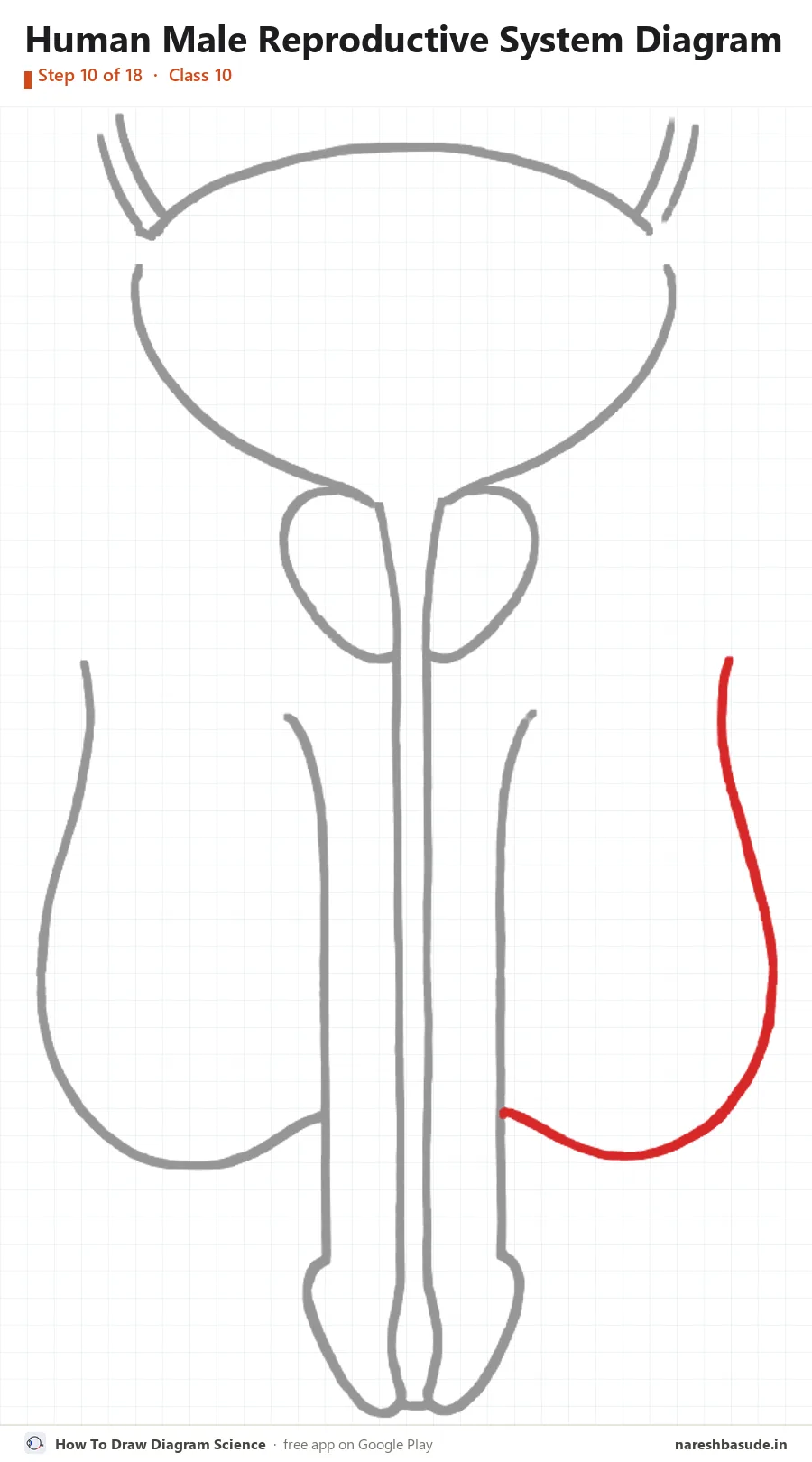
Scrotum: right
Draw the same pouch on the right side.
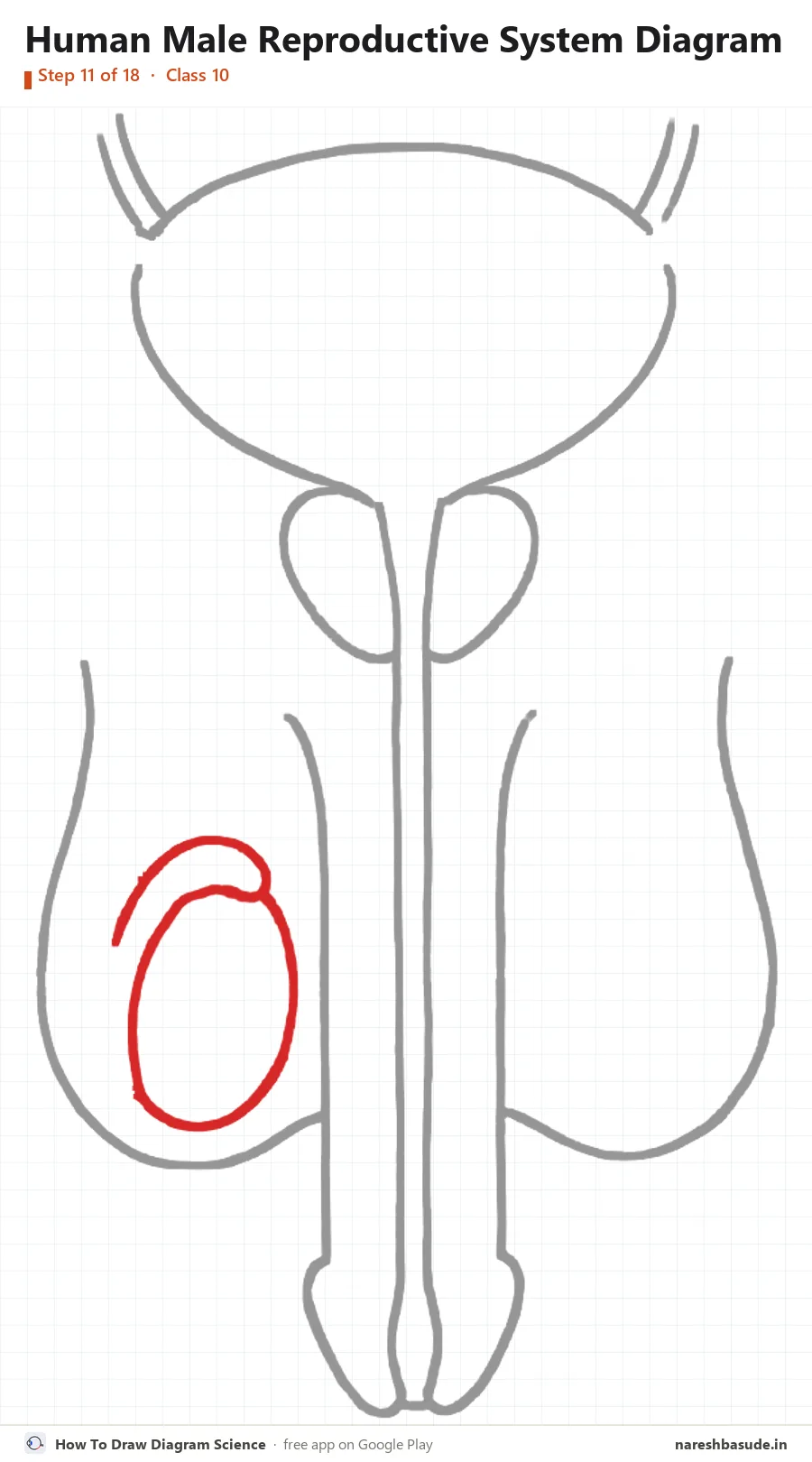
Testis: left
Inside the left pouch draw an oval (the testis) with a small cap sitting on top of it.
Parts drawn: Testis
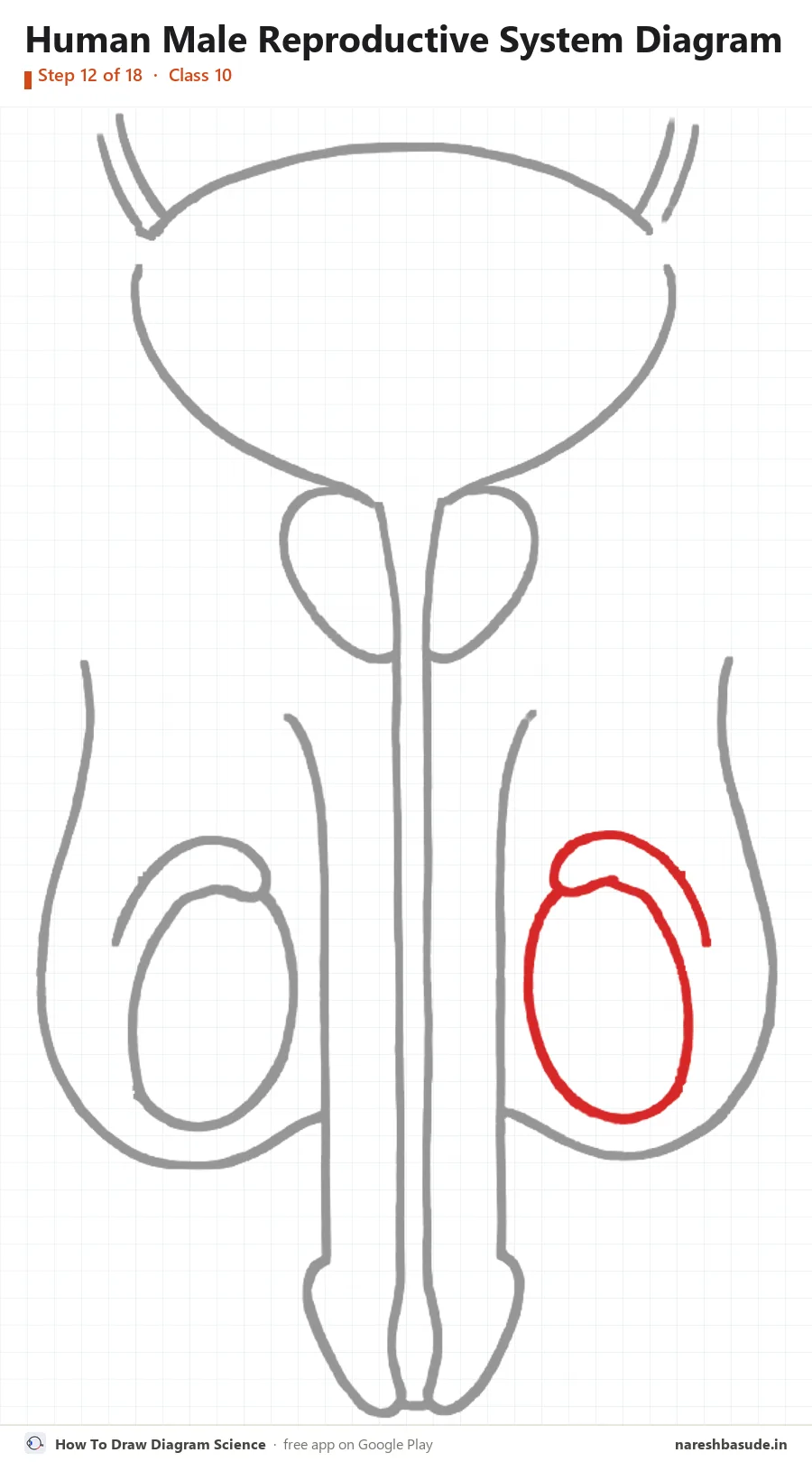
Testis: right
Draw the right testis the same way inside the right pouch.
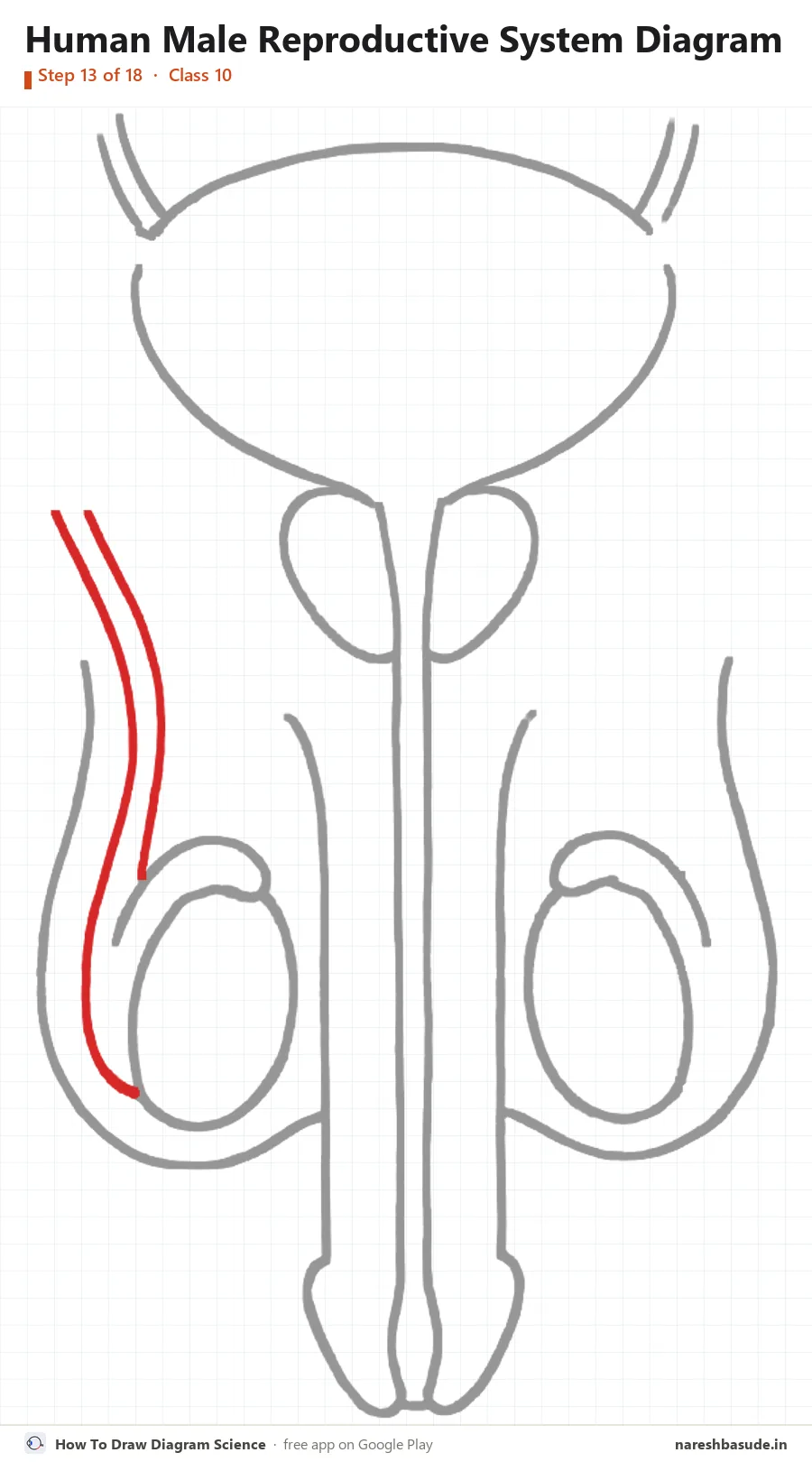
Sperm duct left: up the side
From the top of the left testis draw a tube (two lines side by side) going up the left side. This is the sperm duct, or vas deferens.
Parts drawn: Sperm duct (vas deferens)
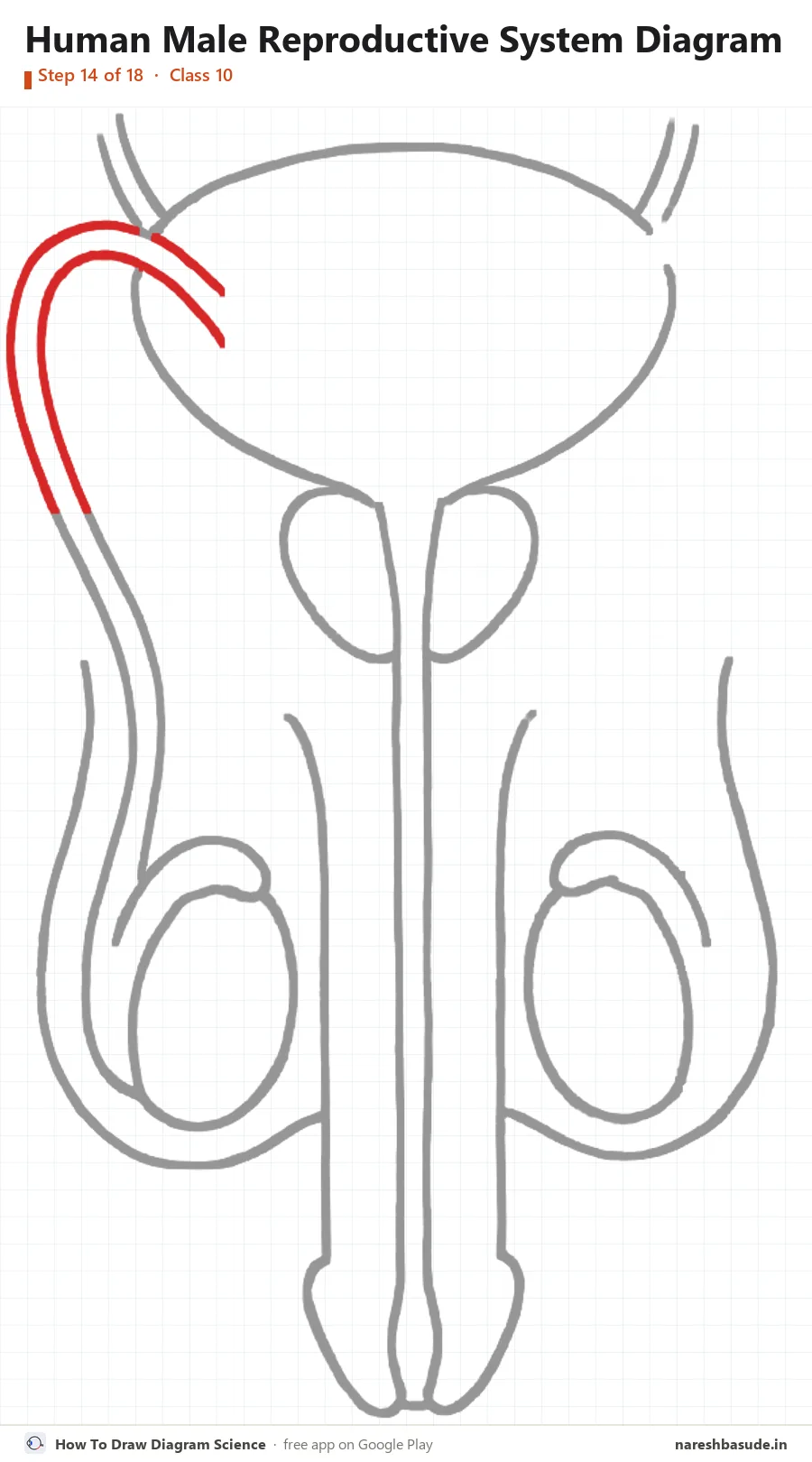
Sperm duct left: over the top
Carry the tube up, loop it over the top corner of the bladder, and bring it down towards the middle.
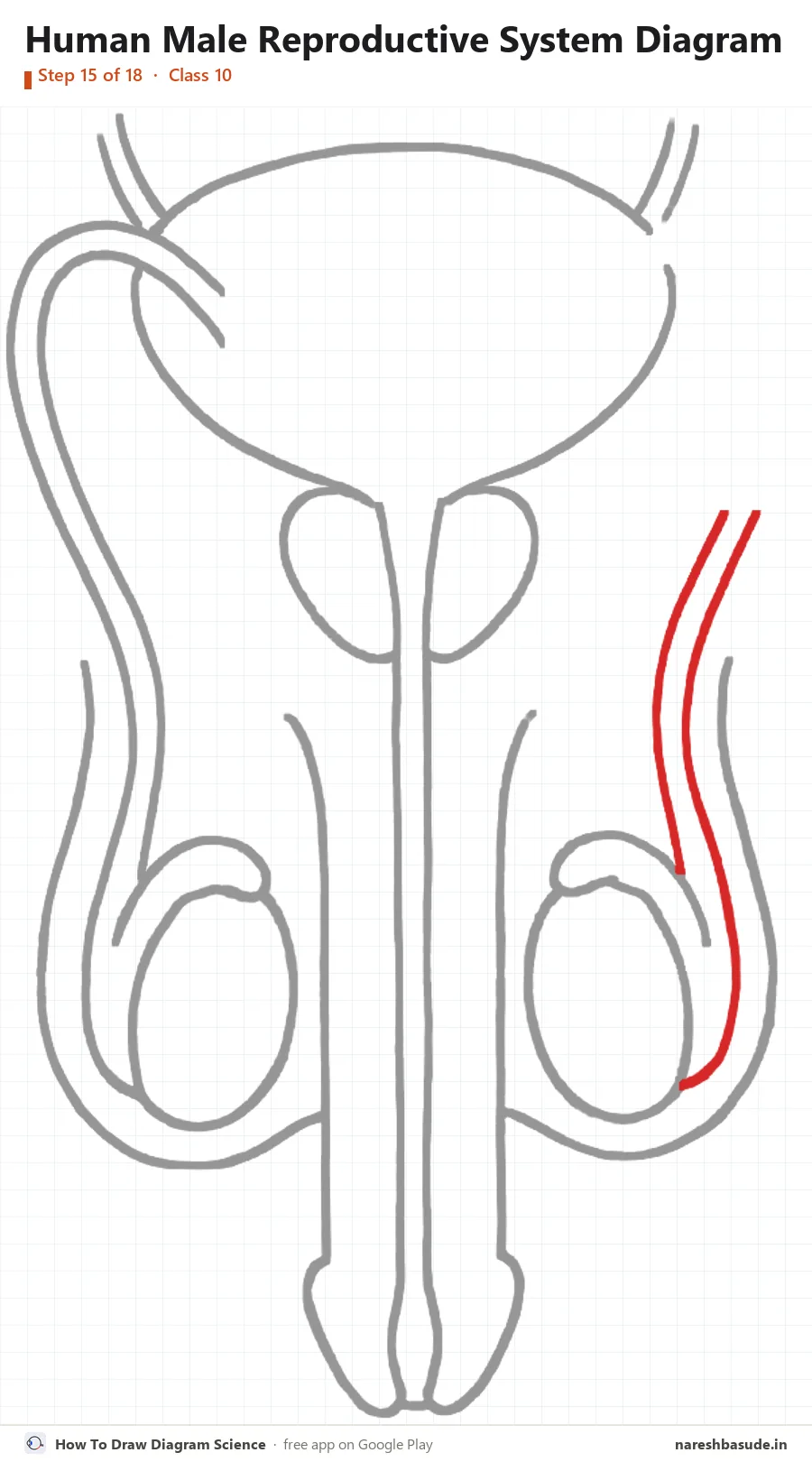
Sperm duct right: up the side
Now the right side: a tube going up from the top of the right testis.
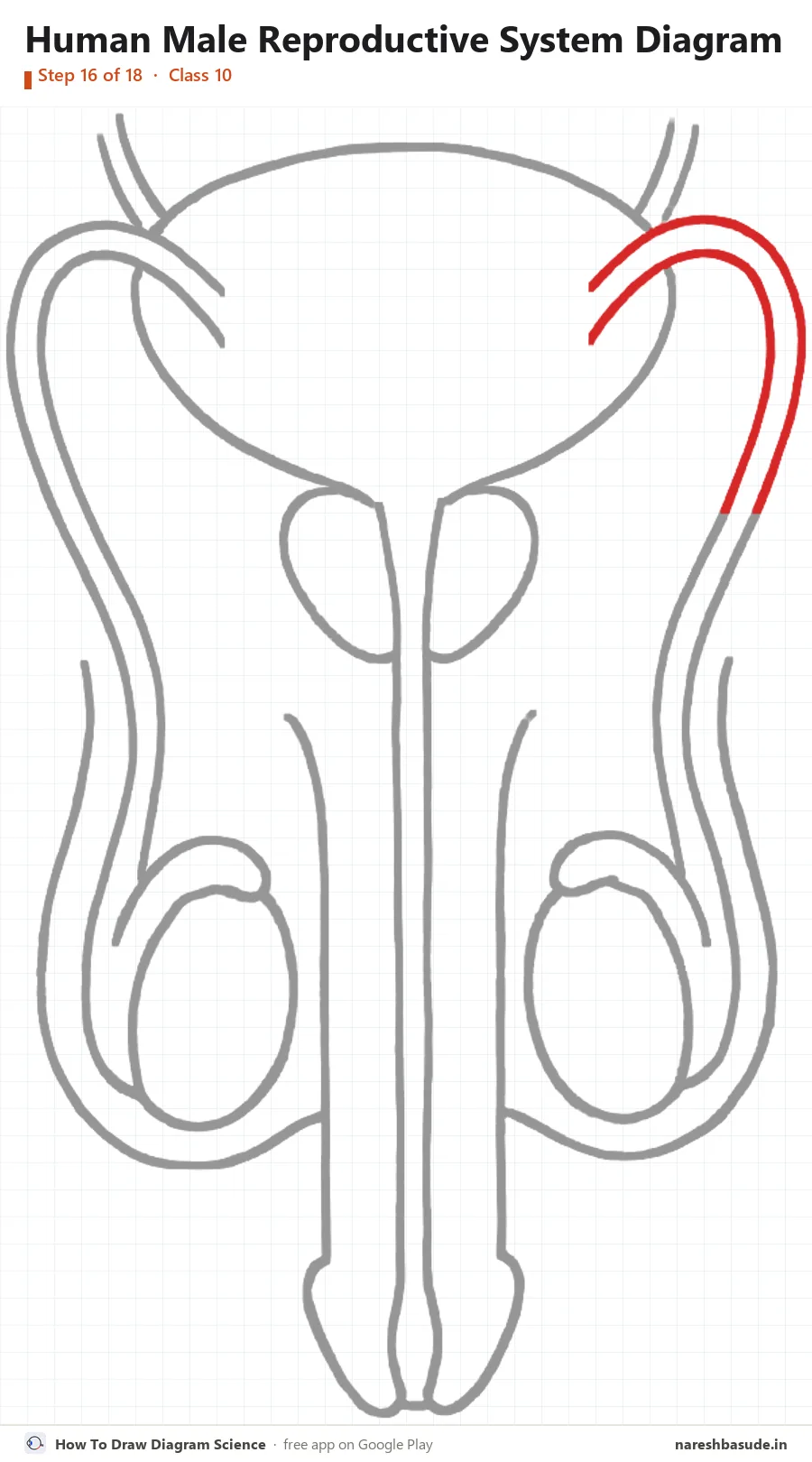
Sperm duct right: over the top
Loop it over the top corner of the bladder and bring it down towards the middle, like the left one.
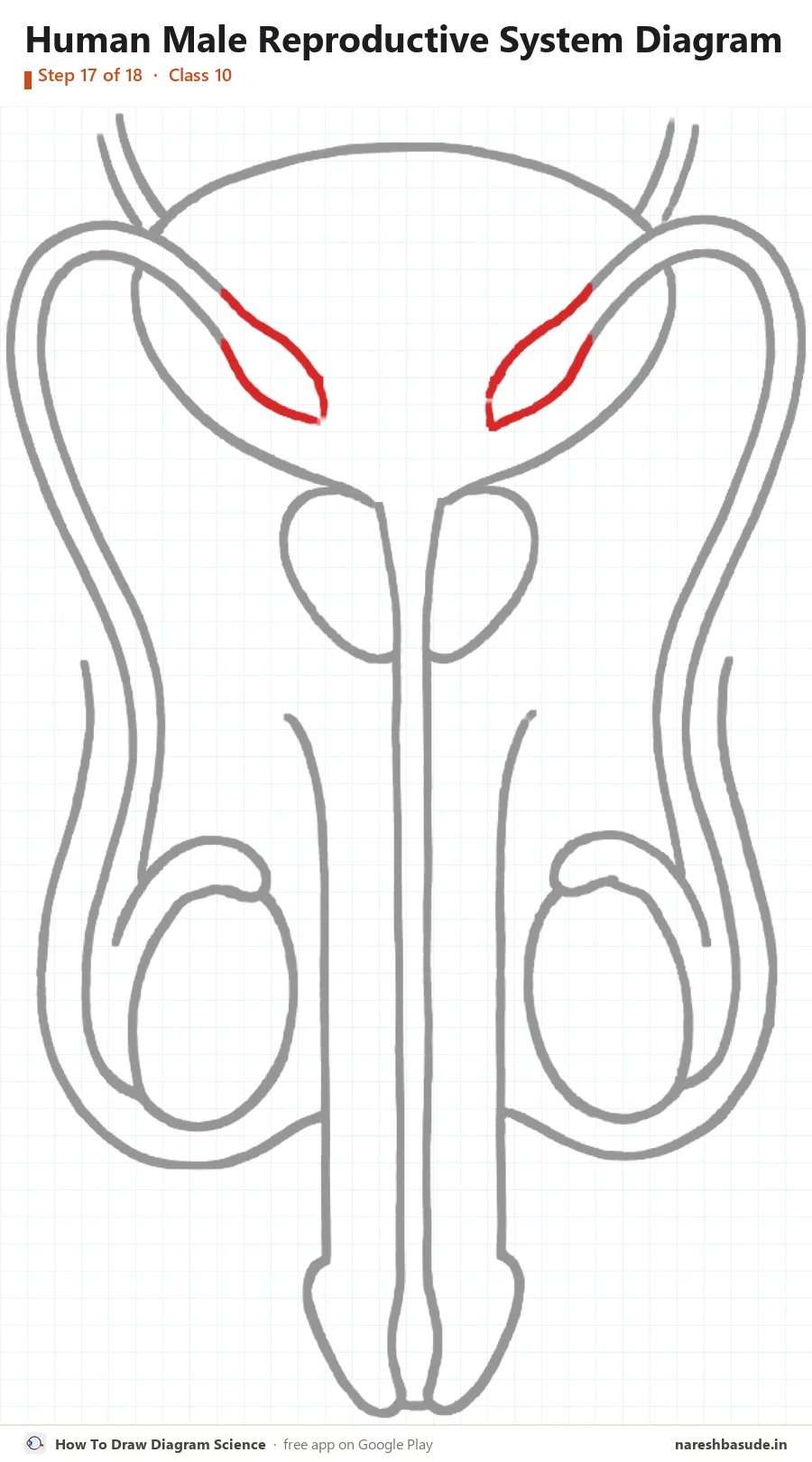
Seminal vesicles
Where each tube comes in, let it swell into a small sac: the seminal vesicle. Close each sac with a short line across its end.
Parts drawn: Seminal vesicle
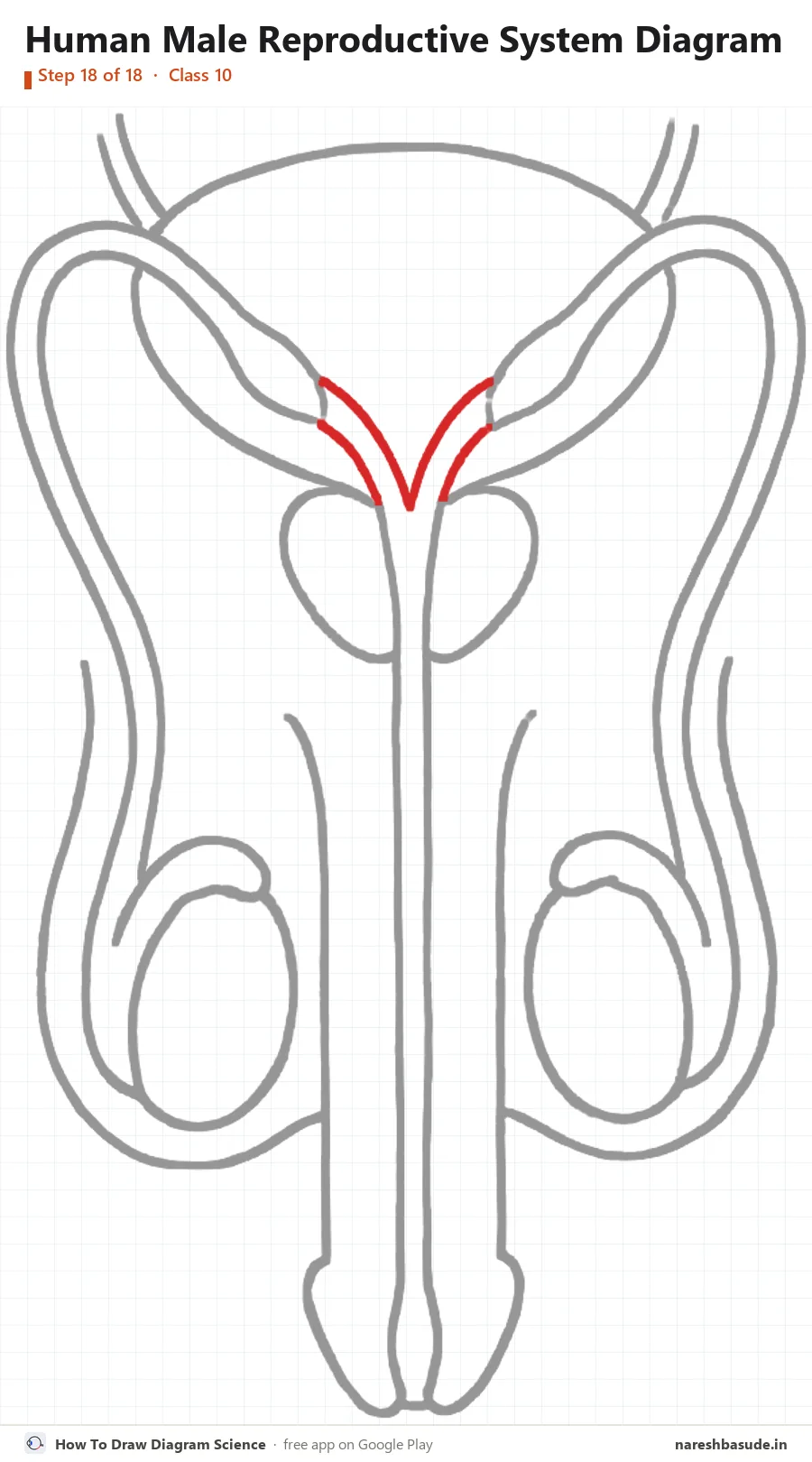
Ducts joining the urethra
From the end of each sac draw a thin tube curving down to the top of the urethra. The two meet in a Y shape.

Parts to label (9) and what each one does
- Urinary bladder Stores urine. It is shown to make clear where the urethra starts.
- Seminal vesicle A gland that adds fluid to the sperms. The fluid feeds them and helps them move.
- Testis Makes sperms and the hormone testosterone. There are two testes.
- Scrotum A pouch of skin that holds the testes outside the body, where it is a little cooler, as sperm formation needs.
- Ureter Brings urine from the kidney to the urinary bladder. It is shown for reference.
- Sperm duct (vas deferens) The tube that carries sperms from the testis towards the urethra.
- Prostate gland A gland that adds its own fluid to the semen.
- Urethra A common passage for both sperms and urine.
- Penis The organ through which semen and urine pass out.
Write each name on the side of the diagram, joined to its part with a straight line. Keep the lines from crossing.
Human Male Reproductive System diagram without labelling (practice sheet)
The same diagram with the label lines but no names (an unlabelled diagram). Write each part's name on its line, then check your answers against the labelled diagram at the top.
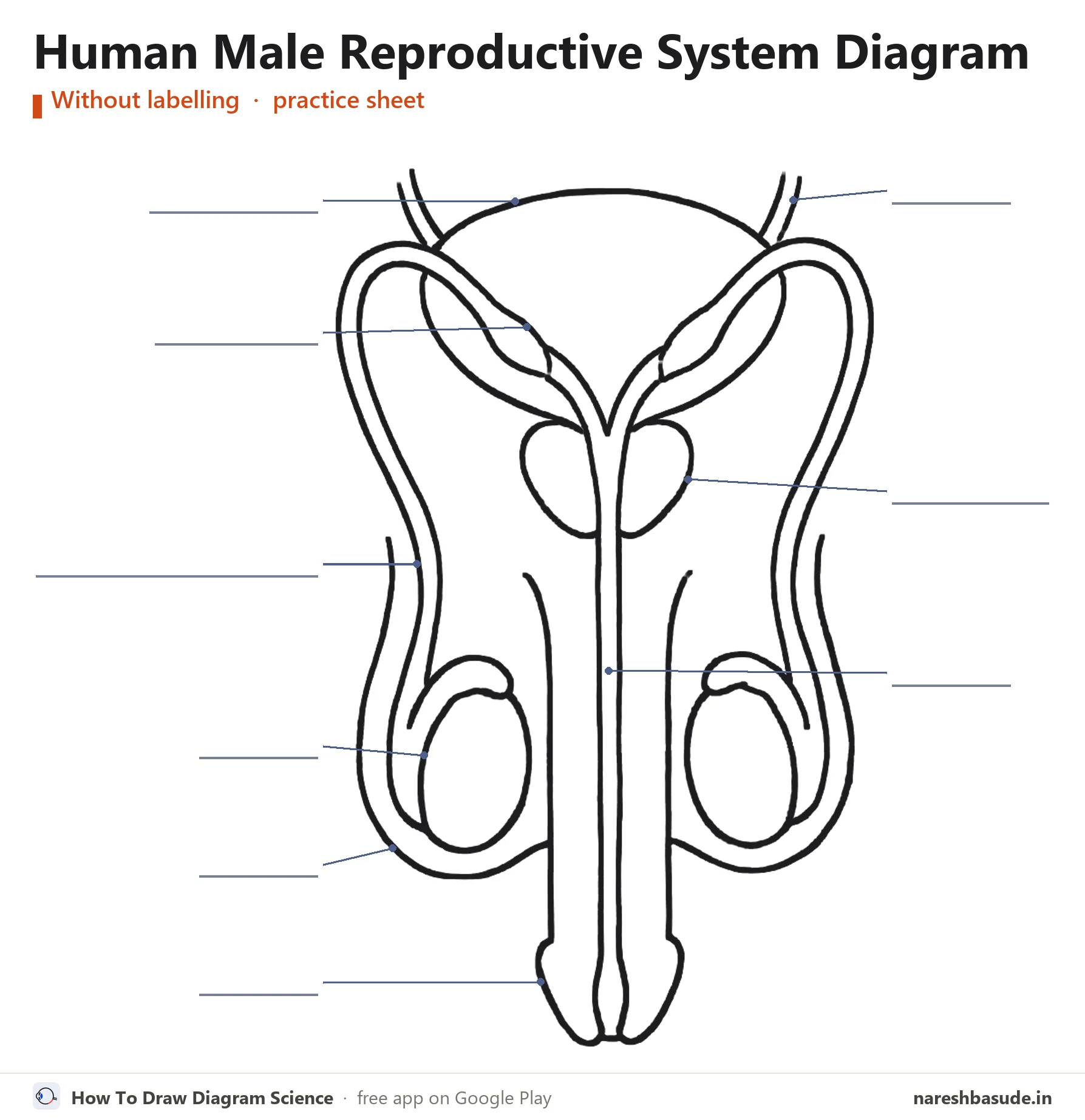
Download free PDF (A4, 3 pages)
Page 1: the labelled diagram. Page 2: this practice sheet with a word bank of all 9 parts. Page 3: all 18 drawing steps on one page.
Exam tips
- Start with the bladder at the top: everything else hangs below it.
- Finish each side completely, then copy it on the other side.
- Loop each sperm duct over the top corner of the bladder before bringing it down to the middle.
Common mistakes
- Running the sperm duct straight to the urethra without the loop over the bladder.
- Mixing up the ureter (from the kidney) and the urethra (out of the body).
- Leaving out the seminal vesicles or the prostate gland.
Exam questions on the human male reproductive system diagram
QuestionDraw a labelled diagram of the human male reproductive system.
Draw the testis inside the scrotum. Run the sperm duct (vas deferens) up and over the urinary bladder to join the urethra, with the seminal vesicle and the prostate gland on the way. Finish with the urethra running through the penis.
QuestionWhat is the function of the testes?
The testes make sperms, the male germ cells. They also make the hormone testosterone, which brings about the changes of puberty in boys.
Questions students ask
Why are the testes outside the abdomen?
Sperm need a temperature lower than normal body temperature to form, so the testes sit in the scrotum outside the body.
What do the seminal vesicles and the prostate gland do?
They add fluid to the sperm, which makes it easier for them to move and also gives them nutrition.
Which tube carries both urine and sperm?
The urethra.
Practise it on your phone
These steps come straight from the free Android app How To Draw Diagram Science. In the app you can view the human male reproductive system with every part named, learn to draw it step by step on a numbered grid, take a quiz on the parts and label it yourself.


