How to Draw and Label a Flower (L.S.) Diagram, Step by Step
The longitudinal section (L.S.) of a flower is asked in Class 10 Biology under How do Organisms Reproduce? It shows the male and female parts of the flower. The steps below start at the stalk and build the flower upwards.
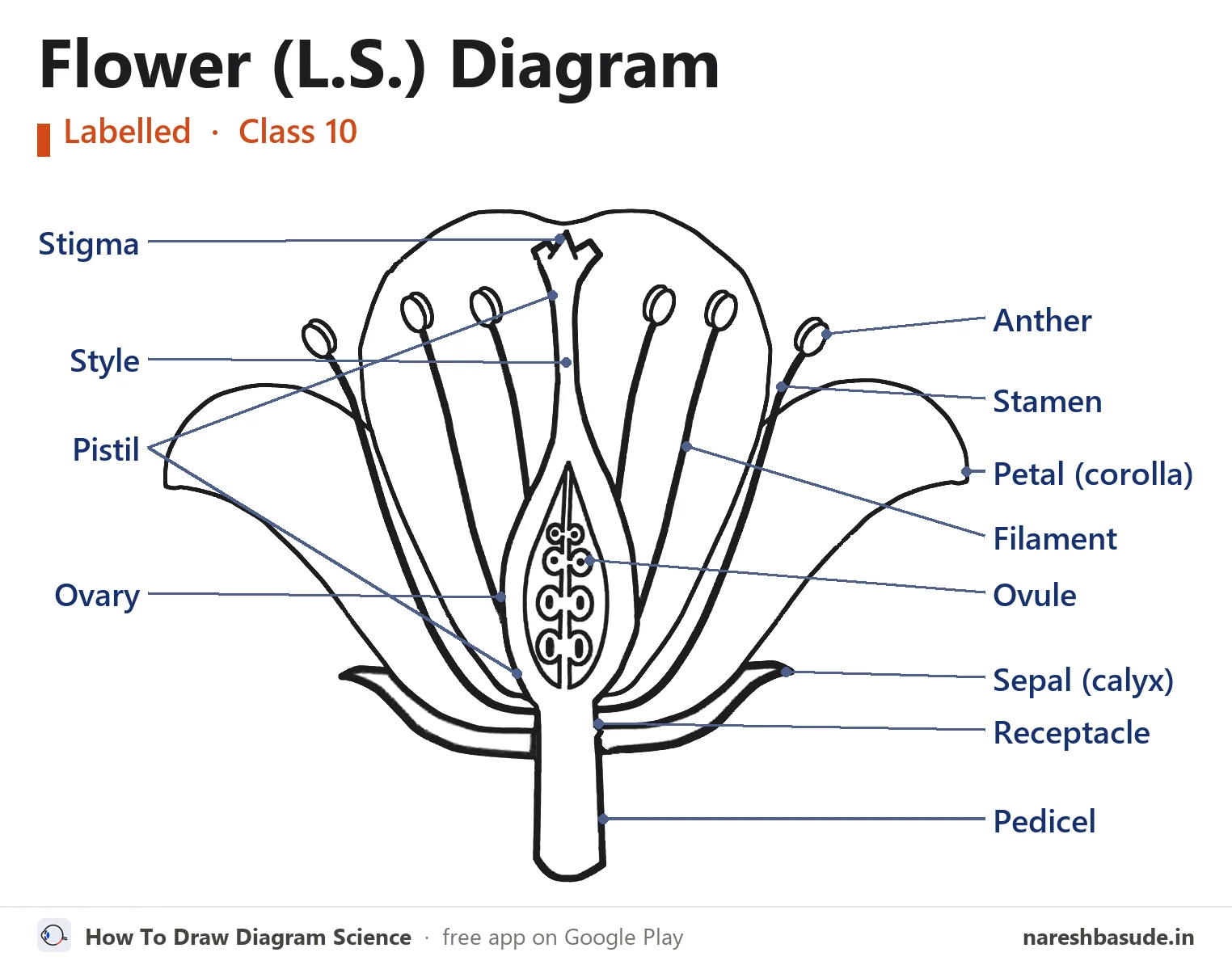
The finished flower (L.S.) diagram with all 12 parts labelled. The steps below build it up one part at a time.
What the flower (L.S.) does
The stamen is the male part: an anther on a thin filament, which makes pollen. The pistil (carpel) is the female part: the stigma catches pollen, the style connects it to the ovary, and the ovary holds the ovules. After fertilisation the ovules become seeds and the ovary becomes the fruit.
Draw it in 11 steps
Use a sharp pencil and draw lightly at first. In every picture, red is what to draw in that step and grey is what you have already drawn.
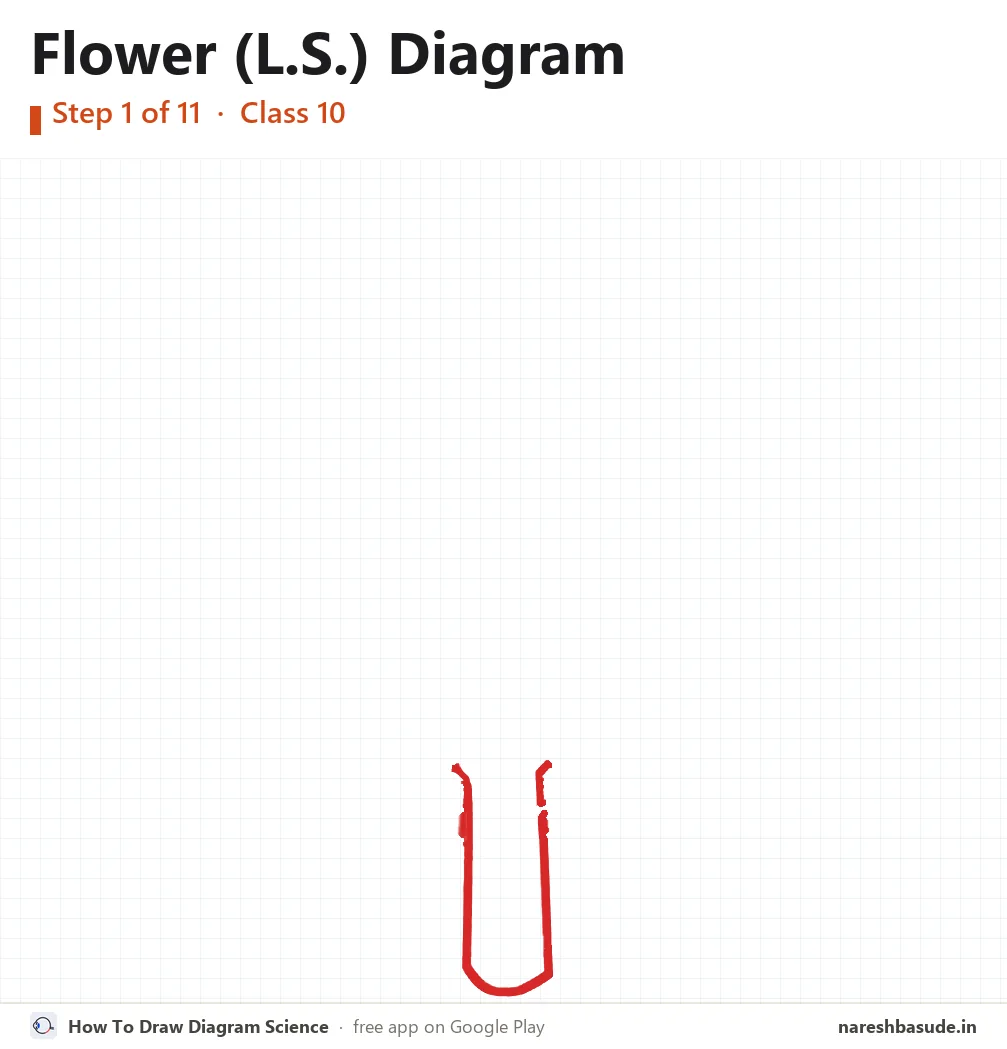
Stalk and receptacle
Start at the bottom: a straight stalk (the pedicel) with a rounded end. Its top part, where the flower sits, is the receptacle.
Parts drawn: Pedicel, Receptacle
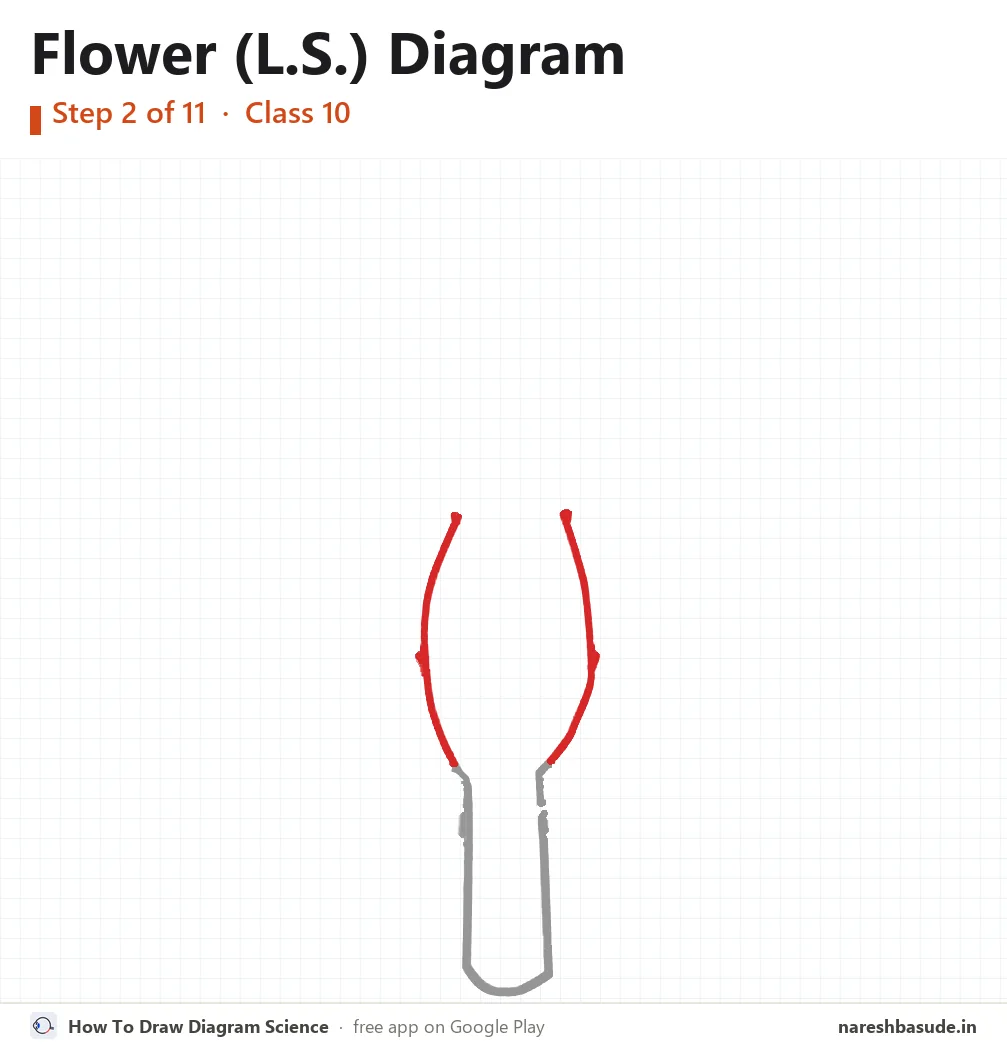
Ovary
On top of the receptacle draw the ovary: a tall swollen shape like a vase, wide in the middle and narrow at the top.
Parts drawn: Ovary
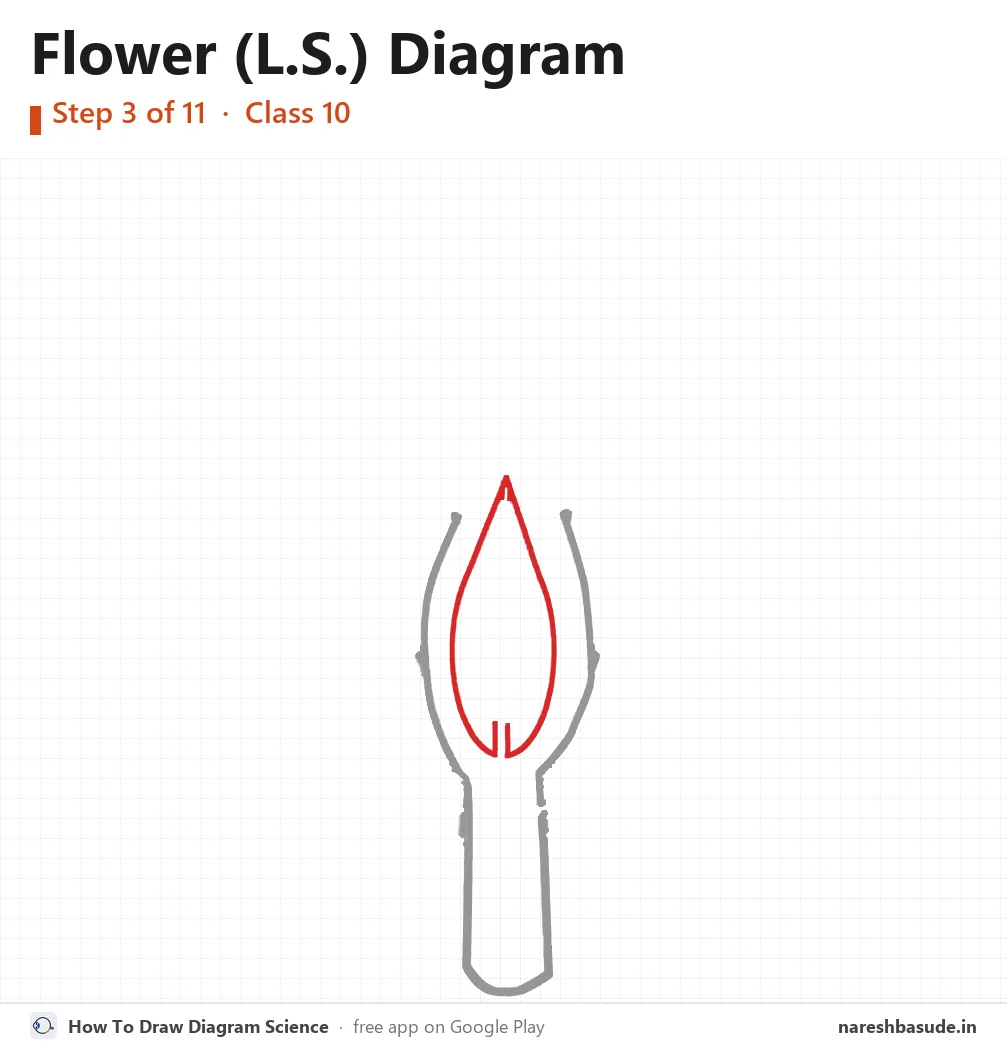
Inside the ovary
Inside it draw a second pointed oval: the hollow chamber of the ovary.
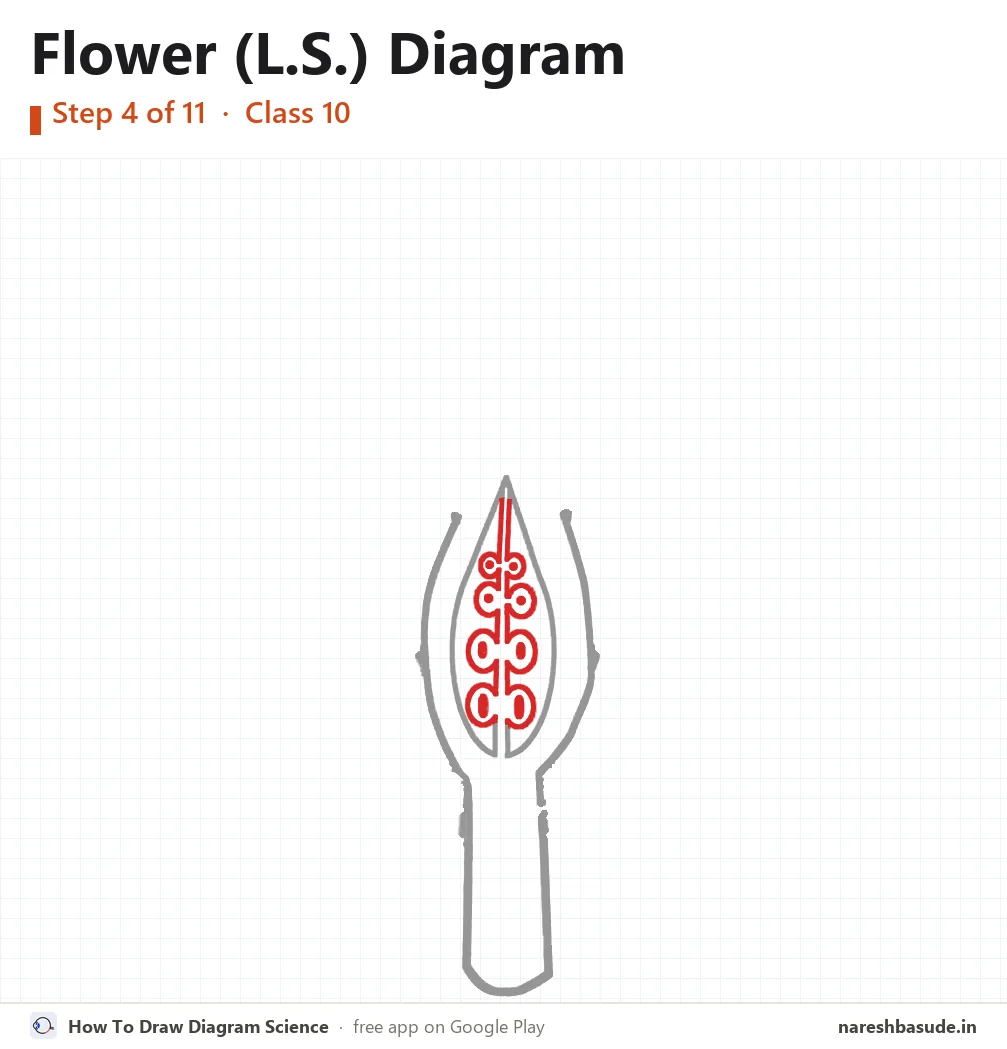
Ovules
Down the middle of the chamber draw a thin line, and hang small rounded ovules on both sides of it. These become the seeds.
Parts drawn: Ovule
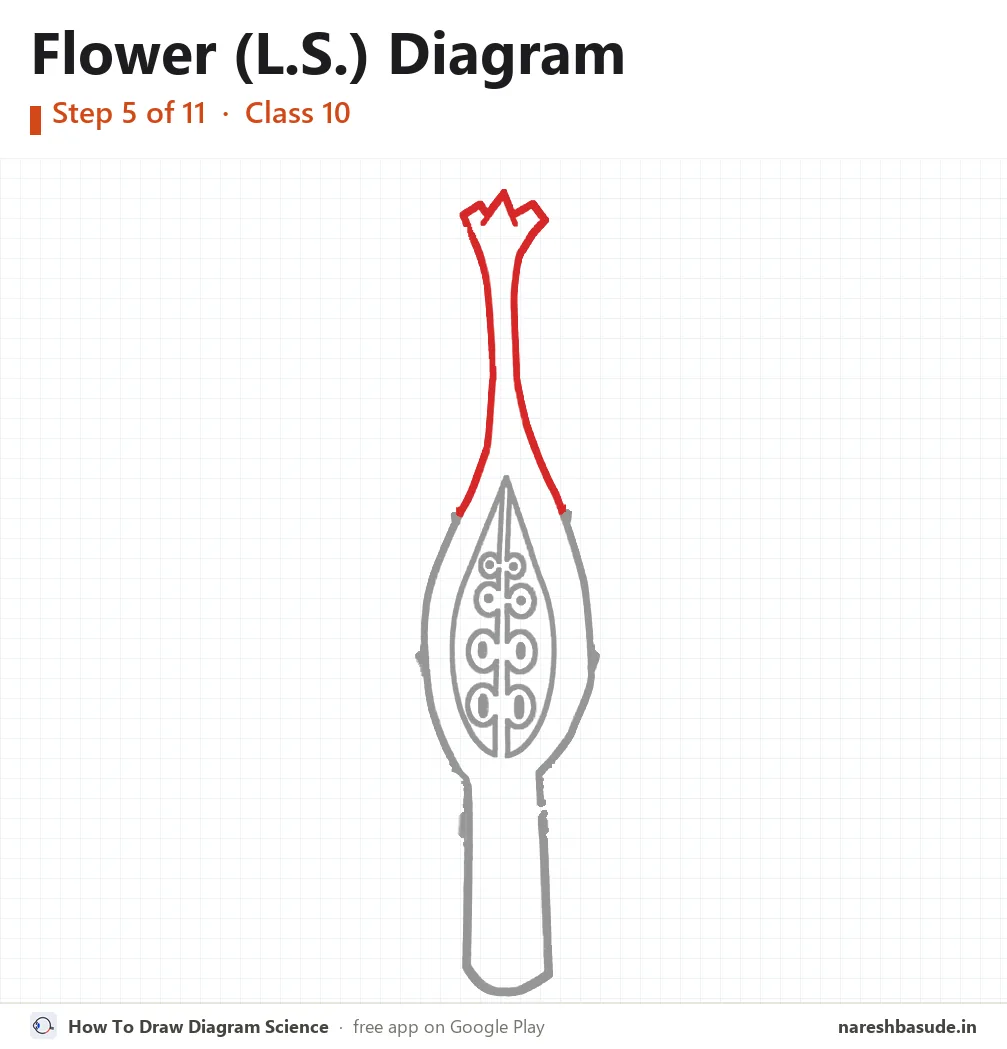
Style and stigma
From the top of the ovary draw a long narrow tube going straight up: the style. Finish it with a small jagged crown: the stigma, which catches the pollen. Ovary, style and stigma together make the pistil.
Parts drawn: Style, Stigma, Pistil
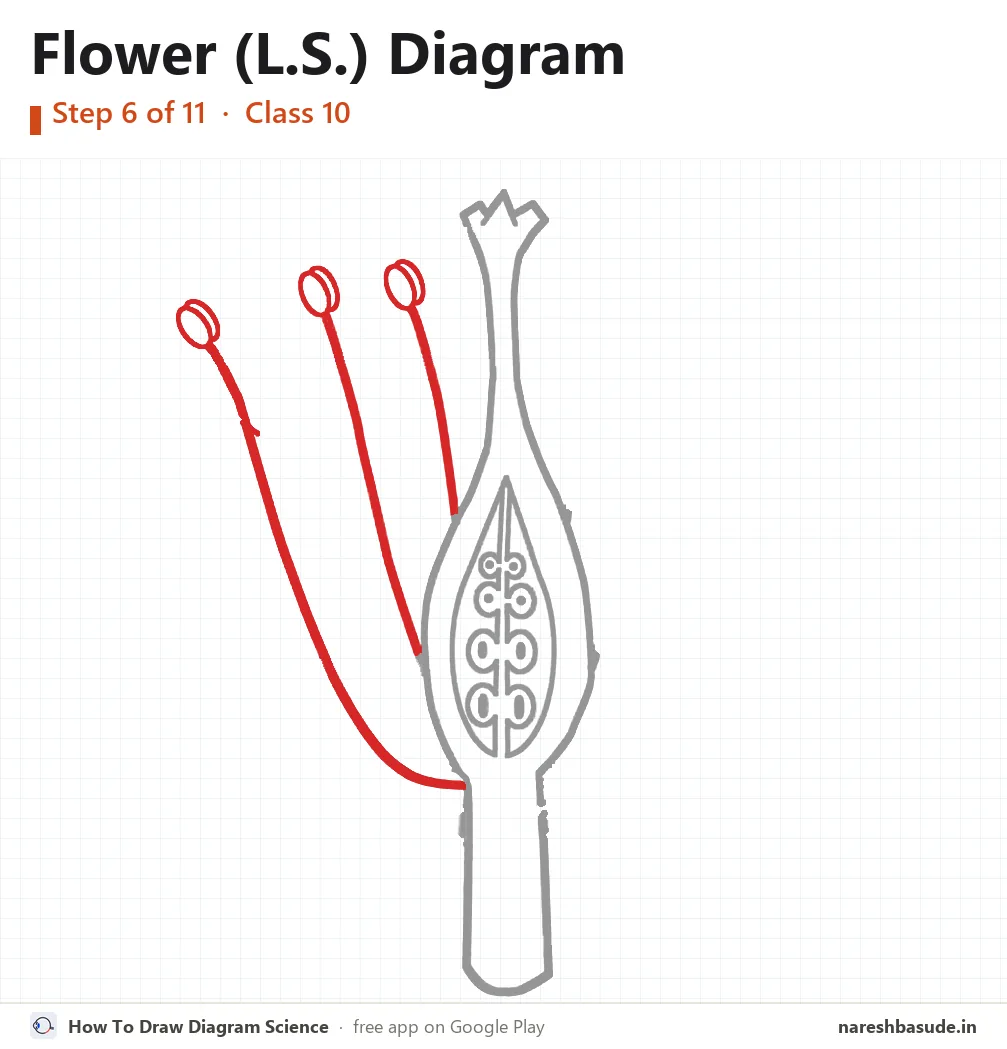
Stamens on the left
On the left draw three stamens. Each is a thin line (the filament) rising from the base, with a small oval anther on top.
Parts drawn: Stamen, Anther, Filament
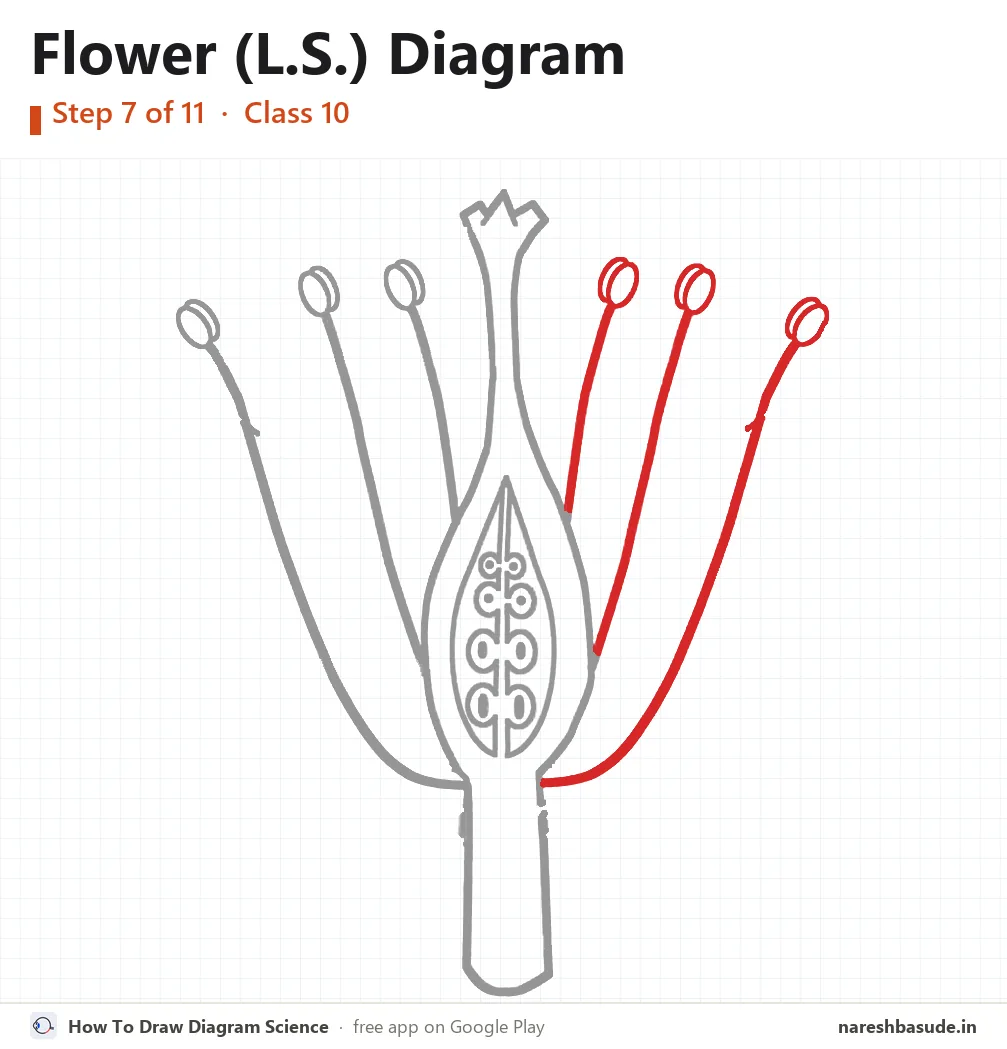
Stamens on the right
Draw the three stamens on the right the same way, matching the left side.
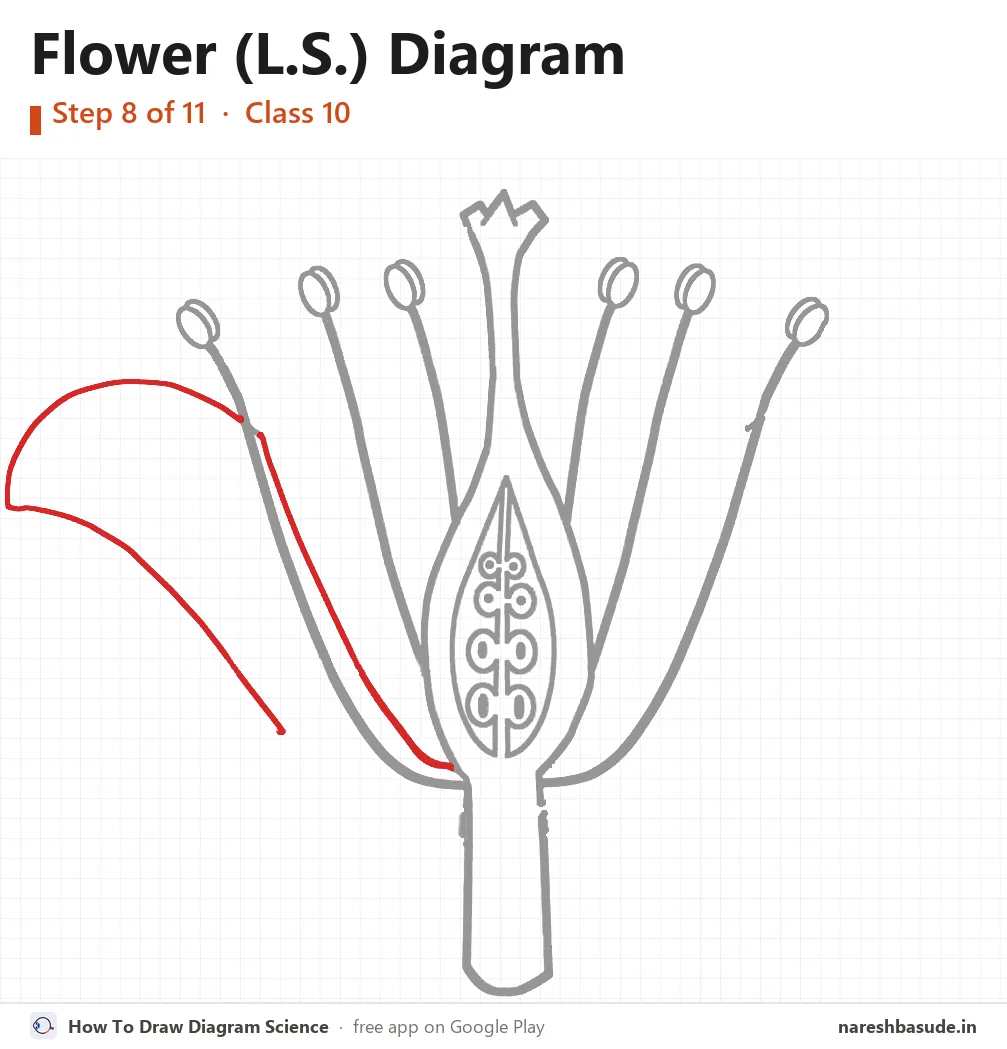
Petal on the left
Draw the left petal: from the base it sweeps out to a rounded tip on the far left and curls back.
Parts drawn: Petal
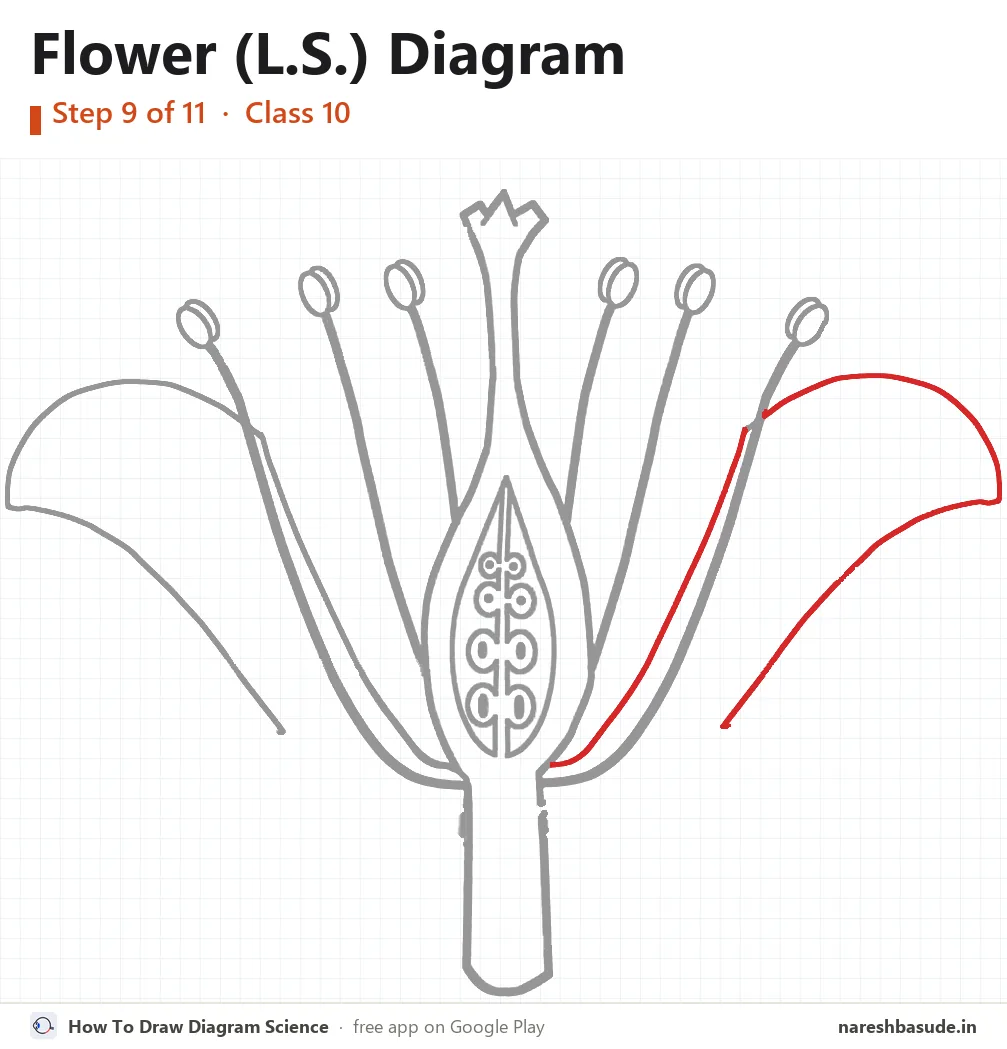
Petal on the right
Draw the right petal the same shape, sweeping out to the far right.
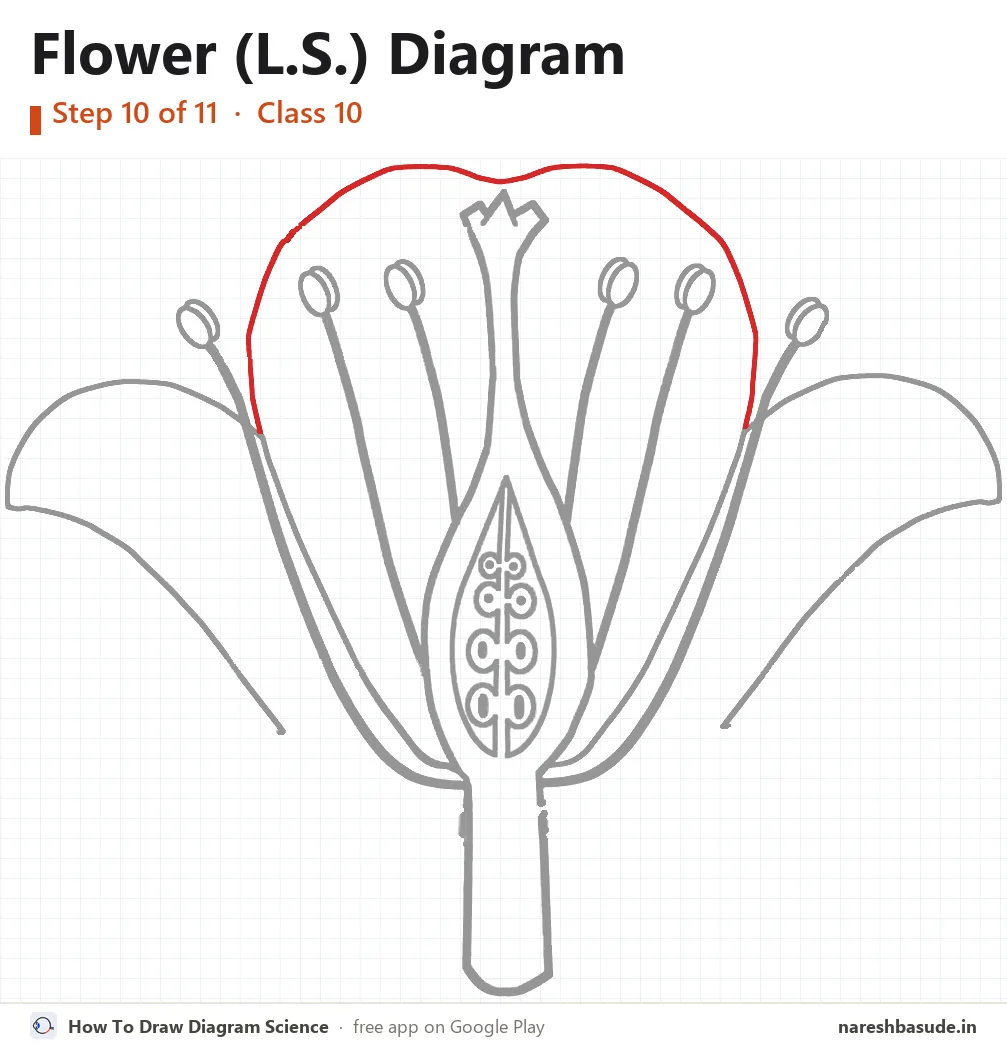
Back petal
Behind the stamens draw the back petal: a big rounded shape with a small dip in the middle of its top edge.
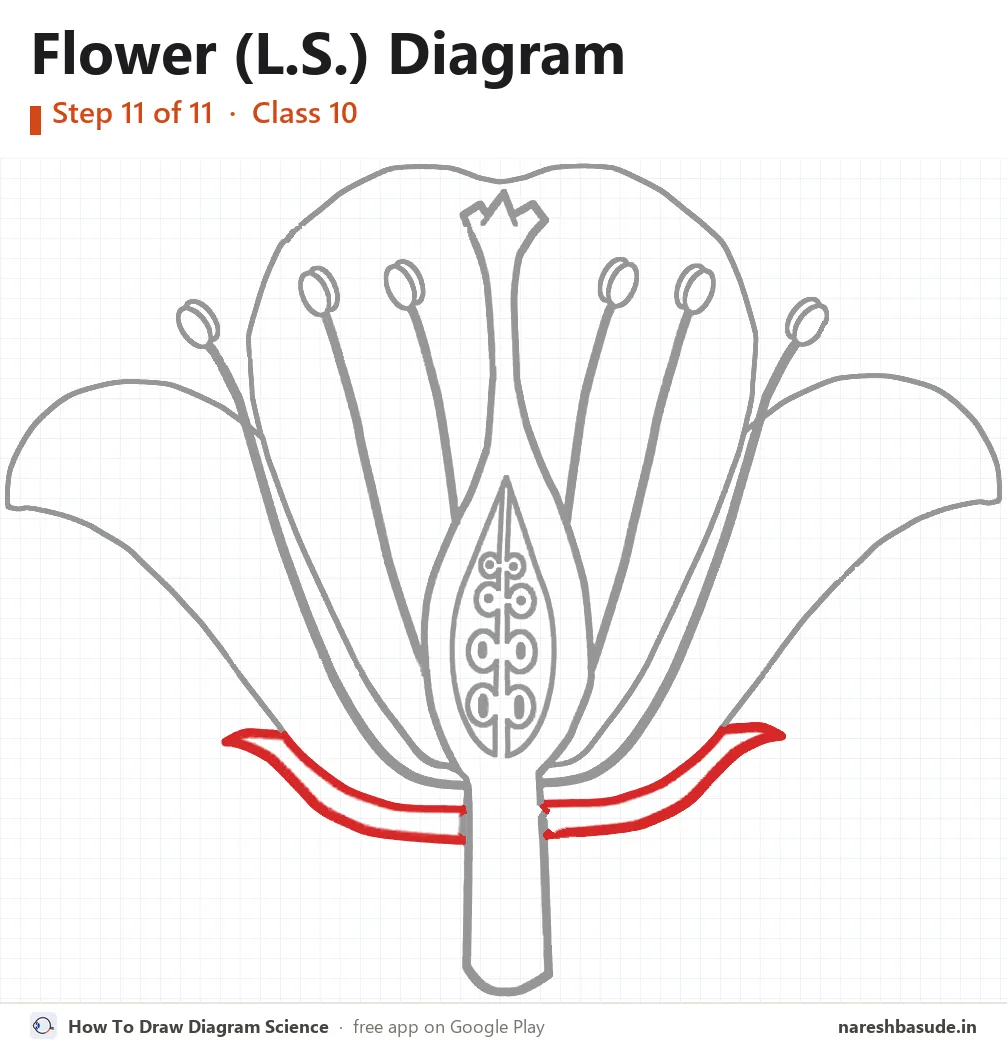
Sepals
At the base, on both sides of the stalk, draw the sepals: narrow curved leaves with pointed tips. Together they are the calyx.
Parts drawn: Sepal

Parts to label (12) and what each one does
- Stigma The sticky top of the pistil that receives pollen grains.
- Style The tube joining the stigma to the ovary. The pollen tube grows down through it.
- Pistil The female part of the flower: stigma, style and ovary together.
- Ovary The swollen base of the pistil that holds the ovules. After fertilisation it becomes the fruit.
- Anther The top of the stamen, which makes pollen grains.
- Stamen The male part of the flower: anther and filament together.
- Petal (corolla) The coloured parts of the flower that attract insects for pollination.
- Filament The thin stalk that holds the anther up.
- Ovule Holds the female germ cell (egg). After fertilisation it becomes the seed.
- Sepal (calyx) Green, leaf-like parts that protect the flower while it is a bud.
- Receptacle The swollen top of the stalk that carries all the parts of the flower.
- Pedicel The stalk of the flower.
Write each name on the side of the diagram, joined to its part with a straight line. Keep the lines from crossing.
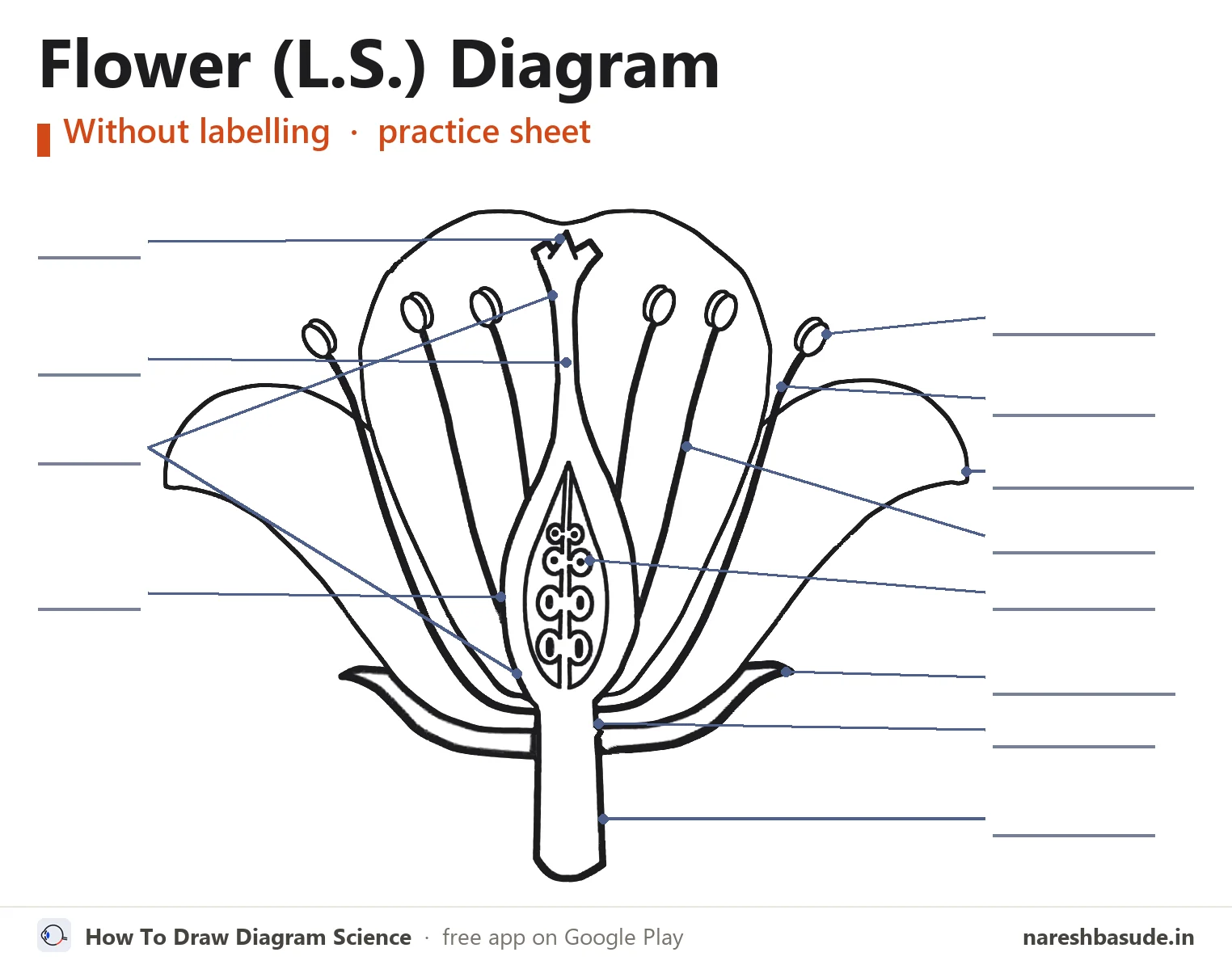
Flower (L.S.) diagram without labelling (practice sheet)
The same diagram with the label lines but no names (an unlabelled diagram). Write each part's name on its line, then check your answers against the labelled diagram at the top.
Download free PDF (A4, 3 pages)
Page 1: the labelled diagram. Page 2: this practice sheet with a word bank of all 12 parts. Page 3: all 11 drawing steps on one page.
Exam tips
- Draw from the bottom up: stalk, receptacle, ovary, then the style and stigma.
- Keep the pistil in the centre with the stamens evenly on both sides.
- Hang the ovules on both sides of a thin line down the middle of the ovary.
Common mistakes
- Mixing up the stamen (male) and the pistil (female).
- Labelling an anther as the stigma.
- Leaving out the ovules inside the ovary.
Exam questions on the flower (L.S.) diagram
QuestionDraw a diagram of the longitudinal section of a flower and label: stigma, style, ovary, anther and filament.
Draw the pistil in the middle: the stigma at the top, the style below it and the swollen ovary at the base. Around it draw the stamens, each a filament with an anther on top. Add the petals, sepals, receptacle and pedicel.
QuestionWhat is the difference between self-pollination and cross-pollination?
In self-pollination, pollen reaches the stigma of the same flower. In cross-pollination, pollen is carried from one flower to another, by insects, wind or water.
Questions students ask
Which is the male reproductive part of a flower?
The stamen. It is made of the anther, which makes pollen, and the filament.
What does the ovary become after fertilisation?
The ovary becomes the fruit, and the ovules inside it become the seeds.
What are the parts of the pistil?
The stigma, the style and the ovary.
Practise it on your phone
These steps come straight from the free Android app How To Draw Diagram Science. In the app you can view the flower (L.S.) with every part named, learn to draw it step by step on a numbered grid, take a quiz on the parts and label it yourself.


