How to Draw and Label a Human Female Reproductive System Diagram, Step by Step
The human female reproductive system is drawn in Class 10 Biology under How do Organisms Reproduce? Like the male system it is symmetrical: build the uterus in the middle first, then the tube and ovary on one side, and repeat them on the other.
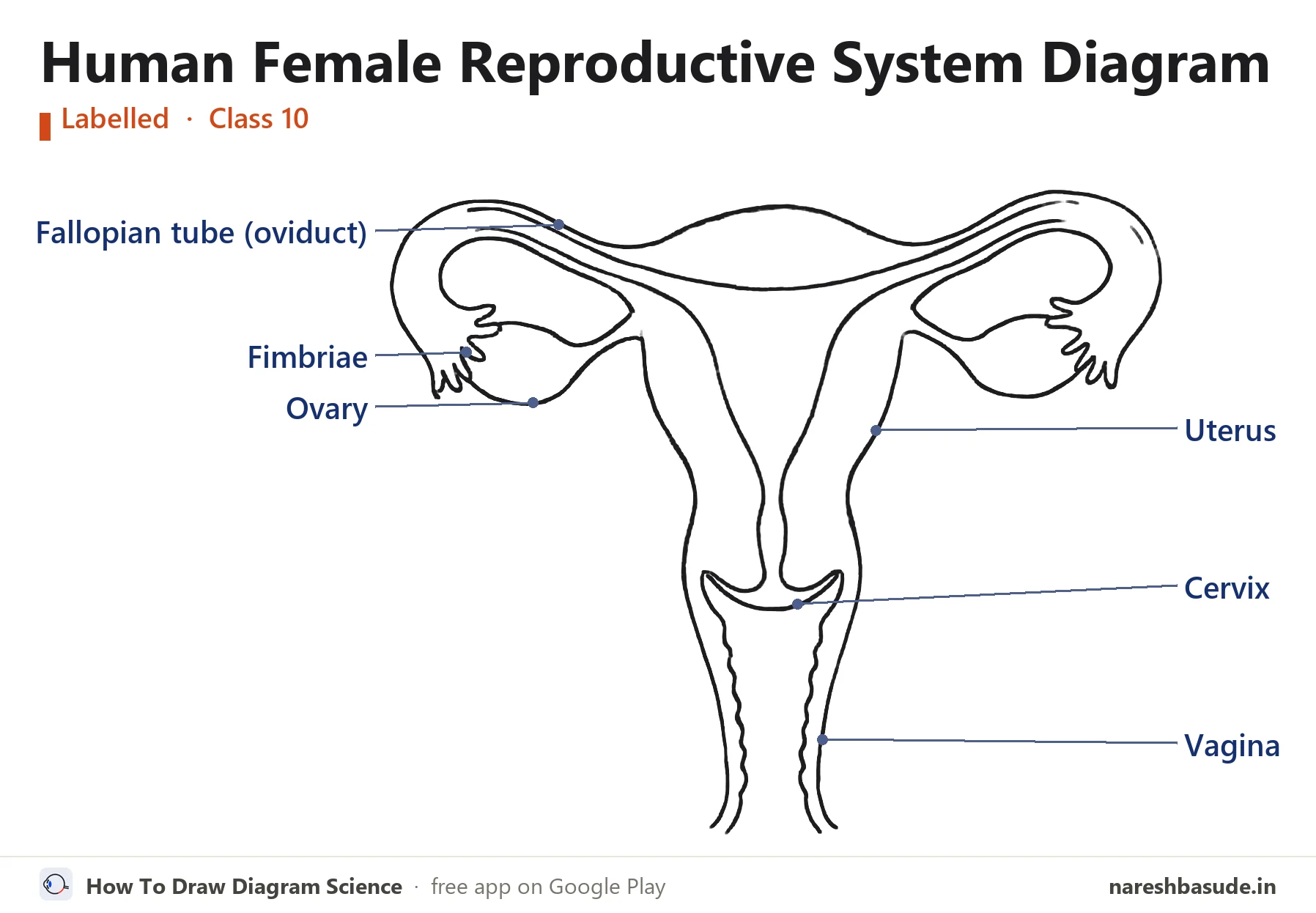
The finished human female reproductive system diagram with all 6 parts labelled. The steps below build it up one part at a time.
What the human female reproductive system does
The ovaries make eggs and hormones. Each month an egg is released and caught by the fimbriae, the finger-like ends of the fallopian tube (oviduct). Fertilisation happens in the fallopian tube. The fertilised egg implants in the wall of the uterus and grows there. The uterus opens through the cervix into the vagina.
Draw it in 14 steps
Use a sharp pencil and draw lightly at first. In every picture, red is what to draw in that step and grey is what you have already drawn.
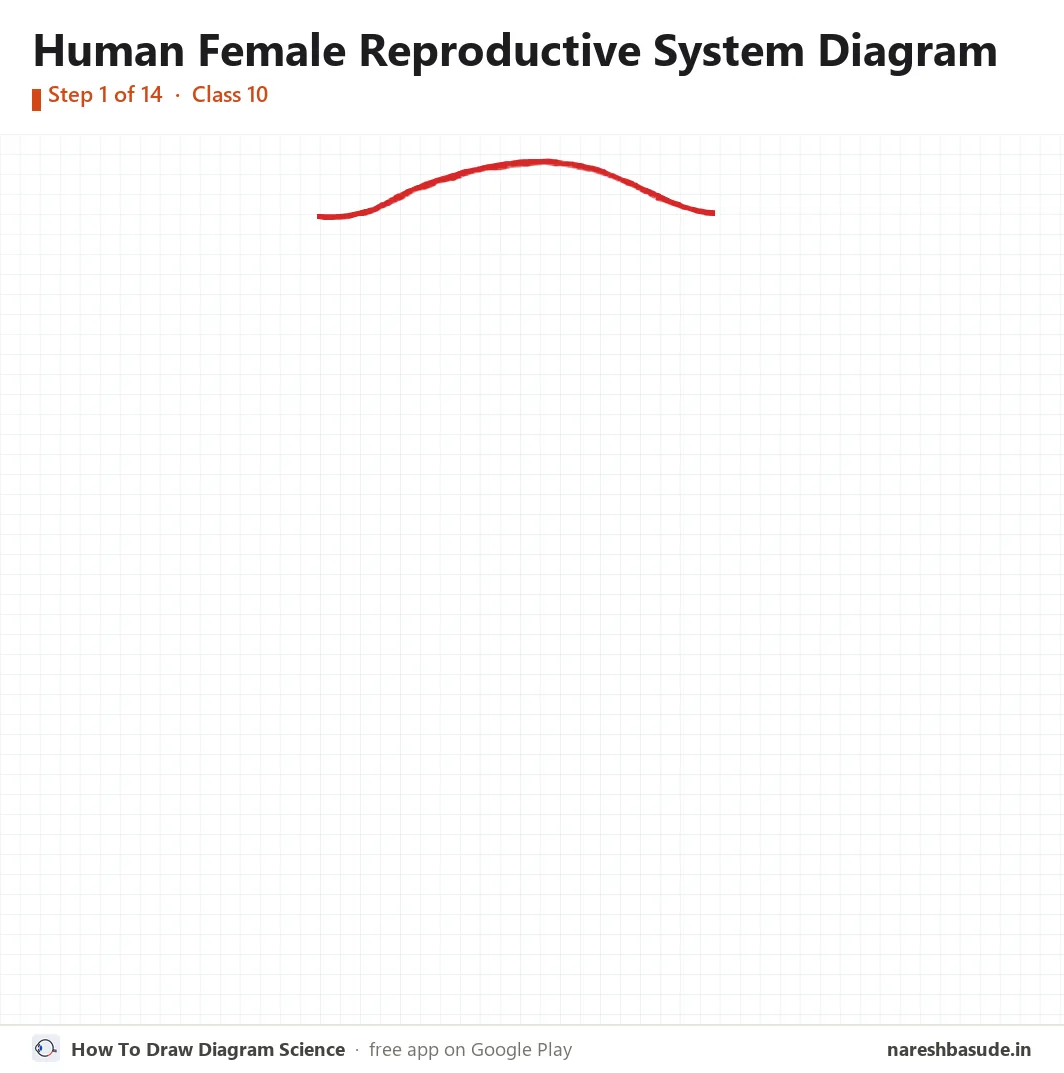
Top of the uterus
Start in the middle: draw a wide rounded hump, like the top of an upside-down pear. This is the top of the uterus.
Parts drawn: Uterus
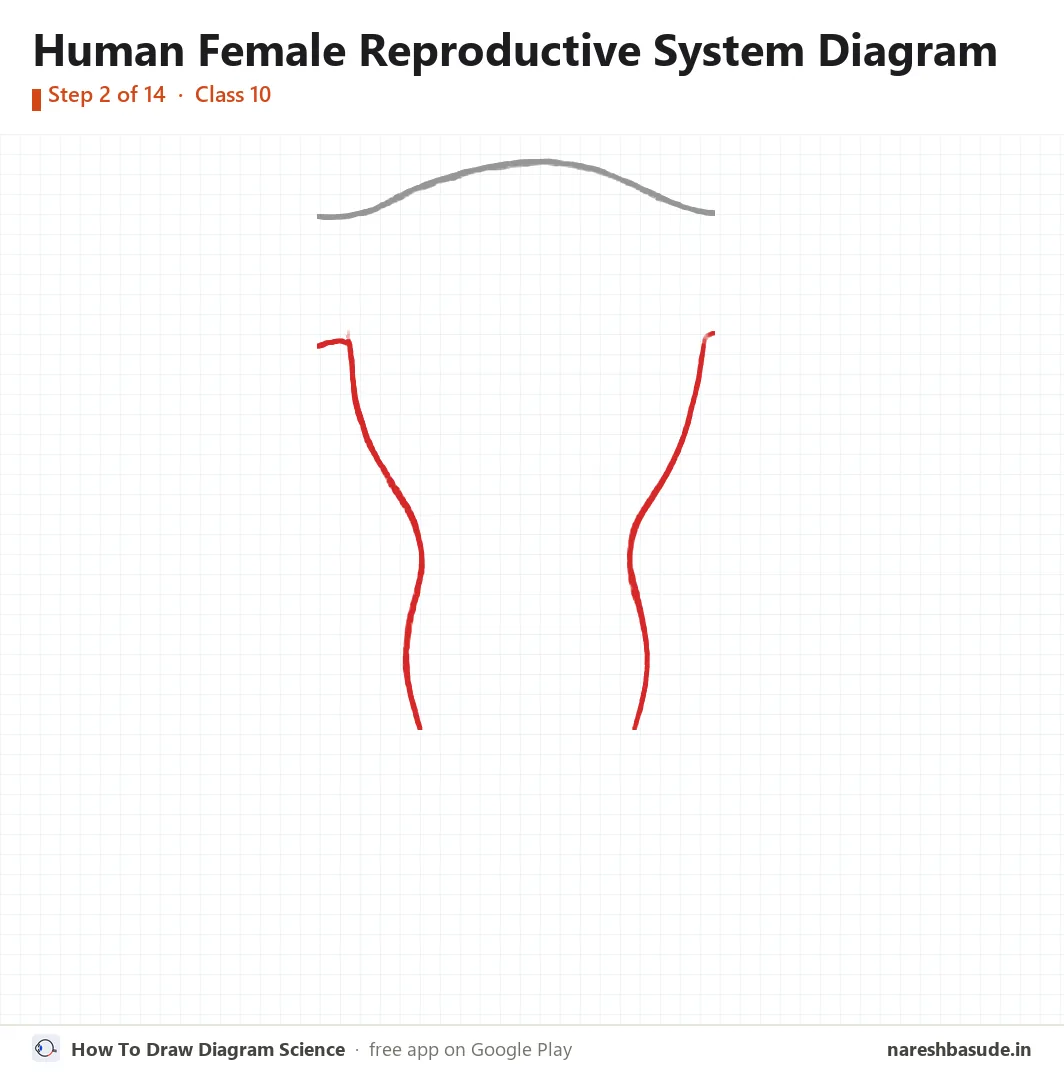
Uterus: the outer walls
Draw the two sides of the uterus: from below the hump curve each line down and in, so the uterus gets narrow at the bottom like a pear.
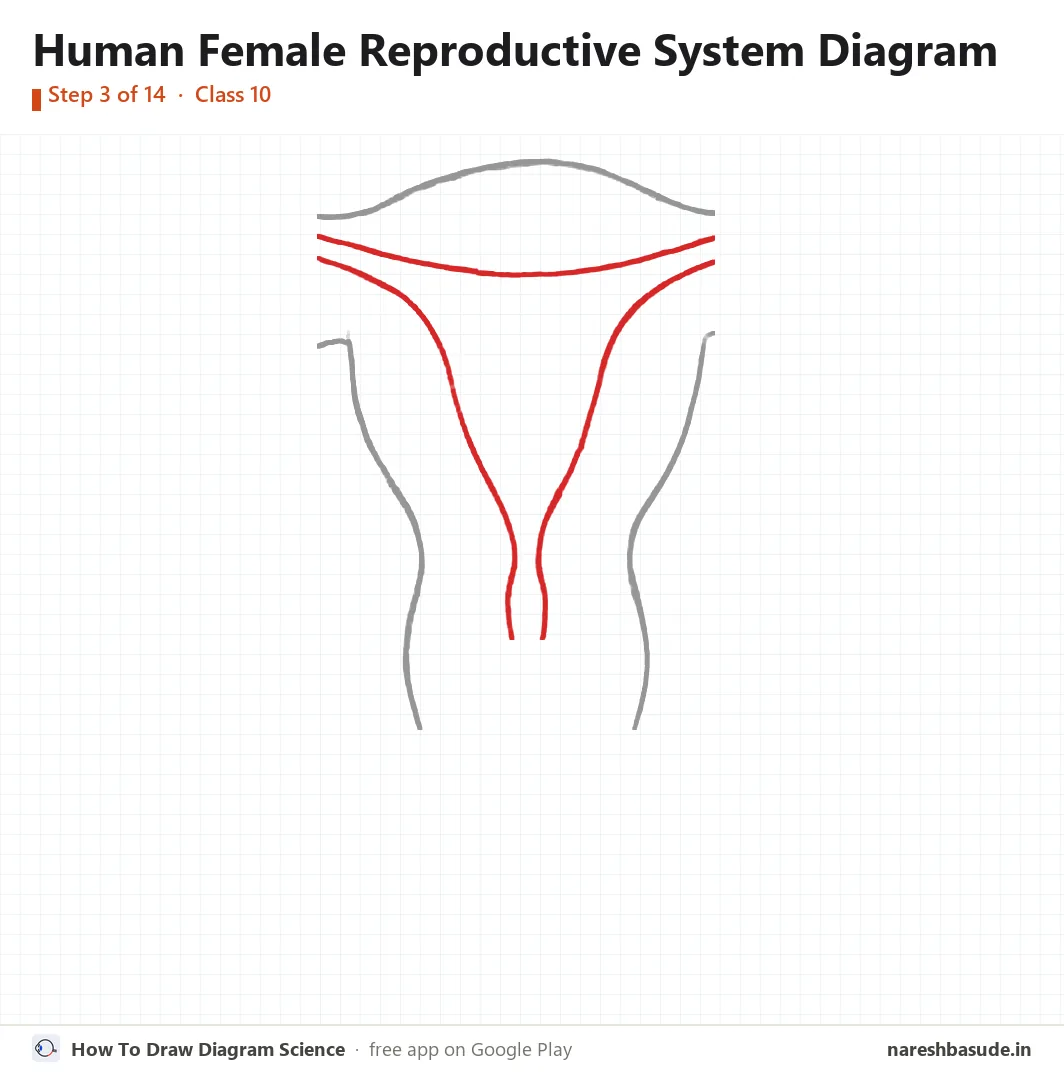
Uterus: the space inside
Inside, draw an upside-down triangle: a line across just under the hump, and two sides that come together near the bottom. This is the hollow inside the uterus.
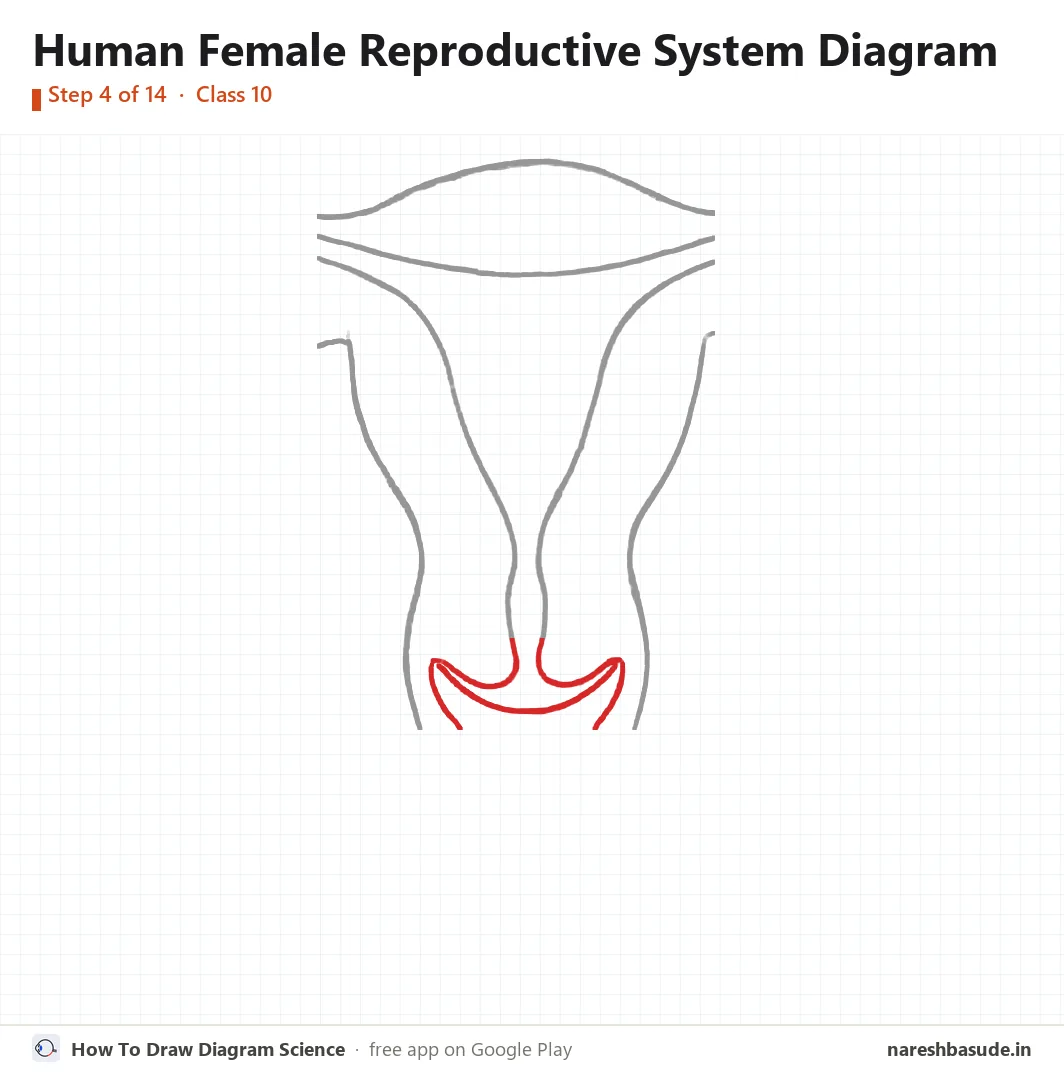
Cervix
At the bottom of the uterus draw the narrow neck ending in a small cup shape, like a smile. This is the cervix.
Parts drawn: Cervix
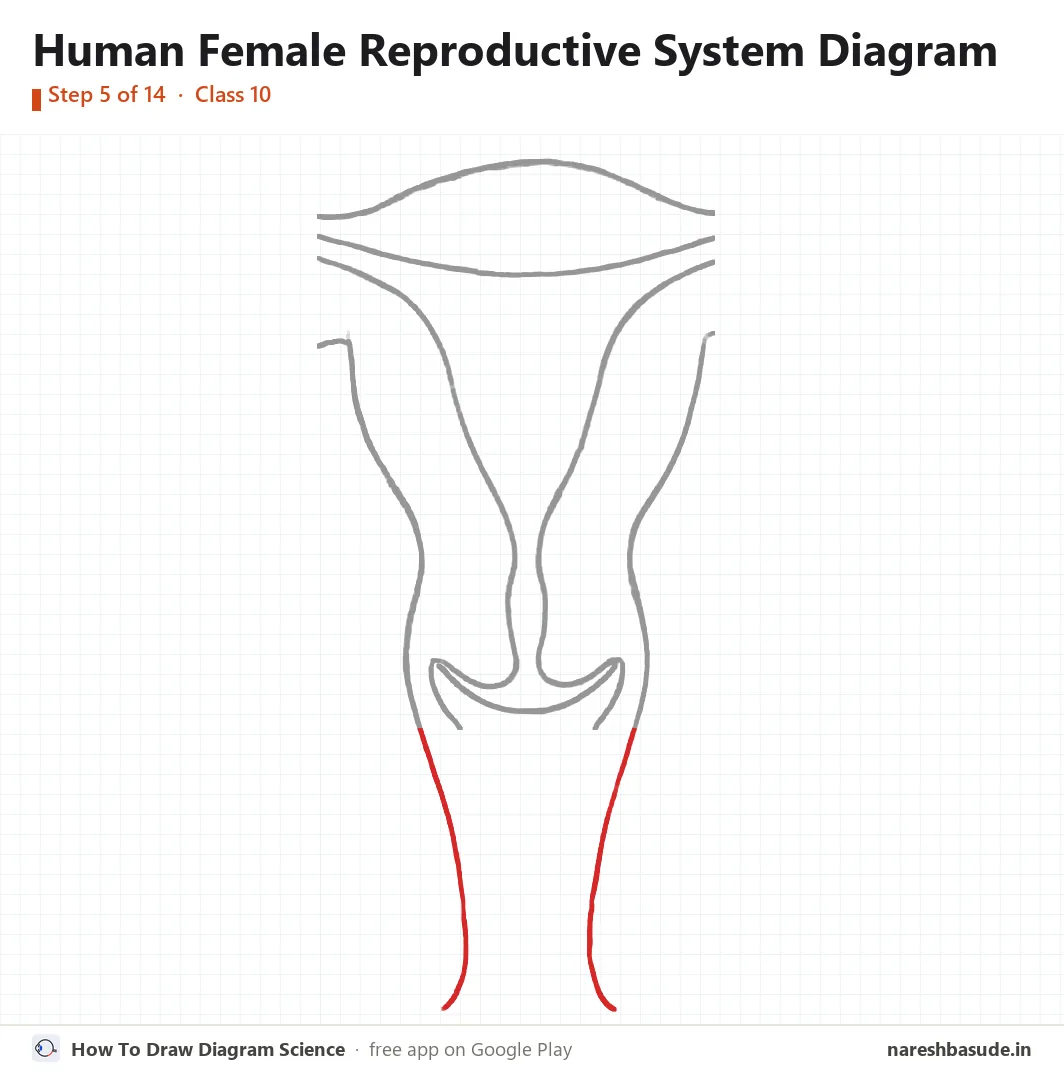
Vagina: outer walls
Below the cervix draw two long lines going down, getting slightly narrower: the vagina.
Parts drawn: Vagina
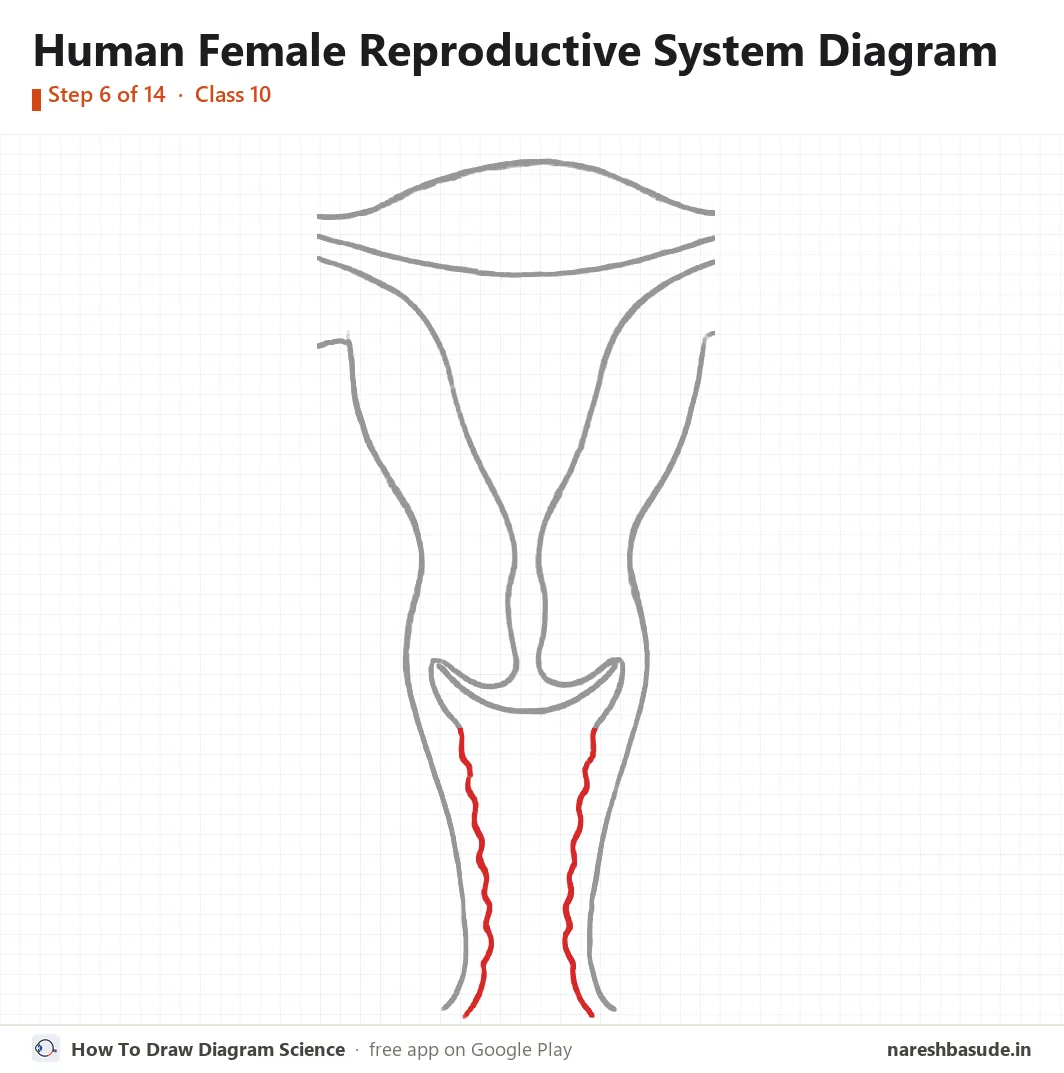
Vagina: wavy inner lines
Just inside those two lines draw two wavy lines going down, one on each side.
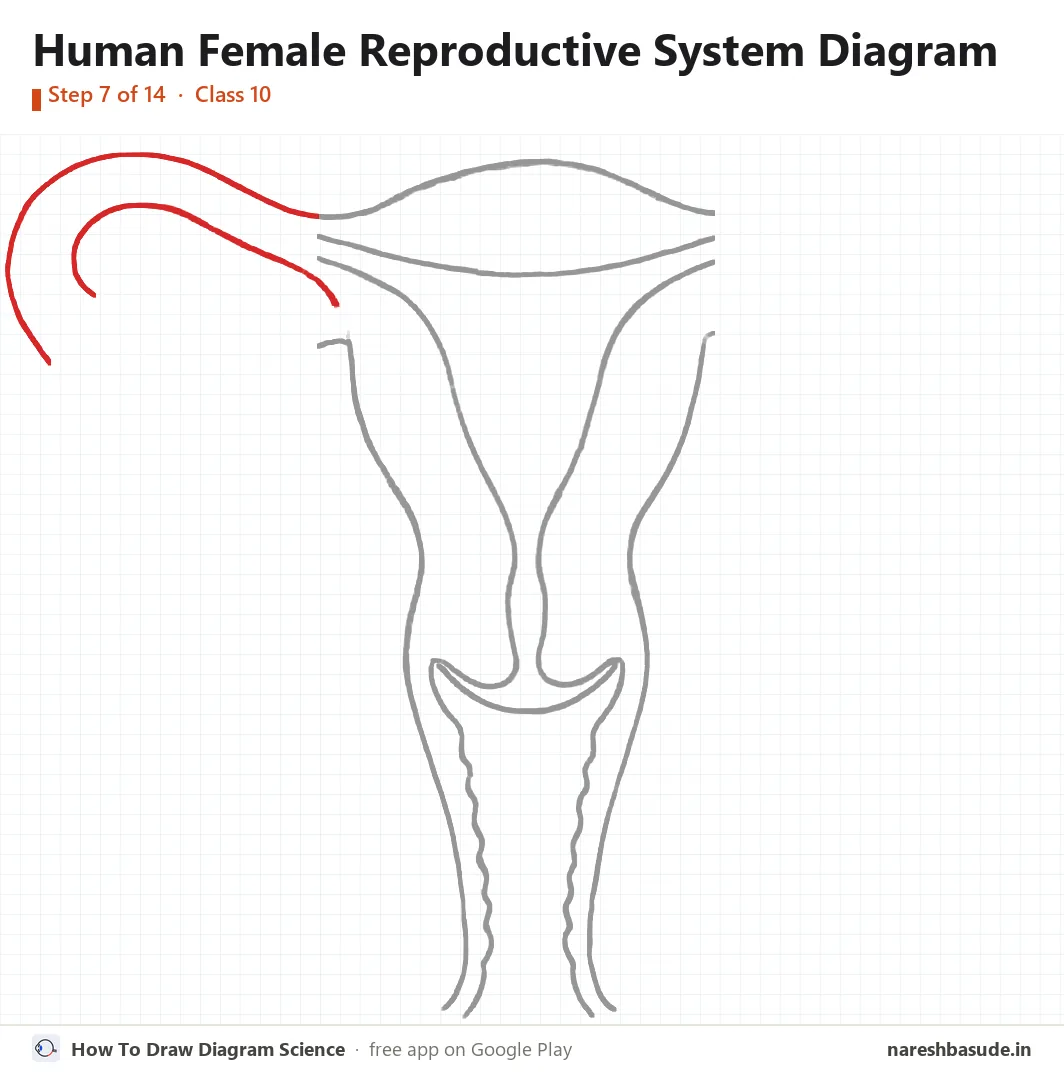
Left tube: outer lines
From the top left corner of the uterus draw a curved tube going out to the left and bending down, like a hook. Start with its two outer lines. This is the fallopian tube, or oviduct.
Parts drawn: Fallopian tube (oviduct)
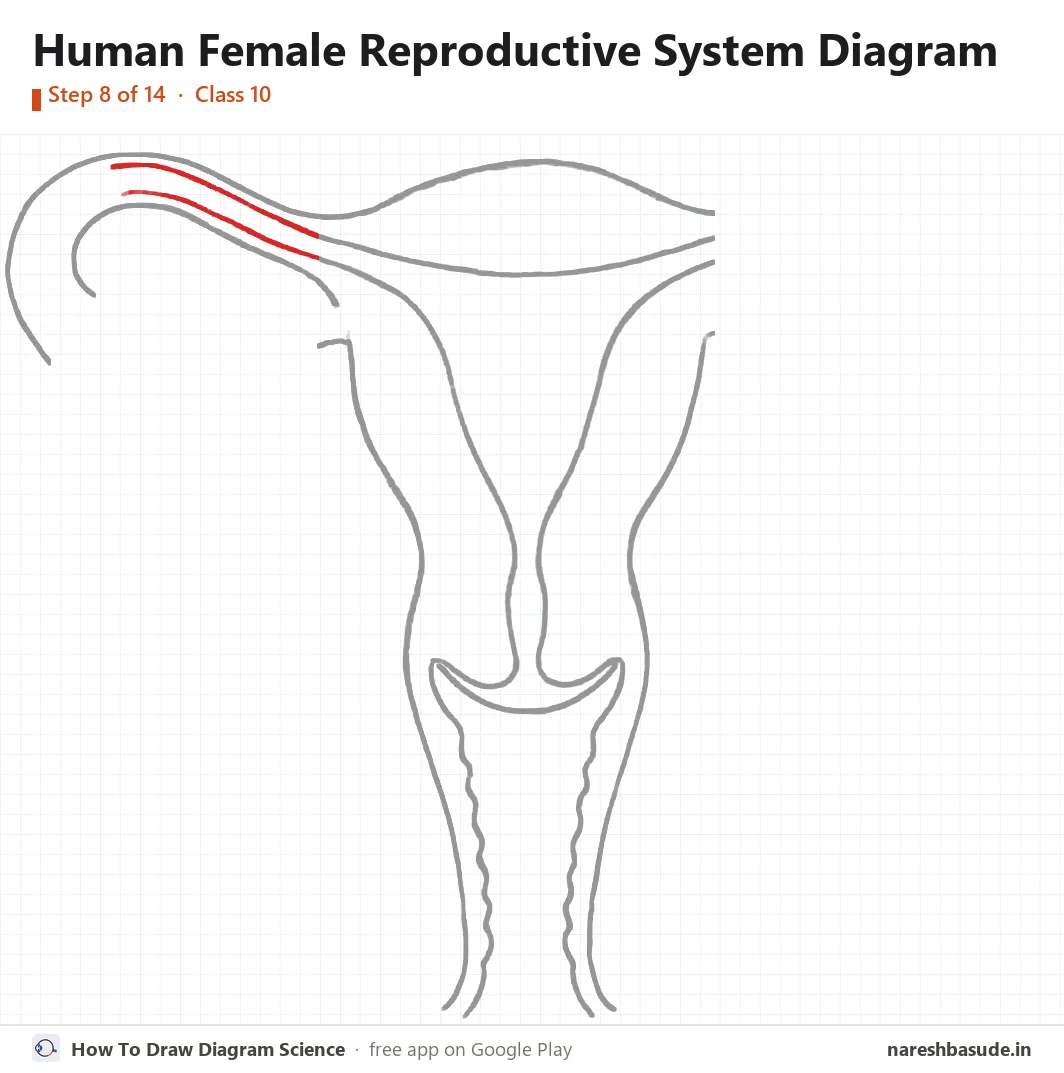
Left tube: inner lines
Inside the tube draw two more lines running along it: the narrow passage the egg travels through.
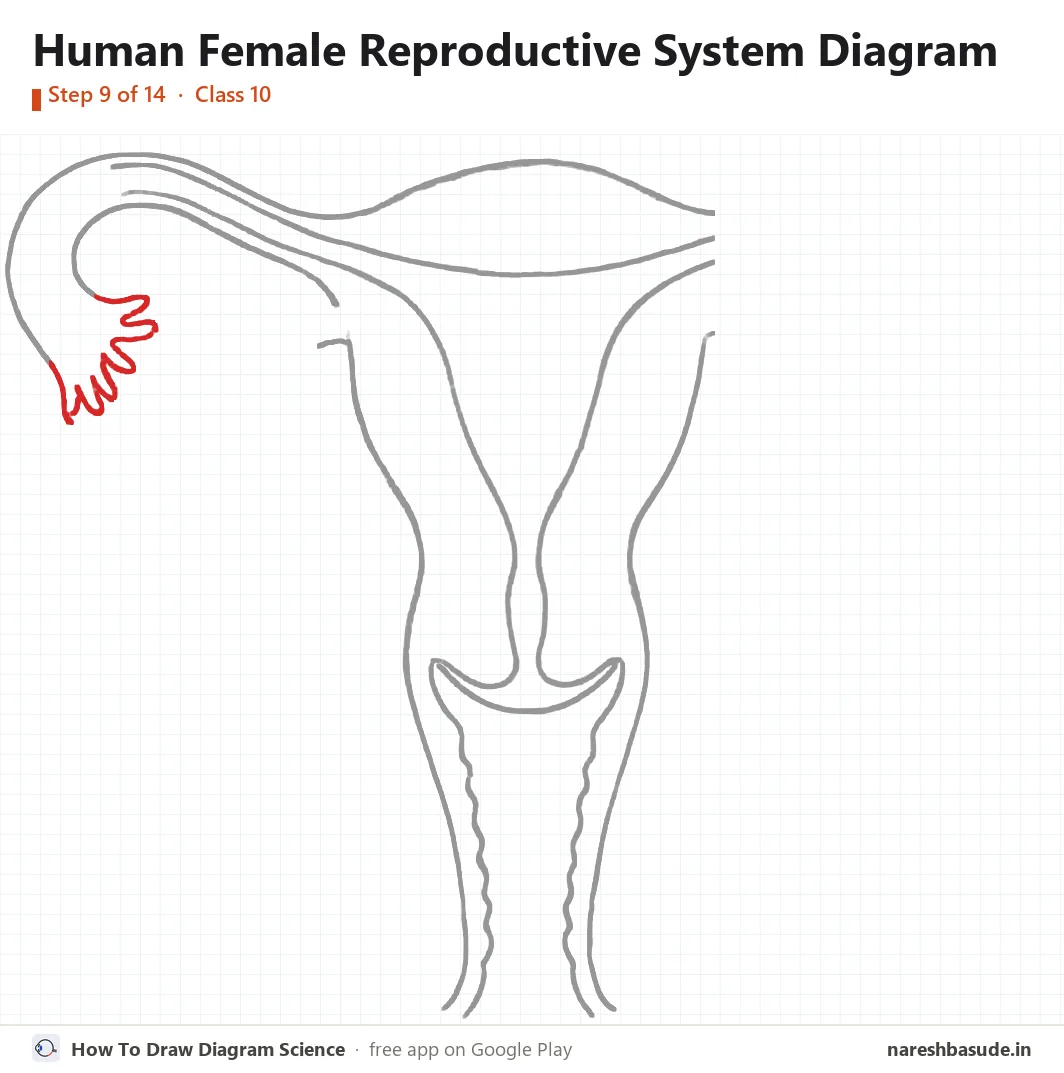
Left tube: the fingers
At the end of the tube draw small wavy fingers, like an open hand. They catch the egg from the ovary.
Parts drawn: Fimbriae
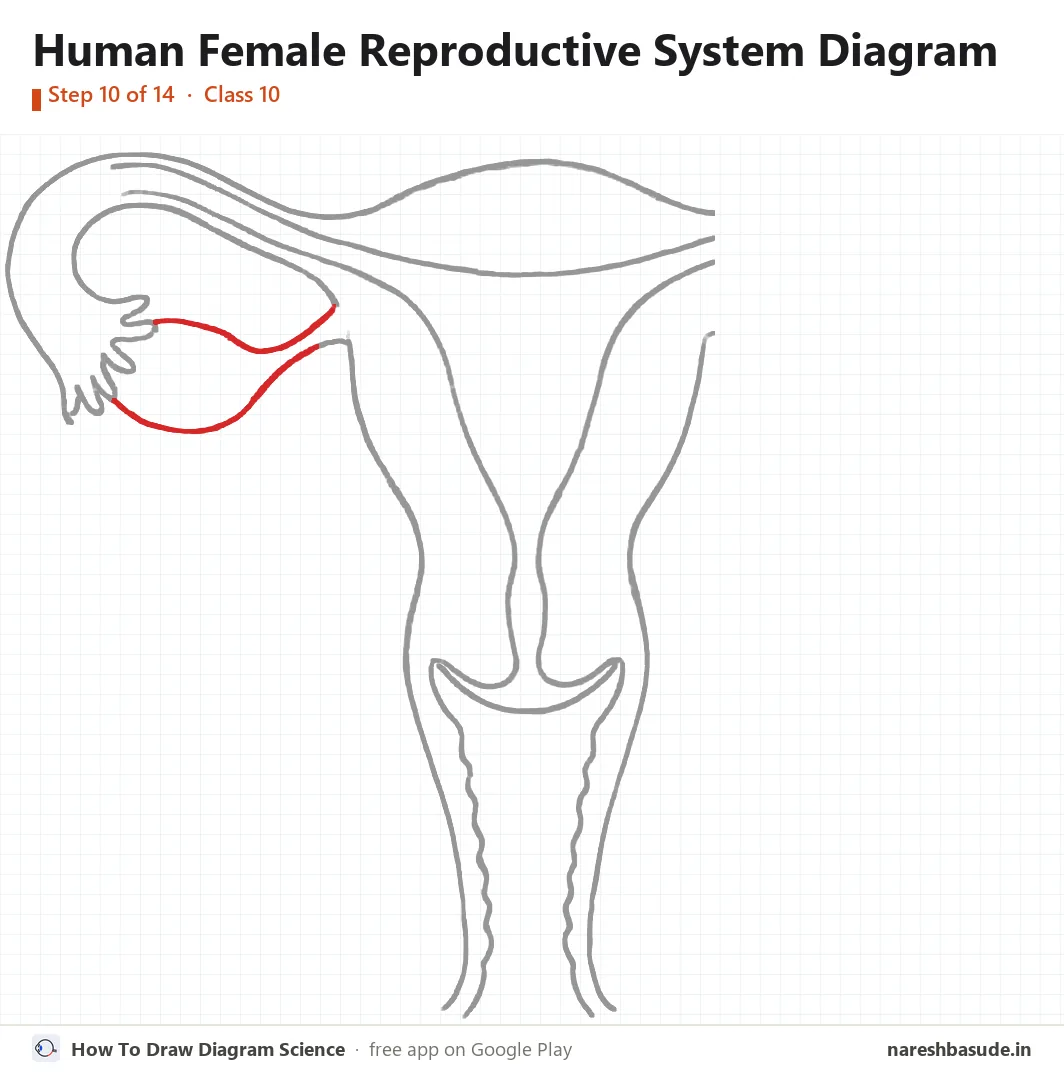
Left ovary
Under the tube, near the fingers, draw an oval: the ovary, where the eggs are made.
Parts drawn: Ovary
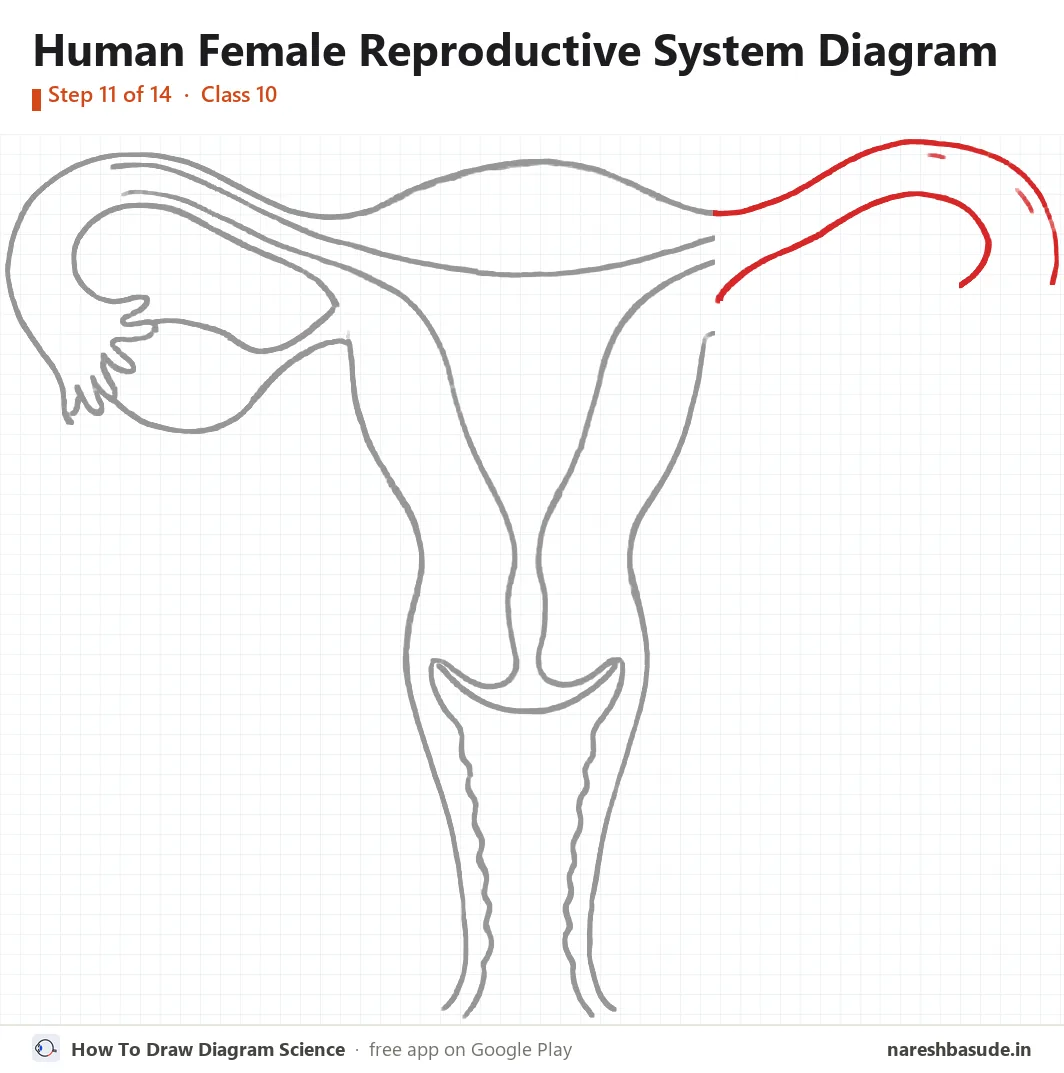
Right tube: outer lines
Now the right side: draw the curved tube going out to the right and bending down, the same as the left one.
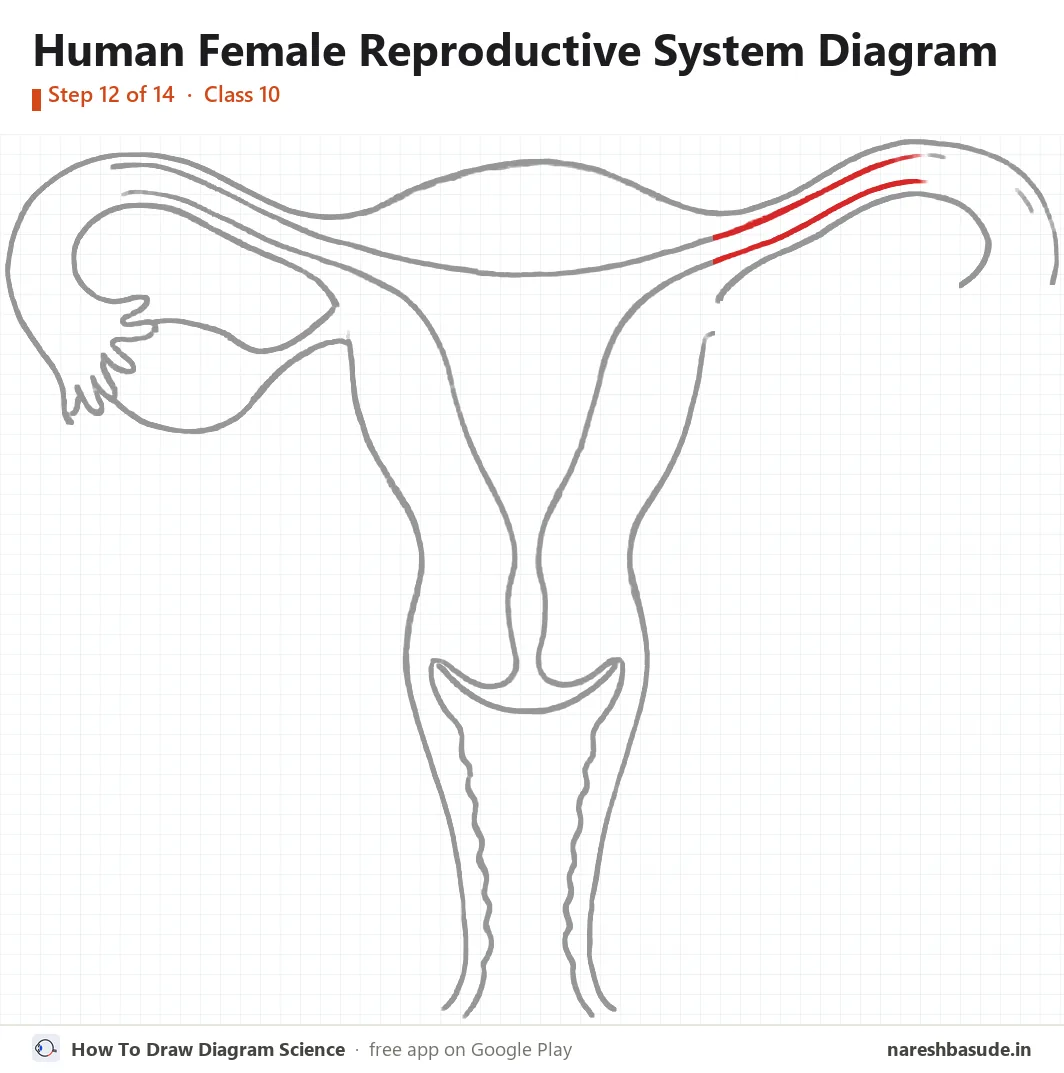
Right tube: inner lines
Draw the two inner lines along the right tube.
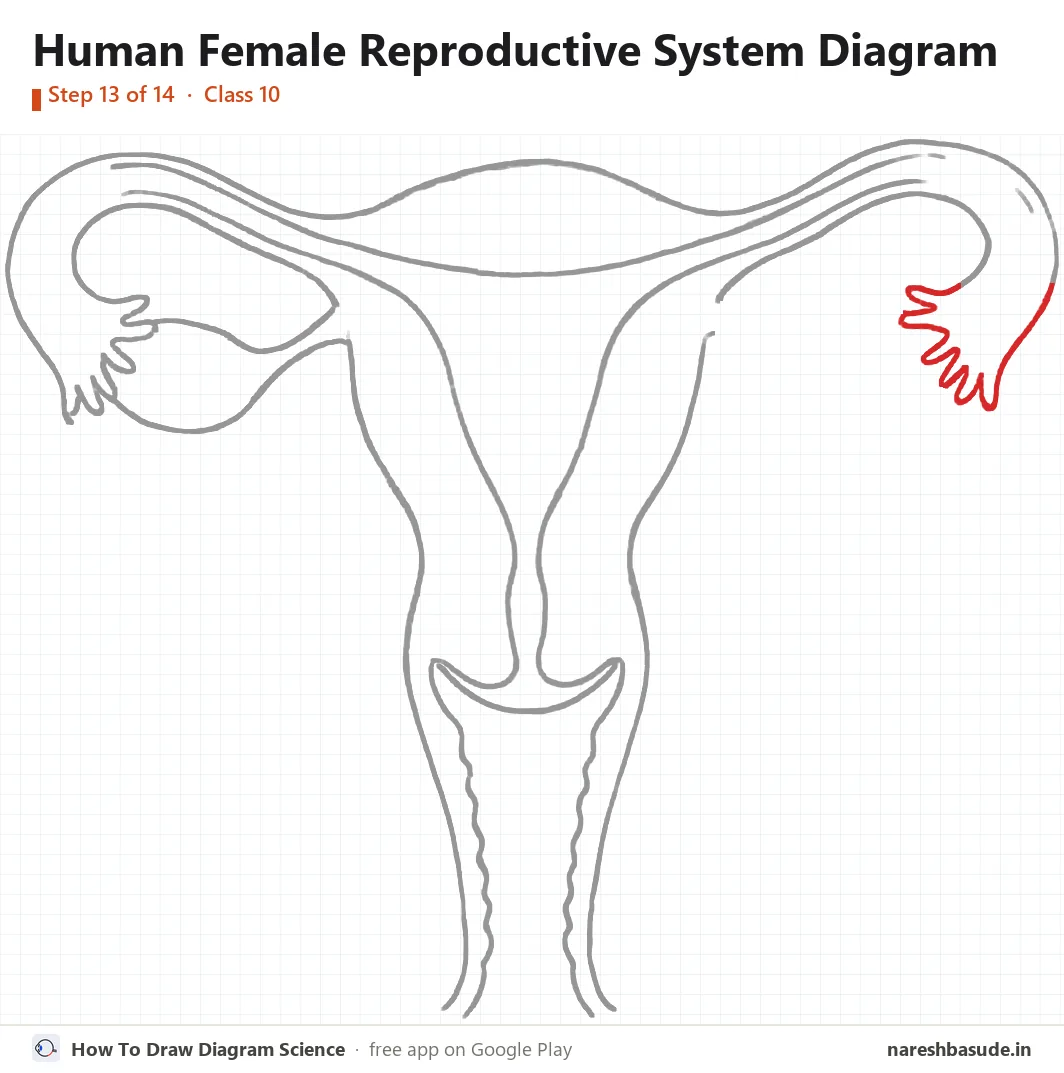
Right tube: the fingers
Draw the small wavy fingers at the end of the right tube.
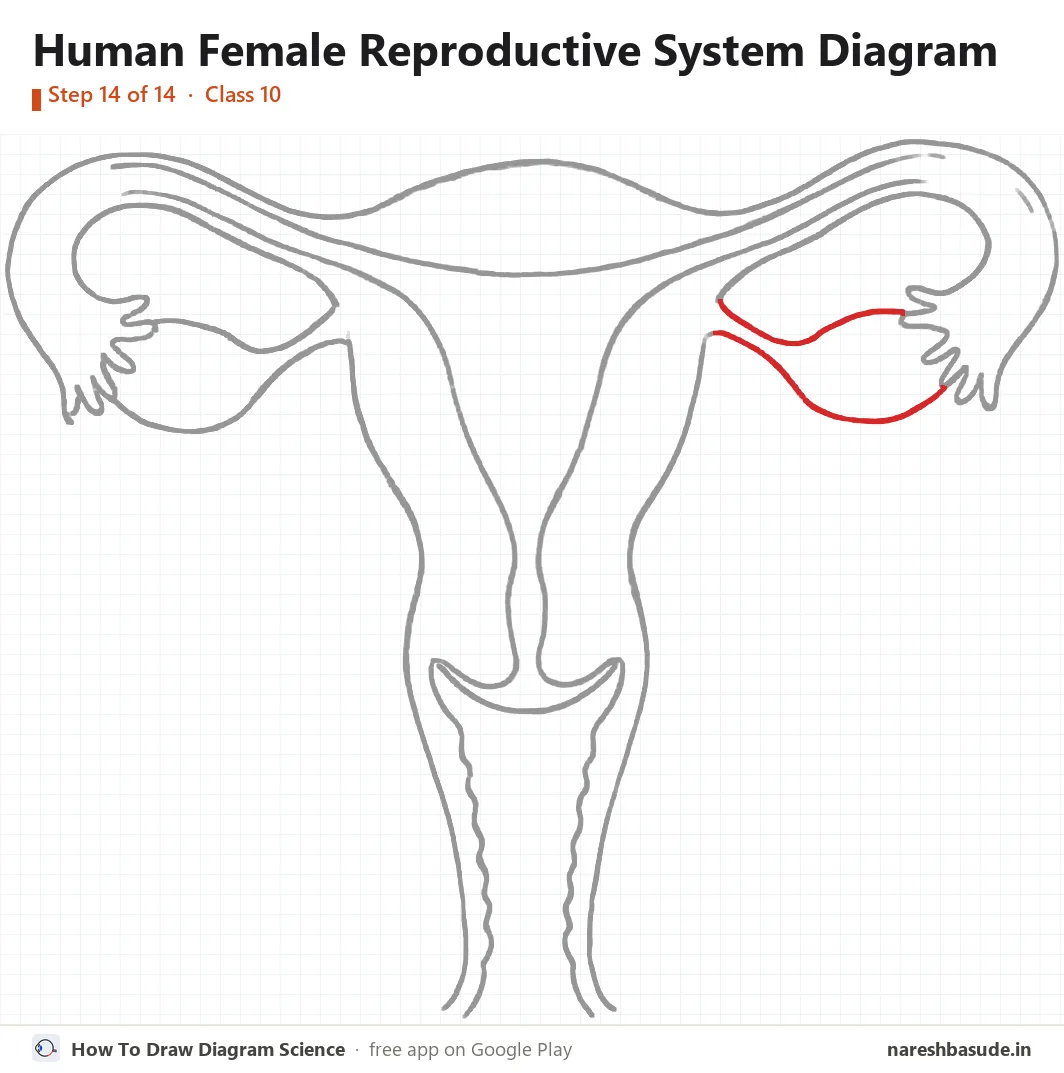
Right ovary
Draw the right ovary: an oval under the right tube.

Parts to label (6) and what each one does
- Fimbriae The finger-like ends of the fallopian tube that catch the egg released from the ovary.
- Ovary One of a pair of glands that make eggs (ova) and female hormones. One egg is released each month.
- Fallopian tube (oviduct) Carries the egg from the ovary to the uterus. Fertilisation happens here.
- Uterus A bag-like muscular organ where the embryo implants and the baby grows.
- Cervix The narrow lower opening of the uterus into the vagina.
- Vagina The passage from the cervix to the outside of the body.
Write each name on the side of the diagram, joined to its part with a straight line. Keep the lines from crossing.
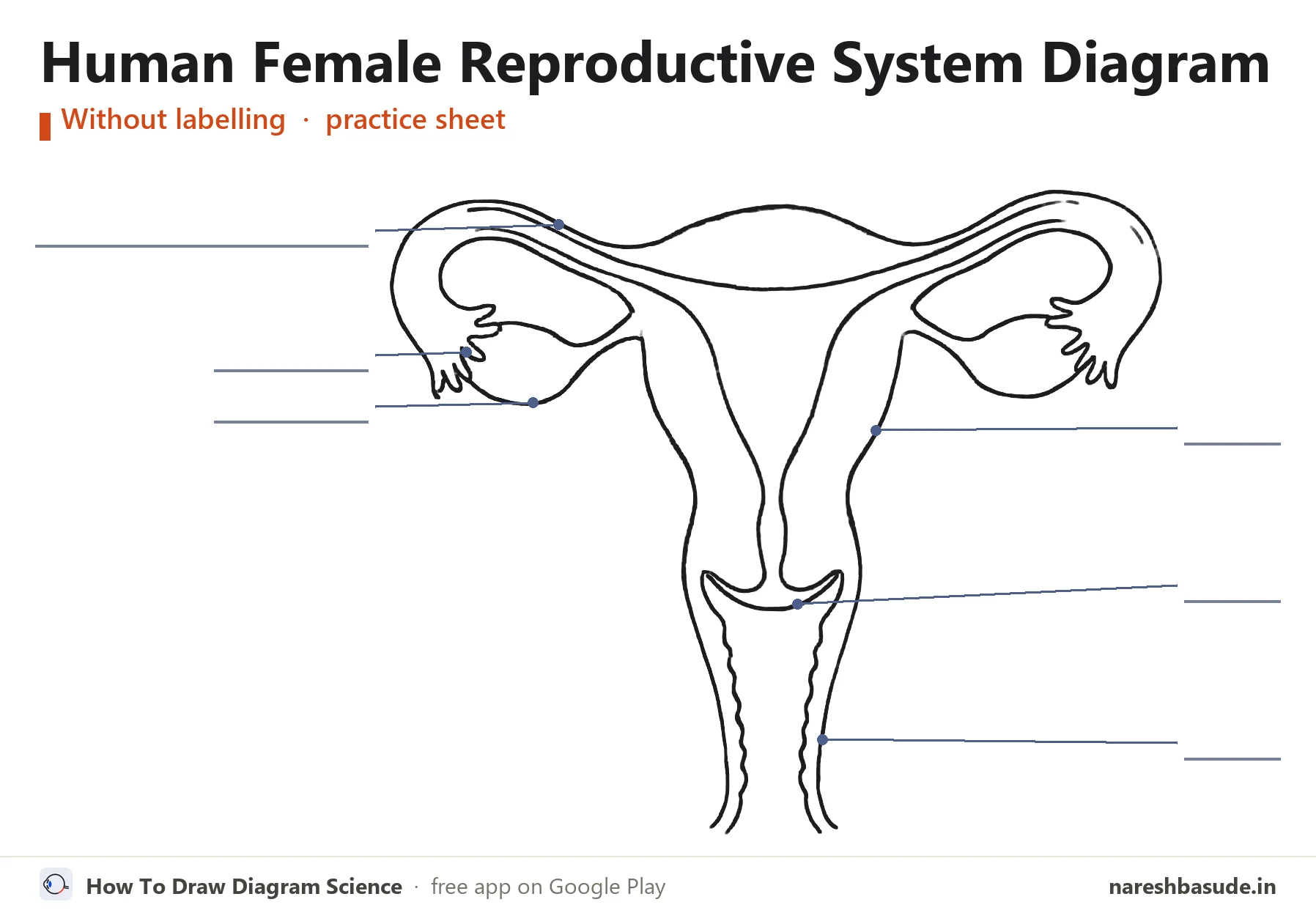
Human Female Reproductive System diagram without labelling (practice sheet)
The same diagram with the label lines but no names (an unlabelled diagram). Write each part's name on its line, then check your answers against the labelled diagram at the top.
Download free PDF (A4, 3 pages)
Page 1: the labelled diagram. Page 2: this practice sheet with a word bank of all 6 parts. Page 3: all 14 drawing steps on one page.
Exam tips
- Start with the pear-shaped uterus in the middle, then the cervix and vagina below it.
- Draw each fallopian tube going out and bending down like a hook.
- Put the ovary just under the fingers (fimbriae) at the end of each tube.
Common mistakes
- Joining the ovary directly onto the tube. It sits close to the fimbriae but is not part of the tube.
- Mixing up the cervix (the neck of the uterus) and the vagina.
- Drawing the two sides at different sizes.
Exam questions on the human female reproductive system diagram
QuestionDraw a labelled diagram of the human female reproductive system.
Draw the uterus in the middle, with a fallopian tube curving out from each top corner and ending in fimbriae. Place an ovary close to each set of fimbriae. Below the uterus, draw the cervix and then the vagina.
QuestionWhat happens in the uterus if the egg is not fertilised?
The uterus lining grows thick and rich in blood every month, ready to receive an embryo. If the egg is not fertilised, this lining is not needed, so it breaks down and comes out through the vagina as blood and mucus. This is menstruation.
Questions students ask
Where does fertilisation take place?
In the fallopian tube (oviduct).
What is the function of the uterus?
The fertilised egg implants in its wall, and the baby grows there.
What are fimbriae?
The finger-like ends of the fallopian tube. They catch the egg released from the ovary.
Practise it on your phone
These steps come straight from the free Android app How To Draw Diagram Science. In the app you can view the human female reproductive system with every part named, learn to draw it step by step on a numbered grid, take a quiz on the parts and label it yourself.


