How to Draw and Label a Human Brain Diagram, Step by Step
The human brain diagram (a side view, cut down the middle) comes up in Class 10 Biology under Control and Coordination. It shows the forebrain, midbrain and hindbrain and the main parts inside them. Follow the steps below and you will have a neat, fully labelled brain.
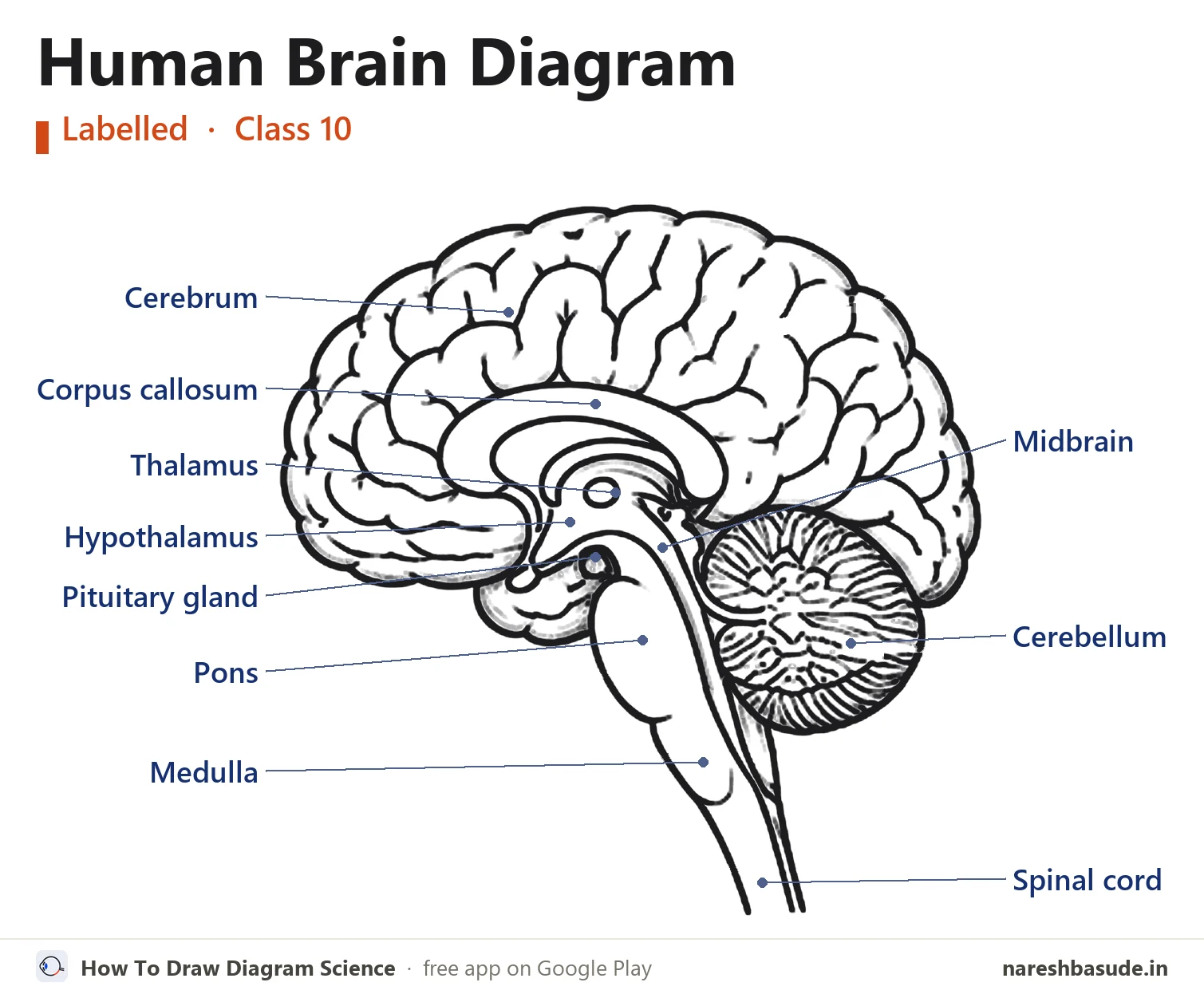
The finished human brain diagram with all 10 parts labelled. The steps below build it up one part at a time.
What the human brain does
The cerebrum (forebrain) handles thinking, memory and voluntary actions. The cerebellum keeps balance and posture. The medulla controls involuntary actions such as heartbeat, breathing and blood pressure. The pituitary gland, hanging below the hypothalamus, releases hormones that control other glands.
Draw it in 10 steps
Use a sharp pencil and draw lightly at first. In every picture, red is what to draw in that step and grey is what you have already drawn.
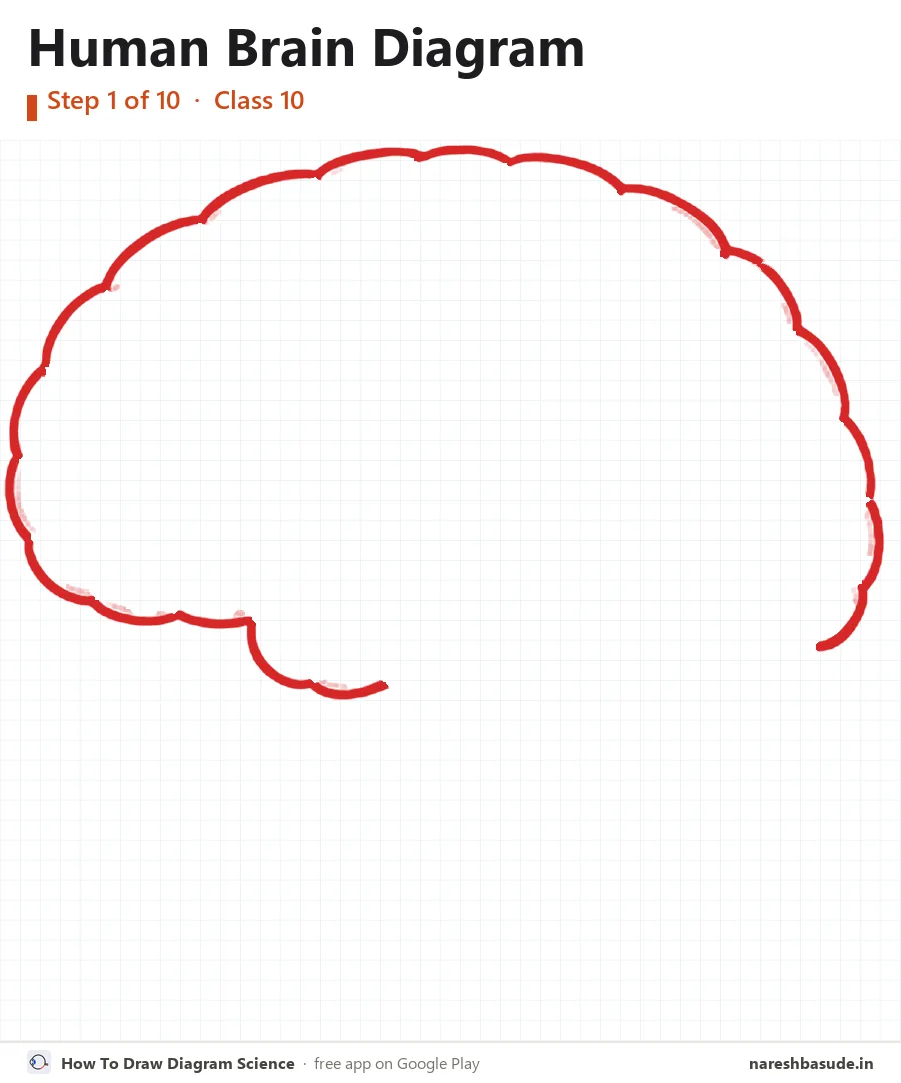
Outline
Draw the big rounded outline of the brain, like a boxing glove lying on its side: round at the top, with a bump at the bottom left.
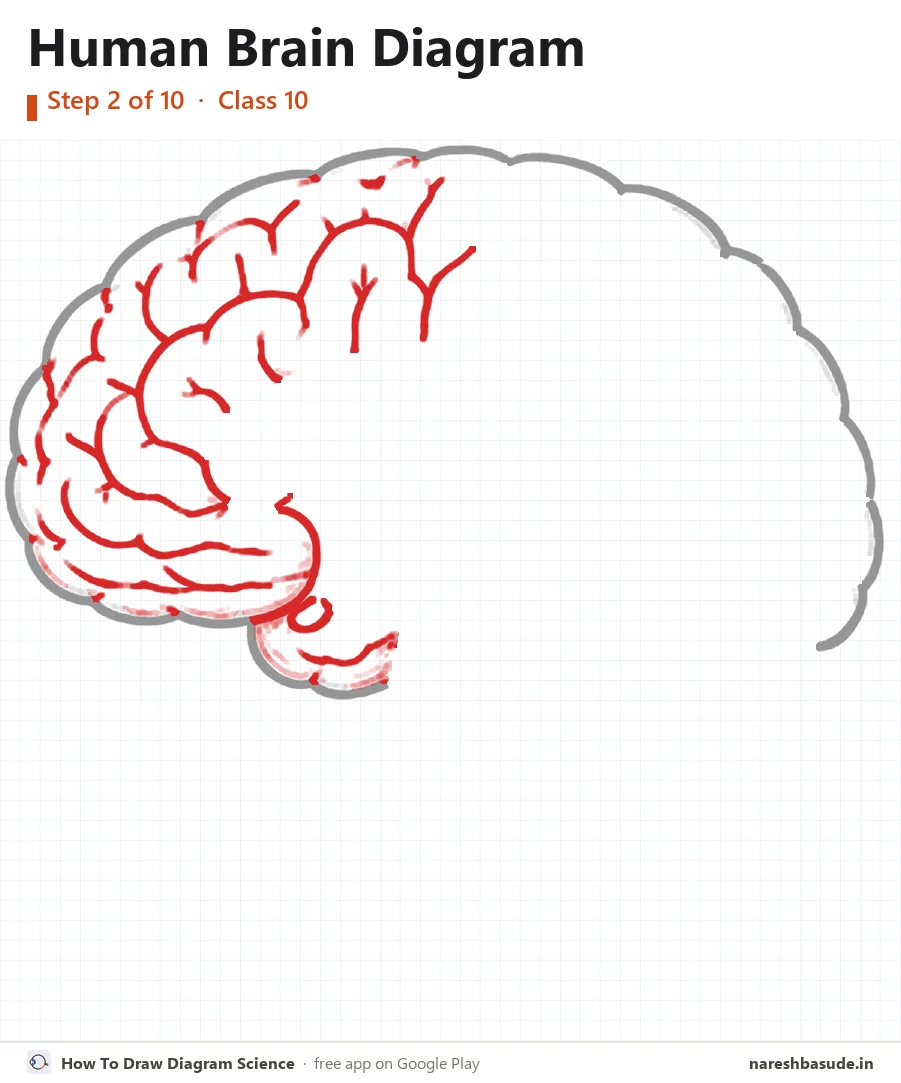
Folds, front half
Fill the front half with wavy folds. They do not need to match exactly: keep them curvy and close together.
Parts drawn: Cerebrum
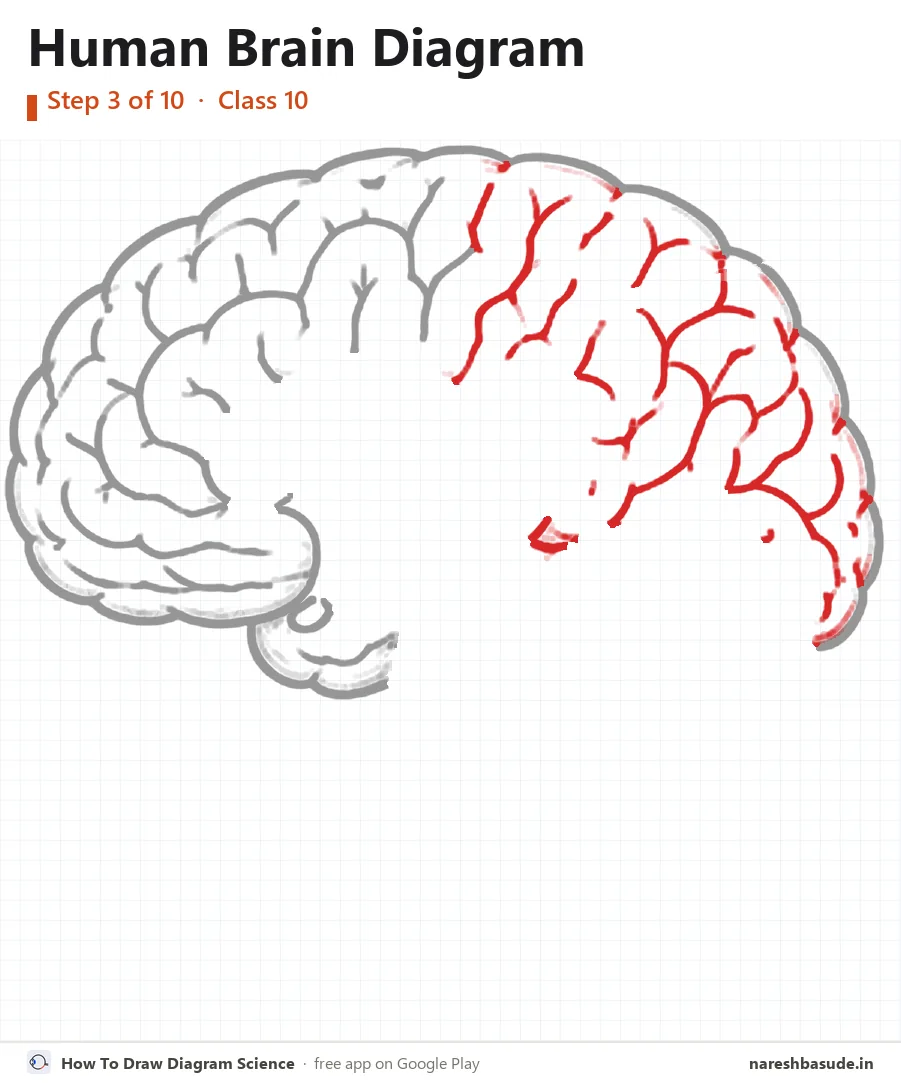
Folds, back half
Carry the wavy folds on over the back half of the cerebrum.
Parts drawn: Cerebrum
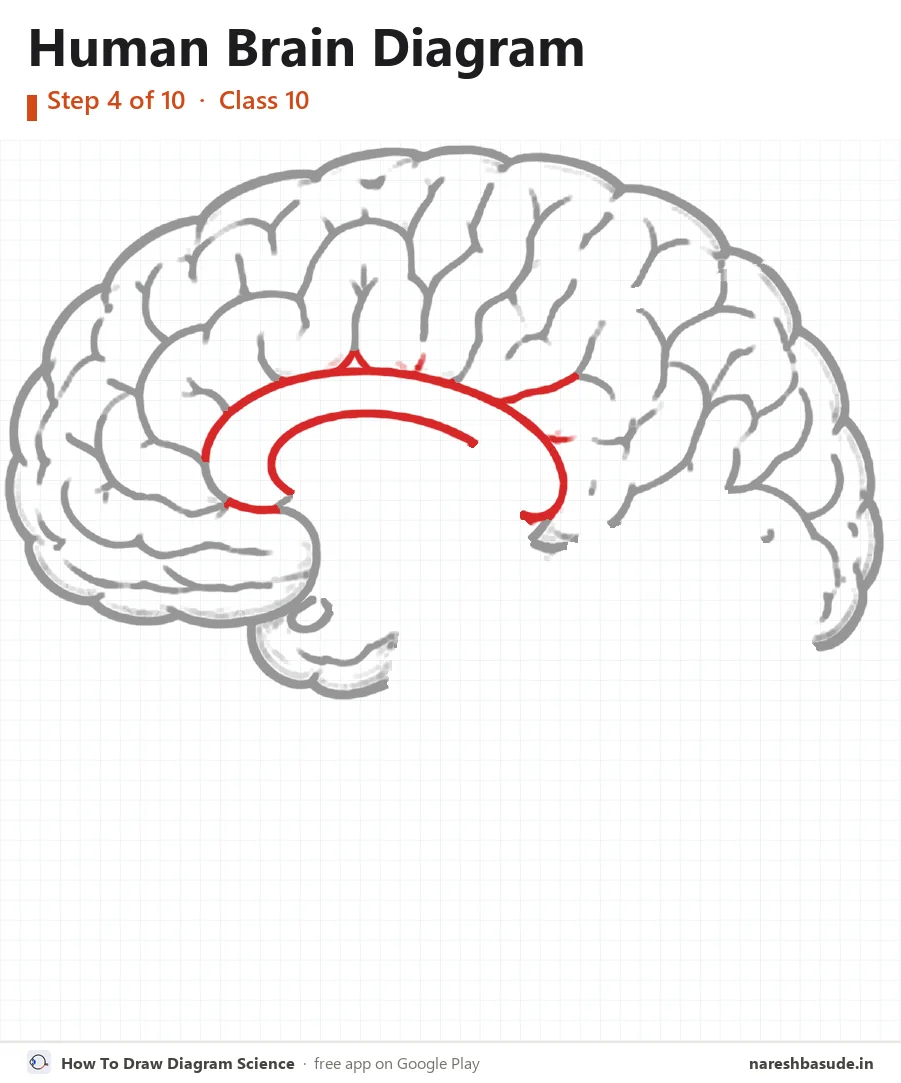
Corpus callosum
In the middle, draw a thick C-shaped band with a hooked front end and a rounded back end. It joins the left and right halves of the brain.
Parts drawn: Corpus callosum
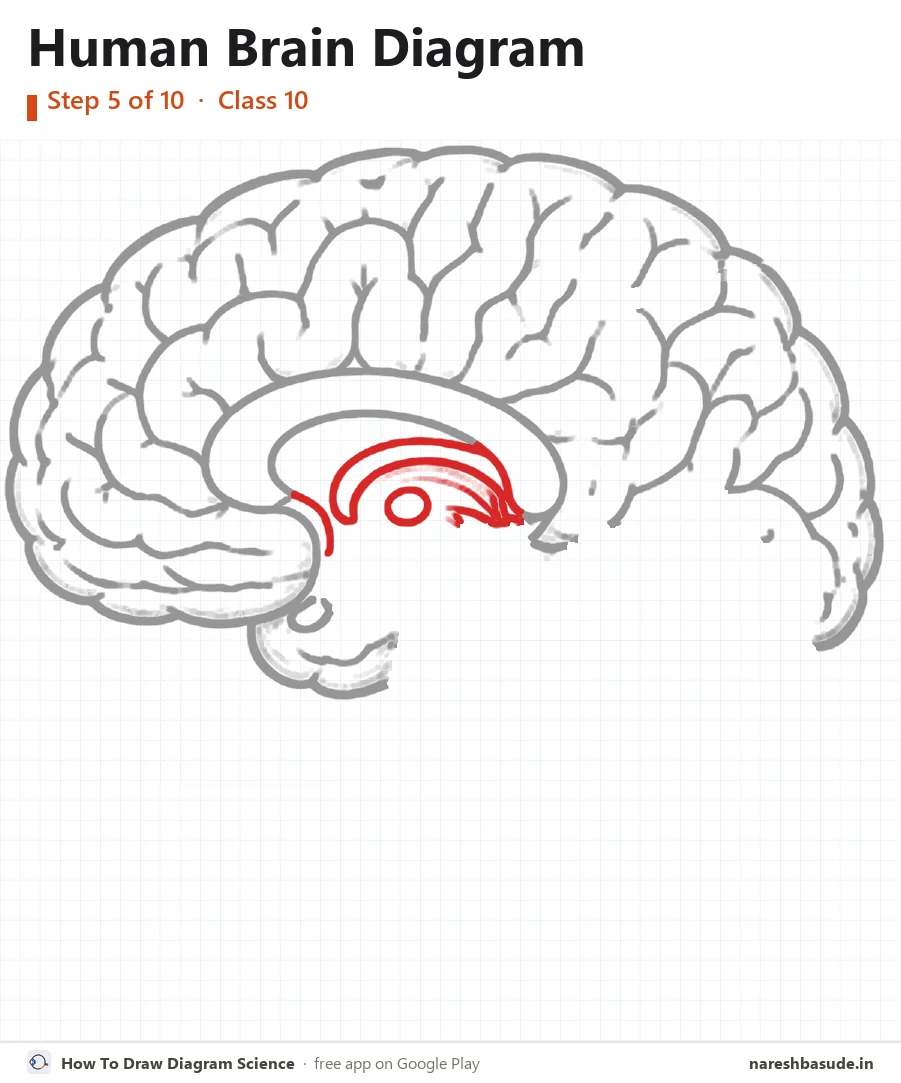
Thalamus
Under the band draw a smaller arch, and below it the thalamus with its small round circle.
Parts drawn: Thalamus
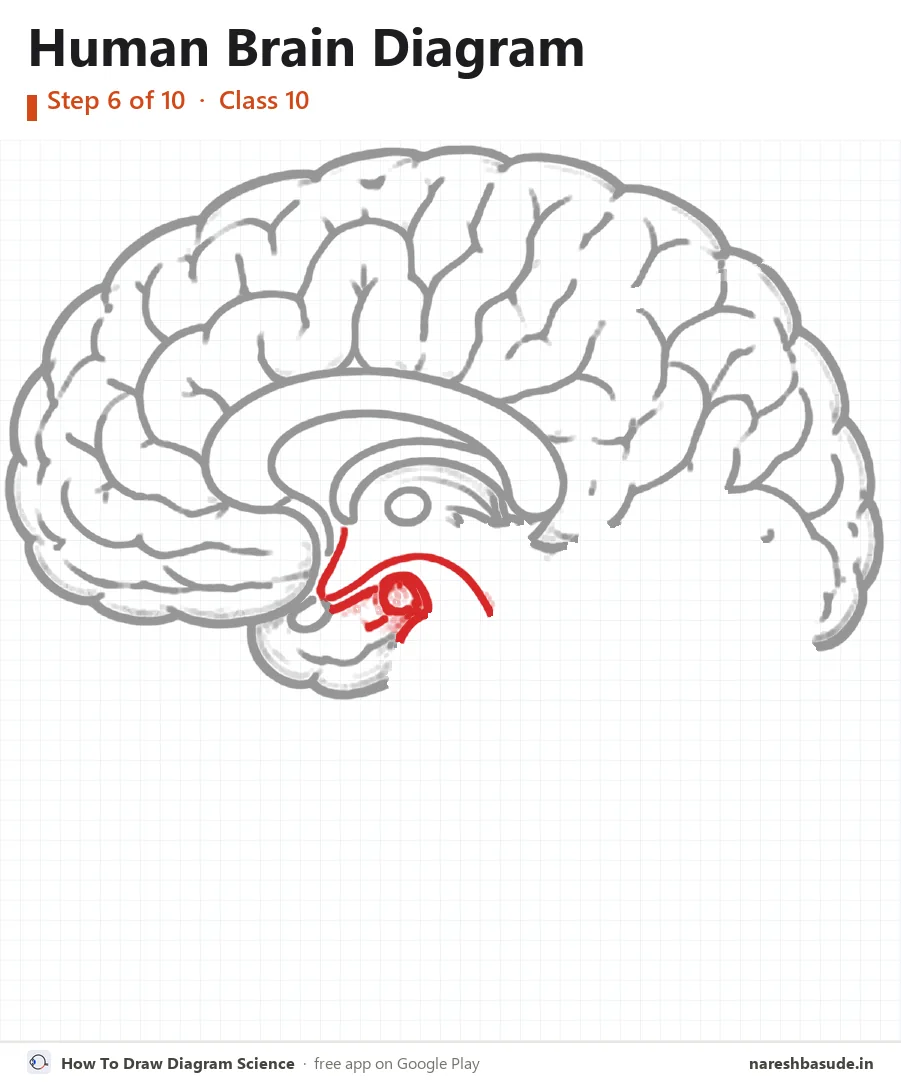
Hypothalamus and pituitary
Below the thalamus draw the hypothalamus and, hanging under it, the small round pituitary gland.
Parts drawn: Hypothalamus, Pituitary gland
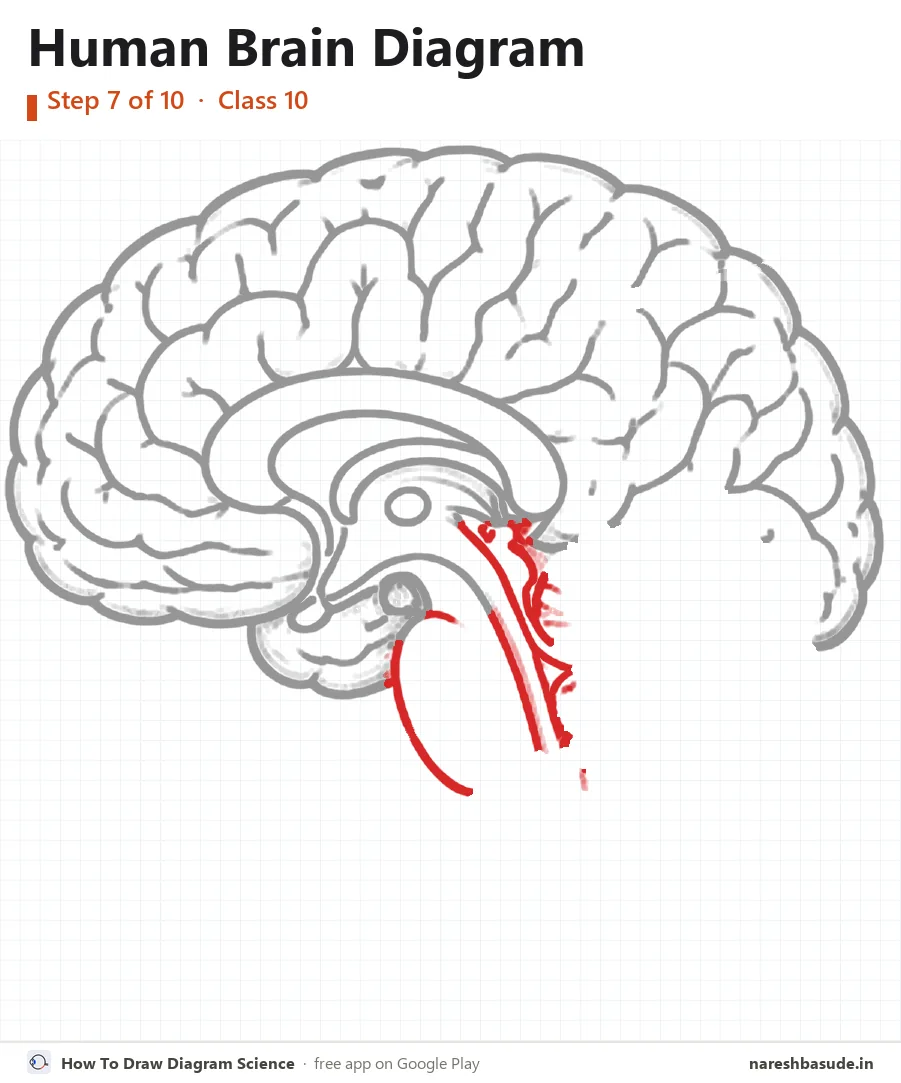
Midbrain and pons
Draw the stalk going down from the middle of the brain: the midbrain, then the big rounded bulge of the pons.
Parts drawn: Midbrain, Pons
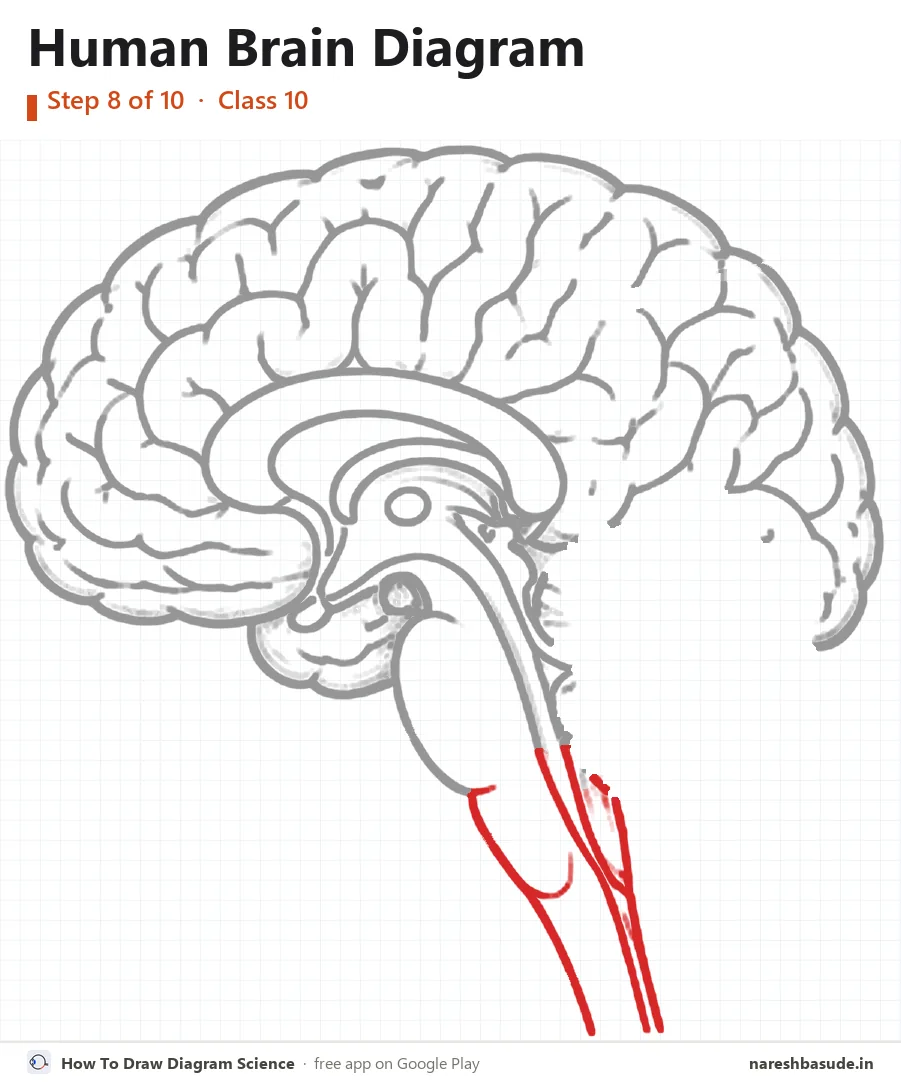
Medulla and spinal cord
Below the pons the stalk narrows into the medulla, then carries on down as the spinal cord.
Parts drawn: Medulla, Spinal cord
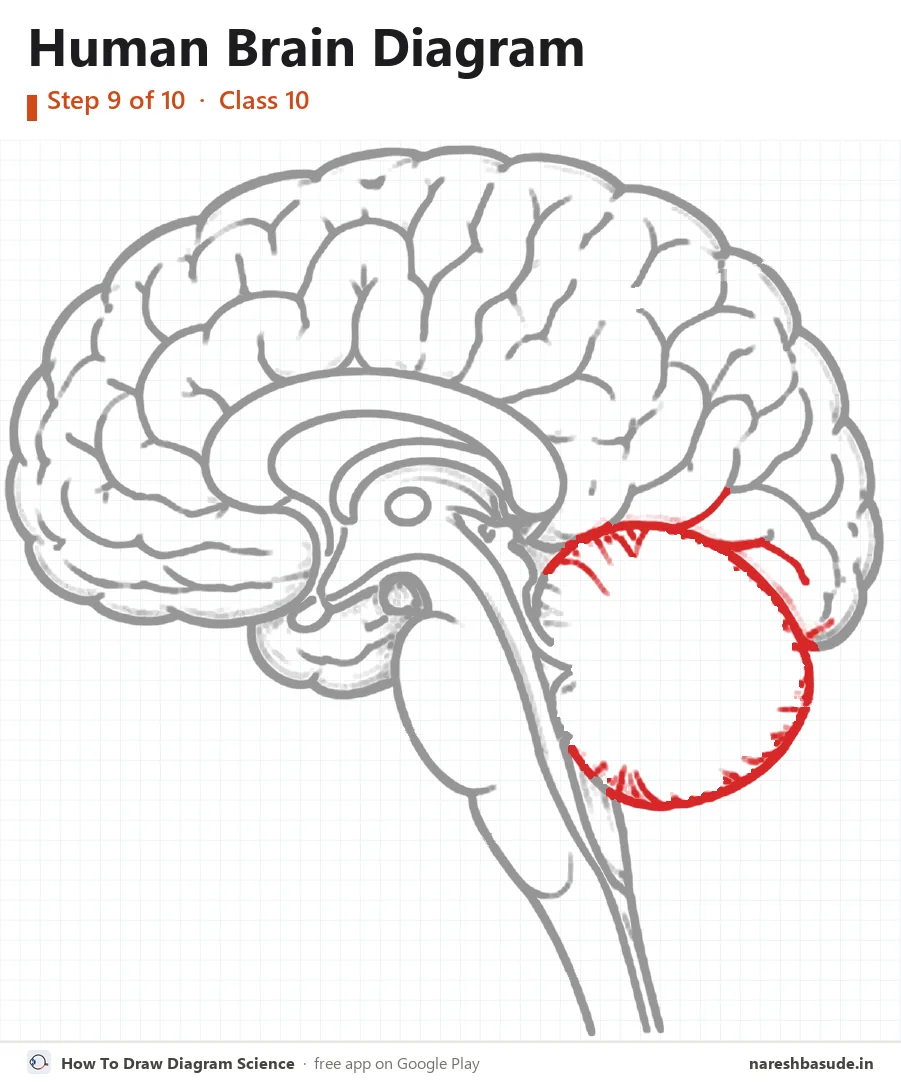
Cerebellum outline
Behind the stalk, under the back of the cerebrum, draw the round cerebellum.
Parts drawn: Cerebellum
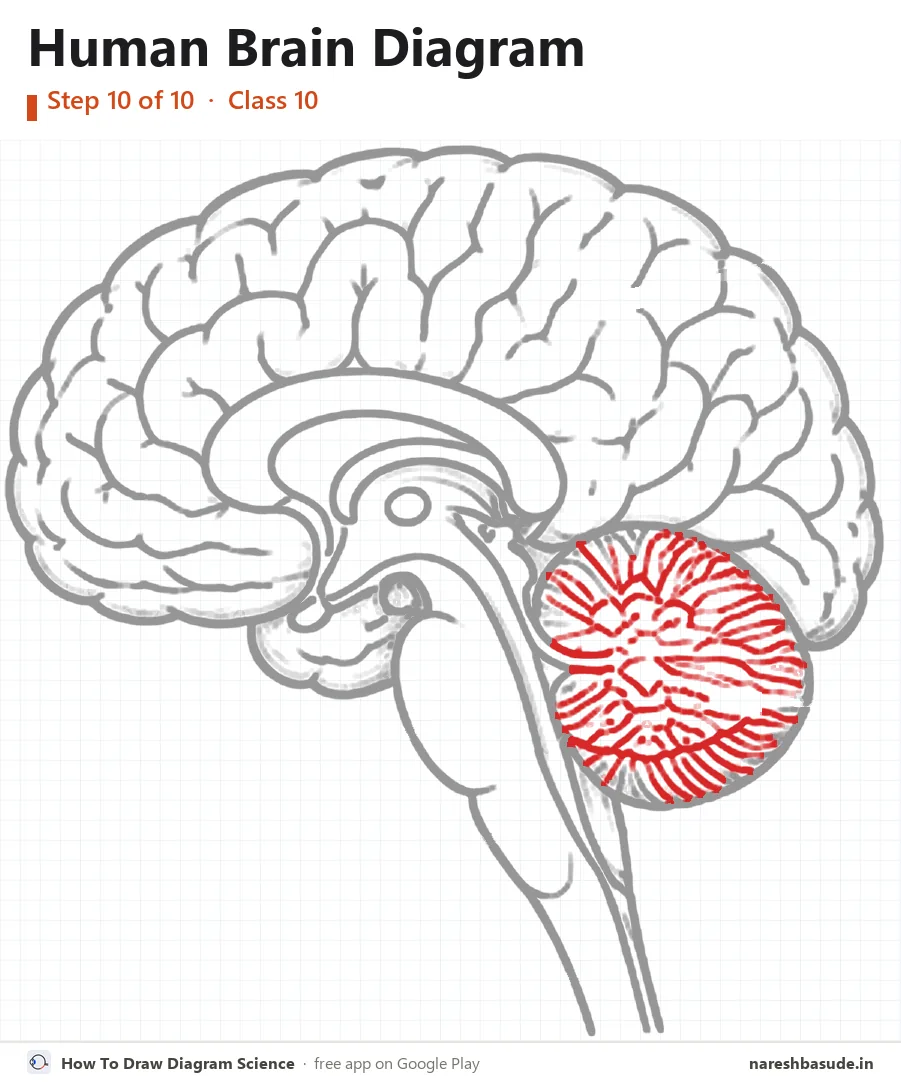
Cerebellum branches
Fill the cerebellum with thin branching lines, like a small tree lying on its side.
Parts drawn: Arbor vitae

Parts to label (10) and what each one does
- Cerebrum The largest part of the brain (forebrain). It handles thinking, memory, reasoning, the senses and voluntary actions.
- Corpus callosum A thick band of nerve fibres that joins the left and right halves of the cerebrum.
- Thalamus A relay centre in the forebrain that passes messages from the senses on to the cerebrum.
- Hypothalamus Part of the forebrain that controls hunger, thirst and body temperature, and the pituitary gland.
- Pituitary gland A pea-sized gland hanging below the hypothalamus. Its hormones, such as growth hormone, control other glands.
- Pons Part of the hindbrain that helps control breathing.
- Medulla Part of the hindbrain that controls involuntary actions such as heartbeat, blood pressure, salivation and vomiting.
- Midbrain Joins the forebrain to the hindbrain and controls some reflexes of the eyes and head.
- Cerebellum Part of the hindbrain that keeps posture and balance and makes voluntary movements precise.
- Spinal cord Runs down from the medulla. It carries messages between the brain and the body and handles reflex actions.
Write each name on the side of the diagram, joined to its part with a straight line. Keep the lines from crossing.
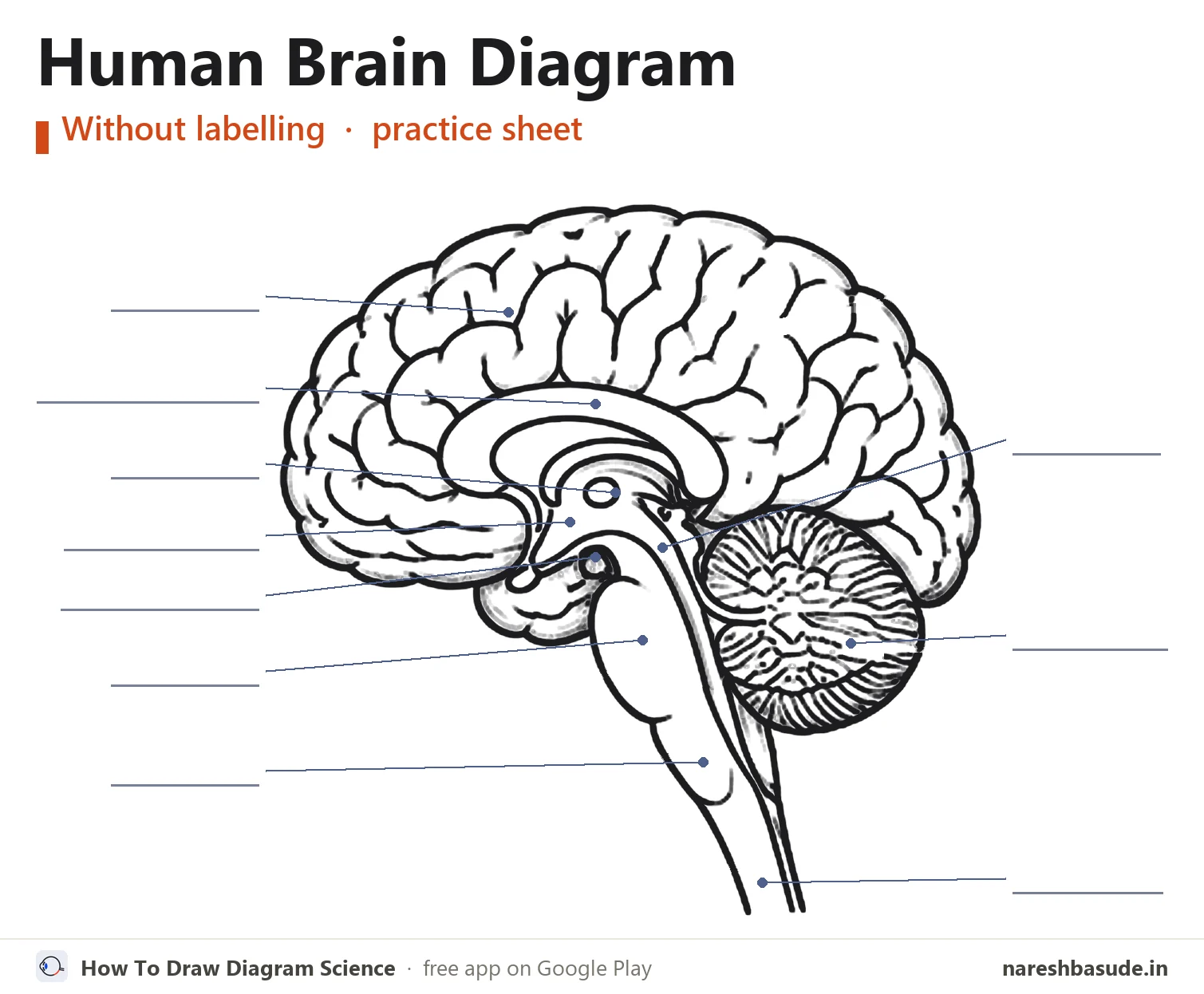
Human Brain diagram without labelling (practice sheet)
The same diagram with the label lines but no names (an unlabelled diagram). Write each part's name on its line, then check your answers against the labelled diagram at the top.
Download free PDF (A4, 3 pages)
Page 1: the labelled diagram. Page 2: this practice sheet with a word bank of all 10 parts. Page 3: all 10 drawing steps on one page.
Exam tips
- Draw the outline first and keep every fold inside it. The folds do not need to match exactly: keep them curvy and close together.
- The cerebellum sits at the back, tucked under the cerebrum. The stalk (midbrain, pons, medulla) comes down in front of it.
- Let the spinal cord continue straight down from the medulla.
- Keep forebrain labels near the top and hindbrain labels near the bottom so the label lines stay short.
Common mistakes
- Drawing the cerebellum at the front of the brain.
- Mixing up the pons and the medulla. The pons is the rounded bulge; the medulla is the narrower part below it that joins the spinal cord.
- Leaving out the small pituitary gland under the hypothalamus.
Exam questions on the human brain diagram
QuestionDraw a labelled diagram of the human brain and label: cerebrum, cerebellum, medulla and pituitary gland.
The cerebrum is the big folded upper part. The cerebellum is the smaller folded part at the back, under the cerebrum. The medulla is the stem at the bottom that joins the spinal cord. The pituitary gland is the small gland hanging below the hypothalamus.
QuestionWhich is the main thinking part of the brain, and where is it on the diagram?
The cerebrum, the large folded upper part that makes up most of the forebrain. It handles thinking, memory, reasoning, the senses and voluntary actions.
Questions students ask
Which part of the brain controls balance?
The cerebellum, at the back of the brain below the cerebrum.
Which part controls involuntary actions like heartbeat and breathing?
The medulla (medulla oblongata), in the hindbrain.
What are the three main regions of the brain?
The forebrain, the midbrain and the hindbrain.
Practise it on your phone
These steps come straight from the free Android app How To Draw Diagram Science. In the app you can view the human brain with every part named, learn to draw it step by step on a numbered grid, take a quiz on the parts and label it yourself.


